
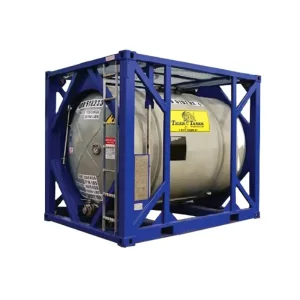
Colombia Offshore 10ft DNV Certified Tank Container for Chemical & Fuel Transfer
Engineered for extreme offshore sea states, structural impact resistance, and full DNV GL / ISO 10855 type-approval certifications.
Colombia Offshore 10ft DNV Certified Tank Container for Chemical & Fuel Transfer
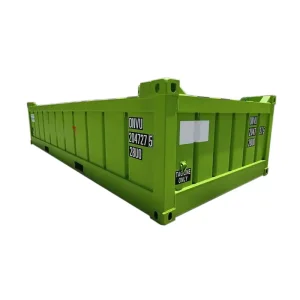
ODM DNV Certified Offshore Half-Height Open Top Container for Drilling Rigs

High-Quality Heavy-Duty Offshore Cargo Basket for Guajira Offshore Operations
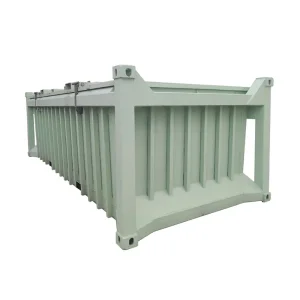
Reinforced Half Height Ore Carrier & Heavy Slag Offshore Container
Navigating dynamic sea conditions, frontier deepwater exploration, and evolving hydrocarbon infrastructure across the Caribbean and Pacific basins.
The Colombian maritime and offshore energy landscape is undergoing a structural paradigm shift. With significant deepwater and ultra-deepwater natural gas discoveries across the offshore Guajira, Sinú-San Jacinto, and Colombia Basins—championed by state operator Ecopetrol alongside multinational partners such as Petrobras, Shell, and Occidental—the demand for certified offshore logistical transport equipment has escalated exponentially.
Unlike standard ISO shipping containers engineered solely for cellular containership slots, offshore operations across key staging terminals like Puerto de Cartagena, Barranquilla, and Santa Marta demand units that survive dynamic snatch-loading, severe wave impact, and corrosive tropical marine environments governed by the Dirección General Marítima (DIMAR) and international maritime standards.
Supplying floating production storage and offloading units (FPSOs), drillships, and semi-submersibles operating miles off the Colombian coast mandates fail-safe dry cargo containers, cutting boxes, closed work cabins, and chemical offshore tanks. Every piece of equipment must possess uninterrupted structural traceability to mitigate environmental spill risks and catastrophic dynamic failure during open-sea crane transfers.
Comparative operational criteria across Colombian marine staging bases:
| Hub Port | Primary Operations | Critical Container Class |
|---|---|---|
| Cartagena (Mamonal) | Refining, Petrochemical, Deepwater Hub | DNV Chemical Tanks, 20ft HC Dry Vans |
| Barranquilla (Magdalena) | Offshore Support Vessel (OSV) Staging | Half-Heights, Cargo Baskets, Toolboxes |
| Santa Marta | Deep Draught Bulk & Deepwater Gas | Bulk Ore Carriers, Dangerous Goods Bins |
| Buenaventura | Pacific Maritime & Intermodal Freight | Multi-Modal Insulated & Specialized Reefers |
Engineering specifications and quality requirements that multinational EPC contractors mandate for offshore container assets in Latin America.
Offshore containers are subjected to violent forces during vessel-to-rig transit. Global procurement teams require full compliance with DNV 2.7-1 / EN 12079 / ISO 10855. This mandates primary structural calculations incorporating design accelerations up to 3.0g, finite element analysis (FEA), and strict pad eye geometric alignments.
Offshore structures prohibit the use of uncertified commercial steel. Procurement specifications enforce high-strength micro-alloyed structural steels (e.g., S355J2G3, Q345E) tested for Charpy V-Notch impact absorption down to -20°C or -40°C. Complete mill test certificates (MTC 3.1 or 3.2 per EN 10204) are digitally logged for every plate and hollow section.
The tropical marine climate of northern Colombia subjects equipment to intense UV radiation, high humidity, and extreme chloride salinity. Finishing systems adhere to ISO 12944 C5-M / CX standards, employing automated grit blasting to Sa 2.5, followed by zinc-rich epoxy primers, high-build epoxy intermediates, and aliphatic polyurethane topcoats exceeding 320 μm DFT.
Systematic containerized logistics architectures resolving severe supply chain bottlenecks in remote exploration theaters.
Standard engineering parameters built into our offshore fleets deployed across South America:
Operating in offshore sectors such as the Caribbean shelf demands uncompromising operational resilience. Unplanned non-productive time (NPT) on deepwater drilling rigs costs operators up to $400,000 per day. Logistics assets must perform reliably without failure during rapid crane dispatches from supply vessels in choppy waters.
Our turnkey macro solutions offer Colombian operators custom-engineered fleets:
Sealed offshore cutting boxes and skips engineered to prevent mud leaks during transfer to coastal treatment facilities.
Length-configurable open baskets (up to 70ft) equipped with dynamic cargo nets for handling heavy downhole pipe strings.
Aligning international offshore manufacturing standards with local administrative authorities and port terminal requirements.
Compliance with Colombian Maritime Directorate directives governing safe lifting, cargo stowage, dynamic crane handling, and marine safety at port interfaces.
Meeting National Hydrocarbons Agency (ANH) environmental and operational mandates for exploration and production supply chains in offshore blocks.
Complete customs clearance data packages: dual-plate CSC & DNV identification, harmonized HS classification, and complete technical Dossier packages.
Technical drawings, NDT schedules, proof-load test protocols, and spare parts availability (seals, sling assemblies, door locking gear) within Colombian hubs.
Pioneering smart fleet telemetry, cryogenic containment, and ultra-high-strength metallurgy for the next era of South American offshore exploration.
Equipping offshore modules with ATEX Zone 1 certified satellite tracking nodes providing real-time GPS coordinates, acceleration impact alerts, temperature, pressure monitoring, and tamper alarms for deepwater operations off Colombian waters.
Developing specialized T75 cryogenic offshore tank containers designed for liquefied natural gas (LNG) bunkering and liquid hydrogen logistics, aligning with Colombia's ambitious decarbonization and maritime green fuel roadmaps.
Integrating fiber-reinforced structural panels and graphene-enhanced thermal barriers into offshore refrigerated and accommodation units, reducing tare weights by up to 22% while increasing payload and thermal efficiency.
Authoritative insights addressing engineering, certification, logistical routing, and commercial standards.
Full spectrum of hazardous goods storage, temperature-controlled cold chains, bulk intermodal transports, and modular worksite infrastructure.
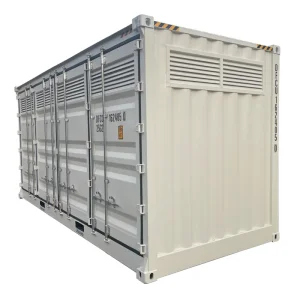
Famous 20FT High-Cube Dangerous Goods Side Open Door Container for Colombia Chemical Plants
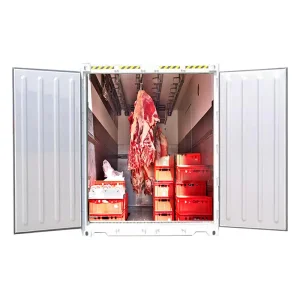
Brand New Heavy-Duty Hanging Meat Container for Low Temperature Fresh Colombia Transport
ODM DNV Certified Offshore Half-Height Open Top Container for Caribbean Platform Dispatch
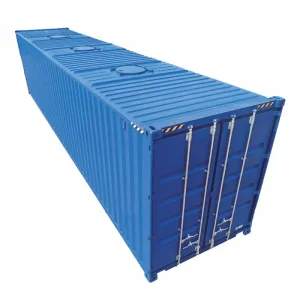
20 Feet Reinforced Intermodal Shipping Bulk Container for Mineral & Agricultural Exports
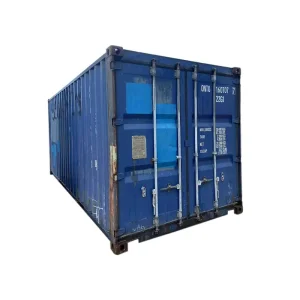
ODM 40ft Certified Dry Cargo Shipping Container for Onsite Mining & Port Storage
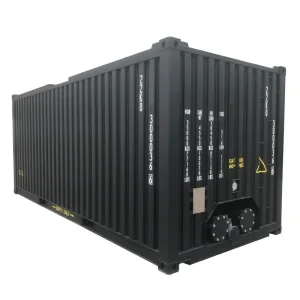
20 Feet Direct Heated Shipping Asphalt & Bitumen Tank Container for Infrastructure Works
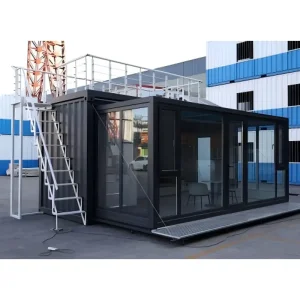
20ft Mobile Expandable Modular Accommodation Container House for Remote Work Camps
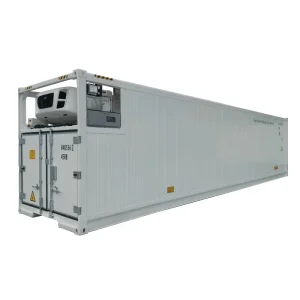
Heavy-Duty 40ft High Cube & 45ft Railway & Multimodal Refrigerated Reefer Container