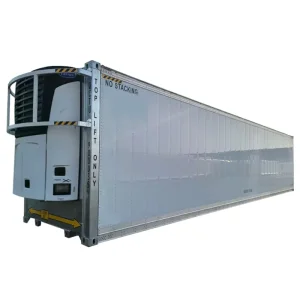
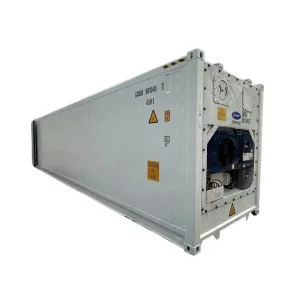
High-Spec Reefer & Thermal Engineering Systems for Korea
Pre-inspected and factory-configured for rapid intermodal transshipment across Incheon Port, Pyeongtaek, and the Seoul Metropolitan cold chain artery.
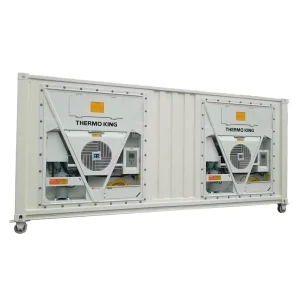
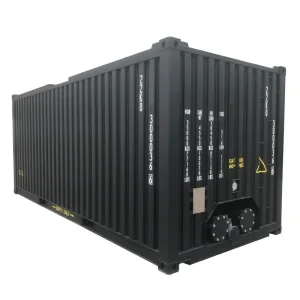
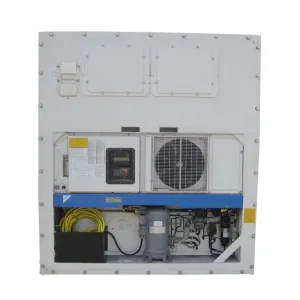
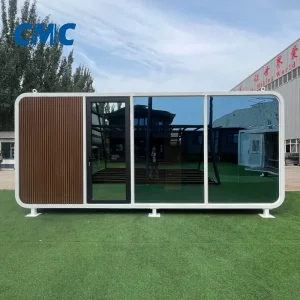
The Seoul Cold Chain Grid: Ultra-Dense Demand & Incheon Gateway Integration
The Seoul Metropolitan Area (SMA)—home to nearly 26 million inhabitants, accounting for roughly half of South Korea's entire population—represents one of the most demanding, technologically saturated, and space-constrained cold-storage ecosystems in East Asia. Because inner-city land in districts like Songpa, Gangnam, and Yeongdeungpo carries extraordinary real estate premiums, primary cold-storage warehousing has decentralized into outer logistical belts such as Icheon, Yongin, Gwangju, and Gimpo within Gyeonggi Province.
Crucially, maritime inflows of fresh perishables, proteins, and chemical raw materials depend on the immediate maritime conduit: Incheon Port (New Port Container Terminal) and the deep-water feeder axis extending from Busan Port through transshipment corridors. Container dwell times must be reduced to absolute minimums to feed South Korea's revolutionary rapid e-grocery infrastructure—pioneered by "Dawn Delivery" (Saetbyeol) platforms such as Kurly, Coupang Rocket Fresh, and SSG.
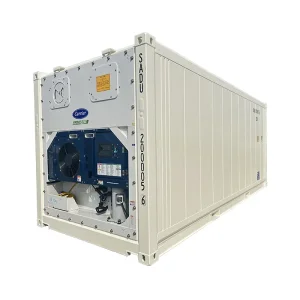
In this high-velocity scenario, standardized static warehouses are insufficient to handle surge seasonal inventory or buffer import flows. Modular, plug-and-play ISO refrigerated containers have transformed from pure shipping boxes into mobile, flexible micro-cold-storage units. These units maintain high thermal integrity under severe winter-to-summer maritime humidity shifts, providing seamless temperature bridges from dockside gantry cranes directly to suburban distribution hubs.
Key Logistics Corridors Serving Seoul
- Incheon New Port to Western Seoul Belt: Rapid intermodal drayage route handling fresh perishables, imported fruits, and chilled meats.
- Songdo Bio-Cluster Corridor: Ultra-cold -70°C and -20°C transport connecting biomanufacturing plants with Incheon International Airport (ICN) cargo terminals.
- Pyeongtaek / Dangjin Axis: Industrial container intake supporting industrial chemicals, EV battery precursors, and electronics manufacturing consumables.
Macro Trends Transforming Global Reefer Container Manufacturing
Stringent decarbonization mandates, the phase-out of high-GWP refrigerants, and intelligent telemetry are radically redesigning global intermodal cold logistics.
Decarbonization & Low-GWP Refrigerant Transition
Under the Kigali Amendment and EU F-Gas regulations, the global cold shipping industry is rapidly decommissioning R404A and aggressively transitioning toward R513A (Opteon XP10) and natural refrigerants like R744 (Carbon Dioxide). Manufacturers must engineer high-pressure stainless coils and dual-stage scroll compressors capable of operating at extreme efficiencies with near-zero ozone depletion potential.
Autonomous IoT Telematics & Predictive Diagnostics
Modern reefer fleets entering the Seoul trading lane integrate built-in satellite-cellular transceivers, ambient air sensors, and microprocessor controllers. From remote pre-trip inspections (PTI) to cloud-monitored automated setpoint adjustments, IoT platforms detect compressor load abnormalities, refrigerant charge leaks, and air-duct blockages days before cargo failure can occur.
Advanced Thermal Envelopes & VIP Foam Chemistry
Thermal leakage directly increases auxiliary diesel generator fuel consumption on feeder container ships. The frontier of structural container design incorporates high-density cyclopentane-blown polyisocyanurate (PIR) foam and integrated Vacuum Insulation Panels (VIP). This architecture drops thermal conductivity (K-value) below 0.36 W/(m²·K), dramatically slashing electrical power consumption.
Localized Reefer Application Scenarios Across the Seoul Economic Rim
Engineering specialized thermal profiles for biopharma manufacturing, high-value seafood distribution, and critical electronic materials.
1. Songdo Bio-Cluster Pharma Logistics
Incheon’s Songdo International City houses the world's largest single-location biopharmaceutical production capacity (including Samsung Biologics and Celltrion). Transporting monoclonal antibodies, vaccines, and cell therapies requires strict Good Distribution Practice (GDP) validation. Our insulated containers utilize redundant dual refrigeration circuits and ultra-stable temperature mapping spanning from +2°C to +8°C, as well as ultra-deep freezer settings reaching -70°C.
2. Noryangjin & Garak Wholesale Seafood Staging
Seoul’s premier seafood hubs—Noryangjin Fish Market and Garak Wholesale Market—rely on immediate blast-frozen preservation for high-grade tuna, king crab, and live-caught deep-sea catch. Blast reefer containers equipped with stainless steel T-flooring, heavy-duty floor scuppers, and dual-evaporator airflow designs pull internal box temperatures down to -60°C within record hours, inhibiting cellular crystallization and preserving premium sashimi grade quality.
3. Semiconductor Specialty Chemical Transit
The Gyeonggi semiconductor triangle (encompassing Samsung Electronics in Giheung/Hwaseong/Pyeongtaek and SK Hynix in Icheon) demands temperature-controlled delivery of specialized photoresists, slurries, and volatile precursor chemicals. Heated-and-refrigerated combined ISO containers ensure these delicate materials do not undergo viscosity breakdown or premature polymerization during sea-land intermodal transfer.
Technical Specification & Structural Architecture
Built using SPA-H anti-corrosive Corten steel, interior food-grade SUS304 linings, and precision high-pressure polyurethane foaming.
| Component Category | Standard Specification | Seoul / High-Spec Customization | Operational Engineering Benefit |
|---|---|---|---|
| Outer Framing & Panels | SPA-H Corten Steel (1.6 - 2.0 mm) | Zinc-rich epoxy primer + heavy polyurethane marine topcoat (350μm) | Resists intense Yellow Sea saltwater corrosion and winter de-icing salts on Korean expressways. |
| Internal Lining | Food-Grade Stainless Steel SUS304 2B Finish | Seamless laser-welded floor joints + SUS304 scupper plugs | Strict compliance with Korea Ministry of Food and Drug Safety (MFDS) and global HACCP sanitation codes. |
| Insulation Matrix | Cyclopentane-blown PIR (Foamed-in-place) | High-density VIP (Vacuum Insulation Panels) in ceiling and sidewalls | Minimizes internal thermal bridging; reduces daily compressor run time by 22-28% during peak Korean summers. |
| Refrigeration Powerplant | Carrier Transicold / Daikin / Thermo King | Dual-inverter digital scroll compressors with soft-start controllers | Prevents voltage spike tripping when connecting to varied auxiliary gensets or Korean industrial 380V/440V grid supplies. |
| Airflow Dynamics | Extruded Aluminum T-Bar Floor (65 mm) | High-flow static pressure air ducting with ceiling return plenums | Ensures homogeneous air distribution through tightly packed palletized kimchi, frozen meats, and fresh fruits. |
| Atmosphere Management | Passive ventilation fresh air intake (0-285 m³/h) | Controlled Atmosphere (CA) with N2 membrane & active O2/CO2 sensors | Extends shelf life for imported premium agricultural goods by arresting natural biological ripening processes. |
Structural Laser Profiling
Automated cutting and multi-stage robotic stamping of Corten steel base members and corner castings according to ISO 1496-2.
Double-Skin Injection
Automated high-pressure pneumatic jig injection of high-density PU foam core to ensure zero voids, uniform density, and absolute insulation bonding.
Air Leakage & K-Value Audit
Rigorous thermal chamber testing measuring total heat transmission, box air leakage rate, and pull-down velocity to -30°C.
Classification Sign-Off
Bureau Veritas (BV), ABS, or CCS inspection and certification before direct maritime dispatch from Tianjin seaport to Incheon.
Macro Industry Solutions for Importers & Fleet Operators
Delivering end-to-end reliability from CAD engineering customization to sea terminal drayage and rapid customs release.
Turnkey OEM/ODM Fleet Engineering
We tailor container heights (High Cube 9'6"), side opening roll-up doors, multi-temperature partition bulkheads, and heavy-cargo floor reinforcements based on exact client handling equipment and vehicle axle load limits in South Korea.
Port-Proximate Manufacturing Base
Located just 100 km from Tianjin Seaport, our factories eliminate inland positioning bottlenecks. We execute direct short-sea feeder sailings across the Bohai Rim directly into Incheon Port or Busan Port, achieving unmatched 48-to-72 hour factory-to-port deployment.
Hybrid Fleet Strategy (New & Certified Used)
We supply brand new custom manufactured reefers alongside pre-surveyed 90% new reconditioned units held at key Chinese coastal hubs, giving logistics operators the fiscal agility to rapidly scale seasonal cold-storage capacity while controlling capital outlay.
Frequently Asked Questions on Reefer Procurement for the Seoul Market
Comprehensive engineering, regulatory, and logistics answers for purchasing managers, 3PL directors, and marine port operators.
What is the typical shipping lead time and customs transit from Tianjin to the Seoul/Incheon terminal?
Maritime short-sea transit from the Port of Tianjin directly across the Yellow Sea to Incheon New Port Terminal is remarkably rapid, typically taking only 36 to 48 hours of ocean navigation. Because our manufacturing facilities sit within 100 km of Tianjin Port, pre-shipment container trucking, customs clearance documentation, and terminal staging can be executed with zero inland delay. Including pre-trip inspections (PTI) and terminal loading schedules, typical delivery from production completion to Incheon arrival ranges from 4 to 7 operational days.
How do CIMIC reefer containers perform during extreme seasonal temperature swings in South Korea?
South Korea encounters extreme seasonal variance—ranging from below -15°C in harsh winter months to above +35°C with 90%+ relative humidity during summer monsoon conditions. Our reefer envelopes are insulated with zero-ODP, high-density cyclopentane-blown polyisocyanurate (PIR) foam and vacuum insulation panels (VIP), guaranteeing an exceptional overall heat transmission coefficient (K-value) below 0.36 W/(m²·K). Dual magnetic door gaskets, thermal breaker strips along all frame perimeters, and internal heating coils prevent thermal bridging and freeze-lock door seals in winter while curbing compressor cycling during summer heatwaves.
Can the refrigeration machinery integrate with South Korea's industrial power grid and mobile gensets?
Yes. All reefer cooling powerplants (featuring Carrier Transicold, Daikin, or Thermo King machinery) are wired standard for 380V/440V 3-phase, 50/60 Hz electrical service. This provides native compatibility with South Korea's standard 380V industrial grid infrastructure found across Gyeonggi logistics warehouses as well as dual-voltage (220V/440V) clips-on and undermount diesel gensets commonly mounted on intermodal chassis traversing Korean national expressways (Gyeongbu and Seohaean Corridors).
What international and Korean classification certificates accompany your container shipments?
Every refrigerated and specialized cargo container built by our engineering division is certified under ISO 1496-2 (thermal containers specification and testing). Structural integrity is certified by leading IACS classification societies including Bureau Veritas (BV), ABS, or CCS. Containers arrive with valid CSC (Convention for Safe Containers) safety approval plates, TIR customs seals verification, and food contact safe material declarations conforming to South Korea's Ministry of Food and Drug Safety (MFDS) standards for SUS304 food-grade internal linings.
Do you supply blast reefer containers capable of ultra-low deep-freeze storage (-60°C) for sashimi tuna?
Yes. We engineer specialized blast-freezer reefer containers equipped with high-capacity dual-stage refrigeration compressors and deep-freeze refrigerants designed to maintain internal cargo temperatures down to -60°C and -70°C. These units are heavily utilized by Korean seafood conglomerates supplying Noryangjin, Busan Gamcheon Port, and luxury hotel chains throughout Seoul where tuna and premium shellfish require continuous ultra-low thermal chains to prevent lipid oxidation and retain sashimi-grade freshness.
What is the procurement and customization process for non-standard or side-opening reefer boxes?
Our OEM/ODM engineering workflow initiates with a comprehensive application brief outlining cargo dimensions, temperature ranges, door handling mechanics (full side-opening, roller shutter, or dual-ended access), and floor load ratings (such as heavy pallet jack or forklift axle weights). Our design team generates detailed 2D/3D CAD drawings and structural stress models for customer approval within 48 to 72 hours. Once approved, specialized tooling, jigging, robotic welding, and automated foam injection occur at our Tianjin manufacturing base, followed by pre-delivery PTI inspection testing.
Ready to Upgrade Your Cold Chain Fleet Serving Seoul?
Speak directly with our container engineering specialists. Request CAD drawings, certified temperature mapping documentation, and firm factory-direct CIF Incheon quotations.
Full Container Fleet Portfolio for Intermodal Transport & Special Cargo
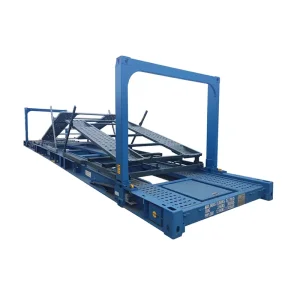
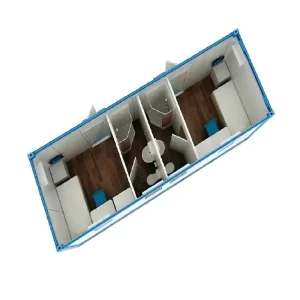
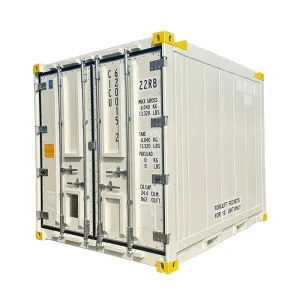
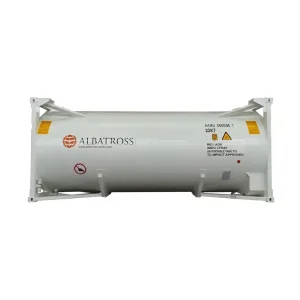
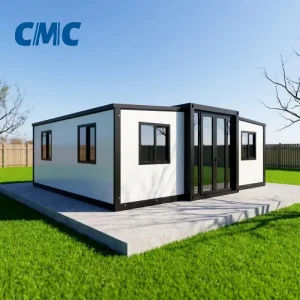
Explore our full manufacturing range—from specialized roll-up reefers and car carriers to heavy industrial gas ISO tanks and modular field pods.