
Specialized Offshore Dynamic Units for UAE Arabian Gulf Operations
Standard and custom DNV-certified structural units engineered with low-temperature Charpy V-notch tested steel, extreme anti-corrosion marine multi-coat systems, and certified integrated 4-point wire rope lifting slings.
Offshore Structural Ecosystem in the UAE: Operational Challenges & Demands
The United Arab Emirates—anchored by Abu Dhabi (ADNOC maritime projects, Upper Zakum, Hail & Ghasha ultra-sour gas developments) and Dubai's global trading nodes (Jebel Ali, Dubai Maritime City)—presents one of the most demanding offshore operating environments on earth. Operating dynamic cargo handling units in the Arabian Gulf requires engineering that directly combats hypersaline marine conditions, ambient air temperatures frequently exceeding 50°C, and structural shock impacts during offshore vessel-to-rig dynamic crane transfers.
High-Capital Upstream Investments
With ADNOC expanding crude production capacity toward 5 million barrels per day alongside multi-billion-dollar sour gas infrastructure expansions, demand for DNV 2.7-1 certified chemical tanks, offshore half-height baskets, and pressurized mud-logging cabins has reached unprecedented historical peaks.
Extreme Gulf Environmental Rigor
Surface water salinity in the Arabian Gulf regularly surpasses 40 PSU, and extreme humidity combined with sandstorm-induced abrasion creates rapid galvanic and pitting degradation. Standard ISO containers deteriorate within months; offshore units require C5-M extreme marine coatings and continuous NDT weld validation.
Zero-Tolerance Safety Compliance
Strict regional HSE frameworks enforce mandatory adherence to statutory maritime safety standards: EN 12079, ISO 10855, and DNVGL-ST-E271. Every dynamic lifting point, pad eye, and sling must withstand offshore dynamic acceleration factors without micro-fracturing or yield failure.
Why UAE EPC Contractors & Logistics Hubs Procure From Our Chinese Factory
While domestic fabrication yards in Mussafah (Abu Dhabi) and Al Quoz (Dubai) provide essential field maintenance and quick repair services, global tier-one contractors systematically turn to high-capacity Chinese manufacturing plants for volume fleet builds and specialized heavy-engineering offshore containers.
End-to-End Metallurgical Precision
Our Tianjin manufacturing facilities leverage direct steel-mill partnerships, utilizing strictly certified micro-alloy structural steel (Q345E / Corten SPA-H / S355NL). Materials undergo comprehensive chemical spectrum testing and Charpy V-notch impact validation to deliver exceptional mechanical resilience against cyclic maritime fatigues.
Massive Scalability & Cost Control
Automated robotic submerged arc welding, integrated blasting cells, and automated climate-controlled spray booths allow our factory to roll out entire container fleets with exact dimensional repeatability. This scale generates significant capital expenditure savings of up to 25–40% compared to local assembly setups in the Gulf.
Direct Maritime Logistics to Jebel Ali & Khalifa
Situated within 100 kilometers of northern China's premier maritime terminals in Tianjin, our facility maintains direct breakbulk and specialized container lines into Jebel Ali Port (Dubai) and Khalifa Port (Abu Dhabi). This proximity ensures predictable, short-transit ocean deliveries without intermediate transshipment delays.
Operational Deployment Vectors Across UAE Energy Sectors
Offshore containers fulfill specialized, high-risk technical missions in the Persian Gulf and the Gulf of Oman. Our products are customized to match exact mechanical, thermodynamic, and functional parameters on active sites.
| Offshore Container Classification | Key Operational Arenas (UAE) | Structural Specification & Materials | Primary Regulatory Approvals |
|---|---|---|---|
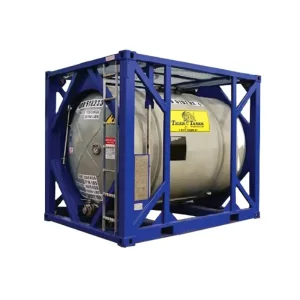
| DNV 10ft Offshore Acid/Chemical Tank | Offshore Well Stimulation, Acidizing Platforms, Upper Zakum | 316L Stainless Steel Shell, 20-35 kPa Design Pressure, Heavy Baffle Walls | DNV 2.7-1, EN 12079, IMDG Code T11/T14 |
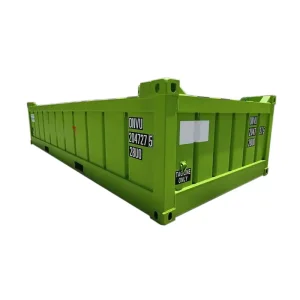
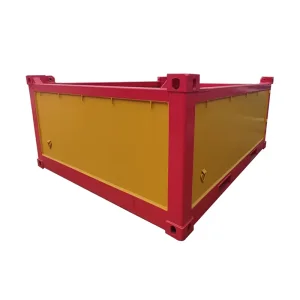
| Half-Height Open Top Container | Drill Collar Transit, Casing Slips, Heavy Ore Logistics (Ruwais) | Low profile, removable tarpaulin or steel hard tops, internal lashing points | ISO 10855, DNV 2.7-1, Charpy tested pad eyes |
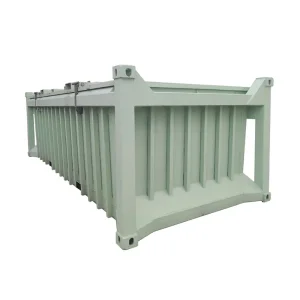
| Extended Offshore Tubular Baskets (20ft–70ft) | Subsea Piping, Drill String Handling, Downhole Tool Deployment | Reinforced base longitudinals, internal cargo nets, dynamic tie-downs | DNVGL-ST-E271, ASME Section IX certified welds |
| Pressurized Offshore Modular Cabins | EPC Laboratory Cabins, MWD/LWD Data Units, Offshore Accommodation | A60 Fire-rated insulation, Zone 1 / Zone 2 ATEX-certified HVAC pressurization | DNV 2.7-2, SOLAS, IECEx Certified Components |
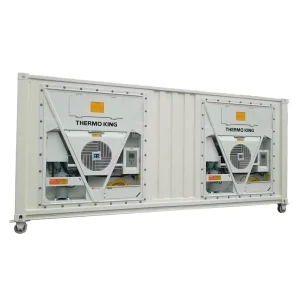
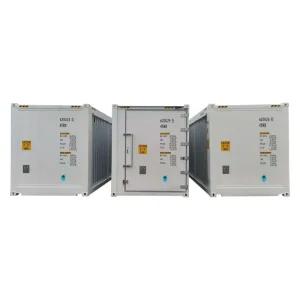
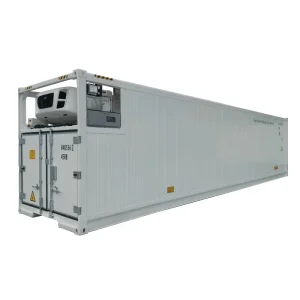
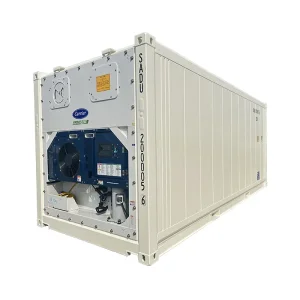
| Blast Reefer & Cold Chain Containers | Offshore Rig Commissary Supply, Temperature-Sensitive Marine Chemicals | Carrier/Thermo King cooling units, 304 Stainless interior, reinforced roof | DNV 2.7-1, ISO 1496-2, CSC Certified |
Strategic Procurement Dynamics & Emerging Offshore Trends
The offshore container market is experiencing a profound paradigm shift. Rig operators and EPC contractors no longer procure units as simple static storage boxes; they demand intelligent, circular, and highly engineered modular assets.
Transition to Modular Offshore Decarbonization
As the Middle East shifts capital toward hydrogen production, offshore wind pilot projects, and carbon capture (CCUS) in the Gulf, offshore modular housings must accommodate high-density battery energy storage systems (BESS), water electrolysis control gear, and cryogenic test equipment with custom structural load ratings.
IoT Integration & Real-Time Structural Telematics
Modern offshore fleets operating across Jebel Ali, Fujairah, and offshore concessions are increasingly fitted with ATEX Zone 1 GPS, shock/impact telemetry, and real-time door seal monitoring. This intelligence warns offshore platform superintendents of excessive g-force shocks sustained during rough-sea crane lifts.
Total Lifecycle Asset Optimization
Procurement departments balance Capex vs. Opex by standardizing fleet geometries. Standardized footprints streamline stackability aboard offshore supply vessels (OSVs), reduce deck footprint bottlenecks on jack-up rigs, and minimize spare-parts inventories across Middle Eastern bases.
Frequently Asked Technical & Procurement Questions
In-depth technical clarifications for procurement managers, structural engineers, and offshore logistics directors operating in the UAE and Middle East.
What is the definitive engineering difference between a standard ISO container and a DNV 2.7-1 certified offshore container?
Can your Chinese manufacturing plant deliver complete DNV documentation packages required by UAE operators like ADNOC?
How do your containers survive the hyper-corrosive, high-heat marine climate of the Persian Gulf?
What are typical production lead times and ocean freight routes to UAE sea gateways?
Can specialized equipment such as offshore blast freezers and Zone 1 accommodation cabins be customized?
Comprehensive Modular, Reefer & Offshore Supply Units
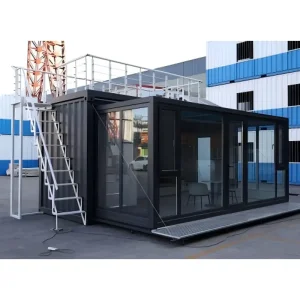
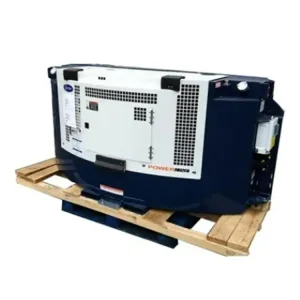
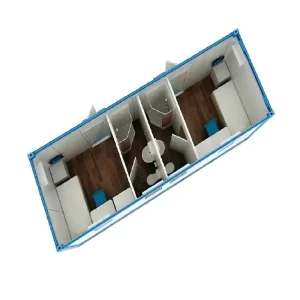
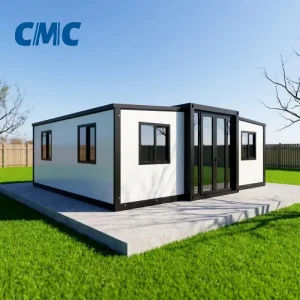
Fully certified containerized solutions spanning modular mobile living quarters, classification society certified blast freezers, heavy gensets, and high-cube intermodal cold-chain equipment.
Ready to Engineer Your Offshore Container Fleet?
Consult with our naval architects and structural engineering team. We supply full technical drawings, finite element analyses (FEA), and DNV/classification certification for delivery across UAE and international energy corridors.