
High-Priority Intermodal Solutions for Kenya
Engineered to handle the rigors of the Northern Corridor transit and demanding coastal climates.

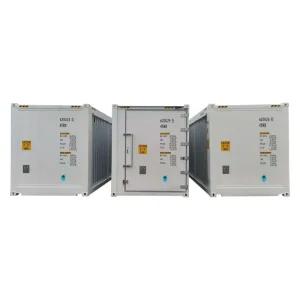
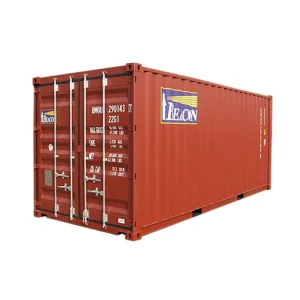
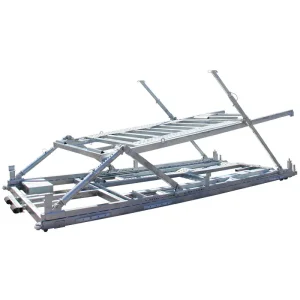
The Kenyan Cold-Chain & Reefer Container Ecosystem
Navigating the vital trade artery between the Port of Mombasa, Nairobi ICD, and agricultural production basins.
Horticultural & Floricultural Hub
Kenya remains one of the world's preeminent exporters of cut roses, fresh avocados, mangos, and green beans. The transition from high-carbon air freight to sea freight via the Port of Mombasa demands highly precise Controlled Atmosphere (CA) and Cold Treatment (CT) reefer units capable of extending post-harvest lifespans across 28-day maritime transits.
The SGR & Northern Corridor Route
The Standard Gauge Railway (SGR) between Mombasa and Naivasha Dry Port has revolutionized cargo dwell times. Reefer containers deployed along this corridor require robust genset integration, exceptional thermal inertia, and vibration-dampened reefer compressors to maintain thermal stability during intermodal transshipment.
Grid Volatility & Off-Grid Farming
In production zones across the Rift Valley, Mount Kenya, and Eldoret, intermittent power grids challenge precooling operations. Deploying micro-substation-compatible reefer systems, diesel clip-on gensets, and high-density polyurethane (PU) cycloisopentane insulated shells minimizes thermal loss during supply chain blackouts.
Macro-Industry Cold-Chain Engineering Trends
Bridging global advanced container manufacturing with localized East African requirements.
Low GWP & Environmental Stewardship
Global decarbonization mandates have accelerated the phase-out of high-GWP refrigerants. Our export reefer solutions incorporate R-452A, R-513A, and natural CO₂ (R-744) units, drastically lowering the global warming impact while elevating coefficient of performance (COP) in tropical environments.
IoT Telematics & Predictive Cold-Chain
Modern fleets serving East Africa demand autonomous tracking. Integrated microprocessors monitor supply and return air temperatures, ethylene saturation levels, defrost intervals, and humidity. GPS/GSM-enabled data loggers ensure live end-to-end audits satisfy EU phytosanitary standards.
Corten Steel & Marine Metallurgies
Built with SPA-H high-strength atmospheric corrosion-resisting Corten steel, double-dip zinc coatings, and marine-grade stainless steel interior linings (MGSS), our containers resist severe saline degradation prevalent at the Mombasa port terminal and Indian Ocean maritime routes.
Localized Applications Across Kenya
Versatile configurations solving acute storage and transit pain points in East Africa.
| Application Scenario | Geographical Zone | Recommended Configuration | Target Temperature | Strategic Benefit |
|---|---|---|---|---|
| Avocado & Fresh Fruit Export | Murang'a, Kisii, Meru | 40ft HC Reefer with Controlled Atmosphere (CA) | +4°C to +7°C | Suppresses ripening, enabling maritime shipments to Rotterdam & Middle East |
| Floriculture Cut Roses | Naivasha, Nakuru, Mount Kenya | 40ft HC High-Airflow Bottom T-Floor Reefer | +1°C to +2°C | Eliminates heat hotspots, avoids botrytis formation, extends vase longevity |
| Coastal Marine & Fisheries | Mombasa, Malindi, Lamu | 20ft Deep Freezer / Ultra-Low Blast Units | -25°C to -40°C | Prevents histamine formation in high-value tuna and sea-caught products |
| Pharmaceutical Cold-Chain | Nairobi Logistics Parks, ICD Embakasi | Redundant Dual-Cooling Unit Multi-Temp Box | +2°C to +8°C / -20°C | WHO-GDP compliant distribution of vaccines and biologic reagents |
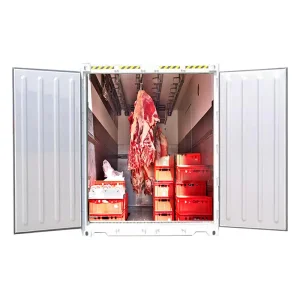
| Meat Processing & Abattoirs | Kajiado, Athi River | Customized Hanging Meat Reefer with SS Rails | -18°C Frozen / 0°C Chilled | Overhead stainless meat hooks with optimized dynamic structural support |
Kenyan Regulatory Compliance & Operational Assurance
Streamlined logistics clearance backed by certified international engineering benchmarks.
KEBS PVoC Certification
Every reefer container destined for Kenya undergoes stringent Pre-Export Verification of Conformity (PVoC). We provide full Bureau Veritas or SGS inspected documentation, ensuring smooth clearing without port demurrage or custom fines at Mombasa.
OEM Powerplants & Spare Parts
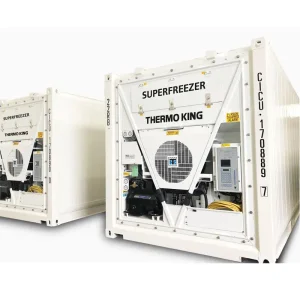
Our units leverage world-class, globally standardized cooling units including Carrier Transicold, Thermo King, and Daikin. Qualified HVAC service engineers and genuine replacement components are readily accessible throughout Nairobi and Mombasa.
Dual-Voltage & Generator Resilience
Equipped with broad-spectrum 380V/460V 3-phase 50/60Hz multi-voltage transformers and circuit surge suppressors, our systems guard sensitive reefer microcontrollers from sudden power fluctuations common to inland industrial facilities.
Technical Roadmap: East African Cold Logistics
Next-generation innovations engineered for ultra-efficiency, connectivity, and zero-carbon resilience.
Autonomous Sensor Arrays & Cloud Telematics
Real-time wireless remote diagnostics, allowing logistics operators in Nairobi to monitor internal temperatures, oxygen/nitrogen concentrations, and diagnostic alarms while containers transit the Indian Ocean.
Vacuum Insulation Panels (VIP) Integration
Upgrading core panels with ultra-thin VIP barriers combined with cyclopentane-blown polyurethane to cut thermal transmission (U-value) by 35%, lowering daily diesel genset fuel consumption along the road corridor.
Roof-Mounted Solar PV & Energy Storage
Integrated high-efficiency low-profile crystalline photovoltaic roofs coupled with compact LiFePO4 batteries, delivering up to 6 hours of autonomous auxiliary cooling during SGR rail transfer halts.
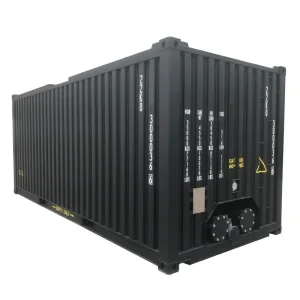
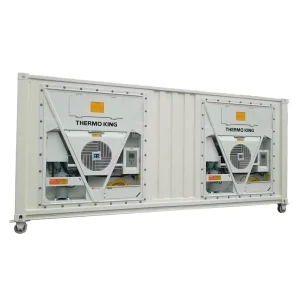
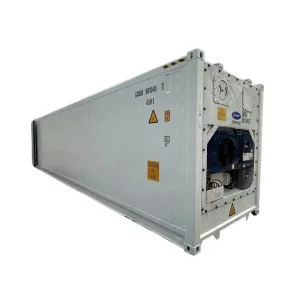
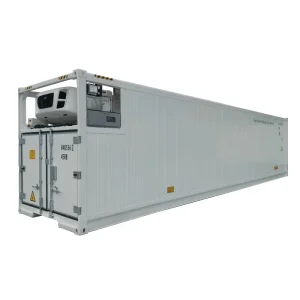
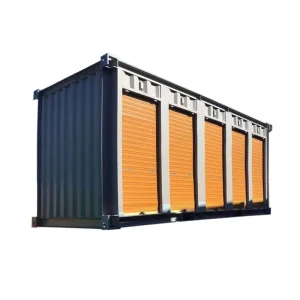
Certified Special & Reefer Equipment for Kenyan Operations
Engineered for high-duty cycles, intermodal flexibility, and certified international safety standards.

Frequently Asked Technical & Logistics Questions
Expert insights addressing customs clearance, cooling dynamics, and structural reliability for Kenya.
How do reefer containers handle transit on the Mombasa-Nairobi SGR?
What documentation is required to clear reefer containers with Kenya Customs?
Why is Controlled Atmosphere (CA) vital for Kenyan avocado and fruit exports?
Are spare parts and maintenance available for Carrier, Thermo King, and Daikin in Kenya?
What is the difference between standard reefers and Blast Freezers for fisheries?
Can customized refrigerated containers be configured for on-site farm storage?
Optimize Your East African Cold-Chain Logistics
Consult directly with our engineering team for CAD drawings, thermal capacity calculations, and factory-direct export quotations to Mombasa, Nairobi, and regional inland destinations.