
High-Performance Mini & Specialized Storage Fleet
Engineered for high density, rapid multi-modal dispatch, and harsh ambient resistance. Featuring nested 4ft–12ft shipping containers alongside cold chain and specialized industrial hardware.
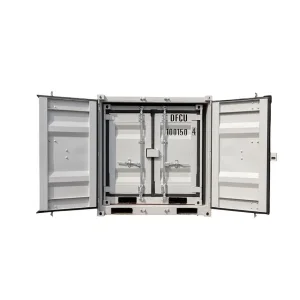
High-Quality Durable Cargo Shipping Container 4Ft/5Ft/6Ft/7Ft/8Ft/9Ft/10Ft/11Ft/12Ft Mini Storage Container Nested Shipping Container Manufacturers, Factories
Explore Specifications
High-Quality Durable Cargo Shipping Container 4Ft/5Ft/6Ft/7Ft/8Ft/9Ft/10Ft/11Ft/12Ft Mini Storage Container Nested Shipping Container Manufacturers, Factories
Explore Specifications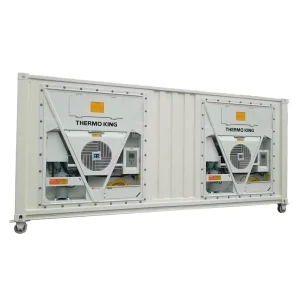
High-Quality The new blast reefer containers are certified by classification societies Manufacturers, Factories
Explore Specifications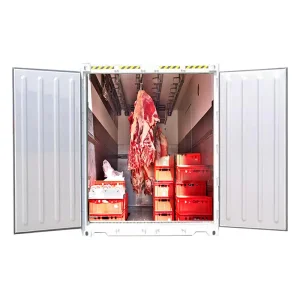
High-Quality Brand new hanging meat container for low temperature fresh transportation Pricelist, Products
Explore Specifications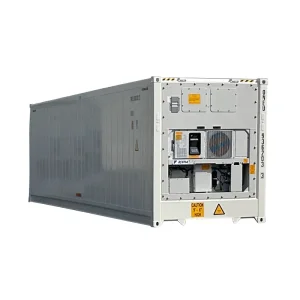
OEM New 40ft High-Cube Daikin Freezer Container Cold Storage Room Manufacturer, Products
Explore Specifications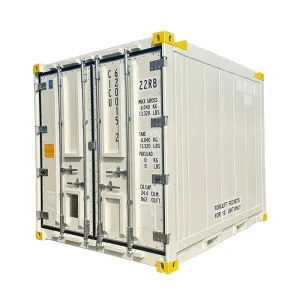
High-Quality New 10ft Certified Thermo King Freezer Container Exporter, Manufacturers
Explore Specifications
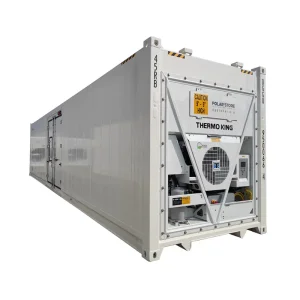
Famous 40ft High-Cube Side Open Door Reefer Container Manufacturer, Factories
Explore SpecificationsEngineering Evolution: The Paradigm Shift to Mini Storage Containers
While traditional 20ft and 40ft intermodal steel containers dominate oceanic deep-sea lines, high-density metropolitan ecosystems and tactical decentralized sites demand granular volumetric storage.
Sub-Metric Volumetric Efficiency
Global self-storage operators, urban fulfillment networks, and Tier-1 EPC contractors face stringent spatial constraints. Mini storage containers—ranging incrementally from 4ft, 5ft, 6ft, 7ft, 8ft, 9ft, 10ft, to 12ft—eliminate dead cubic volume. Designed with proportional corrugated corten sidewalls (1.6mm to 2.0mm SPA-H), they preserve ISO-grade structural rigidity while navigating micro-urban access points inaccessible to 40ft chassis trailers.
Nested Shipping Architecture (Matryoshka Set)
The primary barrier to international acquisition of sub-20ft containers historically was prohibitive sea-freight overhead. Factory 4.0 innovation introduced 4-in-1 and 3-in-1 nested assembly configurations. For example, a 6ft container nests smoothly within an 8ft unit, which seats inside a 9ft unit, which in turn secures seamlessly within a mother 10ft or 20GP container, slashing slot charter fees by up to 72% per metric capacity unit.
Industrial Corten-A Anti-Corrosive Longevity
Unlike commercial sheet-metal garden sheds that deteriorate within 36 months under marine or industrial condensation, genuine mini storage containers utilize continuous full-welded SPA-H weathering steel. Combined with two-pack zinc-rich epoxy primers, chlorinated rubber or polyurethane topcoats, and dual EPDM perimeter gaskets, our mini storage units provide an authenticated design life of 25+ years.
China Factory 4.0: Supply Chain Resilience & Production Prowess
Operating strategic production hubs in Tianjin and Suzhou, CIMIC integrates robotic automation, digital supply chain tracking, and deep port integration to guarantee predictable export fulfillment.
Robotic Seam Welding
Multi-axis robotic gantry systems execute continuous gas metal arc welding (GMAW) across corrugated side panels and heavy-duty structural corner posts, achieving 100% penetration without localized slag defects or thermal warping.
Automated Surface Blasting
Every steel profile undergoes automated closed-loop centrifugal shot blasting to SA 2.5 cleanliness standards, removing mill scale and establishing a uniform 45–65µm anchor profile for optimal polymer adhesion.
Corrosion Barrier Chemistry
3-coat marine defense: 30µm zinc-rich primer, 40µm epoxy barrier coat, and 40µm high-solids polyurethane topcoat, yielding verified salt-spray endurance exceeding 1,500 hours under ASTM B117 standards.
100km Port Gate-In Buffer
Direct express highway haulage to Tianjin Port and Shanghai Port provides seamless gate-in within 3 hours of line clearance, insulating international buyers from demurrage penalties and missed vessel cut-offs.
Standardized Mini Storage Dimensional Specifications
Dimensional tolerances maintained to ±2mm across all axis lines. Corten steel framing enables 3-high to 6-high empty stacking in depot arrays and 2-high payload staging on worksites.
| Model Footprint | External Dim. (L × W × H) mm | Internal Dim. (L × W × H) mm | Tare Weight (kg) | Max Gross Payload (kg) | Cubic Volume (m³) | Primary Industrial Use-Case |
|---|---|---|---|---|---|---|
| 4ft Mini Dry | 1,250 × 1,000 × 1,300 | 1,130 × 910 × 1,180 | 280 | 2,000 | 1.21 | On-site battery storage, tool vault, high-value component transit |
| 5ft Mini Dry | 1,500 × 1,200 × 1,500 | 1,380 × 1,110 × 1,380 | 390 | 3,000 | 2.11 | Apartment basement storage, municipal maintenance locker, hazchem |
| 6ft Mini Cube | 1,980 × 1,750 × 1,910 | 1,840 × 1,620 × 1,720 | 620 | 4,500 | 5.13 | Sub-contractor jobsite security lockbox, micro-distribution staging |
| 7ft Mini Modular | 2,150 × 1,880 × 2,050 | 2,010 × 1,750 × 1,860 | 740 | 5,500 | 6.54 | Commercial equipment transit, nested sets tier-2 core container |
| 8ft Mini Storage | 2,438 × 2,200 × 2,260 | 2,280 × 2,080 × 2,060 | 890 | 7,000 | 9.77 | Self-storage facilities, high-density residential moving pods |
| 9ft Mini Heavy | 2,740 × 2,200 × 2,260 | 2,590 × 2,080 × 2,060 | 980 | 8,000 | 11.10 | Industrial workshop annex, field telecommunications equipment |
| 10ft ISO / Dry | 2,991 × 2,438 × 2,591 | 2,840 × 2,350 × 2,390 | 1,300 | 10,000 | 15.90 | Standard CSC certified intermodal, offshore supply, cold room |
| 12ft Custom POD | 3,658 × 2,438 × 2,591 | 3,500 × 2,350 × 2,390 | 1,580 | 12,000 | 19.65 | Bespoke modular retail, heavy machinery mobile shelter, mining depot |
Mission-Critical Applications Across Global Industry Sectors
From densely populated global financial capitals to remote offshore wind installations, mini storage containers provide flexible, indestructible physical isolation.
Self-Storage Facility Optimization
Modern self-storage enterprises in North America and Western Europe utilize 6ft, 8ft, and 10ft units to transform vacant perimeter land and warehouse easements into revenue-generating lockers. Fitted with roll-up doors, anti-condensation coatings, and recessed high-security lockboxes, they achieve over 95% rentable footprint density.
EPC Infrastructure & Construction Job-Sites
Large infrastructure sites lose millions annually to tool pilferage and weather damage. Rugged 5ft and 6ft mini units function as tamper-proof subcontractor vaults that crane directly onto structural floors as multi-story buildings rise, preserving pneumatic equipment, electrical gear, and hazardous chemicals.
Decentralized Energy & Battery Shelters
As microgrids and EV charging corridors expand, 8ft and 10ft mini containers provide standardized structural shells for Lithium Iron Phosphate (LiFePO4) Battery Energy Storage Systems (BESS). Integrated with thermal ceramic insulation, HVAC brackets, and pressure-relief dampers, they protect critical power components.
Urban Micro-Fulfillment & Last-Mile E-Commerce
Hyper-local distribution hubs utilize modular mini units positioned in transport corridors to store fast-moving retail SKUs. Dual-ended doors or side-opening configurations allow high-speed replenishment for electric cargo bikes and couriers without creating urban traffic blockades.
Disaster Resilience & Mobile Medical Modules
Government agencies and NGOs deploy pre-stocked 10ft container modules containing water purification systems, mobile surgical suites, and communication relays. Their standard corner castings enable rapid helicopter airlift, flatbed transit, and sea freight mobilization.
Decentralized Cold Chain Micro-Depots
Utilizing high-performance vacuum insulated panels (VIP) and Thermo King or Daikin refrigeration machinery, 10ft reefer units provide ultra-low temperature precision (-30°C to +30°C) for vaccines, perishable pharmaceuticals, and specialty seafood in secondary logistics zones.
Global Certification, Testing Protocols & Regulatory Compliance
Stringent compliance ensures seamless customs clearance, safety accreditation, and frictionless intermodal transit across all sovereign maritime jurisdictions.
CSC Safety Approval
Units intended for international freight carry valid International Convention for Safe Containers (CSC) plates. Subjected to hydraulic racking tests, floor load assessments (7,260kg axle loads), and corner post compression tests verified by Bureau Veritas (BV).
DNV 2.7-1 / EN 12079
For harsh marine and offshore rig servicing, our specialized mini containers and cargo baskets are built with specialized impact metallurgy (Charpy V-notch tested at -20°C) with certified 4-leg wire rope lifting slings and padeyes.
TIR Customs Carnet
Sealed continuous hinge pins, riveted cam retainers, and integrated customs seal apertures guarantee uninterrupted border transits across European, Eurasian, and American international freight corridors.
Low-VOC & Wood Treatment
Flooring incorporates 28mm marine-grade hardwood plywood treated in compliance with Australian Department of Agriculture (AQIS) quarantine standards. Steel coatings utilize eco-compliant low-VOC waterborne or high-solids epoxies.
Total Cost of Ownership (TCO) & Procurement Optimization
Strategic purchasing managers evaluate capital expenditure against operational longevity, cycle durability, and nested freight consolidation economics.
Nested Consolidation Strategy
By executing procurement in nested sets (e.g., nesting 6ft + 8ft + 9ft units inside a parent 10ft container, or 4-in-1 sets inside a standard 20ft/40ft slot), shipping slot expenditure is amortized over four discrete assets, lowering landed freight cost per unit by 60–75% compared to single-unit imports.
Drawing Approval & Pre-Production Sign-Off
Zero risk sourcing workflow: Prior to cutting steel, CIMIC structural engineers provide CAD/SolidWorks models indicating exact corner post clearances, door handle leverage, floor cross-member spacing, and paint RAL codes. Prototype sample photos and welding NDT reports are delivered for client sign-off.
Depot Inspection & Factory FAT Protocol
Every completed batch undergoes Factory Acceptance Testing (FAT), including light-leak tests, weather-tightness water hose tests at 200 kPa nozzle pressure, paint film thickness (DFT) gauge verification, and forklift pocket dynamic load simulation before container door sealing.
Technology Roadmap: The Future of Smart Mini Storage Containers
Advancements in telematics, structural lightweighting, and renewable micro-power are transforming passive steel containers into intelligent logistics nodes.
IoT Telematics & Smart Access
Integrated Bluetooth Low Energy (BLE) and satellite-cellular tracking devices embedded flush into corner castings provide real-time geo-fencing, tri-axial shock detection, internal temperature/humidity sensing, and keyless biometric cellular door access for decentralized storage yards.
Thin-Film Solar Integration
Flexible copper indium gallium selenide (CIGS) solar panels integrated into corrugation roof channels power autonomous ventilation, LED lighting, internal CCTV, and dehumidification cycles, maintaining zero external grid dependence in remote environments.
Advanced Circular Metallurgy
Our ongoing metallurgical roadmap incorporates ultra-high-strength steel alloys (UHSS) and 100% recycled scrap-based electric arc furnace (EAF) corten grades, decreasing embedded lifecycle CO2 by over 38% while raising yield strength above 460 MPa.
Advanced Offshore, Specialized Bulk & Modular Solutions
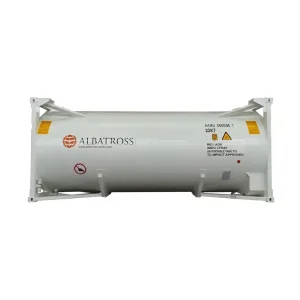
Comprehensive intermodal equipment engineered to complement mini storage installations: offshore lifting baskets, ISO tank containers, vehicle transporters, and modular buildings.
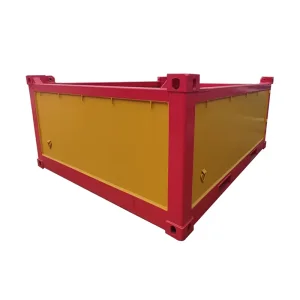
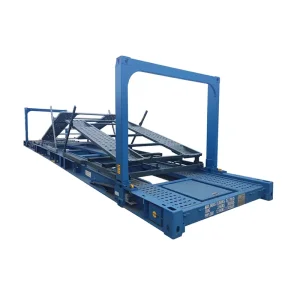
High-Quality New Offshore Basket Container for Offshore Operations Exporter, Exporters
Explore Specifications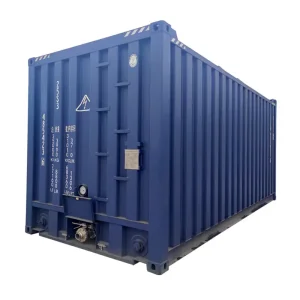
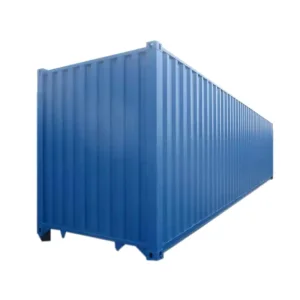
China 40ft High Cube Certified Dry Cargo Shipping Container contaoner Factory, Product
Explore Specifications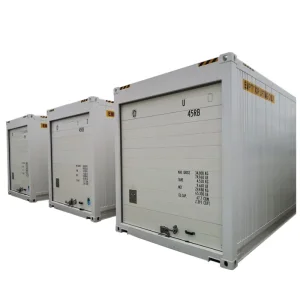
China 40ft High-Cube Roll Up Reefer Container Customized Shipping Containers Factory, Manufacturers
Explore Specifications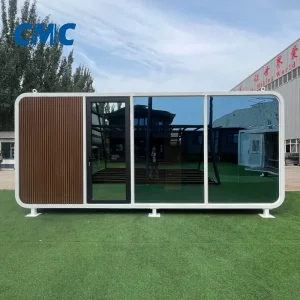
Famous 20ft Prefab Container House Flat Pack Modular House Office Tiny House Outdoor apple Cabin Office Pod Garden Office Pod Manufacturer, Product
Explore Specifications
Frequently Asked Technical & Sourcing Questions
Comprehensive engineering clarifications addressing dimensional tolerances, ocean freight nesting, paint coatings, and custom manufacturing parameters.
How does the nested "Matryoshka" shipping system function for mini storage containers?
Our nested engineering utilizes dimensional stepping where the external width and height of each descending size are calibrated to slide through the door frame of the next larger unit with a 25mm circumferential clearance. Protective high-density polyethylene (HDPE) floor skids and corner cushions prevent paint abrasion during transit. Typically, a 6ft unit nests into an 8ft unit, which enters a 9ft unit, secured inside a 10ft container. The entire assembly moves as a single freight booking, drastically lowering port handling and maritime carrier charges.
What is the standard Minimum Order Quantity (MOQ) for custom-engineered mini containers?
For standard catalog dimensions (such as 6ft, 8ft, 10ft) finished in standard corporate colors (RAL 5010, RAL 7016, RAL 9003), our standard MOQ is typically 4 to 8 units (equivalent to 1 or 2 nested 20ft equivalents). For fully bespoke OEM/ODM footprints requiring custom press-brake tooling, internal shelving channels, roll-up shutter openings, or specialized electrical conduits, the baseline production run is generally 1 × 40ft High Cube container payload volume (accommodating 12 to 24 mini units depending on footprint).
What steel grade is used, and how do you guarantee long-term corrosion resistance?
We build our mini containers exclusively with genuine atmospheric corrosion-resistant SPA-H corten steel (JIS G3125 standard or equivalent ASTM A242). When exposed to ambient moisture, corten steel develops a dense, self-healing cuprous oxide patina that arrests further oxidative penetration. We complement this metallurgy with SA 2.5 grit blasting, followed by a 30µm zinc-rich primer, 40µm epoxy intermediate barrier, and a 40µm acrylic polyurethane topcoat, delivering high UV stability and 15+ years of exterior service life before recoating is required.
Can mini containers be lifted safely when fully loaded with cargo?
Yes. All mini containers engineered with ISO-style corner castings or integrated top lifting lugs are structurally load-rated for lifting at Maximum Gross Weight (MGW). Bottom forklift pockets are reinforced with 6.0mm corten steel plates to prevent fork-tine deformation during rough yard transit. Offshore units built to DNV 2.7-1 / EN 12079 are certified for dynamic crane lifting from supply vessels in open sea states up to 6 meters significant wave height.
What floor options are available for specialized industrial storage?
Depending on cargo chemistry, clients can specify: (1) 28mm marine-grade tropical hardwood plywood treated with Australian quarantine AQIS-approved insecticides; (2) 4.0mm to 6.0mm diamond-pattern corten checkered steel floor plates fully seal-welded to floor cross-members for chemical spillage wash-downs; (3) lightweight structural aluminum T-bar extrusion floors for reefer and cold-chain micro-depots; or (4) galvanized open steel grating for hazardous gas cylinder ventilation.
What is the typical production lead time and export dispatch schedule from Tianjin?
Standard fleet orders (20 to 100 units) require approximately 20 to 30 calendar days from formal CAD drawing sign-off to factory gate-out. Because our primary manufacturing facilities sit approximately 100 km from Tianjin Xingang Port, inland haulage, customs manifest processing, and terminal vessel loading are concluded within 48 to 72 hours of factory release, minimizing transit lead times for European, African, and Americas trade corridors.