
High-Performance Reefer & Multimodal Fleet Units
Explore certified shock-freezing containers, high-cube cold storage rooms, and intermodal transport units manufactured in strict alignment with international classification society standards.
-
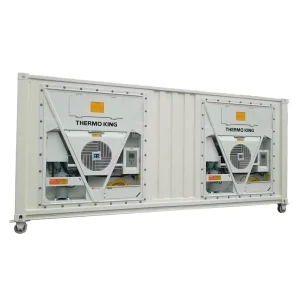 High-Quality The new blast reefer containers are certified by classification societies Manufacturers, FactoriesView Technical Details
-
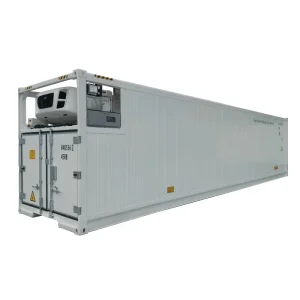 Famous New 40-foot high cube & 45-foot "Belt and Road" railway refrigerated container. Product, ProductsView Technical Details
-
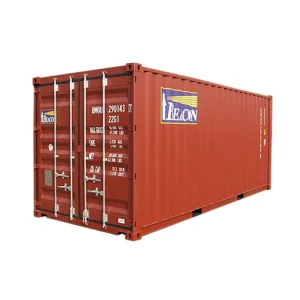 ODM 40ft New Certified Dry Shipping Container Pricelist, ExportersView Technical Details
-
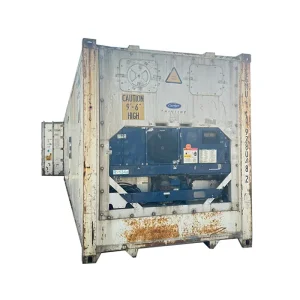 China Used 40ft High-Cube Certified Reefer Container Pricelist, ExporterView Technical Details
-
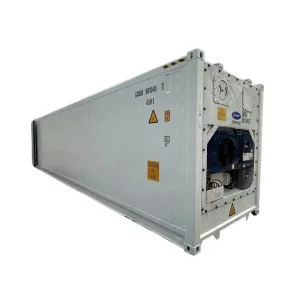 Buy Ninety Percent New Used 40ft HC Carrier Refrigerated Container Product, QuotesView Technical Details
-
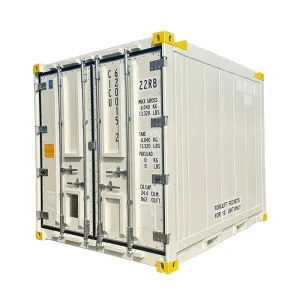 High-Quality New 10ft Certified Thermo King Freezer Container Exporter, ManufacturersView Technical Details
-
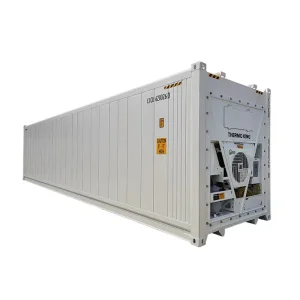 OEM New 40ft High-Cube Certified Reefer Shipping Cargo Container Pricelist, ProductView Technical Details
-
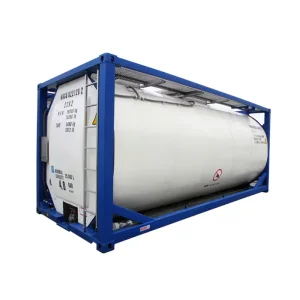 Buy ISO Standard 20ft Versatile Tank Container for Transport Chemicals Exporter, ProductView Technical Details
Blast Reefer Container Engineering: Beyond Holding Temperatures
In the contemporary cold chain ecosystem, standard refrigerated containers are engineered primarily for **holding** cargo temperatures between -25°C and +25°C. However, global food processing firms, oceanic fisheries, and biomedical manufacturers increasingly confront biological degradation scenarios that demand rapid heat removal: enter the industrial **Blast Reefer Container**.
Ice Crystallization Physics
When biological tissue (such as high-grade sashimi tuna, premium beef, or biological serums) cools between -1°C and -5°C, slow freezing generates large, sharp, extracellular ice crystals that puncture cell membranes. Upon thawing, this causes severe cell lysis, nutrient purge, moisture loss, and texture breakdown.
- Flash Freezing Velocity: Rapidly crosses the maximum crystallization zone in under 120 minutes.
- Cell Integrity Preservation: Forces micro-crystallization inside cells rather than macro-crystallization in intercellular spaces.
- Drip Loss Reduction: Reduces thaw-drip loss from >12% to <1.5%, retaining premium product mass.
High-Static CFM Air Dynamics
Blast reefer engineering departs drastically from conventional bottom-up T-bar laminar delivery. Instead, blast freezers integrate reinforced axial evaporator blowers generating high static pressure air circulation (often exceeding 6,500 to 10,000 m³/h CFM), forcing turbulent airflow across palletized cargo.
- Thermal Boundary Disruption: Eradicates the stagnant insulating air boundary layer enveloping warm product.
- Homogeneous Core Chilling: Eliminates core hot-spots in dense pallets through engineered ducting plenums.
- High-Velocity Evaporation: Optimizes finned heat-exchanger contact area for maximum enthalpy transfer.
Multi-Stage Cascaded Compressors
Standard marine reefers utilize single-stage scroll or reciprocating units incapable of sustaining extreme compression ratios without overheating. Factory-engineered blast reefers leverage two-stage economized scroll compressors or dual-circuit cascade systems (e.g., R404A/R507/R452A combined with sub-cooling economizers).
- Sub-Cooling Injection: Liquid injection cooling suppresses discharge temperatures at high compression ratios.
- Low-Evaporation Stability: Sustains full refrigeration capacity down to -40°C to -60°C saturated suction temp.
- Adaptive Defrost Algorithms: Demand-based hot gas injection bypass prevents evaporator icing during shock pull-downs.
Blast Reefer vs. Standard Reefer: Architectural Comparison
Procurement directors must distinguish between holding capability and active chilling capacity. The table below delineates the thermodynamic, mechanical, and insulation benchmarks that separate true industrial blast reefer containers from conventional logistics boxes.
| Performance / Engineering Parameter | Standard ISO 40ft Reefer | Low-Temp Holding Reefer (-35°C) | Industrial Blast Reefer Unit (-40°C to -60°C) |
|---|---|---|---|
| Primary Application Purpose | Pre-chilled cargo temperature holding | Storage of deep-frozen goods | Rapid shock-freezing of warm product core |
| Pull-Down Temperature Capability | +25°C to -25°C (over 24-36 hrs) | 0°C to -35°C (over 18-24 hrs) | +20°C to -40°C/ -60°C (in 4-8 hrs) |
| Refrigeration Capacity @ -30°C | ~3.8 kW to 4.5 kW | ~5.5 kW to 7.0 kW | 14.0 kW to 28.0 kW (High Latent Heat) |
| Compressor Architecture | Single-stage hermetic scroll | Semi-hermetic scroll with economizer | Two-stage screw or semi-hermetic compound compressor |
| Evaporator Airflow (Static CFM) | 3,000 - 4,500 m³/h (T-Bar floor) | 4,000 - 5,500 m³/h | 8,000 - 14,000 m³/h (Targeted overhead & blast ducts) |
| Insulation Thermal Conductivity (λ) | 0.024 W/(m·K) standard PUF | 0.022 W/(m·K) high density PUF | ≤ 0.019 W/(m·K) (Cyclopentane PUF + Vacuum Panels) |
| Electrical Power Demand | 380V/460V 3ph • 15 kVA | 380V/460V 3ph • 18-22 kVA | 380V/460V 3ph • 35-65 kVA (High-surge startup) |
| Interior Shell Material | Grade 304 food-grade stainless / aluminum | Grade 304 stainless steel lining | Grade 316/304 seam-welded washdown stainless |
VIP Hybrid Thermal Barriers
Thermal bridging in standard reefers causes massive energy dissipation when delta-T (ΔT) exceeds 70°C (e.g., +40°C ambient outside vs. -40°C blast inside). Our engineering integrates fumed silica Vacuum Insulation Panels (VIP) sandwiched within micro-cellular polyurethane foam, yielding near-zero thermal leakage.
Variable Frequency Drives (VFD)
Operating a shock-freezer on intermittent diesel gensets or variable port grids induces compressor stress. Factory-integrated VFD controllers modulate compressor motor speeds dynamically, smoothing starting inrush currents (soft starting) and matching power draw precisely to latent heat pull-down loads.
Automated De-Humidification
Shock freezing moist product introduced at warm temperatures introduces enormous airborne water mass that swiftly clogs evaporator fins. Our smart defrost systems utilize hot gas vapor injection coupled with air bypass dampers, executing a complete defrost cycle in 12 minutes without elevating cargo temperature.
Global Enterprise Sourcing Scenarios
International logistics operators, multi-national food processors, and pharmaceutical infrastructure contractors acquire blast reefer containers to resolve mission-critical cold chain vulnerabilities.
Deep Sea Pelagic Fishing
Tuna, swordfish, and Antarctic krill fleets require immediate at-dock or mothership freezing to -55°C to prevent histamine formation and dark muscle discoloration (myoglobin oxidation). Blast reefers provide modular, self-contained dockside freezing capacity.
Biopharma & API Logistics
Active pharmaceutical ingredients (APIs), mRNA vaccines, blood plasma, and biologics require certified -60°C environments with continuous audit trails compliant with FDA 21 CFR Part 11 and European GDP guidelines.
Peak Crop Harvest Surge
Seasonal fruits like fresh durian, organic berries, and high-value avocados encounter short harvest windows that overwhelm regional static cold storage. Modular containerized blast units offer deployable, scalable processing right at farm packing stations.
Remote Offshore & Mining Camps
Offshore exploration rigs and remote terrestrial mining camps face irregular replenishment schedules. Blast reefer units provide ruggedized, dual-temperature blast freezing and long-term provisions storage under harsh maritime salt-spray environments.
Classification Society Approvals & Manufacturing Metallurgy
Operating out of our manufacturing centers in Tianjin and Suzhou, CIMIC integrates four decades of metallurgical engineering, robotic welding, and cryogenic insulation processes with world-class maritime certifications.
Corten Steel & Marine Metallurgy
Outer frames and structural corner castings are forged from SPA-H Corten atmospheric corrosion-resistant steel. All critical load-bearing joints undergo non-destructive ultrasonic and magnetic particle weld testing before shot-blasting to SA 2.5 standard.
C5-M Heavy Industrial Coating
To resist 25+ years of offshore marine salt fog, each blast container undergoes a 4-tier coating cycle: zinc-rich epoxy primer (60μm), intermediate epoxy micaceous iron oxide (80μm), and acrylic polyurethane topcoat (50μm), exceeding ISO 12944 C5-M guidelines.
Hermetic Washdown Interiors
Interior wall liners are crafted from food-grade AISI 304 or 316 stainless steel with seamless TIG-welded floor pans. The entire chamber permits high-pressure hot water washdowns with chemical sanitizers without moisture ingress into the PUF insulation core.
Bureau Veritas (BV)
Type approval for ISO container structural integrity and thermal container efficiency under ISO 1496-2.
DNV 2.7-1 / EN 12079
Full offshore container certification for dynamic offshore hoisting and platform marine transit.
ATP Class FRC Approval
Certifying insulated bodies with heavy reinforced insulation for international transport of perishables.
CSC Safety Convention
Valid safety approval plates certifying compliance with stackability (9-high laden) and transverse racking.
Technology Roadmap: Next-Gen Cryogenic Reefer Engineering
The convergence of strict global F-gas regulations, energy efficiency benchmarks, and supply chain visibility mandates is fundamentally re-shaping container manufacturing.
Low-GWP & Natural Refrigerants
With Kigali Amendment quotas phasing down high-GWP HFCs (like R404A), our factory R&D center is leading field transitions to non-ozone depleting refrigerants including R452A (GWP 2140), R513A, and experimental transcritical CO2 (R744, GWP 1) circuits capable of cryogenic operations down to -50°C.
Satellite-Linked Telematics & AI
Every blast unit can be integrated with dual GSM/Iridium satellite IoT transceivers. Cloud algorithms continuously evaluate sensor data across 24 critical points (suction pressure, sub-cooling, defrost duration, return air CFM) to predict component failure prior to cargo risk and execute remote PTI testing.
Solar-Hybrid Clip-On Battery Integration
To reduce high diesel fuel consumption on long inland intermodal rail and road routes, new frame iterations feature structural roof recesses for aerodynamic flex-PV solar panels. Solar arrays trickle-charge on-board 48V LFP battery packs that sustain control electronics and low-speed ventilation during idle rail transits.
Engineering & Procurement FAQ
Technical clarity for cold chain logistics directors, marine fleet superintendents, and container fleet leasing executives.
Standard reefers are designed solely to maintain the temperature of cargo that has already been chilled or frozen before loading. If you load warm products (+15°C to +25°C) into a standard reefer, the unit will struggle for days, leading to thermal abuse and surface spoilage. A blast reefer features up to triple the refrigeration kilowatt capacity, oversized evaporator coils, and specialized blowers engineered to extract vast latent heat and freeze warm cargo down to -40°C in hours.
Due to multi-stage compressors and high-CFM blowers, industrial blast reefers typically operate on 3-phase 380V/460V 50/60Hz shore power or specialized container gensets. Running amperage ranges between 35A and 65A depending on compressor stage engagement. We recommend matching diesel gensets rated for at least 35kVA to 50kVA continuous output with electronic speed control to absorb high inrush starting currents.
Yes. In addition to standard ISO 20ft and 40ft High Cube frames, we provide OEM/ODM customization. This includes installing overhead stainless steel hanging carcass rails, internal roller conveyors, perforated airflow blast shelving, partitioned multi-zone temperature compartments, and roll-up quick-access doors to minimize air infiltration during unloading.
We configure blast containers with leading marine and industrial refrigeration platforms according to buyer spare-part preferences, including Carrier Transicold PrimeLINE/ThinLINE, Thermo King Magnum Plus, Daikin LXE series, as well as heavy-duty custom semi-hermetic Bitzer/Copeland compressor packs for dedicated ultra-low-temperature industrial duty cycles.
Every manufactured container undergoes a documented Pre-Trip Inspection (PTI), a 24-hour full-load thermal pull-down performance test, smoke-trace door gasket hermetic leak inspection, and electrical insulation dielectric testing. Complete inspection dossiers, video recordings, and classification certificates (BV, CCS, ISO) are verified prior to port loading.
Standard used reefers cannot achieve true blast freezing because their compressors and blowers are undersized. However, we offer certified refurbished "grade-A" used containers retrofitted with brand-new heavy-duty blast freezing machinery, delivering high shock-freezing efficiency at a substantially reduced capital expenditure.
Specialized Freight, Offshore & Cold Storage Products
Explore specialized roll-up reefers, offshore DNV equipment baskets, chemical tank containers, and heavy-duty meat hanging transport units ready for global shipping.
-
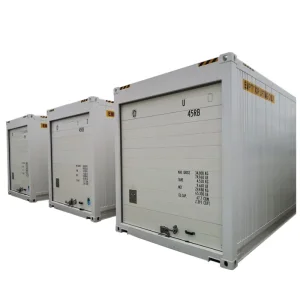 China 40ft High-Cube Roll Up Reefer Container Customized Shipping Containers Factory, ManufacturersView Technical Details
-
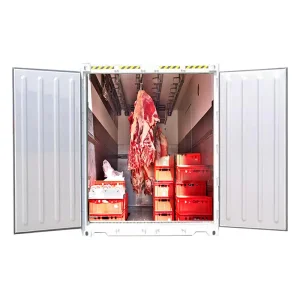 High-Quality Brand new hanging meat container for low temperature fresh transportation Pricelist, ProductsView Technical Details
-
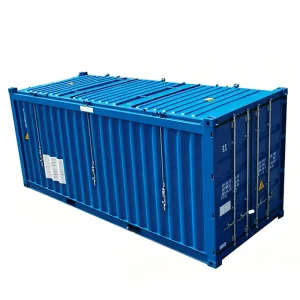 China 20ft New Hard Open Top Shipping Container Manufacturer, FactoriesView Technical Details
-
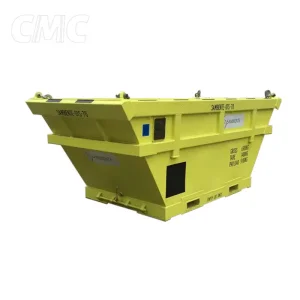 Famous DNV Certification Silt Basket Container Used in Offshore Operations Factories, ExportersView Technical Details
-
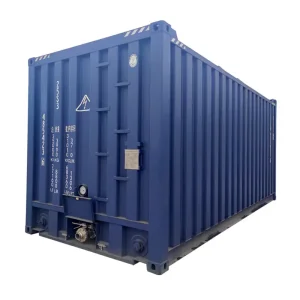 Buy New 20ft Square Liquid Container Factory, ProductView Technical Details
-
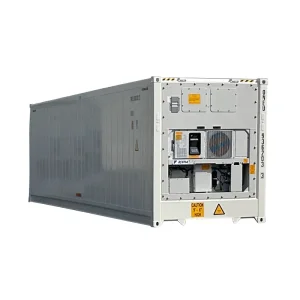 OEM New 40ft High-Cube Daikin Freezer Container Cold Storage Room Manufacturer, ProductsView Technical Details
-
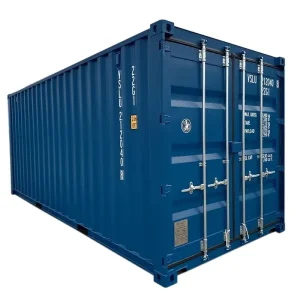 Buy New 20ft Double Door Dry Cargo Shipping Container Products, ManufacturersView Technical Details
-
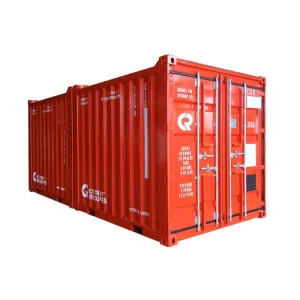 Buy New DNV Certification Offshore Dry Cargo Container Factory, ProductView Technical Details
Request Custom Blast Reefer Engineering Drawings & Quotations
Consult directly with CIMIC container engineering specialists in Tianjin and Suzhou. Share your required pull-down curve, product payload mass, power limitations, and operating trade route. We provide structural drawings, thermal calculation data, and delivery timetables within 24 hours.