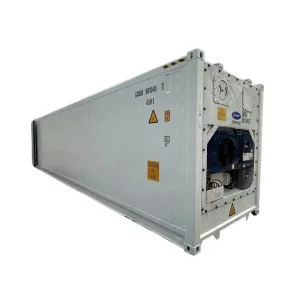
Factory Precision-Engineered Container Fleet
Pre-inspected, CSC-plated ISO intermodal inventory ready for immediate seaport dispatch and transnational containerized deployment.
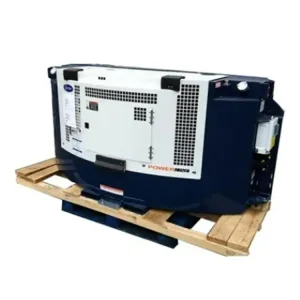
China Refrigerated Container Diesel Generator Exporter, Quotes
Request Quote & Specs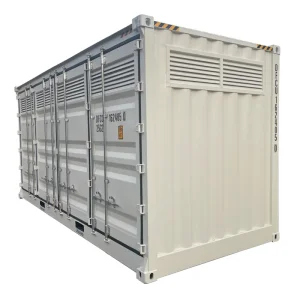
Famous 20FT High-cube Dangerous Goods Container Side Open Door with Ventilation Opening
Request Quote & Specs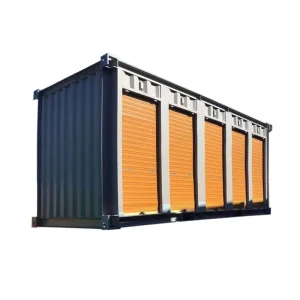
OEM New 20ft Storage Roll-Up Door Dry Cargo Container Pricelist, Product
Request Quote & Specs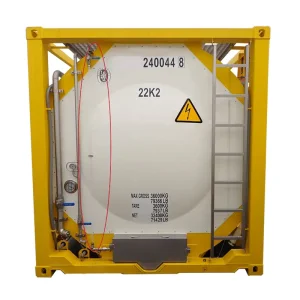
ODM 20ft Tank Container for Alcohol Manufacturer, Quotes
Request Quote & Specs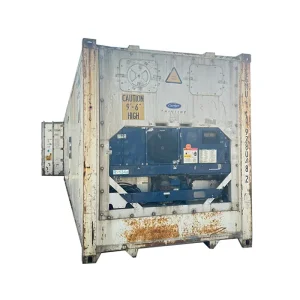
China Used 40ft High-Cube Certified Reefer Container Pricelist, Exporter
Request Quote & Specs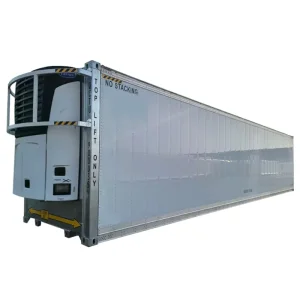
China Carrier X4-7300 Refrigeration and Electricity Integrated Container Exporter
Request Quote & Specs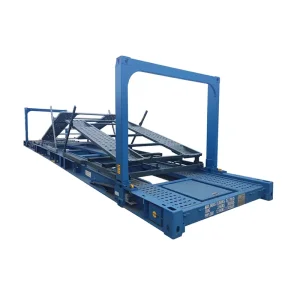
China New 20ft Car Carrier Container Special Container Exporter, Quotes
Request Quote & Specs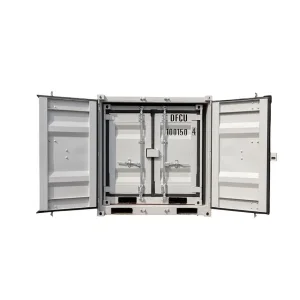
Nested Cargo Shipping Container (4ft to 12ft) Mini Storage Container Units
Request Quote & SpecsEngineering Architecture & High-Cube Structural Mechanics
The 40-foot intermodal freight container serves as the physical foundation of global supply chains. Sourcing factory-direct requires deep technical alignment with international structural criteria.
Corten-A (SPA-H) Structural Steel
Every structural rail, corner post, and corrugated panel is fabricated from atmospheric corrosion-resistant SPA-H Corten steel. This metallurgical formulation develops a self-healing rust-patina layer under oceanic atmospheric exposure, retarding oxidation rates and quadrupling the service life compared to standard carbon steels.
- Yield Strength: ≥ 355 MPa
- Tensile Strength: 490 - 630 MPa
- Minimum elongation rating: 15%
Robotic Seam Welding & Coating
Fabrication utilizes multi-axis automated submerged arc welding to ensure penetration depth across cross-members and ISO corner castings. Surface finishing undergoes shot-blasting to SA 2.5 standard, followed by an electrostatically applied zinc-rich primer and heavy-duty marine polyurethane topcoats exceeding 120μm dry film thickness.
- Shot blast cleanliness: ISO 8501-1 SA 2.5
- Zinc primer adhesion: ASTM D4541 ≥ 5 MPa
- Salt spray resistance: ASTM B117 > 1,000 hrs
Flooring & Load Transference Dynamics
Standard flooring incorporates 28mm 19-ply marine-grade Apitong/Keruing hardwood plywood or dense bamboo composite, treated chemically against phytosanitary risks per Australian Department of Agriculture (DAFF) mandates. Designed to withstand axle wheel loads up to 7,260 kg (16,000 lbs) as specified by ISO 1496-1 floor strength tests.
- DAFF / AQIS timber treatment certified
- Tested to 7,260 kg forklift axle loading
- Recessed galvanized lash rings rated to 1,500 kg
Chinese Manufacturing Ecosystem & Port Cluster Advantages
Over 90% of global intermodal equipment is manufactured along China's coastal industrial belt. Leveraging our direct factory-to-berth pipeline in Tianjin and Suzhou unlocks structural purchasing advantages for multinational logistics enterprises.
Vertical Steel Integration
Our manufacturing facilities operate direct procurement contracts with Baosteel, HBIS, and Shougang, mitigating spot market volatility in hot-rolled Corten-A strip coils. This integrated industrial cluster guarantees continuous production uptime, tighter metallurgical tolerance checks, and priority mill rolling schedules during high-demand cyclical peak seasons.
Port-Side Berth Optimization
Located within 100 kilometers of Tianjin Xingang Port and Shanghai/Taicang maritime corridors, our factory depots eliminate expensive interior dry drayage costs. Containers transfer directly from the finishing and paint curing lines to deep-water staging yards, facilitating streamlined "One-Way Free-Use" repositioning programs that eliminate deadhead repositioning fees.
Tier-1 Component Ecosystem
Every specialized refrigeration compressor, generator set, and secure locking assembly is sourced from top-tier original equipment manufacturers (Daikin, Carrier, Thermo King, Henred Fruehauf). Sourcing direct gives global fleet buyers access to bulk OEM pricing alongside synchronized spare part warranties across all continents.
Regulatory Frameworks, CSC Plate Auditing & Testing Rigor
Purchasing 40ft containers directly from an accredited manufacturer guarantees total adherence to intermodal safety covenants, customs agreements, and environmental mandates.
| Standard / Regulation | Certifying Body | Technical Verification Scope | Compliance Mandate |
|---|---|---|---|
| CSC Safety Approval | Bureau Veritas / ABS / CCS | 9-high stacking load tests (192,000 kg), racking, transverse shear testing | Mandatory for Ocean Shipping |
| ISO 668 & ISO 1496-1 | International ISO Audits | Corner casting dimensions, external envelope, floor deflection ratings | Intermodal Equipment Global Standard |
| TIR Customs Convention | UN Economic Commission | Hinge pin security, tamper-evident door locking rod seals, weld seals | Cross-Border Sealed Transit |
| DNV 2.7-1 / EN 12079 | DNV Maritime | Dynamic offshore drop tests, pad-eye lifting integrity, low-temp charpy V-notch | Offshore & Marine Operations |
| USDA / FDA Food Grade | Cold Chain Authorities | Interior stainless steel (SUS 304), food-contact food safety coatings, non-toxic sealant | Reefer Perishable Cargo |
The Factory Pre-Shipment Inspection Protocol
Every newly rolled container undergoing final quality validation must clear an automated high-intensity light leak inspection, door gasket water tightness testing via 2.5 bar pressurized water nozzles, and tensile verification on corner castings before receiving serialized CSC approval plates. Third-party surveying certificates from Lloyd's Register (LR), Bureau Veritas (BV), or the American Bureau of Shipping (ABS) are issued concurrently with bills of lading.
Global Industrial Deployment & Specialized Asset Applications
Beyond traditional intermodal maritime shipping, 40-foot standard and high-cube containers serve as the structural envelope for cutting-edge engineering and specialized freight sectors.
Battery Energy Storage Systems (BESS)
Utility-scale battery projects utilize custom reinforced 40ft High Cube containers equipped with thermal insulation, built-in explosion relief hatches, automated fire suppression ducting (Novec 1230 / FM200), and integrated liquid cooling loops to house lithium-iron-phosphate (LFP) energy storage banks.
Pharma & Ultra-Low Cold Chain
Fitted with high-efficiency Carrier Transicold, Thermo King, or Daikin digital units, 40ft reefer containers maintain precision climates between -35°C and +30°C. Polyurethane foam insulation and extruded aluminum T-bar flooring ensure temperature distribution within ±0.5°C for biologics, seafood, and fresh agricultural produce.
Modular Architecture & Data Centers
Structural rigidity and standardized stacking make 40HC steel shells the preferred base for mobile edge data centers, field hospitals, military forward operating stations, and remote mining worker accommodation complexes in Australia, South America, and Sub-Saharan Africa.
Chemical & Flammable Dangerous Goods
Engineered with side-access roller doors, explosion-proof ventilation, spark-arresting louvers, and secondary liquid retention bunds, our customized hazardous cargo units comply with IMDG (International Maritime Dangerous Goods) Code class requirements.
Emerging Technology Trends & The Next-Gen 40ft Container
Container manufacturing is undergoing a transformation driven by telematics, environmental mandates, and circular lifecycle economics.
Satellite-Linked Smart Telemetry
Modern fleets are moving toward real-time edge monitoring. Integrated solar-powered door sensors, GPS tracking modules, accelerometer shock loggers, and interior humidity/temp telemetry report location and structural impact data directly via low-orbit satellite constellations.
Low-GWP & Electric Microchannel Reefers
Decarbonization standards in the EU and North America require refrigeration machinery utilizing low global warming potential (GWP) refrigerants such as R-513A and natural CO2 (R-744), delivering energy efficiency improvements of up to 35% compared to legacy R-134a systems.
Zero-VOC Coatings & Composite Floor Cores
To reduce life-cycle emissions, manufacturing lines are adopting waterborne zero-VOC primers and solventless coatings. Renewable, fast-growth bamboo-fiber composite flooring replaces traditional tropical hardwoods, matching steel floor endurance while lowering environmental impact.
Standard vs. High-Cube 40ft Technical Specifications
Critical comparative dimensional analysis and load thresholds for procurement directors, logistics engineers, and vessel planners.
| Dimensional Metric | 40ft General Purpose (40' GP) | 40ft High Cube (40' HC) | 40ft High Cube Reefer (40' HCR) |
|---|---|---|---|
| External Dimensions (L × W × H) | 12,192 × 2,438 × 2,591 mm (40' 0" × 8' 0" × 8' 6") |
12,192 × 2,438 × 2,896 mm (40' 0" × 8' 0" × 9' 6") |
12,192 × 2,438 × 2,896 mm (40' 0" × 8' 0" × 9' 6") |
| Internal Dimensions (L × W × H) | 12,032 × 2,352 × 2,393 mm | 12,032 × 2,352 × 2,698 mm | 11,583 × 2,290 × 2,557 mm |
| Door Opening (W × H) | 2,340 × 2,280 mm | 2,340 × 2,585 mm | 2,290 × 2,569 mm |
| Cubic Capacity | 67.7 m³ (2,390 cu.ft) | 76.3 m³ (2,694 cu.ft) | 67.8 m³ (2,394 cu.ft) |
| Tare Weight (±2%) | 3,730 kg (8,223 lbs) | 3,900 kg (8,598 lbs) | 4,600 kg (10,141 lbs) |
| Max Payload Capacity | 26,750 kg (58,973 lbs) | 26,580 kg (58,600 lbs) | 29,400 kg (64,815 lbs) |
| Max Gross Weight (Rating) | 30,480 kg (67,200 lbs) | 30,480 / 32,500 kg | 34,000 kg (74,950 lbs) |
Enterprise Procurement Questions & Answers
Essential guidance on customs documentation, factory MOQs, CSC plate validity, and global fleet supply logistics.
What is the distinction between factory-direct "One-Trip" and brand-new container units?
"Brand New" containers are manufactured and held in factory yards, never loaded with freight. "One-Trip" units are built to identical ISO standards, loaded once with non-hazardous cargo in China, and shipped to destination ports (e.g., Rotterdam, Houston, Hamburg). This one-way trip covers the sea freight cost, providing buyers near-mint equipment without empty repositioning expenses.
How long is a manufacturer CSC safety plate valid for international shipping?
Every container leaving our production line carries a stainless steel International Convention for Safe Containers (CSC) plate valid for 5 years (60 months) from the factory inspection date. After this initial 5-year period, units can be re-certified under the Approved Continuous Examination Program (ACEP) or through physical periodic surveys at intervals up to 30 months.
Can our enterprise request custom structural modifications (OEM/ODM) at the factory level?
Yes. As a primary manufacturer, we provide tailored engineering services prior to stamping and stamping assembly. Common customizations include full side-opening bifold doors, personnel roll-up doors, heavy-duty insulated interior paneling, specialized HVAC cutouts, interior lashing tracks, customized corporate RAL paint colors, and silk-screened fleet logos applied during the coating stage.
What is the Minimum Order Quantity (MOQ) for custom-built 40ft containers?
For standard dry freight 40ft GP/HC containers in stock colors, our production lines accept orders starting from 1 to 5 units. For specialized OEM builds, side-door modifications, or non-standard paint configurations, the production run minimum is typically 10 units to support automated jig setups and custom material sourcing.
How does a Shipper Owned Container (SOC) reduce ocean shipping detention charges?
Purchasing containers directly as Shipper Owned Containers (SOC) rather than relying on carrier inventory (Carrier Owned Containers - COC) gives logistics managers complete control over equipment turnaround times. Demurrage and detention fees at congested destination terminals are eliminated because the shipping line is only providing slot space, not leasing the steel box.
Which marine classification society certificates are supplied with each export shipment?
Our container production is audited and certified by international classification societies based on client requirements. Each batch can be delivered with verification paperwork and stamped data plates from Bureau Veritas (BV), the American Bureau of Shipping (ABS), Lloyd's Register (LR), or the China Classification Society (CCS).
Custom Engineering & Special Intermodal Equipment
Explore heavy-payload, refrigerated railway, and special side-access containers built for demanding intermodal corridors.
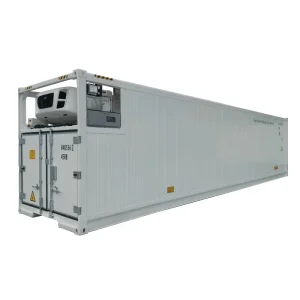
Famous New 40ft High Cube & 45ft "Belt and Road" Railway Reefer Container
Request Quote & Specs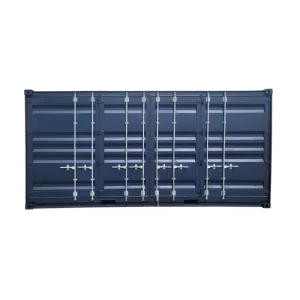
High-Quality New 20ft Customized Side Door Dry Cargo Shipping Container
Request Quote & Specs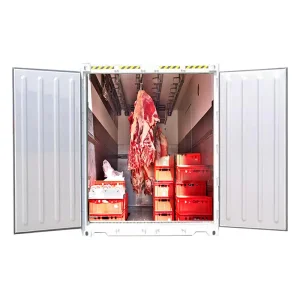
Brand New Hanging Meat Container for Low Temperature Transportation
Request Quote & Specs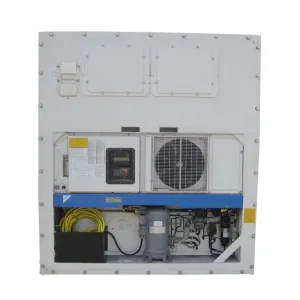
Refrigeration Equipment / Cooling Unit for Reefer Containers
Request Quote & Specs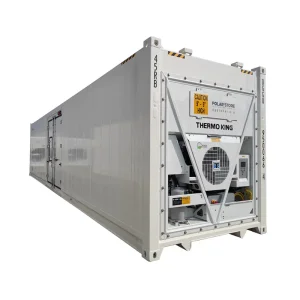
Famous 40ft High-Cube Side Open Door Reefer Container Manufacturer
Request Quote & Specs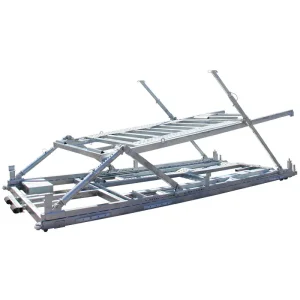
China Vehicle Transport Rack Special Container Exporters
Request Quote & Specs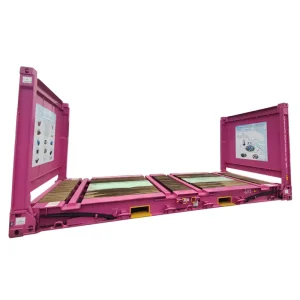
ODM New 20ft Platform Frame Container Pricelist, Exporters
Request Quote & Specs