
Certified Cold Chain, Tank & Intermodal Container Units
Fabricated in accordance with ISO container dimensional envelopes, equipped with heavy-duty structural corner castings and precision-engineered base assemblies.

Famous TK SLXI Mobile power generation trailer cooling unit Product, Manufacturers
Configure & Inquiry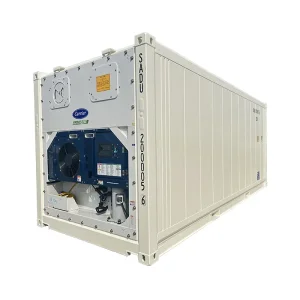
High-Quality New 40ft High Cube Carrier Refrigerator Freezer Cold Room Product, Exporters
Configure & Inquiry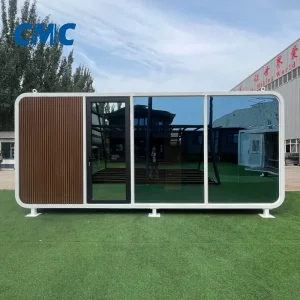
Famous 20ft Prefab Container House Flat Pack Modular House Office Tiny House Outdoor apple Cabin Office Pod Garden Office Pod Manufacturer, Product
Configure & Inquiry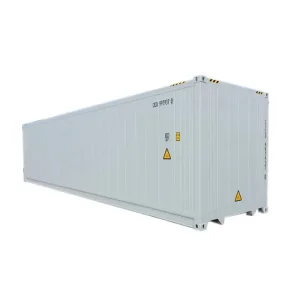
Buy New 40ft High Cube Thickened Foam Insulation Container Factory, Exporters
Configure & Inquiry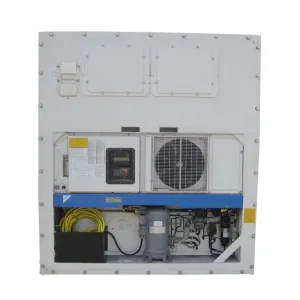
Buy Refrigeration Equipment /Cooling Unit For Refrigerated Containers Products, Exporters
Configure & Inquiry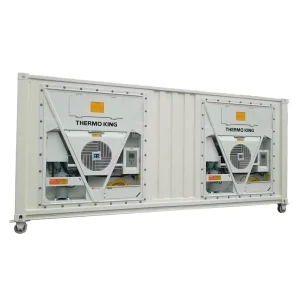
High-Quality The new blast reefer containers are certified by classification societies Manufacturers, Factories
Configure & Inquiry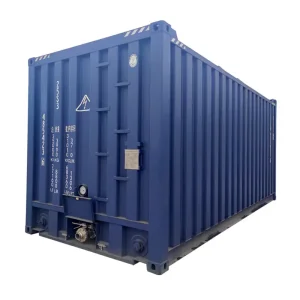
Buy New 20ft Square Liquid Container Factory, Product
Configure & Inquiry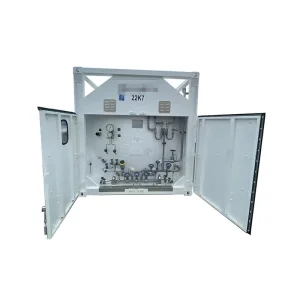
Famous T75 20ft Cryogenic Liquid Tank Container Products, Exporters
Configure & InquiryDeconstructing "Container Feet": Corner Castings, Structural Mounts & Foundation Interfaces
Understanding the engineering geometry, metallurgy, and stress distribution mechanisms governing ISO 1161 load points and containerized structures.
ISO 1161 Standard Corner Castings
The universal anchor of global logistics. A standard container utilizes 8 discrete corner blocks (Top-Left, Top-Right, Bottom-Left, Bottom-Right). The "bottom feet" serve as the ultimate load transmission points capable of supporting stacks exceeding 192,000 kg (up to 9-high container stacking) with precision-machined aperture geometry for twistlocks.
Heavy-Duty Leveling & Jacking Feet
For stationary conversions—such as modular container houses, battery energy storage systems (BESS), and mobile refrigeration cold rooms—integrated mechanical or hydraulic leveling legs bolt directly into bottom ISO casting apertures. They provide up to 300 mm of height variance compensation while isolating the Corten steel understructure from ground moisture.
Intermodal Twistlock Interface Blocks
In road trailer and railway wagon configurations, container feet integrate with chassis twistlocks. Our precision-forged weldable cast steel bases (SCW480) ensure fatigue-resistant cyclic loading, absorbing horizontal shear stresses up to 150 kN generated during emergency rail shunting and high-speed highway cornering.
Global Commercial Ecosystem for Container Feet & Foundation Systems
Analyzing procurement demands across maritime logistics, energy transition infrastructures, and prefabricated modular engineering.
The global demand for container feet and corner hardware has fundamentally transformed over the past decade. Historically restricted to standard dry freight maritime trade governed by the Bureau Veritas (BV) and ISO standards, container corner castings and bottom support legs are now critical procurement nodes for three expanding modern industries: utility-scale modular data centers, renewable battery energy storage systems (BESS), and rapid-deployment architectural housing.
In traditional shipping contexts, an ISO 668 intermodal container transfers 100% of its stacked weight through eight corner points. When containers are stacked 6 to 9 units high on a post-Panamax container ship, the lowest container feet withstand extreme dynamic crushing forces exceeding 85 metric tons per corner. In static architectural and equipment shelter applications, poor foundation feet design is the single largest point of failure, causing differential settling, structural warping, door misalignment, and compromised weatherproofing. For industrial procurement officers, buying directly from ISO 9001 and classification society-certified factories guarantees that steel chemistries, dimensional casting apertures, and stress-relieving heat treatments adhere strictly to ISO 1161 standards.
| Application Sector | Primary Structural Requirement | Standard Steel Grade | Key Performance Threshold |
|---|---|---|---|
| Intermodal Maritime Logistics | Extreme vertical stacking & cyclic sea motion dynamic loads | SCW480 / ASTM A27 Grade 70-36 | 848 kN compressive load / ISO 1161 twistlock aperture |
| Battery Energy Storage (BESS) | Seismic dampening & heavy uniform ground load dispersion | Q355D / Cast Steel with Galvanized Footing | Zone 4 seismic survivability; zero-deflection footing |
| Offshore Marine Exploration | Salt-spray corrosion endurance & dynamic lifting stress | DNV 2.7-1 / EN 12079 Special Grade Steel | Charpy impact 27J at -20°C; 3.0x design safety factor |
| Modular Prefab Architecture | Micro-height adjustment & ground moisture barrier isolation | Hot-Dip Galvanized Structural Alloy / Polyurethane Pad | Up to 15-ton static capacity per foot; ±150mm stroke |
Chinese Foundry Dominance: Structural Cost Efficiency & Supply Chain Resilience
Why global equipment manufacturers source engineered container corner castings and leveling systems directly from specialized Chinese industrial clusters.
Vertical Foundry Integration
With operations centered in Tianjin and the Yangtze River Delta industrial belts, Chinese foundries maintain full vertical integration—from electric arc furnace (EAF) scrap recycling and precision automated sand casting to multi-axis CNC aperture milling. This eliminates intermediary supply friction, achieving raw-material-to-finished-component cycle times under 14 days.
Cluster Tooling & Mold Precision
Specialized mold clusters in Hebei and Jiangsu support high-volume manufacturing of standard ISO 1161 castings while accommodating bespoke OEM modifications (such as reinforced side pads, lifting lugs, and built-in load cells). Tooling turnaround for custom foundation interfaces takes less than 3 weeks compared to 10+ weeks in Western domestic markets.
Deep-Water Port Proximity
With factory infrastructure located roughly 100 km from Tianjin Port and Shanghai Port hubs, supply chains bypass trans-shipment bottlenecks. High-tonnage cast steel components move seamlessly directly into container vessels, mitigating inland trucking expenses and securing reliable shipping schedules across transpacific and European freight lanes.
Localized Application Scenarios: Where Container Feet Dictate Performance
Engineered implementations across diverse environments, from arctic oilfields to seismic-prone coastal infrastructure.
Remote Battery Energy Storage (BESS)
In high-density battery energy containers deployed across Australian deserts and Texas solar farms, specialized base feet incorporate elastomeric vibration isolation pads. These feet prevent ground-borne harmonic resonance from damaging sensitive lithium-ion cells while compensating for uneven gravel foundation pads.
Offshore Drilling Exploration (DNV 2.7-1)
North Sea offshore operations require container feet cast with enhanced low-temperature toughness steel. Capable of surviving rough ship-to-platform dynamic snatch lifts at wave heights above 2.5 meters, these corner castings undergo non-destructive magnetic particle examination (MPI) and 100% radiographic verification.
Rapid Modular Medical Facilities
For temporary clinics and disaster-relief shelters, telescopic screw-jack feet inserted into lower ISO castings allow single-operator mechanical leveling on unpaved terrain. This eliminates costly concrete pouring, allowing deployable hospital pods to achieve perfect horizontal leveling in minutes.
Cold-Chain Food Logistics Hubs
Refrigerated cargo containers stationed in port distribution centers rely on thermal-break container feet. Engineered high-density polymer spacers between the Corten steel casting and the foundation curb thermal bridging, minimizing energy losses and preventing sub-floor frost heave.
Next-Generation Engineering Roadmap: The Evolution of Container Feet
Anticipating the technological shifts in materials science, Internet-of-Things integration, and automated container handling.
Ultra-Tough Cryogenic Alloys
Transitioning to micro-alloyed nickel steels capable of retaining Charpy V-notch impact toughness below -60°C for extreme Arctic shipping routes and LNG infrastructure.
IoT Smart Corner Castings
Embedding piezoelectric strain sensors and RFID tags directly within non-critical web areas of corner castings to deliver real-time container tare and gross load analytics.
Graphene-Zinc Nano Coatings
Replacing heavy sacrificial hot-dip galvanizing with thin-film graphene silicate polymers, extending salt-spray corrosion resistance past 3,000 continuous hours (ISO 12944 C5-M).
Self-Aligning Aperture Geometries
Developing chamfered internal guides that assist autonomous straddle carriers and automated crane spreaders in locking twistlocks with zero human intervention.
Rigorous Classification & Localization Compliance Framework
Every corner casting and custom foot is documented, batch-tested, and certified under leading international maritime standards.
Bureau Veritas (BV) Certified
Our foundries and container manufacturing facilities hold BV type approval certification. Material heat analysis and dimensional conformance audits guarantee that raw billets and final castings strictly follow maritime strength protocols.
DNV & EN 12079 Standards
For specialized offshore dry freight and mud skip containers, our corner feet satisfy DNV 2.7-1 rules. Batch traceability guarantees each casting can be tied directly to mill test reports (MTR EN 10204 3.1) and ultrasonic NDT records.
ISO 9001:2015 Manufacturing
Decades of manufacturing discipline back every production run. Dimensional tolerance testing ensures the critical 124 mm × 63 mm bottom casting hole profile achieves sub-millimeter precision, guaranteeing effortless twistlock pin entry.
Dry Cargo, Offshore, Insulated & Special Container Solutions
Engineered with high-tensile bottom structural corners, heavy crossmembers, and custom access doors for specialized global missions.
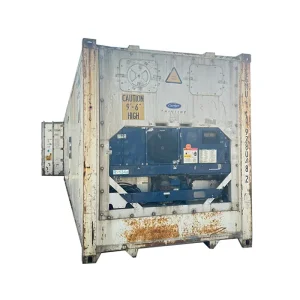
China Used 40ft High-Cube Certified Reefer Container Pricelist, Exporter
Configure & Inquiry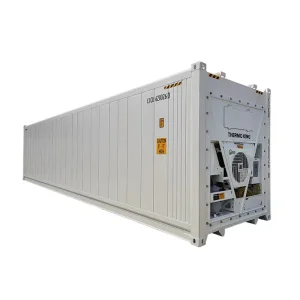
OEM New 40ft High-Cube Certified Reefer Shipping Cargo Container Pricelist, Product
Configure & Inquiry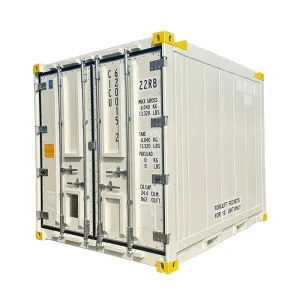
High-Quality New 10ft Certified Thermo King Freezer Container Exporter, Manufacturers
Configure & Inquiry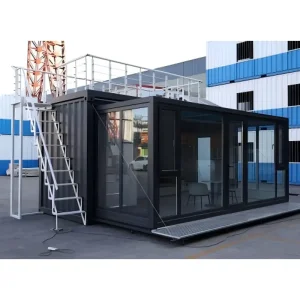
Famous 20ft Foldable Prefab Modular Homes Mobile Expandable Container House Prefabricated House with Bathroom Manufacturer, Exporters
Configure & Inquiry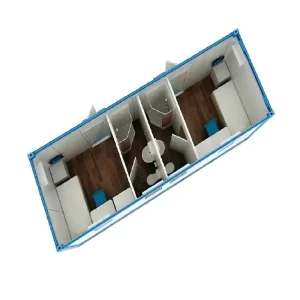
Famous 20ft 40ft Standard Size Accommodation Modular House Container Exporter, Products
Configure & Inquiry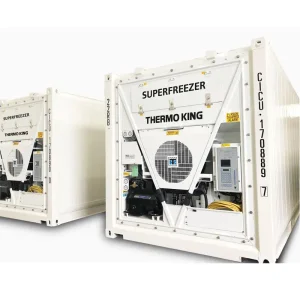
OEM New Deep Freezer Refrigerator Container For Sale Factory, Quotes
Configure & Inquiry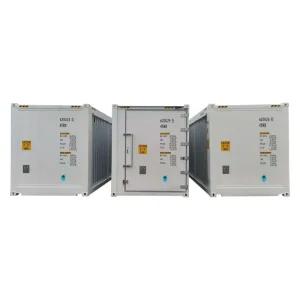
China OEM 40ft High-Cube Customized Three-in-One Combination Reefer Storage Container Manufacturer, Quotes
Configure & Inquiry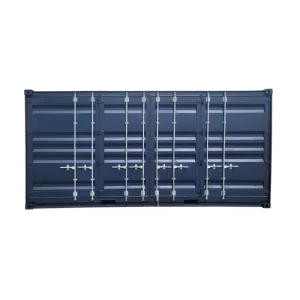
High-Quality New 20ft Customized Side Door Dry Cargo Shipping Container Factory, Product
Configure & InquiryFrequently Asked Questions: Container Feet, Castings & Foundation Engineering
Expert technical insights for naval architects, civil engineers, modular home builders, and global logistics buyers.
What exact steel metallurgy is required for ISO 1161 container corner casting "feet"?
How do container bottom feet differ geometrically from top corner castings?
Can stationary container homes and equipment shelters be leveled using the corner casting feet?
What testing procedures verify that container feet won't fail under heavy stacking?
Why is Corten steel compatibility critical when welding replacement feet onto a container?
What is the standard lead time and MOQ when purchasing container feet directly from Chinese factories?
Partner Directly with Tianjin Cimic Imp&Exp Co., Ltd.
Operating since 1983, CIMIC provides certified dry cargo, refrigerated, insulated, and offshore container engineering. Our technical team assists global engineering contractors and intermodal fleet operators with container feet specifications, full CAD drawing validation, and factory-direct volume pricing.