
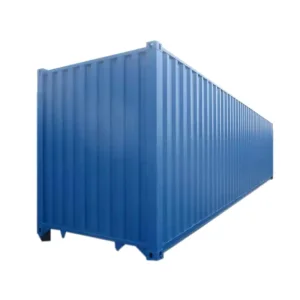
Featured Fleet Inventory · Part 1
Primary Industrial Logistics Product Selection
Direct manufacturer access to heavy-duty dry vans, atmospheric gas containers, classified reefer modules, and certified offshore engineering equipment.
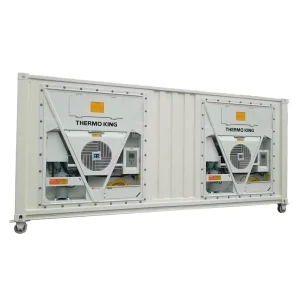
High-Quality The new blast reefer containers are certified by classification societies Manufacturers, Factories
Procure Unit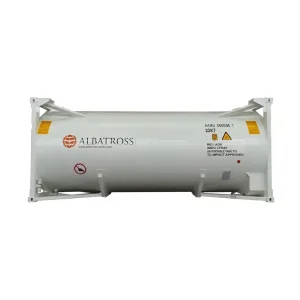
China 25000 Liters ISO 20ft Gas Tank Container for Sale Product, Factories
Procure Unit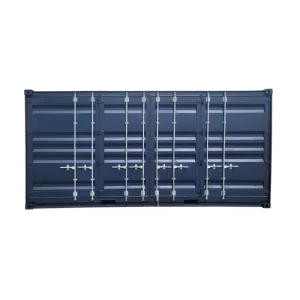
High-Quality New 20ft Customized Side Door Dry Cargo Shipping Container Factory, Product
Procure Unit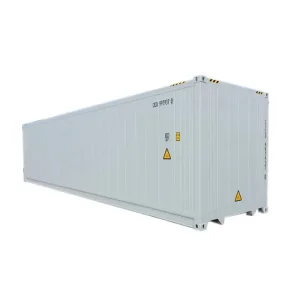
Buy New 40ft High Cube Thickened Foam Insulation Container Factory, Exporters
Procure Unit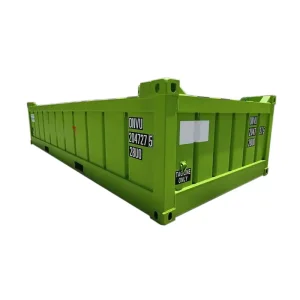
ODM New DNV Certification Offshore Half-Height Open Top Container Products, Exporters
Procure Unit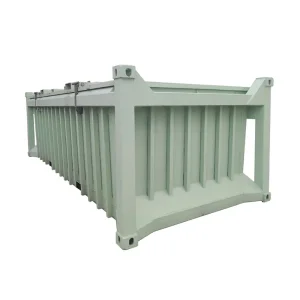
Buy New Half Height Ore Carrier Container Offshore Container Manufacturers, Quotes
Procure Unit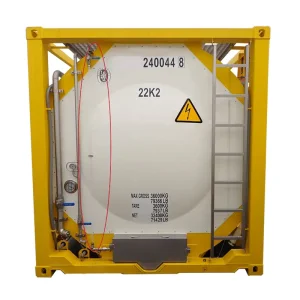
ODM 20ft Tank Container for Alcohol Manufacturer, Quotes
Procure Unit
Industry Macro Analysis · Strategic Sourcing
Global Enterprise Procurement Dynamics for Logistics Containers
Evaluating Total Cost of Ownership (TCO), capital lifecycle efficiency, and supply chain resilience across Fortune 500 freight forwarders, energy conglomerates, and cold-chain providers.
Fleet Standardization & Asset Velocity
Global procurement teams prioritize strict dimensional tolerances compliant with ISO 668 and ISO 1496-1 to ensure automated ship-to-shore gantry cranes, reach stackers, and rail well cars operate without structural jamming or handling bottlenecks.
By standardizing on high-tensile Corten-A weathering steel and universal twist-lock corner castings, carriers minimize non-revenue dwell time across primary transshipment terminals worldwide.
- Uniform corner casting wall thickness (≥11.5mm)
- Zero-twist structural deflection under 9-high laden stacking
- Optimized Tare-to-Payload ratios for reduced drayage burn
Total Cost of Ownership (TCO) Economics
Procurement directors must calculate beyond initial FOB unit purchase prices. Strategic TCO evaluation models evaluate initial capital expenditure against a 15-to-20-year operational life cycle, incorporating dry-dock refurbishments, marine paint recasting, and floor panel swaps.
Investing in environmentally stable apitong hardwood flooring or bamboo composite planks treated under Australian Quarantine guidelines prevents pest-induced customs detentions.
- Triple-coat zinc-rich epoxy + polyurethane marine coatings
- Degreased hot-rolled steel surface preparation (SSPC-SP10/Sa 2.5)
- Sub-0.5% yearly corrosion deterioration under C5-M marine exposure
Regulatory Risk Hedging & ESG Metrics
Procuring logistics containers demands uncompromising validation against international maritime codes. Failure to verify valid CSC (Convention for Safe Containers) safety approval plates leads to immediate detention by port state control inspectors.
Furthermore, leading international enterprise buyers demand low-VOC waterborne coatings and sustainably certified timber flooring to satisfy mandatory corporate ESG supply chain sustainability disclosures.
- CSC Safety Plate approval supervised by BV, ABS, or LR
- Low-VOC coating formulations cutting greenhouse emissions
- FSC-certified or lab-formulated synthetic sustainable floorboards
42+ Years
Industrial Manufacturing Legacy (Since 1983)
100 km
Deepwater Seaport Proximity (Tianjin & Suzhou)
34,000 kg
Max Gross Weight Capacity Rating (High-Cube)
100% CSC / BV
Classification Society Certification Guarantee
Sector Engineering Solutions
Macro Industrial Solutions Engineered per Application
Purpose-built containerized hardware addressing complex thermal stability, high-density bulk payload distribution, and severe offshore dynamic forces.
Intermodal Rail & Ocean Dry Freight
Standard 20GP, 40GP, and 40HC dry cargo boxes engineered for high-frequency transshipment across maritime container ships, standard rail wagons, and road semi-trailers.
Reinforced front walls, 270-degree swing doors with anti-rack EPDM gaskets, and high-strength roof bows safeguard cargo against extreme weather and dynamic kinetic shifts.
- High-yield Corten SPA-H structural steel
- Dual-end and full side-opening custom options
- Customized internal lashing rings rated to 2,000 kg
Pharmaceutical & Perishables Cold Chain
Blast freezers and precision reefer units integrated with Carrier Transicold, Daikin, or Thermo King machinery. Equipped with non-ozone-depleting cyclopentane polyurethane foaming cores.
T-bar aluminum extruded sub-flooring channels conditioned air evenly through palletized loads to guarantee constant ±0.25°C thermal stability for vaccines and fresh produce.
- Temperature range: -40°C to +30°C continuous
- 304 food-grade stainless steel interior lining
- Digital telematics dataloggers with remote modem alert
Hazardous Chemicals & Gas UN Portable Tanks
20ft ISO tank containers built to ASME Section VIII and IMDG Type T11/T50 standards for bulk flammable liquids, atmospheric gases, food-grade spirits, and potable water supply.
Stainless steel 316L pressure vessels equipped with steam heating jackets, rockwool thermal insulation, and multi-stage rupture disc relief valves prevent hazardous vapor release.
- Working pressure configurations up to 22.0 Bar
- Full ADR, RID, US-DOT, and IMDG compliance
- Electropolished sanitary inner surface finishes
Offshore Exploration & DNV 2.7-1 Baskets
Engineered for hazardous oilfield environments and harsh maritime crane lifting where significant dynamic amplification forces occur during offshore supply vessel (OSV) transfers.
Certified under DNVGL-ST-E271 (DNV 2.7-1) and EN 12079, featuring 4-point wire rope lifting slings, Charpy impact-tested structural steel, and internal tie-downs for drill collars.
- Half-height open tops and long tool baskets
- Extreme design ambient temperature down to -20°C
- Independent third-party NDT weld inspection
Engineering Specifications
ISO Dimensional Blueprint & Payload Technical Matrix
Verified physical structural parameters, payload boundaries, and volume capacities across primary logistics container classes to eliminate planning discrepancies.
| Equipment Designation | External Dimensions (L×W×H) | Internal Clearances (L×W×H) | Max Gross Mass (M.G.W.) | Tare Weight | Max Payload Capacity | Internal Cube | Standard Certifications |
|---|---|---|---|---|---|---|---|
| 20ft Standard Dry (20GP) | 6,058 × 2,438 × 2,591 mm | 5,898 × 2,352 × 2,393 mm | 30,480 kg (67,200 lbs) | 2,230 kg | 28,250 kg | 33.2 m³ (1,172 cu.ft) | ISO 1496-1 / BV |
| 40ft High Cube Dry (40HC) | 12,192 × 2,438 × 2,896 mm | 12,032 × 2,352 × 2,698 mm | 32,500 kg (71,650 lbs) | 3,900 kg | 28,600 kg | 76.4 m³ (2,698 cu.ft) | ISO 1496-1 / ABS |
| 40ft High Cube Reefer (40RH) | 12,192 × 2,438 × 2,896 mm | 11,584 × 2,290 × 2,555 mm | 34,000 kg (74,950 lbs) | 4,480 kg | 29,520 kg | 67.8 m³ (2,394 cu.ft) | ISO / ATP / BV |
| 20ft ISO Tank (UN T11/T14) | 6,058 × 2,438 × 2,591 mm | Cylindrical Shell Dia: 2,400 mm | 36,000 kg (79,366 lbs) | 3,650 kg | 32,350 kg (25,000 L) | 25,000 Liters | ASME VIII / IMDG |
| Offshore Basket / Half-Height | 6,058 × 2,438 × 1,280 mm | 5,860 × 2,240 × 990 mm | 18,000 kg (39,680 lbs) | 2,900 kg | 15,100 kg | 13.0 m³ (459 cu.ft) | DNV 2.7-1 / EN 12079 |
Future Engineering Trajectory
Next-Generation Technology Roadmap & Decarbonization
How the integration of low-carbon metallurgy, IoT asset visibility, and automated robotic manufacturing is revolutionizing modern freight hardware.
IoT Telematics & Autonomous Condition Sensors
The industry is transitioning from passive steel boxes to intelligent cyber-physical logistics assets. Solar-powered telematics gateway devices embedded into container header bars transmit real-time telemetry via dual-mode cellular and satellite constellations.
Shippers receive uninterrupted real-time tracking covering geofenced coordinates, internal door breach events, severe 3-axis G-force impact shocks, and humidity thresholds.
- Continuous GPS / Galileo / Beidou multi-GNSS fix
- Reefer remote automated pre-trip inspections (e-PTI)
- Real-time atmospheric monitoring (CO2, O2, Ethylene)
Near-Zero Carbon Steel & Eco-Foam Insulation
To support corporate Scope 3 emissions reductions, modern production lines integrate electric arc furnace (EAF) Corten steel manufactured with scrap recycling and green hydrogen reduction, cutting embodied carbon by over 45%.
Reefer containers now replace conventional blowing agents with water-blown cyclopentane closed-cell polyurethane foam, preventing long-term ozone depletion.
- Up to 45% reduction in embodied product carbon
- Thermal conductivity rating λ ≤ 0.032 W/(m·K)
- Non-toxic circular interior plastic composite liners
Digital Twin Modeling & Stress Analysis
High-end structural modifications (such as side-opening bifold doors, electrical power generators, or lithium-ion BESS battery housings) leverage Finite Element Analysis (FEA) computer simulations before cutting metal.
This digital-twin design methodology ensures critical load redistribution during dynamic rail shunts or rolling sea swells, avoiding unexpected frame deformation or corner fitting failures.
- Stress modeling under simulated 150-ton racking loads
- Precision robotic laser cutting and continuous MIG welds
- Accelerated cyclic salt spray corrosion testing (ASTM B117)
Statutory Assurance & Compliance
Global Regulatory Frameworks & Quality Governance
Ensuring complete import-export compliance across global customs terminals, maritime classification societies, and international safety conventions.
International Safety Convention (CSC 1972)
Every newly built logistics container must carry an official International Convention for Safe Containers (CSC) Safety Approval Plate stamped with its structural approval reference, manufacturing date, and gross weight limits.
Our manufacturing and quality assurance workflows operate under the supervision of world-leading classification societies (Bureau Veritas, Lloyd's Register, ABS, or China Classification Society).
- Mandatory 9-high laden stacking test verification
- Static floor load testing up to 7,260 kg per forklift axle
- Weather-tightness testing with high-pressure hose sprays
Customs TIR & UIC Intermodal Rail Approval
Cross-border overland logistics requires uninhibited transit without customs cargo inspections at intermediate borders. Our containers are manufactured in strict compliance with the Customs Convention on the International Transport of Goods (TIR Convention).
All door hinge pins, locking cam brackets, and keeper fittings feature certified customs-seal protection holes that prevent covert tampering with goods in transit.
- Full compliance with UIC 592 leaflet intermodal standards
- Tamper-proof door hinges with welded keeper caps
- Official customs seal protection brackets (Hasp shrouds)
Factory Direct Staging & Port Proximity
Operational facilities located in Tianjin and Suzhou are positioned approximately 100 kilometers from primary international container ports. This strategic geographical proximity minimizes inland drayage costs and lead times.
Buyers can consolidate custom cargo inside newly purchased boxes ("One-Way SOC" shipper-owned container arrangement), cutting empty positioning ocean freight costs entirely.
- Direct terminal drop-off at Tianjin, Qingdao, and Shanghai
- Turnkey export packing and customs brokerage filing
- Immediate availability of Port-stored used container inventory
Procurement Knowledge Base
Frequently Asked Questions on Purchasing Logistics Containers
In-depth technical and financial clarifications for enterprise procurement managers, supply chain operators, and project engineers.
What is the difference between buying Shipper-Owned Containers (SOC) vs. Carrier-Owned (COC)?
Purchasing Shipper-Owned Containers (SOC) provides full operational ownership, completely eliminating carrier demurrage and detention charges during extended transit, customs bottlenecks, or remote site storage. Carrier-Owned Containers (COC) incur escalating per-diem penalties if not emptied and returned within short grace periods (typically 7–14 days). For project logistics, remote mining camps, or prolonged transshipment routes, buying SOC containers significantly lowers overall logistics expenditure.
What steel grades and anti-corrosion paint systems are standard for intermodal boxes?
Industrial shipping containers are built from high-tensile Corten-A / SPA-H weathering steel, which develops a protective oxide layer that halts rust penetration. Coating systems feature a multi-layer marine-grade process: a zinc-rich epoxy primer (30 μm), an epoxy middle barrier coat (40 μm), and a durable top polyurethane finish (40 μm), delivering total dry film thickness (DFT) exceeding 110 μm capable of resisting C5-M extreme oceanic marine environments.
How are blast freezers distinguished from standard cold chain reefer containers?
Standard reefer containers are designed to maintain the pre-chilled or pre-frozen temperature of loaded cargo with moderate airflow rates. In contrast, specialized blast freezers are equipped with oversized refrigeration compressors and ultra-high-velocity evaporator blowers capable of rapidly pulling down warm core temperatures (e.g., from +25°C down to -35°C within hours), preventing cellular structural breakdown in fresh seafood, meat processing, and biological pharmaceuticals.
Can custom dimensional modifications be certified for maritime vessel stowage?
Yes. Provided the custom modifications (such as side access doors, open-tops, half-height profiles, or equipment cutouts) maintain compliance with ISO corner casting centers and pass ISO 1496-1 physical type-testing (stacking, racking, roof load, floor deflection, and lifting), an authorized classification society (such as Bureau Veritas, DNV, or ABS) can issue a valid CSC certificate permitting international container vessel carriage.
What documentation accompanies an international container purchase?
Every export shipment includes a full manufacturer compliance packet: CSC Safety Approval Certificate, Classification Society Type Approval (BV, ABS, or LR), Material Test Reports (MTRs) for structural steel batches, Paint & Flooring Treatment Quarantine Declarations (Australian TCT compliance), and detailed dimensional general arrangement (GA) drawings with tare weight calibration records.
How does purchasing "One-Trip / New" compare to "Cargo Worthy (CW) Used" inventory?
One-trip containers are brand new from the factory, having carried only a single initial dry cargo load to reach international destination ports; they offer immaculate paint, zero rust, and a full 20-year operational life. Cargo Worthy (CW) used containers are typically 10–14 years old, retired from shipping line fleets; they exhibit aesthetic dents and cosmetic surface corrosion but remain structurally certified, watertight, and fully capable of passing CSC inspection at lower initial acquisition capital.
Featured Fleet Inventory · Part 2
Specialized Intermodal & Energy Transfer Inventory
Procure specialized solar-assisted cold stores, heavy-duty offshore baskets, stainless ISO liquid tanks, and open-top transport units direct from production lines.
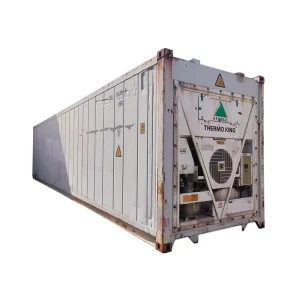
ODM New 40ft Refrigerated Freezer Container for Sale Factory, Exporter
Procure Unit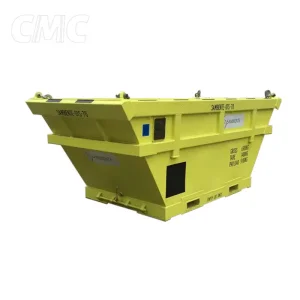
Famous DNV Certification Silt Basket Container Used in Offshore Operations Factories, Exporters
Procure Unit
ODM The Smart Chain Cold Storage 20ft/40ft Solar Refrigerated Container 220V With DC Inverter Unit Pricelist, Exporters
Procure Unit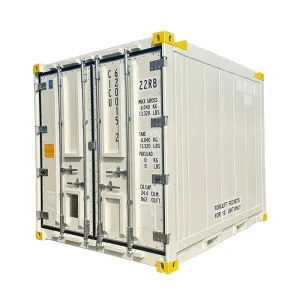
High-Quality New 10ft Certified Thermo King Freezer Container Exporter, Manufacturers
Procure Unit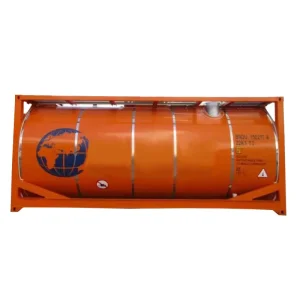
China 20 Foot ISO Liquid Tank Container for Water Manufacturer, Product
Procure Unit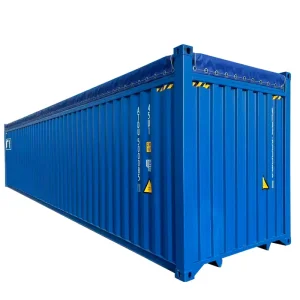
Buy 40ft High-Cube New Soft Open Top Shipping Container with Tarpaulin Cover Manufacturer, Product
Procure Unit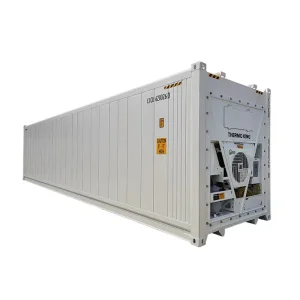
OEM New 40ft High-Cube Certified Reefer Shipping Cargo Container Pricelist, Product
Procure Unit