
The Engineering Backbone of Modern Intermodal Freight
In intermodal transportation and heavy-duty structural engineering, container feet—technically classified as ISO 1161 corner castings and bottom load-distribution interface blocks—represent the single most critical structural nodes. Every ton of gross container weight, dynamic acceleration shock on rough seas, and stacking load in multi-tier terminal yards passes directly through these eight corner fittings.
From Simple Stacking Blocks to Multi-Axis Load Bearing Physics
Originating in the standardized freight revolution of the late 20th century, Chinese manufacturing plants have evolved from basic casting foundries into high-precision metallurgy and computer-aided finite element analysis (FEA) production centers. Today's maritime logistics demand that container feet withstand cumulative stacking loads exceeding 84,000 kg (allowing safe 9-high laden stacking on container vessels) and instantaneous transverse racking forces generated by severe sea states.
Engineering Core Insight: A micro-flaw in casting porosity or a dimensional deviation of mere millimeters can cause twistlock seizure during high-speed gantry crane operations, or structural buckling under seismic excitation in modular energy storage system (BESS) deployments.
Modern container feet engineered at our Tianjin manufacturing hub utilize micro-alloyed cast steel (SCW480 or equivalent grade), treated with refined normalization processes to guarantee impact energy absorption exceeding 27 Joules at -40°C. This ensures that whether containers traverse Arctic shipping routes, the Suez Canal, or deep inland rail corridors, their structural anchoring points retain metallurgical ductility and zero notch embrittlement.
Standardized vs. Extreme Operating Parameters
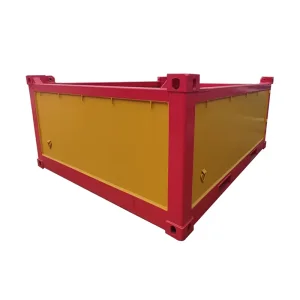
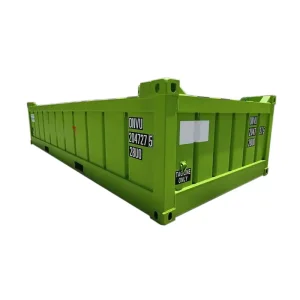
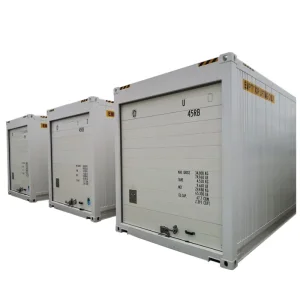
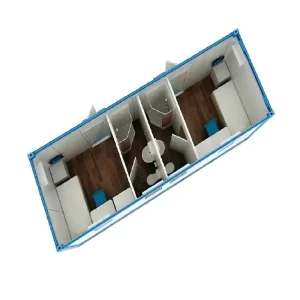
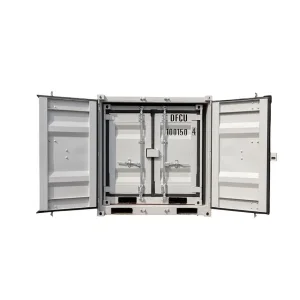
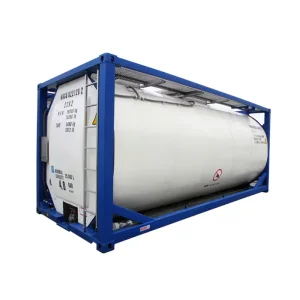
Featured Heavy-Duty Containers & Intermodal Systems
Explore our precision-engineered specialized shipping units, built with high-tensile corner fittings, BV and ISO-certified structural skeletons, and tailored multimodal load capacities.
Metallurgical Standards, ISO 1161 Tolerances & Physics
A deep comparative review of the physical chemistry, casting methodologies, and strict nondestructive testing (NDT) criteria governing industrial container feet production.
| Evaluation Parameter | Standard Commercial Grade | Heavy-Duty Rail / Multi-Modal | DNV 2.7-1 / Arctic Class Extreme |
|---|---|---|---|
| Base Metallurgy | Cast Carbon Steel (WCB / ZG230-450) | Micro-alloyed Cast Steel (SCW480) | Low Alloy Normalized Steel (SCW480-Mod / 20Mn5) |
| Yield Strength (ReH) | ≥ 230 MPa | ≥ 280 - 320 MPa | ≥ 345 - 400 MPa |
| Tensile Strength (Rm) | 450 - 600 MPa | 480 - 650 MPa | 520 - 700 MPa |
| Elongation at Break (A5) | ≥ 18% | ≥ 22% | ≥ 25% |
| Charpy V-Notch Impact Test | Untested or ≥ 20J at 0°C | ≥ 27J at -20°C | ≥ 42J at -40°C (Offshore Rig Spec) |
| Dimensional Precision | ± 2.5 mm | ± 1.5 mm (CNC milled critical faces) | ± 0.8 mm (Full 5-axis CNC machining) |
| NDT Inspection Protocol | Visual (VT) + Spot Magnetic (MT) | 100% MT + Ultrasonic (UT) on corners | 100% Radiographic (RT) + 100% MT + 100% UT |
Weldability & HAZ Integrity
Container feet are joined directly to Corten-A/B weathering steel corner posts and bottom side rails. Our carbon equivalent (CEV) is rigorously controlled below 0.42%, mitigating hydrogen-induced cold cracking in the Heat Affected Zone (HAZ) during automated submerged arc or flux-cored welding operations.
Twistlock Geometry & Cam Clearance
Internal aperture dimensions for bottom corner castings (Bottom Left BL, Bottom Right BR) are calibrated to strict ISO 1161 profiles. The teardrop aperture guarantees swift, snag-free entry of semi-automatic twistlocks while maintaining exact contact surface area to distribute 420 kN of shear force per corner.
Fatigue & Dynamic Cycle Life
Through full-spectrum sand-casting simulation and degassed electric arc furnace (EAF) ladle refining, our corner feet eliminate subsurface micro-inclusions. This ensures that cyclic tension-compression cycles encountered during 20+ years of intercontinental transoceanic voyages cause zero fatigue-crack propagation.
Solving the 4 Critical Friction Points for Global EPCs & Fleet Buyers
Sourcing container structural components and finished special containers from overseas involves multifaceted logistical, regulatory, and engineering hurdles. Here is how our system eliminates procurement vulnerability.
Minor discrepancies in corner foot aperture radii cause catastrophic twistlock jamming on high-speed rail chassis and maritime cranes. Solution: We apply 100% go/no-go optical laser gauge verification on all eight corner fittings before release.
Hidden shrinkage cavities inside the steel casting crack under extreme vessel stacking pressure. Solution: Ultrasonic testing (UT) according to ASTM A609 Level 1 standards is executed on 100% of all structural corner lots.
Containers held at Antwerp, Houston, or Durban due to mismatched CSC certification plates or missing mill test certificates. Solution: Bureau Veritas (BV), ABS, or DNV classification paperwork is synchronized directly with shipping manifests.
Surface degradation and rust pitting at the interface between the container foot and foundation footing. Solution: Heavy zinc-rich epoxy priming (exceeding 60 microns) plus polyurethane topcoats tested for 1,500 hours of continuous salt-spray exposure.
Macro Industry Solutions Powered by Engineered Corner Sockets
Beyond general cargo boxes, container feet serve as standardized interface nodes for global energy infrastructure, specialized industrial machinery, and modular off-grid systems.
1. Utility-Scale Battery Energy Storage (BESS)
Lithium iron phosphate (LFP) battery systems require high structural rigidity to avoid cell pack distortion. Our heavy-duty container feet integrate high-shear internal ribs, transferring the massive weight of 40-50 ton stationary energy storage modules directly into concrete pad foundations with zero frame deflection.
2. Offshore Exploration & Subsea Maintenance
Offshore cargo carrying units (CCUs) certified under DNV 2.7-1 / EN 12079 endure severe wave-impact slamming. Our offshore container feet are custom cast from low-alloy steel possessing exceptional Charpy notch toughness, engineered to survive instantaneous crane dynamic snatch loads in rough North Sea conditions.
3. Cold-Chain Railway & Intermodal Freight
For transcontinental refrigerated rail corridors such as the Belt and Road routes traversing Siberia and Central Asia, the bottom corner interface must endure extreme vibrational fatigue across 10,000+ continuous kilometers without stress fracture, preserving the thermal envelope and precision machinery alignment.
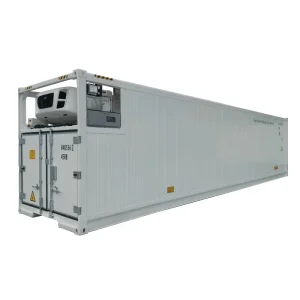
Specialized Reefer, Modular, & ISO Cargo Enclosures
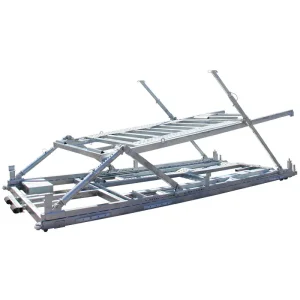
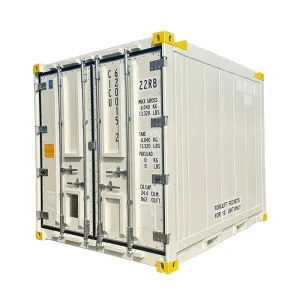
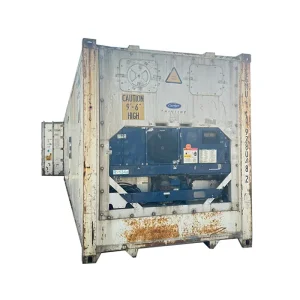
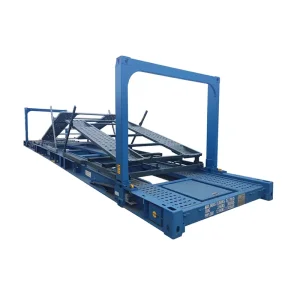
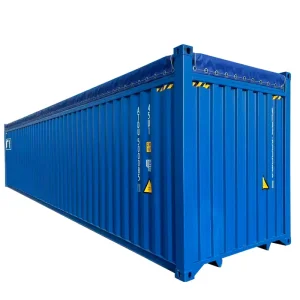
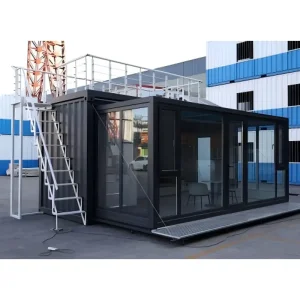
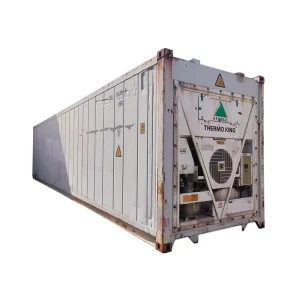
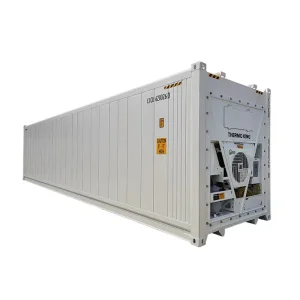
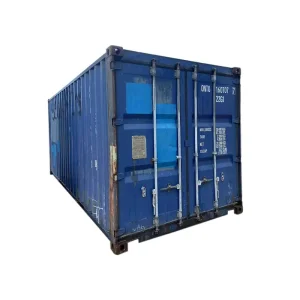
Review our precision-built refrigerated freezer containers, vehicle logistics platforms, open-top dry units, and prefabricated modular accommodation systems.
Factory Auditing Protocols, Bureau Veritas & Port-Side Support
Rigorous manufacturing standards maintained across four decades of specialized export operations from Tianjin and Suzhou production bases.
Documented 7-Tier Factory Verification Workflow
Procuring from China without technical verification creates vulnerability. Our manufacturing plants operate an unbroken traceable chain of custody for every melt heat and corner block serialized batch:
- Spectrographic Chemical Analysis: Verifying C, Si, Mn, P, S, Ni, Cr, and Mo contents to eliminate thermal cracking propensity.
- Dimensional Coordinate Measuring (CMM): Continuous 3D probe measuring of twistlock engagement chambers and outer stack faces.
- Hydrostatic & Mechanical Stacking Proof Load: Subjecting corner posts and feet to 848 kN vertical compressive testing per ISO 1496-1.
- CSC Convention Safety Approval: Permanent stainless steel CSC approval data plates stamped and riveted to every container door assembly.
Our manufacturing infrastructure is located approximately 100 km from major ocean freight container terminals in Tianjin and Suzhou. This geographic advantage eliminates complex cross-province road permit bottlenecks for oversized high-cube or out-of-gauge (OOG) special containers, shaving 7-10 days off vessel dispatch lead times and significantly reducing inland drayage charges for international EPCs.
Every unit leaves our premises accompanied by authentic classification society inspection certificates issued directly by Bureau Veritas (BV), ABS, or DNV. For specialized projects, witness testing can be live-streamed or hosted in person for client inspection teams.
Technology Roadmap: Next-Gen Container Feet & Intelligent Logistics
The transition toward autonomous cargo terminals, smart shipping corridors, and carbon-neutral metallurgy is reshaping how container structural interfaces are engineered.
Green EAF Low-Carbon Steel
Transitioning foundries to 100% renewable-powered Electric Arc Furnaces (EAF) with scrap-recycled feedstock, slashing embedded carbon emissions by 48% per casting set to satisfy EU CBAM cross-border tariff mandates.
Smart IoT Integrated Castings
Embedding micro-sensor cavities inside non-critical corner casting webs to house passive RFID, load-cell strain gauges, and satellite tamper indicators without degrading structural mechanical load capacity.
Robotic 5-Axis Hybrid Additive Repair
Deploying laser metal deposition (LMD) technologies at regional port depots to restore worn corner casting twistlock apertures, extending active service life without hot-cutting corner posts.
AI Autonomous Spreader Docking
Laser-etched high-contrast fiducial markers on bottom corner profiles, enabling millimeter-level machine vision docking for autonomous terminal straddle carriers and automated stacking cranes (ASCs).
Frequently Asked Questions: Container Feet & Special Equipment
Authoritative answers covering manufacturing specs, dimensional tolerances, order customizations, and international regulatory clearance.
An ISO 668/1161 container set comprises 8 distinct castings: 2 Top Left (TL), 2 Top Right (TR), 2 Bottom Left (BL), and 2 Bottom Right (BR). Bottom corner castings feature elongated bottom apertures specifically contoured to receive twistlocks and chassis guide horns, whereas top castings have symmetrical top holes intended for crane spreader lifting twistlocks and side slings.
Yes. We specialize in ODM/OEM structural foundations. For battery energy storage systems (BESS) or oversized offshore winch skids, our engineers can supply widened corner castings with internal cable-pass conduits, reinforced pad eyes, or elevated base plates with tapped anchor-bolt holes while maintaining standard ISO outer envelope alignment.
We employ SCW480 cast steel or modified low-carbon alloy steels adhering strictly to ISO 1161 requirements. The chemical formulation maintains a carbon content ≤ 0.20% and a low carbon equivalent (CEV ≤ 0.42%), ensuring direct, crack-free manual and robotic flux-cored arc welding to Corten SPA-H side posts without mandatory preheating in normal workshop temperatures.
All commercial and specialized containers manufactured at our facilities are backed by Bureau Veritas (BV) or ISO 9001 quality certificates. Offshore units are engineered and stamped to DNV 2.7-1 (Standard for Certification No. 2.7-1 Offshore Containers) and EN 12079 criteria, and are delivered with complete material test reports (MTR) according to EN 10204 Type 3.1 or 3.2.
Standard ISO dry and modular units usually ship within 2 to 3 weeks from drawing approval. Highly customized OEM units (such as roll-up reefer units, car carrier racks, and DNV offshore baskets) require approximately 30 to 45 calendar days, encompassing complete structural FEA simulation, prototype fit-up, paint cure testing, and classification society survey sign-off.
Every corner block undergoes automated centrifugal grit blasting to SA 2.5 cleanliness before primer application. We apply an inorganic zinc-rich epoxy primer (minimum 30 μm dry film thickness), followed by an epoxy intermediate barrier coat and an aliphatic polyurethane topcoat, resulting in a minimum total dry film thickness (DFT) of 120 μm rated for C5-M marine exposure.
Consult With Our Container Structural Engineers
Whether you require replacement ISO 1161 certified corner feet, specialized structural chassis design, or complete custom fleet builds, our export engineering department provides direct technical drawing reviews, FEA stress reports, and transparent port-of-loading delivery schedules.