
Reefer Storage
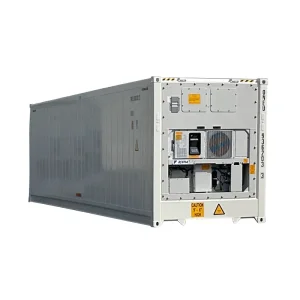
OEM New 40ft High-Cube Daikin Freezer Container Cold Storage Room
- Cooling UnitDaikin LXE Series
- Temp Range-30°C to +30°C
- Internal Volume67.8 m³
Engineered to withstand harsh marine salinity, ultra-low sub-zero temperatures, and demanding intermodal cycle stresses with verified BV, ISO, and DNV certifications.
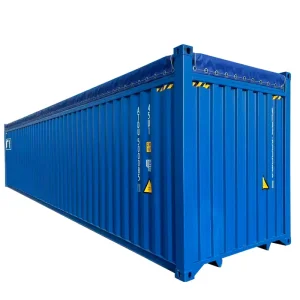
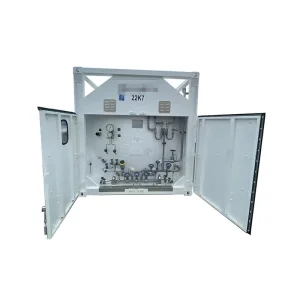
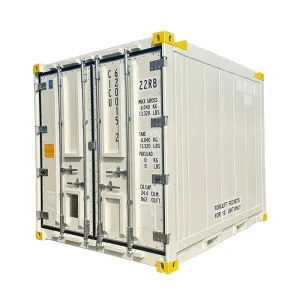
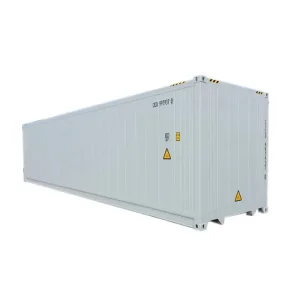
The global containerized logistics ecosystem has undergone a massive paradigm shift. Standard shipping containers are no longer treated merely as standardized maritime boxes for dry breakbulk cargo. In today's highly fragmented global trade environment, specialized container projects serve as mission-critical, self-contained functional infrastructure units.
Global supply chains now demand intelligent thermal containment, explosion-proof battery energy storage systems (BESS), hazardous chemical transport architectures, and modular deployable civil shelters. Modern procurement leaders face escalating regulatory stringency, where ISO standard compliance must coalesce seamlessly with DNV offshore impact specifications, CSC (Convention for Safe Containers) safety certifications, and decarbonized manufacturing directives.
Procuring low-specification containers often leads to early floor delimitation, structural racking failure, and severe refrigerant migration. Industrial container purchasers must balance initial capital expenditure with a 15-year marine lifespan index.
Industrial Heritage Year
Years Engineering Expertise
Deepwater Port Radius
BV & ISO Weld Traceability
Why Tier-1 international logistics operators, mining conglomerates, and energy multinationals centralize their specialized container procurement in Tianjin and Suzhou manufacturing corridors.
Direct mill-level integration with leading metallurgical complexes guarantees continuous supplies of high-grade SPA-H atmospheric corrosion-resistant Corten steel. This alloy forms a stabilizing rust-like patina upon exposure to moisture and oxygen, eliminating catastrophic structural rust penetration even in saltwater shipping environments.
Yield Strength ≥ 355 MPaOur Tianjin & Suzhou manufacturing workshops feature six-axis automated submerged arc welding gantry systems and CNC fiber laser cutters. This eliminates thermal micro-cracking along primary structural corner posts, corner castings (ISO 1161), and load-bearing lower side rails, achieving micron-level geometric dimensional tolerance.
NDT Ultrasonic Weld VerificationAutomated shot-blasting chambers treat raw steel assemblies to SA 2.5 Swedish cleanliness standards, clearing all mill scale. Next, robotic applicators deposit a 3-layer protective envelope: zinc-rich epoxy primer (30μm), epoxy intermediate barrier (40μm), and weatherable polyurethane topcoat (40μm), delivering 1,000+ hour salt-fog resilience.
C5-M Marine Environment RatingFor custom reefer, cold storage rooms, and insulated units, robotic high-pressure cyclical foaming jigs inject 100% CFC/HCFC-free cyclopentane polyurethane foam at controlled temperatures. This achieves uniform 45 kg/m³ density without internal thermal bridges, cold voids, or delamination under continuous transit flexing.
K-Factor ≤ 0.020 W/(m·K)Strategically situated within approximately 100 kilometers of the world's most active seaport complexes (Tianjin Xingang Port and Shanghai/Taicang maritime terminals). This geographical advantage drastically slashes inland drayage costs, accelerates customs clearing under FTA Pilot policies, and eliminates pre-carriage dispatch bottlenecks.
FOB/CIF Express Berth LoadingComprehensive engineering dimensional benchmarks. Reefer, insulated, and offshore units feature specialized wall geometries, thermal core thickness, and subfloor duct profiles.
| Classification & Model | Ext. Dimensions (L × W × H) | Int. Dimensions (L × W × H) | Internal Volume | Max Gross Mass | Primary Compliance |
|---|---|---|---|---|---|
| 20ft Dry Cargo (20GP) | 6,058 × 2,438 × 2,591 mm | 5,898 × 2,352 × 2,393 mm | 33.2 m³ | 30,480 kg | ISO 1496-1 / CSC |
| 40ft High-Cube Dry (40HC) | 12,192 × 2,438 × 2,896 mm | 12,032 × 2,352 × 2,698 mm | 76.3 m³ | 32,500 kg | ISO 1496-1 / TIR |
| 40ft High-Cube Reefer (40RH) | 12,192 × 2,438 × 2,896 mm | 11,583 × 2,290 × 2,557 mm | 67.8 m³ | 34,000 kg | ISO / BV / ATP Class FRC |
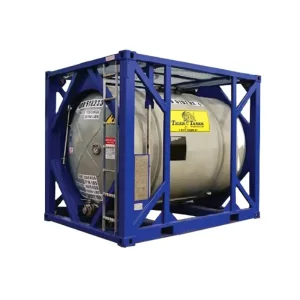
| 10ft Offshore Tank Container | 2,991 × 2,438 × 2,591 mm | Cylindrical Pressure Vessel | 6,000 - 10,000 L | 12,000 kg | DNV 2.7-1 / EN 12079 |
| 20ft T75 Cryogenic ISO Tank | 6,058 × 2,438 × 2,591 mm | Vacuum Insulated Double Vessel | 19.8 - 22.0 m³ | 36,000 kg | ASME VIII / IMDG / ADR |
| 20ft Modular Prefab Expandable | 5,900 × 2,250 × 2,520 mm (Stowed) | 5,800 × 6,200 × 2,400 mm (Expanded) | ~36.0 m² Floor | 3,800 kg | CE / Structural Class 2 |
From deep-sea hydrocarbon platforms to polar temperature supply lanes and emergency modular field stations, our containers perform reliably in real operating conditions.
Operating in the North Sea, Gulf of Mexico, and West African offshore shelves demands containers certified to DNV 2.7-1 and EN 12079. Dynamic offshore lifting from supply boats onto platform rigs causes intense shock loads. Our offshore baskets and tanks feature pad-eyes forged directly into the mainframe, non-destructive weld testing, and certified sling sets.
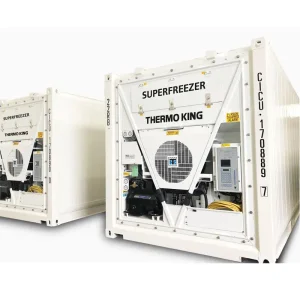
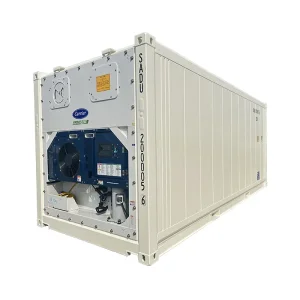
Fresh berry exports from South America, deep-frozen tuna from the Pacific, and active pharmaceutical ingredients (APIs) across Europe rely on precision reefers with Daikin, Carrier, or Thermo King refrigeration units. Microprocessor controllers maintain temperatures within tight ±0.25°C windows, complete with automated defrosting and telemetric logging.
The global renewable transition requires custom energy storage enclosures. Our custom ISO container project lines engineer thermal run-away containment, integrated FM-200 fire suppression ducting, internal cooling channels, and high-strength load bearing frames able to hold up to 35 tons of dense lithium-iron-phosphate (LiFePO4) battery racks.
Resource extraction in the Australian Outback, Canadian oil sands, or disaster response zones requires rapid shelter deployment. Foldable and expandable modular container houses pack flat for low-cost maritime transport, then unfold in under 15 minutes into fully plumbed, electrically wired, insulated living spaces with integrated bathrooms.
Liquid asphalt heating containers, food-grade alcohol tanks, and T75 cryogenic liquid vessels (LIN, LOX, LAR, LNG) provide seamless door-to-door multi-modal bulk transit via ship, rail, and road. This completely eliminates expensive decanting, drum disposal, and cargo handling hazards.
Explore our heavy-duty liquid tank systems, automated roll-up reefers, offshore cargo baskets, and factory-integrated modular architecture units.
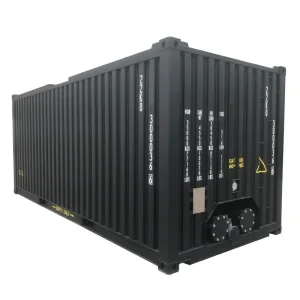
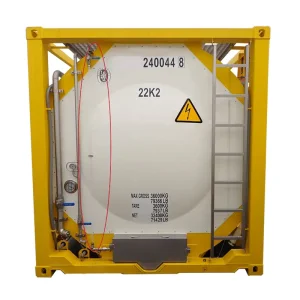
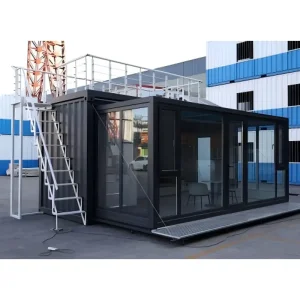
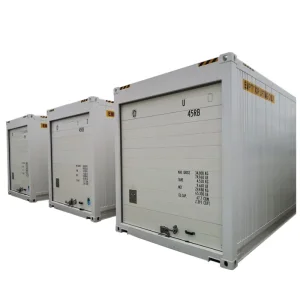
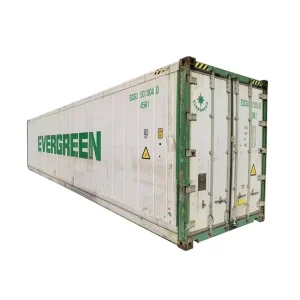
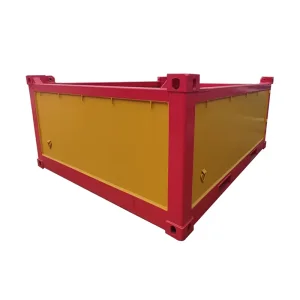
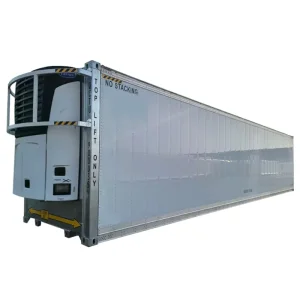
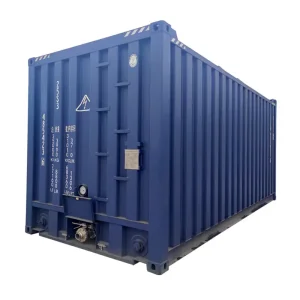
Every project container manufactured in our facilities undergoes strict stage-gate quality audits supervised by international classification societies including Bureau Veritas (BV), ABS, and DNV.
We work closely with global buyers from initial concept to container deployment. Our engineering and production steps ensure clear communication, verified specs, and reliable lead times:
Evaluating cargo density, handling dynamics, tare targets, temperature needs, and environmental challenges.
Validating 9-high fully loaded stacking capability (192,000 kg racking load) and corner post shear resistance via finite element analysis.
Constructing a pilot unit inspected directly by BV or DNV survey officers before full production runs begin.
Synchronized manufacturing across automated assembly lines, with fast delivery to Tianjin or Shanghai/Suzhou container port gates.
Key technical details, certification steps, and manufacturing workflows every procurement professional should know.
We use genuine SPA-H Corten weathering steel (conforming to JIS G3125 standards) across all structural frames, side panels, corrugated roofs, and crossmembers. Corten steel contains targeted additions of copper, chromium, and nickel that create a self-healing patina, preventing rust from eating through the steel even in corrosive saltwater shipping conditions.
While standard ISO containers rely on corner castings for dock crane and spreader handling, DNV 2.7-1 / EN 12079 offshore units are built to withstand severe offshore lifting conditions. They feature heavy pad-eyes welded directly into structural headers, Charpy impact-tested steel at -20°C, and integrated 4-leg wire rope sling assemblies with proof-load certifications.
Yes. As an authorized engineering integrator, we supply and fit complete OEM refrigeration equipment from leading global brands: Carrier Transicold (PrimeLINE series), Daikin (Zestia/LXE series), and Thermo King (Magnum PLUS). Each unit includes a manufacturer factory warranty, global parts support, and digital diagnostic data interfaces.
Our expandable container units fold into an ultra-compact standard ISO shipping envelope during transit. This allows them to ship as standard CSC-plated cargo containers, completely avoiding expensive flat-rack or breakbulk ocean freight rates. Once on site, two operators can unpack and expand the unit within 15 minutes.
Every ISO tank container ships with a complete Manufacturer's Data Report (MDR). This includes raw material mill test certificates (EN 10204 3.1), radiographic (RT) and dye-penetrant (PT) weld test reports, pressure test certificates (hydrostatic and pneumatic), helium mass-spectrometer vacuum leak tests, and formal classification survey approvals (ASME, IMDG, RID/ADR).
Standard ISO dry and regular reefer containers typically carry a baseline order volume of 1 to 4 units. For bespoke engineering modifications—such as custom dimensional profiles, explosion-proof BESS enclosures, specialized doors, or custom floor layouts—we offer pilot prototype builds of 1 unit for technical validation, followed by volume production runs.