Specialized Intermodal & Refrigerated Product Portfolio
Precision-fabricated to ISO 1496 and DNV GL offshore standards. Explore our high-demand refrigerated containers, chemical tank units, and mineral logistics solutions engineered for harsh operating environments.
Macro-Economic Drivers in Global Shipping Container Procurement
Navigating geopolitical supply chain re-routing, modal shifts, and rigorous total-cost-of-ownership (TCO) asset allocation models across Fortune 500 logistics frameworks.
The global intermodal transportation landscape is undergoing structural transformation driven by supply chain decentralization, ESG mandates, and cross-border multi-modal corridors like the Trans-Eurasian rail lines and the African Continental Free Trade Area (AfCFTA). Procurement directors, tier-1 shipping lines, and intermodal operating companies (BCOs) are no longer purchasing commodity steel boxes; they are investing in high-integrity, yield-optimized industrial containment assets designed for twenty-year service lives under extreme climatic stresses.
Total Cost of Ownership (TCO) vs. Initial Capital Outlay
Corporate balance sheets require container assets that minimize secondary maintenance cycles. Substandard surface pre-treatments, inconsistent seam welds, and low-tolerance corner castings cause premature fatigue cracking, salt spray corrosion penetration, and refrigeration vacuum degradation. CIMIC container manufacturing integrates heavy-gauge SPA-H atmospheric corrosion-resistant steel, certified automated gas-shielded submerged arc welding, and two-component multi-pass polyurethane coating matrices that consistently exceed ISO 12944 C5-M marine exposure specifications.
When evaluating container capital expenditures, tier-one global logistics providers evaluate five core cost pillars:
- Structural Durability and Floor Deflection: Integration of sustainable hardwood apitong or bamboo composite flooring compliant with Australian Department of Agriculture quarantine treatment specifications, rated for heavy 7,260 kg axle loads under ISO 1496-1 floor testing protocols.
- Thermal Transfer Indices (U-Value Performance): High-density, closed-cell, non-ozone-depleting cyclopentane-blown polyurethane foam insulation ensuring a heat leakage factor below 0.38 W/(m²·K) across our 40ft High-Cube cold storage units.
- Modal Versatility and Deadweight Ratios: Tare-weight reduction initiatives utilizing finite element analysis (FEA) to maximize payload density without sacrificing stacking capacity (up to 9-high container ship holds at 216,000 kg total gross stack weights).
Industrial Anatomy: Kinds of Specialized Containers
Systematic taxonomy of commercial container engineering, detailing structural configurations, refrigeration subsystems, and chemical pressure vessels.
General Purpose Dry Freight (GP & HC)
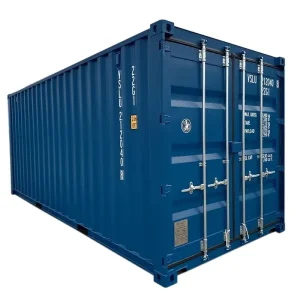
Fabricated in standard 20ft, 40ft, and 45ft High-Cube envelopes. Equipped with anti-theft high-security cam-and-keeper door gear, dual recessed vent panels, EPDM weather-resistant perimeter gaskets, and reinforced corrugations capable of withstanding extreme torsional racking stresses encountered during rough sea states.
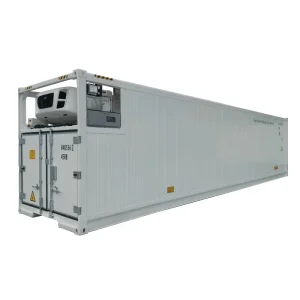
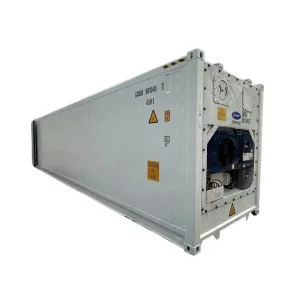
Precision Cold Chain (Reefers & Insulated)
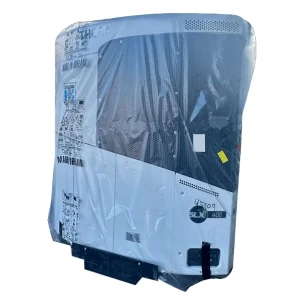
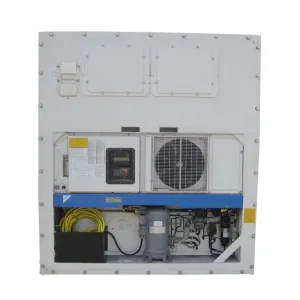
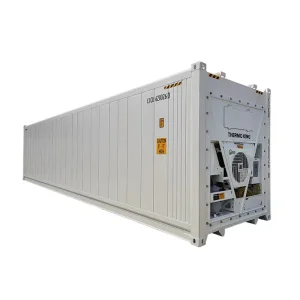
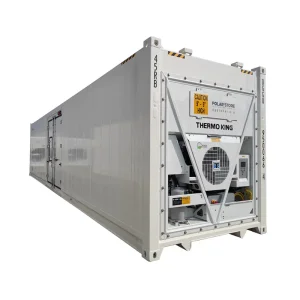
Integrating advanced compressor modules from Thermo King, Carrier Transicold, and Daikin. Interior linings feature marine-grade SUS 304 or 409 stainless steel sheeting with extruded aluminum T-bar airflow decking, enabling continuous micro-climate regulation from -35°C to +30°C for deep-freeze seafood and active pharmaceuticals.
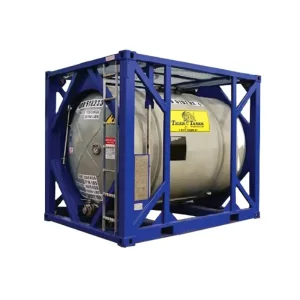
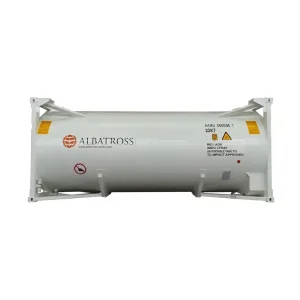
ISO Tank Containers (UN Portable Tanks)
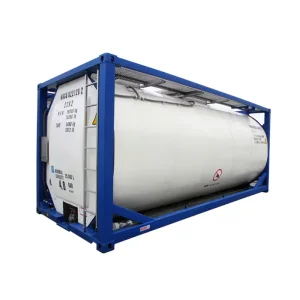
Built to ASME Section VIII Div.1 and IMDG T11/T14/T50/T75 classifications for corrosive acids, industrial solvents, LNG, and cryogenic media. Tanks utilize 316L pickled and passivated stainless steel vessels wrapped in heavy rockwool or vacuum multilayer insulation jackets with steam/electric heating tubes.
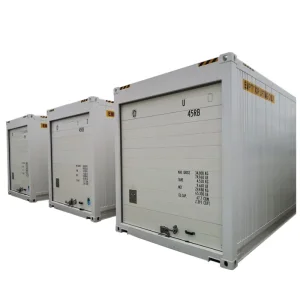
DNV 2.7-1 / EN 12079 Offshore Units
Engineered exclusively for open-ocean dynamic wave impact and marine vessel crane lifting. Features high-tensile impact-tested pad eyes, certified four-leg wire rope sling sets, low-temperature charpy V-notch steel grades (tested down to -20°C or -40°C), and explosion-proof electrical fittings for hazardous offshore drilling zones.
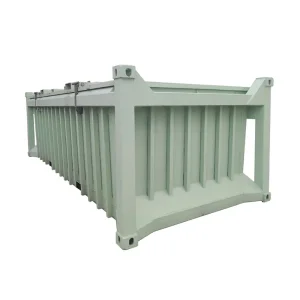
Bulk Cargo & Half-Height Ore Carriers
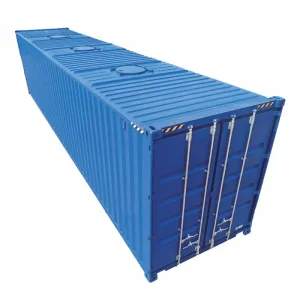
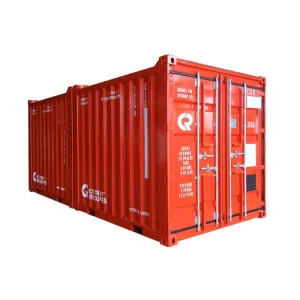
Specifically manufactured for heavy commodities such as copper concentrate, iron ore, lithium concentrates, and industrial grains. Configured with heavy reinforced top-hatch loading chutes, high-volume bottom discharge mechanisms, or fully removable tarpaulin hard-tops allowing 360-degree crane bucket tippler operation.
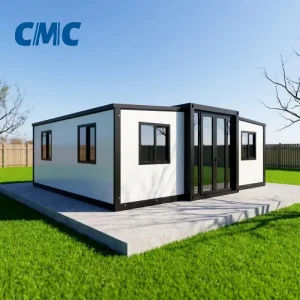
Modular Prefabricated & Equipment Enclosures
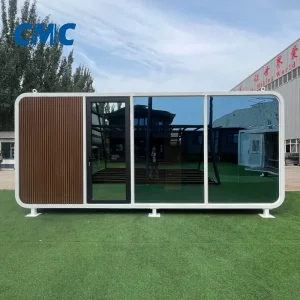
Custom ISO-dimensioned structural envelopes designed for mobile sub-stations, battery energy storage systems (BESS), water treatment skids, and architectural modular housing. Built with integrated fire-suppression raceways, thermal acoustic rockwool walls, and reinforced floor steel framing for heavy machinery mounting.
Engineering Specifications Across Primary Container Formats
Direct volumetric, dimensional, and structural payload benchmarking validated against CSC safety approval requirements.
| Standard Model | Internal Dimensions (L × W × H) | Cubic Capacity | Tare Weight (±3%) | Max Gross Weight (MGM) | Key Engineering Feature |
|---|---|---|---|---|---|
| 20ft Dry Cargo (20GP) | 5,898 × 2,352 × 2,393 mm | 33.2 m³ | 2,200 kg | 30,480 kg | 2.0mm SPA-H side corrugations, 28mm apitong plywood floor |
| 40ft High-Cube Dry (40HC) | 12,032 × 2,352 × 2,698 mm | 76.4 m³ | 3,850 kg | 32,500 kg | Gooseneck tunnel understructure, dual lock rod gear on each leaf |
| 40ft High-Cube Reefer (40HR) | 11,583 × 2,290 × 2,555 mm | 67.8 m³ | 4,480 kg | 34,000 kg | Daikin/Carrier/TK chilling unit, SUS 304 lining, -35°C to +30°C range |
| 20ft ISO Tank (T11 UN Portable) | External 20ft Frame: 6,058 × 2,438 × 2,591 mm | 24,000 - 26,000 L | 3,650 kg | 36,000 kg | 316L Stainless Steel vessel, 4.0 bar test pressure, steam heating |
| 10ft DNV Offshore Cargo Unit | 2,830 × 2,270 × 2,450 mm | 15.7 m³ | 2,150 kg | 10,000 kg | DNV 2.7-1 certified, -20°C Charpy V-Notch steel, pad eyes integrated |
| 40ft Roll-Up Door Distribution | 12,032 × 2,340 × 2,680 mm | 75.5 m³ | 4,200 kg | 30,480 kg | Rapid-cycle aluminum insulated shutter doors for inner-city logistics |
Metallurgical Integrity: The Corten-A (SPA-H) Advantage
The bedrock of high-performance container fabrication is atmospheric corrosion-resisting steel (widely referred to as Corten-A or JIS G3125 SPA-H). Unlike conventional commercial mild steel (such as Q235B), SPA-H alloy incorporates specific micro-alloying additions of copper, chromium, nickel, and phosphorus. When exposed to maritime cycles of salt water, humidity, and sun, SPA-H develops an adherent, protective oxide patina layer that halts further oxygen ingress into the inner metal substrate.
At CIMIC manufacturing lines, our automated plate blast-cleaning systems strip hot-rolled steel coils down to ISO 8501-1 Sa 2.5 cleanliness standards within milliseconds prior to primer application. We combine this metallurgical standard with zinc-rich ethyl silicate shop primers, followed by high-build epoxy intermediate coatings and finish coats of aliphatic polyurethane. This three-stage chemical barrier provides industry-leading salt spray resistance exceeding 1,500 hours under ASTM B117 testing conditions.
Industrial Supply Chain Architecture & Turnkey Applications
How world-scale enterprises leverage specialized container builds to eliminate transport bottlenecks, maintain chain-of-custody, and reduce transit losses.
Cold Chain & Global Agri-Food Integrity
From Chilean cherry harvests and Mediterranean citrus exports to high-value meat logistics in Australia and South America, temperature control tolerance is razor thin. Our 40ft High-Cube reefers feature digital scroll compressors and atmospheric modification (Controlled Atmosphere / CA) modules that precisely control oxygen and CO2 levels, suppressing fungal respiration and tripling the viable shipping shelf life of perishable cargoes.
Hazardous Chemicals & Petrochemical Bulk
Moving corrosive liquids across multimodal rail and container vessels requires rigorous safety engineering. Our ISO tank containers provide seamless integration across truck chassis, rail flatcars, and container vessel holds. Equipped with top-spill containment boxes, burst discs, calibrated pressure relief valves, and internal fluoropolymer (PTFE/PFA) linings, they prevent hazardous leaks under harsh operational impacts.
Mining, Concentrates & Heavy Metallurgy
Transporting high-density ores presents structural deformation challenges. Standard general-purpose containers suffer bulged sidewalls and crushed floors under concentrated loads. Our half-height containers utilize hardened high-strength steels (Domex / Hardox equivalents) that endure repeated loading impact from front-end loaders and overhead clamshell cranes, speeding vessel turnaround at bulk ports.
The Next Decade of Intermodal Equipment Engineering
Pioneering digital telemetry, carbon-neutral manufacturing lines, and specialized containment systems for the global clean energy transition.
The modern shipping container is transforming from a passive steel box into an active, intelligent, and communicative cyber-physical system. Driven by maritime digital transformation and rigorous net-zero emissions mandates from the International Maritime Organization (IMO), CIMIC engineering initiatives focus on three critical frontiers:
1. AIoT Telemetry & Real-Time Cargo Chain Sensing
Integrated autonomous sensor arrays embedded directly into the door header and floor structure provide real-time geofenced satellite tracking, shock and impact logging (3-axis acceleration), interior humidity metrics, door-opening tamper detection, and reefer unit operational analytics. Using ultra-low-power cellular LTE-M and satellite uplinks, asset owners receive predictive maintenance warnings hours before a compressor component fails, preventing millions of dollars in cold chain spoilage.
2. Grid-Scale Battery Energy Storage Enclosures (BESS)
As renewable solar and wind facilities proliferate across the globe, the demand for modified ISO container footprints housing multi-megawatt-hour lithium iron phosphate (LFP) energy storage banks has surged. CIMIC designs specialized structural enclosures rated for internal deflagration relief (NFPA 68/69 standards), integrated liquid cooling manifold routings, clean-agent aerosol fire-extinguishing systems, and heavy internal racking that supports up to 40 metric tons of battery racks without frame deflection.
3. Decarbonized Metallurgy & Zero-VOC Waterborne Coating Systems
Addressing Scope 3 supply chain emissions, our manufacturing hubs in Tianjin and Suzhou are adopting green hydrogen-reduced steel feeds and completely transitioning exterior paint lines from traditional solvent-borne paints to 100% waterborne epoxy and acrylic coating systems. This shift eliminates over 85% of volatile organic compound (VOC) emissions while exceeding all standard marine anti-corrosion benchmarks.
Compliance Safeguards & Port-Proximate Export Capability
Certified by world-leading classification societies and strategically positioned along China's primary maritime corridors for streamlined global deployment.
CSC Certification Verification
Every container leaves our factory with an approved International Convention for Safe Containers (CSC) safety approval plate, certified by Bureau Veritas (BV), Lloyd's Register (LR), or China Classification Society (CCS), ensuring legal global transit on container vessels and rail flatcars.
100 KM Port Delivery Advantage
Our strategic production centers in Tianjin and Suzhou are located within 100 kilometers of the world's most active deep-water container ports (Tianjin Xingang Port and Shanghai / Ningbo Ports). This proximity minimizes inland drayage costs, accelerates vessel gate-in, and avoids cross-country haulage delays.
One-Way Shipper Owned Container (SOC)
Eliminate demurrage and detention charges through SOC programs. We support one-way cabotage loading, positioning new or certified used containers directly to your nominated discharge ports across Europe, Africa, North America, and Australia without empty repositioning fees.
Rigorous QA Factory Protocols
Comprehensive testing regimes cover corner casting dimensional verification, hydraulic ram wall racking tests, pneumatic seal pressure decay tests, floor load deflection tests, and multi-angle high-pressure water deluge spray testing to ensure complete weather-tight integrity.
Frequently Asked Questions for Container Buyers & EPCs
Authoritative technical answers to common queries regarding container grades, custom engineering, documentation, and international shipping protocols.
For standard ISO dry cargo configurations (20GP, 40GP, 40HC), production lines accommodate order sizes starting from 1 to 2 units for evaluation prototypes, scaling to multi-thousand unit batch allocations. For specialized engineering builds involving custom side-open doors, non-standard structural footprints, or custom equipment integration (e.g., generator enclosures or BESS housings), our baseline engineering MOQ typically starts at 2 to 4 units to justify specialized tooling, laser cutting jigs, and class certification documentation.
Every production batch undergoes non-destructive testing (NDT), including ultrasonic testing (UT) and dye penetrant inspection (DPI) on critical load-bearing assemblies such as corner castings, headers, and bottom side rails. Furthermore, finished units are subjected to static structural testing—including roof strength, floor strength, transversal/longitudinal racking, and a 30-minute continuous 2-bar pressure water deluge test from automated nozzle gantries to verify zero perimeter seal infiltration.
Each reefer machinery brand offers distinct operational strengths: Carrier Transicold (such as the PrimeLINE series) is globally recognized for low total lifecycle power consumption and universal spare-parts availability across major sea hubs. Daikin is celebrated for its scroll compressor reliability, exceptionally fine temperature control accuracy (±0.25°C), and low noise output. Thermo King (such as the Magnum Plus) excels at ultra-deep freezing capabilities down to -40°C with rapid pre-cooling and pulldown rates ideal for high-respiration produce.
Yes. CIMIC offshore containers are manufactured in strict compliance with DNVGL-ST-E271 (DNV 2.7-1) and European Standard EN 12079. We utilize impact-tested fine-grain structural steels tested to -20°C or -40°C, certified welding procedure specifications (WPS) approved by DNV surveyors, and provide certified four-leg wire rope lifting sling assemblies complete with Crosby safety shackles and complete material test report (MTR) tracing packages.
Our comprehensive documentation package includes the Clean on Board Bill of Lading, Commercial Invoice, Packing List, Original Certificate of Origin (including Form E, Form A, or RCEP certifications where applicable), Manufacturer's Certificate of Quality & Conformance, Official CSC Safety Approval Certificate, Timber Treatment Quarantine Certificate (complying with Australian Biosecurity / AQIS guidelines), and Third-Party Survey Reports (Bureau Veritas or DNV) verifying pristine structural condition prior to port handover.
Specialized Modular Systems & Intermodal Rail Equipment
Complete engineering spectrum including Belt and Road railway containers, prefabricated modular pods, mobile refrigeration trailers, and offshore tank equipment.