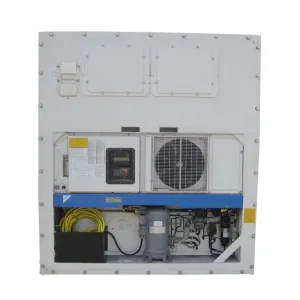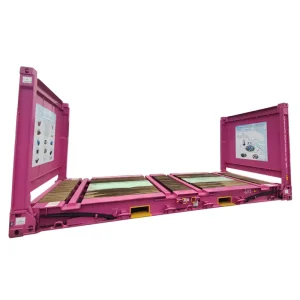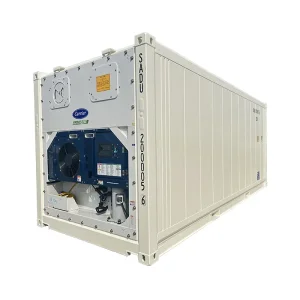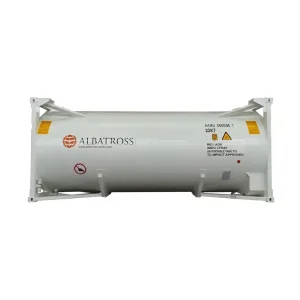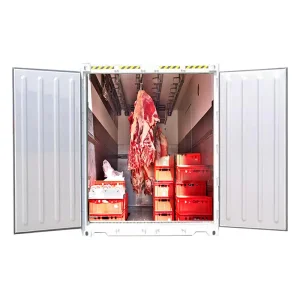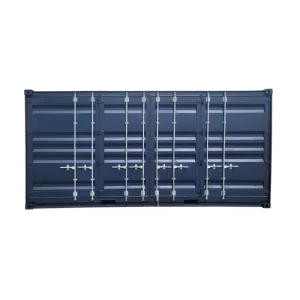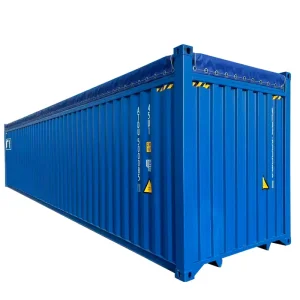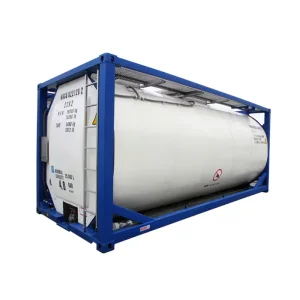
Buy ISO Standard 20ft Versatile Tank Container for Transport Chemicals Exporter, Product
View Specifications
Explore high-cube insulated envelopes, mobile processing units, and intermodal certified carriers designed for high-stress agricultural logistics and off-grid CEA operations.
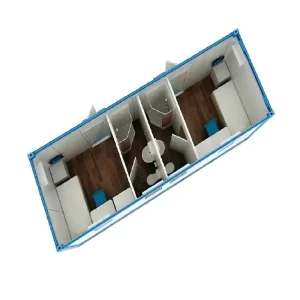
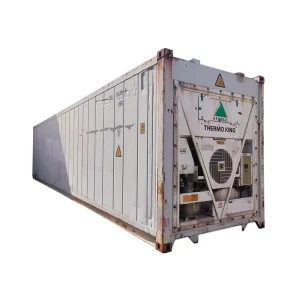
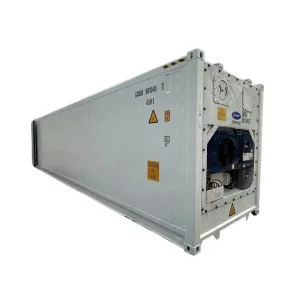
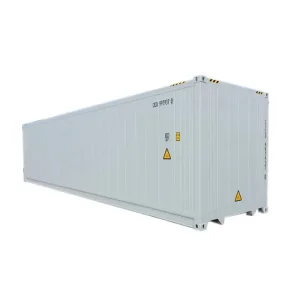
Understanding thermodynamic barriers, spectral optimization, and cleanroom biocontainment in modern planting container infrastructure.
In modern agricultural infrastructure, transitioning from land-intensive traditional greenhouses to modular, decentralized Controlled-Environment Agriculture (CEA) represents a key engineering shift. As an established China planting containers manufacturer, our technical methodology treats the shipping container envelope not merely as a structural shell, but as an integrated closed-loop life support system (CELSS). The conversion of standard 20ft, 40ft, and 45ft high-cube Corten steel containers into hyper-efficient planting chambers demands deep expertise in HVAC enthalpy balances, Vapor Pressure Deficit (VPD) regulation, microbial biocontainment, and automated fertigation physics.
Traditional indoor farming designs often suffer from condensation bridging, localized microclimate stratification, and rapid parasitic heat gain from high-flux PAR spectrum LED luminaires. Modern commercial operations demand continuous, repeatable yields regardless of outside environmental conditions—from the hyper-arid deserts of the Middle East to sub-zero subarctic territories. Industrial planting containers solve these spatial and environmental limitations by pairing structural durability with cutting-edge environmental controls.
High-density expanded polyurethane (PU) or rockwool insulation with vacuum break barriers guarantees superior U-values. Thermal bridging prevention prevents condensation behind interior food-grade cladding.
Interior surfaces lined with seamless 304 food-grade stainless steel or chemical-resistant FRP panels. Positive air pressurization paired with MERV 13 to HEPA H14 multi-stage filtration mitigates airborne pathogens.
Engineered duct configurations maintain micro-laminar airflow over multi-tier canopy layers. Controlled velocities eliminate boundary-layer resistance and avoid crop tip-burn while stabilizing localized humidity.
Decoupling manufacturing bottlenecks through localized industrial clustering, high-throughput automated fabrication, and strict quality control.
Operating out of major northern logistics hubs with coastal and rail access, our automated facilities integrate deep container engineering experience with modern smart-factory manufacturing. The strategic strength of an established container manufacturer lies in complete industrial cluster integration. Raw high-tensile Corten steel, high-performance polyisocyanurate thermal cores, and specialized cleanroom extrusions are sourced directly from verified primary suppliers, mitigating global supply chain risks.
Our production facilities deploy industrial robotic laser-welding lines, high-speed automated hydraulic stamping, and robotic environmental shot-blasting. By replacing fragmented manual fabrication with precision production schedules, structural tolerances are maintained to under 0.5 millimeters across all 40ft high-cube frame assemblies. Every completed envelope undergoes structural deflection testing, thermal-imaging leakage audits, and pneumatic moisture-barrier pressure tests to ensure reliable long-term performance.
Standardized vs. Specialized agricultural converted containers engineered for multi-tier vertical farming operations.
| Dimensional Class | Structural Frame / Envelope | Thermal Coeff. (U-Value) | Supported CEA Modalities | Automation & Fertigation Interface | Regulatory Compliance |
|---|---|---|---|---|---|
| 20ft Standard HC Farm Pod | SPA-H Corten Steel + Polyurethane Core | 0.22 W/m²K | Hydroponic NFT, Microgreens, Seedling Germination | Semi-automated dual-dosing, PLC touch-screen, 4-tier racking | ISO 668, CSC Safety Approved, CE Electrical |
| 40ft Commercial High-Cube | High-Tensile Corten + 75mm Vacuum Barrier Panels | 0.18 W/m²K | Vertical Aeroponics, Deep Water Culture (DWC), Leafy Greens | 8-Channel automated PID dosing, SCADA IoT integration, HVAC-D | ISO 1496-1, BV Certification, UL/ETL Ready |
| 45ft Ultra-Cube Intermodal Farm | Reinforced Intermodal Chasis + FRP Composite Internal | 0.16 W/m²K | High-Density Fruiting Crops, Saffron, Biopharmaceutical Crops | Closed-loop AI VPD modulation, dynamic spectrum multi-channel LED | DNV GL Verified, Custom CSC Rail/Ocean Cleared |
| Modular Double-Wide Combined Unit | Dual Interlinked ISO Profiles, Column-Free Interior | 0.20 W/m²K | Commercial Fungi/Mushroom Cultivation, Nursery Tissue Culture | Centralized clean-in-place (CIP), industrial steam sterilizable ducting | ISO Modular Building Code, Fire Retardant Class B1/A2 |
Scalable, climate-resilient hardware deployments addressing regional supply disruptions and industrial biological manufacturing.
High-ambient chillers (rated to +55°C) paired with closed-loop condensation recovery extract up to 98% of transpirational water, turning arid territories into productive agricultural zones.
Industrial dual-inverter heat pump systems paired with thermal subfloor heating allow sustained botanical development even in northern conditions dropping below -40°C.
Designed to stack up to 9 units high under full operational payloads. Integrated plug-and-play connections allow municipal parking lots and warehouse footprints to function as high-yield fresh supply hubs.
Precision cleanroom modular systems engineered for GMP compliance. Features positive-pressure HEPA filtration, ozone sanitation cycles, and batch-traceable automated parameter logging.
Eliminating regulatory friction through pre-certified container framing, custom electrical configurations, and global intermodal clearance.
Deploying specialized technical hardware overseas can introduce regulatory hurdles regarding maritime safety, structural compliance, and grid integration. Standard ISO modifications can compromise the load-bearing integrity of shipping containers if not calculated by a certified marine structural engineer. As an experienced container group with certifications spanning Bureau Veritas (BV), ISO 9001, and DNV-GL offshore standards, every agricultural conversion maintains structural integrity while supporting custom wall penetrations, drainage ports, and heavy HVAC installations.
Our OEM/ODM engineering workflow solves these challenges through tailored electrical, plumbing, and structural adaptations. Electrical cabinets are engineered with dual 50/60Hz multi-voltage compatibility (208V/240V/400V/480V) meeting UL 508A, CE, and CSA standards. CSC (Convention for Safe Containers) safety plates remain fully certified and intact, allowing units to ship via standard container vessel cargo slots as standard dry/reefer cargo rather than costly out-of-gauge (OOG) breakbulk loads.
Structural recalculations ensure stackability up to 9-high. Valid CSC plates ensure hassle-free transit across major maritime, rail, and road routes.
Electrical harnesses utilize certified marine-grade armored conduits. Switchgear is matched to target domestic grids, ensuring rapid site hookup.
Dedicated component support, digital diagnostic telemetry, and modular replacement components reduce field downtime across long-term deployments.
Pioneering AI edge-computing, closed-loop robotics, and circular resource recovery in next-generation CEA cultivation systems.
The planting container sector is moving toward deeper operational automation, driven by high labor costs and tighter energy budgets. Next-generation systems integrate autonomous mobile robotics (AMR) designed to traverse narrow internal central corridors, handling continuous seedling transport, plant spacing, and real-time multispectral canopy scanning. These automated diagnostics track chlorophyll indexing, transpiration stress, and micro-nutrient balances down to the individual plant.
Energy management represents another major engineering frontier. Future platforms leverage multi-source energy orchestration, combining roof-mounted bifacial photovoltaic canopies with localized lithium iron phosphate (LiFePO4) energy storage and variable-refrigerant-flow (VRF) dynamic compressor algorithms. By shifting HVAC run cycles to match off-peak power tariffs, these high-efficiency container farms help commercial operations lower power draw without compromising daily light integrals (DLI) or harvest yields.
Embedded neural networks process live canopy feeds, dynamically optimizing red-to-far-red light ratios and CO2 injection rates based on real-time plant development.
Direct DC microgrid architectures bypass AC-to-DC conversion losses, powering variable LED driver arrays directly from container-integrated renewable solar and battery arrays.
Thermal recovery heat exchangers channel excess LED ballast heat into pre-heating sub-chambers, thermal storage sinks, or auxiliary process sanitation cycles.
Clear, engineering-backed answers addressing the practical structural, logistical, and operational considerations of CEA container procurement.
While standard used refrigerated containers provide baseline insulation, their internal thermal dynamics and T-bar flooring are designed for packed, stationary pallets, not dynamic living biomass. Converted planting containers require specialized micro-climate air circulation to balance canopy humidity, positive-pressure biosecurity seals, food-grade antimicrobial wall panels, integrated drainage troughs, specialized high-output PAR spectrum lighting, and automated water dosing infrastructure. Using an unoptimized standard reefer often leads to microclimate stratification, high mildew pressure, and uneven crop development.
Thermal bridging occurs when ambient outdoor temperatures transfer through structural steel studs to warm, humid indoor spaces, causing hidden condensation and structural corrosion. We prevent this by installing closed-cell high-density polyisocyanurate (PIR) cores, internal thermal breaks, non-conductive framing anchors, and seamless food-grade FRP/stainless steel linings. Every container build is verified using calibrated differential-pressure smoke testing and infrared thermography.
Yes. Our thermal and HVAC envelopes are customized for specific operating environments. For Middle Eastern applications, we deploy multi-stage high-ambient tropicalized compressors (rated up to +55°C) and solar-reflective thermal barrier coatings. For subarctic and extreme winter operations, we integrate sub-floor heating coils, secondary airlocks, and closed-loop heat exchangers, maintaining an optimal indoor range of 20°C–25°C regardless of outside extremes.
Every modified structural unit is reviewed by licensed marine architects in accordance with ISO 1496 and the International Convention for Safe Containers (CSC). Structural modifications—such as HVAC cutouts, intake louvers, and service doors—are reinforced with perimeter box framing to preserve corner casting strength and racking stiffness. This allows units to maintain valid CSC certification and travel via standard global container slots without special cargo handling.
A fully fitted 40ft High Cube planting container typically requires a 30kW–45kW connected load, depending on lighting density and crop transpiration demands. All internal electrical panels are manufactured to target regional standards—including UL 508A for North America, CE for the EU, and CSA for Canada. Systems are designed for 3-phase 208V, 400V, or 480V configurations with complete circuit protection, integrated surge suppression, and industrial PLC controls.
Review specialized open-top, platform-frame, solar hybrid cold-storage, and customized gas transport units designed to support diverse agricultural and global logistics programs.