
Primary Industrial & Freight Product Solutions (Set I)
Explore heavy-duty intermodal equipment precision-engineered at our Tianjin and Suzhou manufacturing facilities for international shipping lines, petrochemical conglomerates, and temperature-controlled logistics networks.
Evolutionary Trajectory: The Modernization of China's Intermodal Manufacturing
From conventional ISO dry freight cargo boxes to intelligent, decarbonized, and telematics-integrated intermodal ecosystems: How Chinese manufacturers established global supply chain dominance.
Foundational Metallurgy & Standardization (1983–2000)
The dawn of modern intermodal fabrication in Tianjin and coastal corridors focused on structural uniformity. Incorporating SPA-H Corten atmospheric corrosion-resistant steel, standard ISO 668 external dimensional compliance, and automated submerged-arc welding established the baseline for high-tare-load resistance against harsh ocean salt spray.
Specialized & High-Cube Diversification (2001–2018)
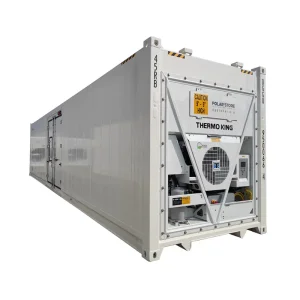
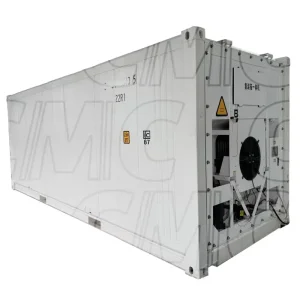
Global demand transitioned toward volumetric efficiency. Production expanded into 40ft/45ft High-Cube (HC) reefers, ISO liquid tank containers (T11/T14/T50), side-opening configurations, and DNV 2.7-1 certified offshore silt baskets. The introduction of Carrier Transicold, Thermo King, and Daikin machinery solidified export leadership.
Intelligent Green Intermodal Tech (2019–2025+)
Current industrial priorities integrate solar-assisted DC inverter reefer refrigeration, IoT telematics with multi-constellation GNSS tracking, automated atmospheric control for perishables, and conversion of structural freight shells into mobile Battery Energy Storage Systems (BESS) and modular data centers.
Enterprise Procurement Criteria: Total Cost of Ownership (TCO)
Enterprise procurement directors evaluate container assets far beyond the initial FOB unit invoice. A rigorous technical audit evaluates structural fatigue life, thermal preservation dynamics, and intermodal versatility.
Atmospheric Weathering Steel
Procuring Corten-A/SPA-H grade alloy forms a self-regenerating copper-chromium-nickel protective oxide patina. This resists marine salinity penetration, preventing early rust perforation and extending operational service life to 20+ years under aggressive sea-freight duty cycles.
Thermal Bridging & K-Value
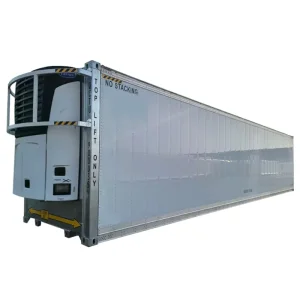
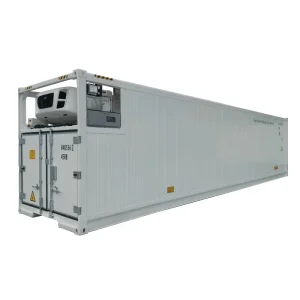
For reefer and insulated containers, polyurethane rigid foam injected at 40-42 kg/m³ density ensures an overall heat transfer coefficient (U/K-value) below 0.38 W/(m²·K). This minimizes thermal bridging, lowers genset diesel consumption, and preserves delicate pharmaceuticals or fruits.
Multi-Door Ergonomics
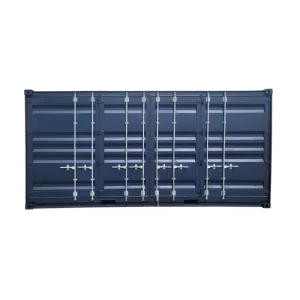
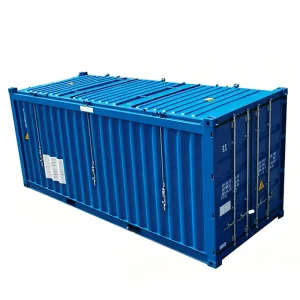
Side-opening four-panel configurations, roll-up shutter access, and hard open-top mechanisms drastically reduce depot turnaround times. Forklifts can access standard pallet footprints across the full 12-meter side profile without dead-zone restowing, cutting warehouse handling costs.
Fleet Resale & Depreciated Equity
Containers engineered strictly to ISO/CSC and Bureau Veritas certification maintain buoyant secondary market value. Even after 10-12 years of deep-sea shipping, structural integrity allows seamless repurposing into on-site storage, urban mini-warehouses, or modular architectural living spaces.
Macro Industry Solutions: Bridging Maritime, Rail, and Remote Project Nodes
How versatile containerized platforms resolve structural bottlenecks across key global supply chain sectors.
"Belt and Road" Trans-Eurasian Rail Corridors
Long-haul overland rail routes traversing Kazakhstan, Russia, and Europe experience extreme ambient fluctuations from -40°C in Siberian winters to +45°C in Central Asian deserts. Our 45ft reinforced high-cube reefer containers feature dual-power integrated diesel-electric generator sets, vacuum insulation panels (VIP), and real-time satellite telemetry to prevent rail cargo freezing.
Hazardous Chemical & High-Purity Liquid Logistics
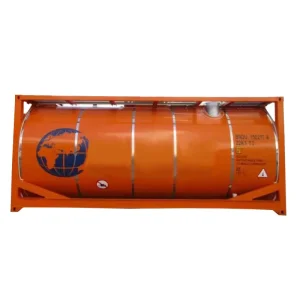
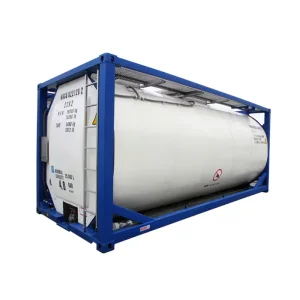
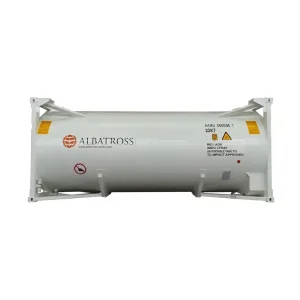
Global transport of bulk specialty chemicals, food-grade additives, and potable water demands UN Portable Tank (T11/T14/T50) compliance. Utilizing ASME-certified 316L stainless steel pressure vessels encased within high-tensile carbon steel outer frames guarantees zero vapor leakage, complete drainage via bottom discharge valves, and rapid CIP cleaning cycles.
Offshore Exploration & Dynamic Heavy Lifting
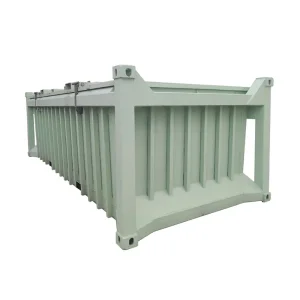
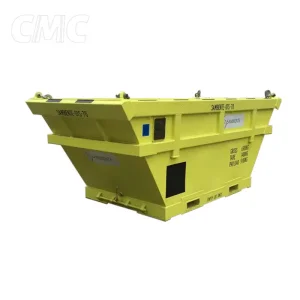
Harsh North Sea and offshore marine platforms cannot tolerate standard container corner castings due to massive wave-induced dynamic snatch loading. Our DNV 2.7-1 / EN 12079 certified half-height ore containers, silt baskets, and modular tool cabins feature Charpy V-notch tested low-temperature impact steel (-20°C structural resilience) and certified lifting pad-eyes.
Standardized Dimensional & Mechanical Performance Benchmarks
A precision comparison of structural load limits, tare masses, internal volumetric ratings, and refrigeration thermal ranges across key factory-built configurations.
| Container Classification | Structural Metallurgy | External Dimensions (L × W × H) | Internal Dimensions (L × W × H) | Max Gross Mass (MGM) | Tare Weight | Cubic Capacity | Thermal / Mechanical Range |
|---|---|---|---|---|---|---|---|
| 20ft Standard Dry (20GP) | SPA-H Corten Steel | 6,058 × 2,438 × 2,591 mm | 5,898 × 2,352 × 2,393 mm | 30,480 kg | 2,200 kg | 33.2 m³ | Ambient (-40°C to +80°C) |
| 40ft High Cube Dry (40HC) | SPA-H Corten Steel | 12,192 × 2,438 × 2,896 mm | 12,032 × 2,352 × 2,698 mm | 32,500 kg | 3,850 kg | 76.4 m³ | Ambient / High Stacking Strength |
| 40ft HC Side-Door Reefer | SUS304 Interior / Corten Frame | 12,192 × 2,438 × 2,896 mm | 11,580 × 2,290 × 2,545 mm | 34,000 kg | 4,980 kg | 67.5 m³ | -35°C to +30°C Precise Control |
| 20ft ISO Liquid Tank (T11) | 316L SS / Carbon Steel Cradle | 6,058 × 2,438 × 2,591 mm | Shell Dia: ~2,300 mm | 36,000 kg | 3,650 kg | 25,000 Liters | Working Pressure: 4.0 Bar |
| DNV 2.7-1 Offshore Silt Basket | Low Temp Alloy (Q345E/SPA-H) | 6,058 × 2,438 × 1,400 mm | 5,860 × 2,240 × 1,120 mm | 15,000 kg | 2,400 kg | 14.7 m³ | Offshore Dynamic Snatch Tested |
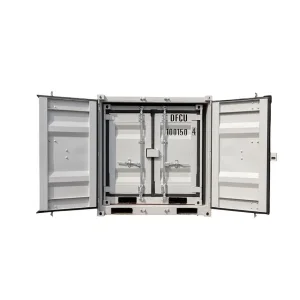
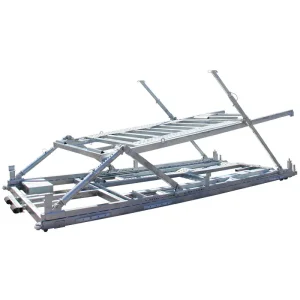
| Nested Mini Storage (4-12ft) | High-Tensile Galvanized Steel | Modular Nesting Sizes | Variable Internal Profiles | 5,000–10,000 kg | 650–1,400 kg | 6.0–22.0 m³ | Weatherproof Secure Site Storage |
Localization Support, Port Proximity & Global Compliance Assurance
How geographic advantage and international classification approvals eliminate procurement delays for overseas EPC contractors and logistics fleet owners.
100 km Strategic Port Radius
Our dual operational bases in Tianjin and Suzhou are situated within 100 kilometers of the world's most active maritime container handling hubs (Tianjin Xingang and Shanghai/Taicang ports). This geographic proximity cuts inland drayage costs, guarantees guaranteed feeder berths, and facilitates one-way "cabotage" freight arrangements that minimize empty deadhead repositioning fees.
International Classification Society Approvals
Every newly constructed unit undergoes third-party verification and certification by Bureau Veritas (BV), American Bureau of Shipping (ABS), Lloyd's Register (LR), or China Classification Society (CCS). Products comply strictly with CSC (International Convention for Safe Containers), ISO 1496 Series 1, TIR customs requirements, and DNVGL-ST-E271 offshore standards.
Turnkey Export Documentation Clearing
Overseas buyers receive complete documentation dossiers: Certified Manufacturer's Data Report (MDR), Welder Qualification Records (WQR), Non-Destructive Testing (NDT) radiographic weld test certificates, Timber Treatment Phytosanitary certificates (Australian AQIS compliance), and custom CSC safety approval plates riveted directly to the left-hand door leaf.
Engineering Roadmap (2025–2035): Autonomous, Clean, and Modular
The manufacturing architecture for storage and freight containers is undergoing a profound paradigm shift driven by decarbonization targets, digital twin telematics, and electrification.
Autonomous Satellite IoT Sensors
Next-generation containers integrate low-profile solar energy harvesting antennas, BLE wireless cargo sensors, optical volumetric sensors, and low-Earth-orbit (LEO) satellite communications. Real-time door-opening tracking, internal atmospheric O2/CO2 levels, and mechanical shock accelerometers ensure total chain of custody visibility.
Zero-VOC Waterborne Paint Systems
Aligning with aggressive global ESG mandates, our automated robotic coating lines have phased out solvent-based coatings. Utilizing high-build waterborne epoxy zinc-rich primers and polyurethane topcoats achieves 100% compliance with ISO 12944 C5-M marine exposure testing while drastically reducing factory VOC emissions.
Grid-Scale BESS & Hydrogen Storage
Converting structural container frames into standardized energy storage enclosures. Integrated with liquid cooling loops, FM-200 explosion suppression systems, and thermal runaway barriers, these 20ft/40ft modular shells house lithium iron phosphate (LFP) battery racks for national power grids worldwide.
Circular Economy & Bio-Flooring
Traditional apitong hardwood floorboards are being transitioned to sustainably sourced bamboo-composite laminates and 100% recyclable cold-formed steel flooring systems. These alternatives resist forklift axle loads up to 7,260 kg (ISO 1496/1 test standard) without chemical fumigation requirements.
Structural Design & FEA
Finite element analysis validating torsional stiffness, floor shear, and 9-high stacking load tests under 192,000 kg.
Automated Laser Cutting
High-precision fiber laser profiling of SPA-H Corten corrugated panels, side headers, and corner posts.
Robotic Jigs & Welding
Automated CO2 gas-shielded seam welding ensuring deep root penetration and air-tight corner casting bonding.
Shot-Blast & C5 Coating
Automatic steel shot blasting to Sa 2.5 cleanliness, followed by three-coat waterborne paint application.
Final Survey & Stamping
Weather-tightness smoke testing, dimension inspection, CSC certification riveting, and port staging.
Specialized Tank, Bulk & Offshore Container Portfolio (Set II)
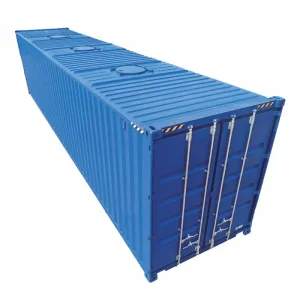
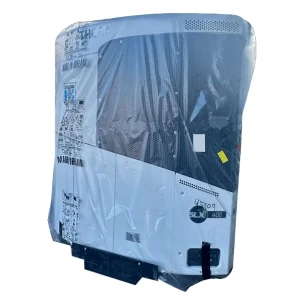
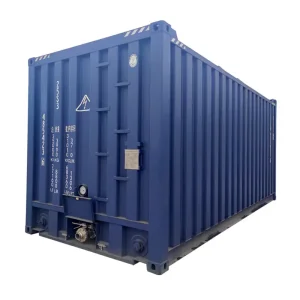
Engineered for hazardous cargo containment, offshore dynamic hoisting, bulk mineral transport, and distributed power generation trailers.
Frequently Asked Questions: Technical & Procurement Standards
In-depth responses covering classification rules, mechanical tolerances, thermal integrity, customs protocols, and second-hand inspection criteria.