Engineering Hardware: Top 8 Certified Configurations
Specialized intermodal equipment engineered with structural Corten steel, maritime-grade seals, and verified thermal protection.
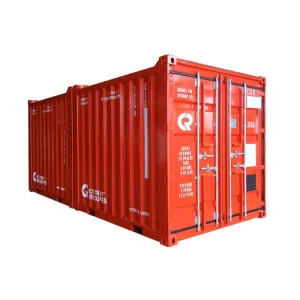
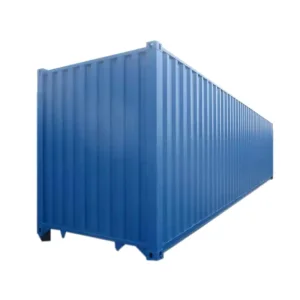
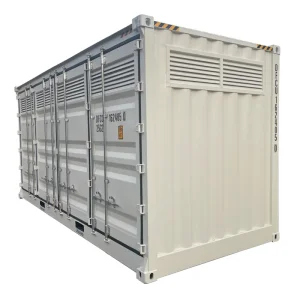
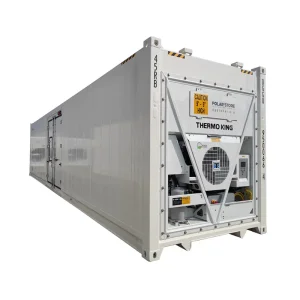
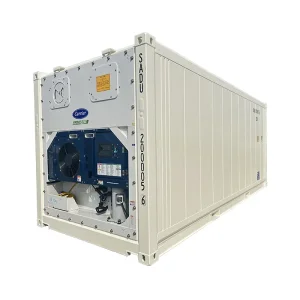
40 Ft High Cube Architecture: Structural Dynamics & Volumetric Physics
A rigorous inspection of modern container manufacturing tolerances, structural loading kinematics, and the operational economics of 9ft 6in profiles.
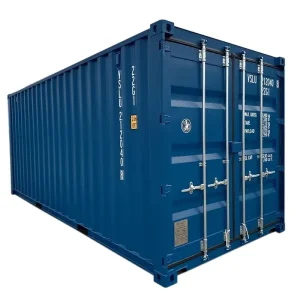
In modern intermodal freight networks, the 40 Ft High Cube Container (40HC) represents the pinnacle of high-volume dry and refrigerated intermodal transportation. Designed with an exterior height of 2,896 mm (9 ft 6 in)—a full 305 mm (12 inches) taller than standard ISO GP containers—the 40HC solves the volumetric bottlenecks of modern global distribution networks. As manufacturing trends shift toward lightweight, voluminous, and precision-packaged goods (such as consumer electronics, modular automotive components, and automated palletized distribution systems), the extra cubic capacity translates directly to lower per-unit transportation expenses.
Engineered from SPA-H atmospheric corrosion-resistant Corten steel, our high cube containers are fabricated to withstand 1.8G dynamic acceleration forces encountered in transoceanic freight and rail humping operations. The structural integrity relies heavily on high-tensile cold-formed corner posts capable of supporting up to 9-high fully loaded stacks (exceeding 192,000 kg total superimposed static load) in compliance with the stringent ISO 1496-1 testing regime.
| Dimensional Metric | 40 Ft Standard GP | 40 Ft High Cube (40HC) | Engineering Differential Advantage |
|---|---|---|---|
| External Height | 2,591 mm (8' 6") | 2,896 mm (9' 6") | +305 mm vertical clearance for high-cube automation |
| Internal Height | 2,393 mm | 2,698 mm | Accommodates standard European & US mega-pallets |
| Cubic Capacity | 67.7 m³ (2,390 cu.ft) | 76.3 m³ (2,694 cu.ft) | +8.6 m³ (+12.7% information/volumetric payload) |
| Tare Weight (Avg.) | 3,740 kg | 3,900 kg | High strength-to-weight Corten corrugated profiles |
| Door Opening Height | 2,280 mm | 2,585 mm | Rapid loading via high-mast counterbalanced forklifts |
Macro-Industry Shifts & Procurement Vector Optimization
Evaluating international supply chain decarbonization, IoT telemetry integrations, and structural modularization trends.
IoT Telemetry & Smart Fleet Sensing
Next-generation 40HC assets feature integrated satellite-linked IoT nodes. These monitor real-time kinetic impact shocks, atmospheric humidity levels, door-breach security events, and interior micro-climates. Real-time predictive telemetry reduces asset downtime and cargo liability during multimodal transit.
Decarbonization & Eco-Coatings
Global environmental mandates (such as EU ETS shipping compliance) are driving manufacturers away from traditional solvent-borne paints toward low-VOC waterborne zinc-rich primers and advanced thermal barrier coatings that actively decrease internal reefer refrigeration loads by up to 14%.
Modular Infrastructure Re-Engineering
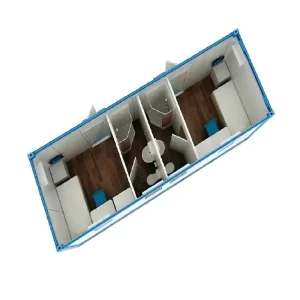
The global demand for 40HC frameworks has expanded beyond maritime freight into mobile edge computing (data center pods), battery energy storage systems (BESS), and specialized modular housing, where the 2.7m ceiling clearance provides code-compliant working room for technical MEP installations.
Engineered Turnkey Solutions for Demanding Industries
Addressing structural load distribution, multi-temperature management, and hazardous containment.
Cold-Chain & Controlled Atmosphere
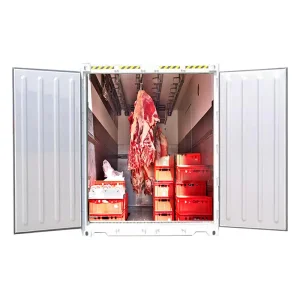
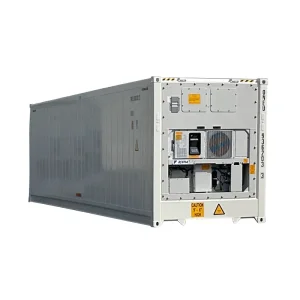
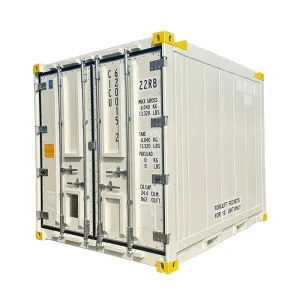
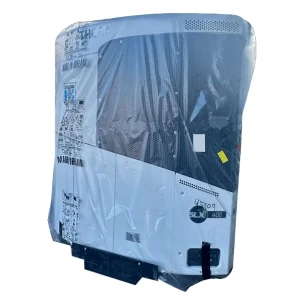
For fresh perishables, bio-pharmaceuticals, and high-value seafood, our 40HC reefers combine high-density polyurethane thermal foam injection with Carrier, Thermo King, or Daikin cooling units. Temperature stability is guaranteed across operating envelopes ranging from -35°C to +30°C, complete with dual-speed scroll compressors and atmosphere-scrubbing CO2/O2 systems.
Hazardous Cargo & Chemical Logistics
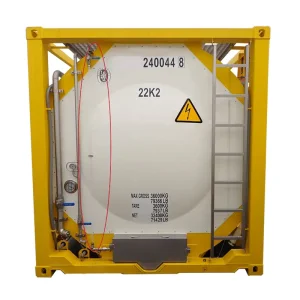
Hazardous material transportation demands absolute compliance with the IMDG code. Our modified dangerous goods (DG) high cube containers feature integrated bunded catch-basins, full-length spark-resistant floors, high-flow gravitational venting, and marine-certified explosion-proof lighting infrastructure for class 3, 6, and 8 chemical shipments.
Offshore Exploration & DNV Lifting
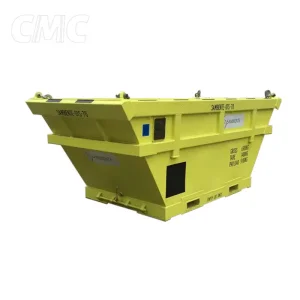
Offshore logistics demand survival in aggressive sub-zero maritime conditions. Fabricated to exceed DNV GL 2.7-1 / EN 12079 structural dynamics, these platforms feature heavy-duty integrated pad-eyes, low-temperature impact test certification down to -20°C, and secondary certified sling assemblies for offshore rig operations.
Regulatory Compliance & Certification Matrix
Complete traceability, documentation, and mechanical endurance guarantees for international maritime border clearances.
CSC Certification
Every unit leaves production with an approved International Convention for Safe Containers (CSC) data plate, ensuring stack approval ratings, timber treatment phytosanitary clearances, and customs seal compliance.
ISO 1496/668 Audit
Dimensions, structural corner fittings, transverse floor flexural stress thresholds, and door perimeter racking tests are validated on our automated hydraulic load frames under external Bureau Veritas inspection.
DNV 2.7-1 / EN 12079
For high-risk offshore deployment, our structural steel meets Charpy V-Notch impact testing requirements. Welds undergo 100% NDT (Non-Destructive Testing) ultrasonic review to prevent brittle fractures offshore.
ISO 9001:2015 QC
From initial uncoiling of Corten steel plates to automated robotic continuous seam welding, zinc phosphatizing, and baking ovens, our quality management delivers mill-certified trace documentation across entire fleet batches.
Frequently Asked Questions: Global Sourcing & Specification
Clear, direct technical clarification for commercial logistics leads, procurement managers, and specialized engineers.
Specialized Freight Assets: Secondary Showcase
Specialized bulk material units, offshore silt carriers, vehicle transport architectures, and cryogenic reefer units.