
Standard & Specialized Container Solutions (Top Portfolio)
Engineered to withstand harsh oceanic conditions, high-cube volume demands, and critical thermal precision. All units comply with CSC, ISO 1496/1, and international classification society rules.

Engineering Taxonomy: Different Types of Shipping Containers
From the standard corrugated ISO steel box to high-performance cryogenic freezers and rugged offshore modules, modern supply chains depend on specialized containment architecture.
The global shipping container sector has evolved far beyond the homogeneous 20-foot and 40-foot dry boxes standardized during the mid-20th century. In today’s hyper-synchronized multimodal logistics landscape, intermodal freight containers represent specialized mechanical engineering solutions designed to tackle complex hydrostatic pressures, dynamic vessel accelerations, severe cryogenic thermal retention, and harsh atmospheric corrosion. Sourcing procurement heads, freight forwarders, and logistics architects must master the distinct design paradigms of modern container classes to safeguard cargo integrity and maximize volumetric payload utilization.
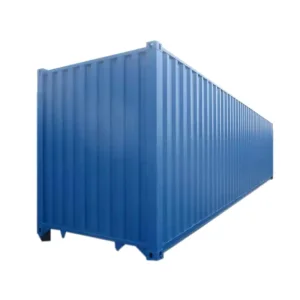
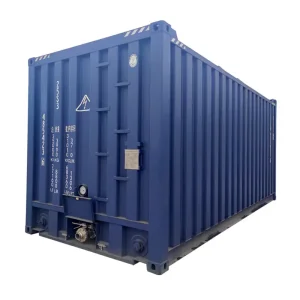
Standard Dry Cargo Containers (GP & HC)
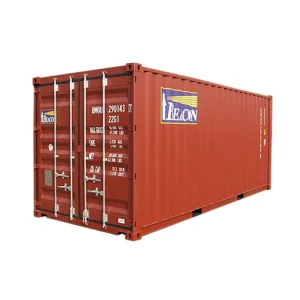
Fabricated using high-yield Corten-A weathering steel (SPA-H), standard General Purpose (GP) and High Cube (HC) units are the foundation of global maritime trade. High cube configurations increase vertical clearance by 305 mm (1 foot), achieving 76.3 m³ of internal volume for bulk consumer goods, apparel, and light machinery.
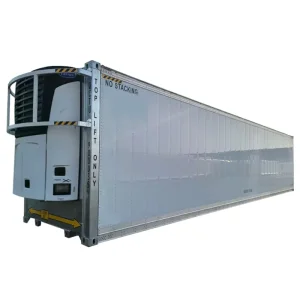
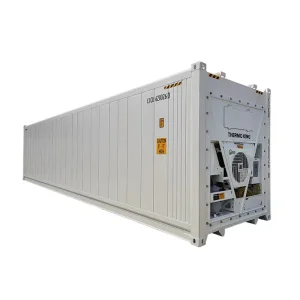
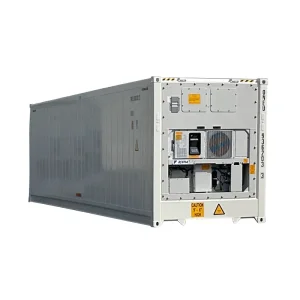
Thermal & Reefer Containers (RF & HR)
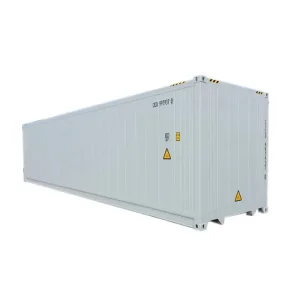
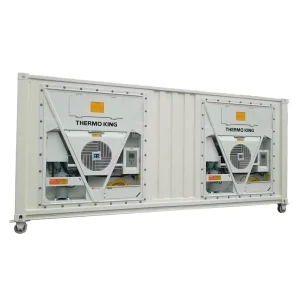
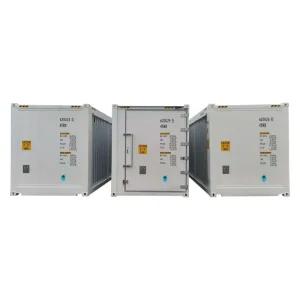
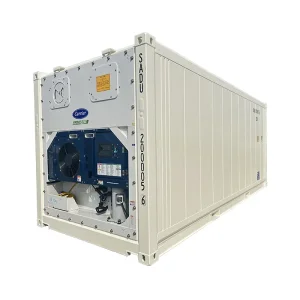
Precision-engineered sandwich panels containing vacuum-foamed polyurethane core insulation (density ≥ 42 kg/m³) paired with Carrier, Daikin, or Thermo King cooling units. Capable of maintaining tight temperature profiles from -35°C up to +30°C, and ultra-deep -60°C blast freezing for biological and tuna shipments.
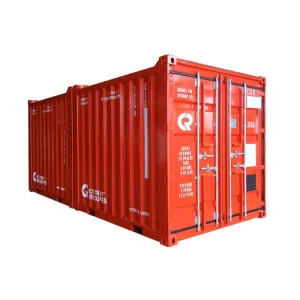
DNV 2.7-1 / EN 12079 Offshore Units
Constructed specifically for the oil, gas, and offshore wind industries. Features reinforced corner castings, certified padeyes, heavy-duty crash frames, and structural materials tested for Charpy V-notch dynamic impact resistance at -20°C or -40°C in volatile oceanic environments.
Specialized Open Top & Flat Rack Units
Engineered for out-of-gauge (OOG) and heavy industrial cargo. Removable roof bows and heavy-duty tarpaulins allow overhead crane loading for breakbulk machinery, steel coils, and granite blocks, while stanchion flat racks handle high point-load concentrations up to 45 metric tons.
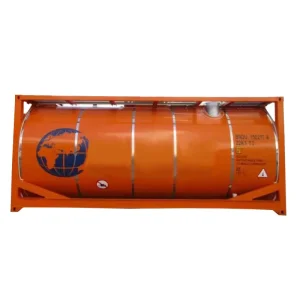
ISO Tank Containers (UN Portable Tanks)
Cylindrical stainless steel pressure vessels (grade 316L) encased in an ISO structural frame. Designed for safe, high-volume multimodal transport of dangerous liquid chemicals, food-grade oils, potable liquids, and liquefied gases under IMDG and ASME Section VIII directives.
Modular & Battery Energy Storage (BESS)
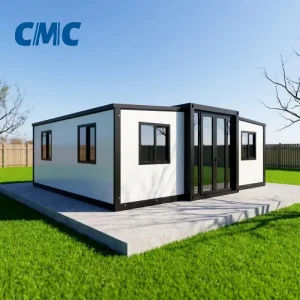
Custom structural platforms modified for battery storage containers, telecom switchgear shelters, and expandable modular living pods. Equipped with integrated thermal barrier liners, explosion venting panels, fire-suppression conduits, and structural load distribution beams.
| ISO Container Classification | External Dimensions (L × W × H) | Tare Weight (Avg) | Max Gross Mass (MGM) | Payload Volume | Structural Metallurgy |
|---|---|---|---|---|---|
| 20ft General Purpose (20GP) | 6,058 × 2,438 × 2,591 mm | 2,150 kg | 30,480 kg | 33.2 m³ | SPA-H Corten Steel / 28mm Apitong Marine Plywood |
| 40ft High Cube Dry (40HC) | 12,192 × 2,438 × 2,896 mm | 3,850 kg | 32,500 kg | 76.3 m³ | Corten-A Cold-Rolled Corrugated Sections |
| 40ft High Cube Reefer (40HR) | 12,192 × 2,438 × 2,896 mm | 4,480 kg | 34,000 kg | 67.6 m³ | SUS304 Stainless Interior / High Density PU Core |
| 20ft ISO Liquid Tank (T11/T14) | 6,058 × 2,438 × 2,591 mm | 3,620 kg | 36,000 kg | 21,000–26,000 L | SS316L Tank Shell / Carbon Steel Q345 Frame |
| DNV 2.7-1 Offshore Dry Cargo | 3,048 × 2,438 × 2,591 mm (10ft) | 2,800 kg | 10,000 kg | 15.8 m³ | S355J2 Welded Tubular Steel (-20°C Impact Rated) |
Global Enterprise Sourcing Demand & Strategic Procurement
How shipping lines, leasing giants, EPC contractors, and cold-chain operators optimize procurement cycles, total cost of ownership (TCO), and fleet compliance.
Procuring shipping containers is no longer merely an equipment purchase; it is a high-stakes balance sheet allocation that dictates shipping reliability, maintenance overhead, and asset turnover. Global container shipping lines (such as MSC, Maersk, and CMA CGM) alongside massive container leasing corporations (Textainer, Triton, and Florens) manage fleets exceeding tens of millions of TEUs (Twenty-foot Equivalent Units). For these institutional buyers, supply stability, coating life-cycle longevity, and strict metallurgical tolerances dictate supplier selection.
Total Cost of Ownership (TCO)
Procurement teams evaluate the 15-to-20 year economic lifespan of units. High initial structural coating specifications—such as three-coat epoxy systems with zinc-rich primers—significantly depress refurbishment and rust-remediation expenses over sea voyage rotations.
Classification Society Accreditations
Global sea-worthiness demands verifiable type-approval documentation from Bureau Veritas (BV), Det Norske Veritas (DNV), American Bureau of Shipping (ABS), or Lloyd’s Register (LR), ensuring seamless entry through worldwide customs and port state controls.
Fleet Interoperability & Dimensions
Precision corner casting tolerances (ISO 1161) guarantee automated container spreader engagement in deepwater port terminals. Deviations greater than 2 mm can cause gantry crane jams, slowing down mega-vessel turnaround times.
Dual-Cycle OEM & ODM Customization
Increasingly, mining operators, defense contractors, and energy developers bypass stock containers to order custom-engineered ODM containers featuring side cargo access, drop-down ramps, blast vents, and integrated cable conduits directly from the factory line.
Procurement Strategic Insight: Institutional buyers often adopt a blended fleet strategy: sourcing 70% new-build factory units from primary Chinese manufacturing clusters for long-term core liner routes, while absorbing certified, port-inspected used containers for inland repositioning and static on-site cold storage projects.
China Factory 4.0: Supply Chain Resilience & Manufacturing Prowess
Over 90% of the world’s shipping containers originate from modern smart factories across coastal China. Discover the engineering ecosystem behind this manufacturing advantage.
The manufacturing dominance of Chinese container factories is rooted in deep metallurgical integration, automated production cells, and strategic port-adjacent logistics clusters. In key industrial hubs like Tianjin, Suzhou, Shanghai, and Guangdong, factories operate adjacent to national-level steel foundries, automated continuous coil-rolling mills, and world-class seaport terminals. This close geographic proximity eliminates inland haulage bottlenecks and shields global buyers from raw material price volatility.
Automated Continuous Production Flow
State-of-the-art container fabrication utilizes continuous stamping and uncoiling lines that convert raw SPA-H Corten coils into corrugated roof and side panels within seconds. Multi-axis robotic welding gantries carry out complete submerged arc and gas-shielded fillet welds across roof bows, corner posts, and sill beams. This automated assembly ensures weld penetration consistency, zero hot cracks, and standard diagonal squareness tolerances within ±2 mm—well within international classification rules.
Ecological Shot-Blasting & Waterborne Coating Lines
Environmental standards in modern Chinese Industry 4.0 plants use automated, closed-loop centrifugal shot-blasting machines. Steel structures undergo abrasive surface preparation to Swedish Standard Sa 2.5, clearing mill scale and oxidation. Automated reciprocator spray booths apply eco-friendly, low-VOC waterborne zinc-rich primers, high-build epoxy intermediate barriers, and polyurethane exterior finishes, delivering high salt-spray resistance (exceeding 1,500 hours under ASTM B117).
Localized Engineering Use-Cases & Extreme Operating Environments
From North Sea drilling rigs to sub-Saharan cold chain networks, containers must withstand diverse dynamic forces and environmental stressors.
Offshore Exploration & Rig Supply
Platform operators use 10ft, 20ft, and half-height open-top offshore containers certified to DNV 2.7-1. Equipped with specialized sling lifting sets, these modules handle severe shock-loads and roll angles during dynamic crane transfers between platform decks and offshore supply vessels (OSVs) in heavy seas.
Pharmaceutical & Fresh Produce Cold Chain
Temperature deviations can spoil entire shipments of biologics, vaccines, or premium berries. Modern high-cube reefer containers feature automated digital dataloggers, atmosphere-modifying scrubbers (controlling CO₂/O₂ levels), and multi-temperature dual-evaporator compartments to preserve shelf life across long ocean voyages.
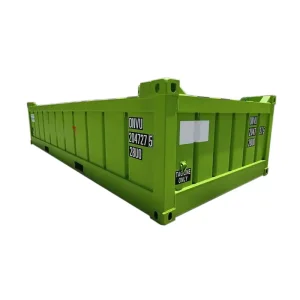
Heavy Mineral & Bulk Ore Transport
Transporting dense copper concentrates, lithium spodumene, and iron ore requires specialized half-height containers. Engineered with steep-angled interior side-walls and reinforced corner structures, these units integrate with specialized harbor rotators for quick 360-degree dumping into bulk carriers.
Grid-Scale Battery Energy Storage (BESS)
Renewable solar and wind installations utilize reinforced 20ft and 40ft high-cube shells as walk-in enclosures for lithium-iron-phosphate (LFP) battery banks. These units feature pre-installed liquid-cooling loops, aerosol fire suppression, structural floor weight distribution frames, and rapid thermal insulation.
Expedited Emergency Relief & Living Pods
Disaster relief agencies and mining operations utilize expandable 20ft modular container houses. Built with fire-rated rock wool panels, folding steel hinges, factory-integrated electrical circuits, and quick plumbing connections, full accommodations can be deployed in under 15 minutes per module.
Cross-Border Intermodal Rail Corridors
Operating across Eurasian rail corridors and North American double-stack lines, standard dry containers endure intense dynamic longitudinal acceleration loads. Reinforced sill pockets, dual side doors, and robust locking bars keep freight intact across fluctuating continental climates.
Frequently Asked Questions: Container Engineering & Procurement
Clear, technical explanations covering classification approvals, structural metallurgy, reefer machinery selection, and export requirements.
What is Corten steel (SPA-H) and why is it essential for ISO shipping containers?
SPA-H is a specialized low-alloy, high-strength weathering steel specified under JIS G3125. Containing trace alloying elements of copper, chromium, and nickel, it develops a self-healing, dense oxide patina upon atmospheric exposure. This passivating protective layer prevents deep oxygen penetration and suppresses ongoing pitting corrosion in salty maritime conditions. Container roofs, corrugated wall panels, corner posts, and cross-members fabricated from SPA-H offer yield strengths exceeding 345 MPa, delivering reliable structural integrity under full 9-high stacked vessel configurations.
What is the structural difference between ISO 1496 shipping units and DNV 2.7-1 offshore containers?
Standard ISO 1496 containers are designed for commercial intermodal shipping and rely on eight ISO 1161 corner castings engaged by automated harbor twistlocks. In contrast, DNV 2.7-1 (and EN 12079) offshore containers are engineered for dynamic offshore crane lifts between vessels and drilling platforms in turbulent seas. They feature heavy structural crash frames, higher safety design factors (typically 2.0 to 3.0), integrated lifting lugs (padeyes) aligned with certified four-leg wire rope slings, and structural steel verified for dynamic impact toughness down to -20°C or -40°C.
How do Carrier, Daikin, and Thermo King refrigeration units compare for reefer shipping containers?
Each refrigeration manufacturer offers distinct performance profiles suited to specific cargo needs: Carrier Transicold (e.g., PrimeLINE, ThinLINE) is widely used across container shipping lines for its balanced power efficiency, digital scroll compressors, and widespread global parts availability. Daikin (e.g., LXE series) features durable scroll compressor technology that delivers stable, fine-tuned humidity control ideal for perishable fruits and pharmaceuticals. Thermo King (e.g., Magnum Plus) excels at ultra-low temperature ranges down to -40°C or -60°C blast configurations, making it a preferred choice for deep-frozen tuna and specialized biological supplies.
What testing and certifications are stamped on the CSC Safety Approval Plate?
Mandated by the International Convention for Safe Containers (CSC 1972), the stainless steel CSC plate fixed to the container door confirms that the unit passed independent structural inspections by an approved classification society (BV, LR, ABS, DNV, or CCS). Certified ratings include: Transverse Racking Test load (typically 150 kN), End Wall Strength (0.4P), Side Wall Strength (0.6P), Floor Proof Test load (typically 7,260 kg axle loads over contact wheels), and Maximum Superimposed Stacking Weight (typically 216,000 kg, representing nine fully-laden containers stacked at sea).
What is the typical manufacturing lead time and minimum order quantity (MOQ) for custom OEM containers?
For standard ISO dry cargo containers, factory production lines run in high-volume batches with variable MOQs depending on production scheduling. For specialized OEM/ODM projects (such as side-door openings, special insulation, liquid tanks, or modular power shelters), engineering drawings are typically finalized in 7 to 10 working days. Following prototype stress verification and customer sign-off, production lead times generally range between 25 and 45 days. Finished containers are then moved directly to nearby deepwater wharves in Tianjin, Shanghai, or Qingdao for immediate sea export.
Specialized ISO Tanks, Offshore Units & Custom Storage (Bottom Portfolio)
High-durability stainless liquid vessels, certified DNV offshore cargo baskets, customized multi-temperature combinations, and heavy ore carriers.

On-Site Factory Acceptance Testing (FAT) Protocol
A standardized checklist used by classification society surveyors and third-party inspectors prior to container handover.
Light & Weather-Tightness
Conducted in darkened testing tunnels or using high-intensity interior illumination. Inspects complete perimeter EPDM door gaskets and panel seam welds to confirm zero light leakage and watertight sealing.
Dimensional Tolerance Verification
Laser triangulation measurement checks external diagonal variance across all corner castings to ensure tolerance within ±2 mm, guaranteeing smooth compatibility with port cranes and intermodal flatbed twists.
Floor Deflection & Axle Load Test
A specialized steel test vehicle bearing a 7,260 kg axle load is driven across the interior Apitong hardwood or steel checkered floor to confirm zero permanent deflection or structural sagging in underfloor cross-members.
Coating Dry Film Thickness (DFT)
Magnetic dry-film gauges measure total paint build-up (typically 120–150 microns across exterior corrugated steel, with 25–35 microns of zinc-rich primer) to verify protective barrier performance for harsh sea voyages.