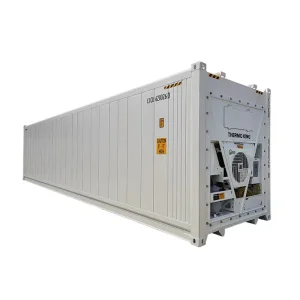
Featured Blast Reefer & Specialized Marine Containers
Precision-manufactured units certified for sub-zero rapid cooling, extreme maritime transit, and specialized industrial containment.
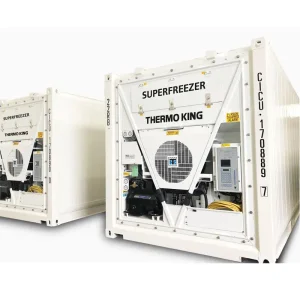
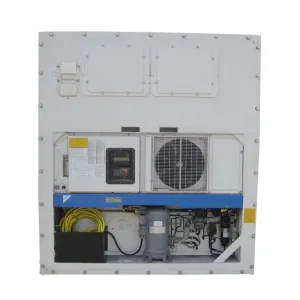
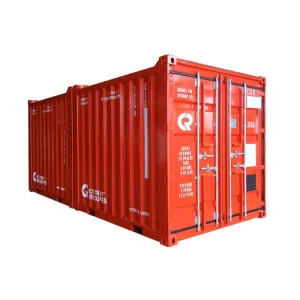
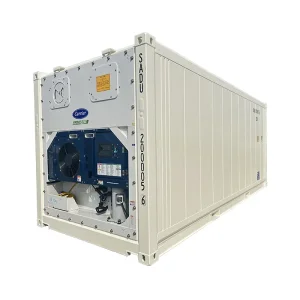
Global Landscape: The Paradigm Shift Toward Modular Blast Freezing
Evaluating commercial supply chain demands, cold storage decentralized models, and technical thermodynamic performance in international transshipment.
Conventional Reefers vs. True Blast Freezing
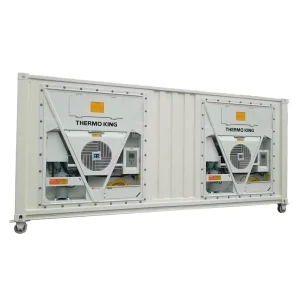
Standard refrigerated shipping containers are designed for holding pre-frozen cargo between -20°C and -25°C. Their air handling systems lack the convective velocity and BTUs required for rapid core temperature drop. OEM Blast Freezer Containers solve this limitation by integrating heavy-duty multi-compressor systems and specialized high-CFM evaporator fans capable of plunging ambient-temperature core biomass down to -38°C to -60°C within hours, effectively bypassing cellular rupture caused by large water ice crystals.
Decentralized Pre-Cooling Infrastructure
Modern food and biochemical logistics have moved away from centralized, costly brick-and-mortar freezing hubs toward localized point-of-harvest pre-cooling. By deploying mobile ISO-framed blast containers directly at aquaculture docks, livestock processing stations, or agricultural aggregation hubs, operators eliminate spoilage windows, maintain raw commodity weight, and capture significant margin upside before cold-chain handoffs occur.
Macro CapEx Reduction Strategy
Traditional industrial cryogenic and blast tunnels require deep capital expenditure, prolonged municipal permitting, and static land commitments. An engineered modular OEM container approach transforms heavy capital investments into agile, scalable operational capacity. Plug-and-play architecture combined with standard intermodal corner castings guarantees that equipment can be relocated across international facilities as harvest seasonality dictates.
Localized Application Scenarios & Engineering Implementations
Engineered across harsh maritime, onshore processing, and specialized chemical supply environments worldwide.
Offshore Aquaculture & Tuna Cryo-Freezing
Sashimi-grade bluefin tuna, pelagic catch, and premium shrimp require blast temperatures below -45°C directly upon retrieval to stop myoglobin oxidation and flesh darkening. Our maritime-certified containers feature anti-corrosive 304/316 stainless-steel interiors, deep extruded T-bar floor profiles with high mechanical load bearing, and integrated drainage manifolds that allow heavy daily saltwater washdown.
Abattoirs & Commercial Meat Processing
Red meat processing lines rely on rapid post-slaughter heat dissipation to inhibit bacterial colonization while mitigating excessive drip loss during subsequent thawing. OEM blast freezer containers with integrated overhead rail systems and reinforced side loading doors provide continuous batch operation, dropping beef quarters and poultry crates through the latent heat curve in strict adherence to USDA/HACCP norms.
Biologics, Vaccines & Specialty Polymers
High-value pharmaceutical manufacturing, cell culture transportation, and temperature-activated aerospace resin systems demand verifiable thermal uniformity. Equipped with micro-PLC programmable logic controllers, redundant secondary refrigeration circuits, and cloud-linked multi-point telemetry, our specialized containers guarantee precision temperature profiles without hot spots.
China Industrial Supply Chain Resilience & Production Synergy
Operating from premier logistics and manufacturing clusters in Tianjin and Suzhou, combining heavy industrial steel fabrication with advanced thermal engineering.
Corten Steel Corten-A Structural Integrity
Fabricated using heavy-gauge atmospheric corrosion-resistant SPA-H Corten steel for exterior corrugation, base frames, and corner cast nodes. Full robotic submerged-arc welding delivers high torsional rigidity capable of withstanding rough maritime motion.
High-Density Vacuum Polyurethane Injection
Utilizing high-pressure cyclic-pentane foaming technology to produce 100mm–120mm structural insulation panels. Delivering thermal conductivity as low as 0.018 W/m·K, ensuring minimized thermal bridging and optimized coefficient of performance (COP).
Multi-Tier Compressor Integration
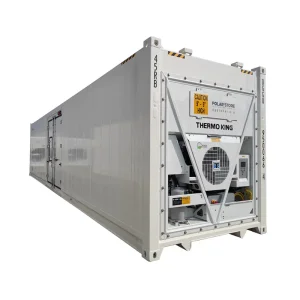
Factory integration with globally recognized cooling equipment including Carrier Transicold, Thermo King, Daikin, and Bitzer semi-hermetic screw/scroll compressor groups tailored to synthetic (R404A/R452A) or low-GWP refrigerants.
Port-Adjacent Consolidation Hubs
Direct positioning within 100 kilometers of the major international deep-water seaports of Tianjin and Shanghai/Taicang. This eliminates domestic drayage delays, prevents multi-handling, and enables real-time factory-to-berth vessel transfers.
Thermodynamic & Dimensional Performance Matrix
Evaluating standard ISO dimensional envelopes, insulation thicknesses, compressor topologies, and operating parameters across modern blast reefer builds.
| Container Model Class | External Dimensions (L × W × H) | Usable Volume / Floor | Compressor Configuration | Temp Capability | Primary Industrial Use Case |
|---|---|---|---|---|---|
| 20ft ISO Ultra-Deep Freezer | 6,058 × 2,438 × 2,591 mm | ~28.3 m³ / Heavy T-Floor | Single-Stage Heavy Scroll / Carrier Unit | -10°C to -35°C | Dockside catch pre-cooling, modular cold room expansions |
| 40ft High Cube Blast Container | 12,192 × 2,438 × 2,896 mm | ~67.6 m³ / High Airflow Extrusion | Dual-Stage Screw / Bitzer or Thermo King | -25°C to -45°C | Commercial abattoir throughput, intermodal cold transit |
| 40ft Cryo-Tunnel Customized | 12,192 × 2,438 × 2,896 mm | ~59.0 m³ / Baffled Tunnel Ducting | Cascade Cryogenic Pack / Dual Compressors | Down to -60°C | Sashimi tuna processing, vaccine & active ingredient freeze |
| Side-Open Blast Storage Unit | 12,192 × 2,438 × 2,896 mm | ~64.2 m³ / Structural Side Portals | Packaged Compact Reefer Group | -15°C to -30°C | Rapid lateral forklift staging, field logistics depoting |
Technology Roadmap: The Next Era of Sustainable Cold Logistics
Low-GWP & Natural CO2 (R744) Systems
Pioneering transcendent transcritical CO2 refrigeration loops for shipping containers. R744 offers ultra-low Global Warming Potential (GWP=1), high volumetric cooling capacity, and unmatched efficiency in low evaporating temperatures down to -50°C, anticipating impending European F-gas restrictions.
AIoT Dynamic Airflow & Telematics
Integrating intelligent variable-frequency drives (VFD) paired with machine-learning algorithms. System fans continually recalculate static pressure drops against real-time pallet cargo resistance, dynamically trimming parasitic kWh draw while eliminating micro-climate warm zones inside the box.
Phase Change Material (PCM) Thermal Buffers
Embedding custom latent-heat micro-encapsulated PCM composites inside sandwich wall structures. In the event of open-sea genset outage or regional grid interruption, thermal inertia allows zero-power temperature maintenance for up to 18 hours without product loss.
International Classification & Factory Quality Protocols
Rigorous multi-stage validation ensures every export container satisfies international marine safety, thermal efficiency, and environmental mandates.
Classification Society Certification
All structural enclosures, corner posts, and lifting lugs are built and tested under Bureau Veritas (BV), DNV GL, or CCS supervision. Units carry valid CSC (International Convention for Safe Containers) safety plates, guaranteeing unconditional clearance across global ports and containership stowage slots.
ATP Thermal & Air Leakage Testing
Factory testing is performed in accordance with ATP regulations (Agreement on the International Carriage of Perishable Foodstuffs). Container shells are subjected to positive/negative pressure seal validation, vacuum chamber tests, and 24-hour heat ingress evaluations to verify continuous Class FRC thermal performance.
Worldwide Component Field Support
Equipment integrates core refrigeration packs from world-tier brands (Carrier, Daikin, Thermo King), ensuring genuine spare parts, digital diagnostic codes, and factory-trained certified service mechanics are available at major maritime ports and cargo distribution terminals worldwide.
Frequently Asked Questions for Sourcing Directors & Engineers
Clear answers regarding thermodynamic capabilities, engineering options, lead times, and global shipping logistics.
What is the structural and mechanical difference between a reefer and a blast freezer container?
Standard reefers are designed solely to maintain pre-chilled freight temperature with lower airflow rates and low-to-medium compressor displacement. A true OEM blast freezer container incorporates oversized industrial semi-hermetic or dual-stage compressors, high-static pressure fans, and reinforced baffled interiors that generate intense convective heat transfer to freeze core food flesh rapidly.
Can you provide custom dimensions or non-standard door configurations?
Yes. In addition to standard ISO 20ft, 40ft, and 40ft High-Cube envelopes, we engineer tailor-made OEM/ODM units including full side-opening bi-fold doors, automated thermal roll-up shutters, internal dividing bulkheads for multi-temperature zones, and customized meat rail hanging fixtures.
What power supply infrastructure is needed for operating these units on site?
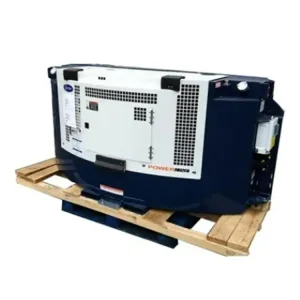
Typical configurations require 3-phase 380V/460V, 50Hz/60Hz electrical hookups. For remote field applications, deep-sea vessels, or rail transit without local utility connections, we manufacture and supply clip-on or underslung heavy-duty diesel generator sets (gensets) built to maintain uninterrupted freezing performance.
How do you verify insulation performance and structural seal tightness before shipment?
Every manufactured reefer enclosure undergoes multi-point factory acceptance testing (FAT), including light leak testing, pressure-decay air leakage validation, and thermal imaging checks to verify there are zero thermal bypass zones across panel corner joints and door perimeter double gaskets.
Explore Specialized Intermodal, Tank & Modular Units
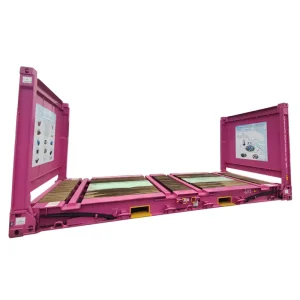
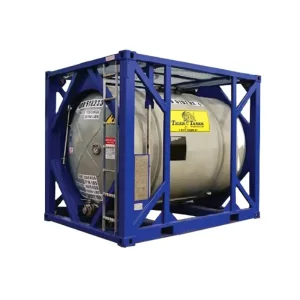
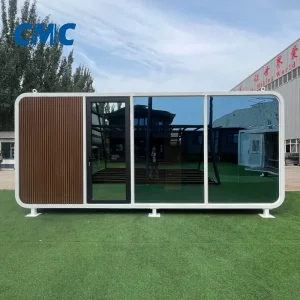
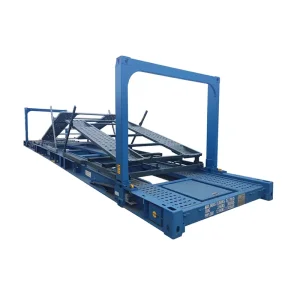
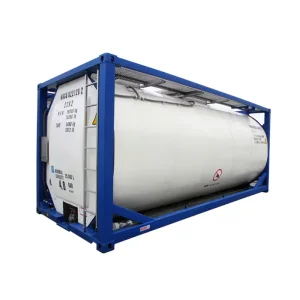
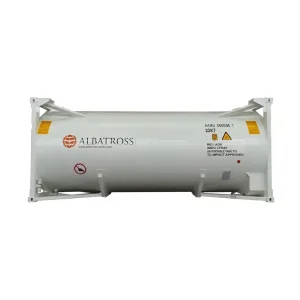
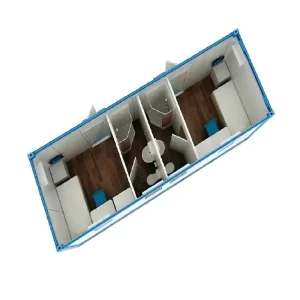
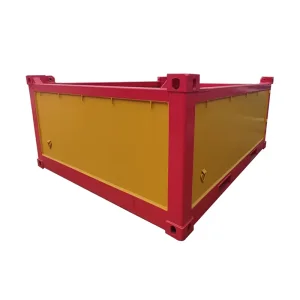
Expanding global fleet logistics with custom flat-racks, certified chemical ISO tanks, offshore skids, and modular living pods.