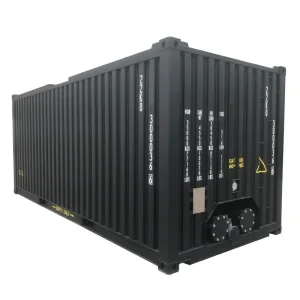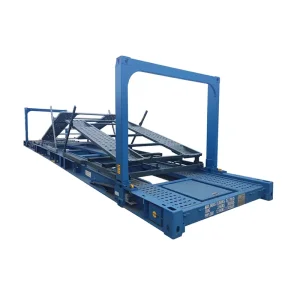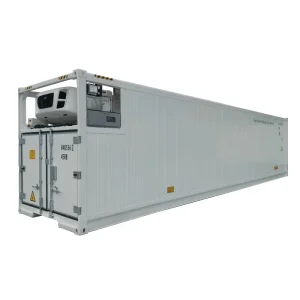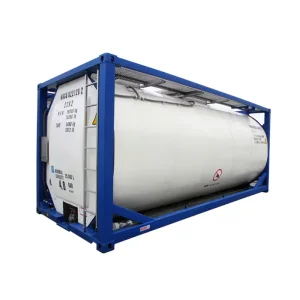
Standard & Heavy-Duty Intermodal Enclosures
Direct supply line from our Tianjin manufacturing facility. Fully certified corner casting modules built into global dry, cold-chain, and resource carrier units.
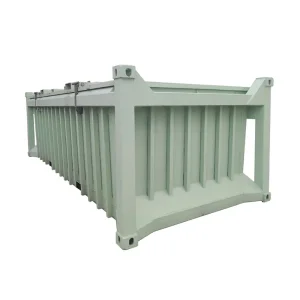
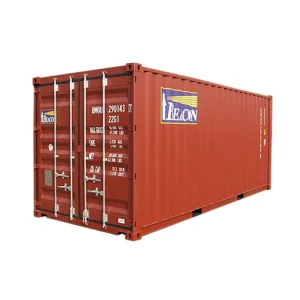
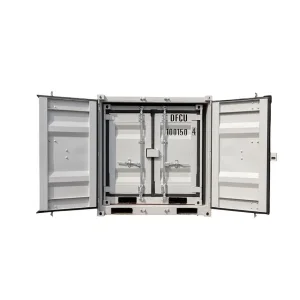
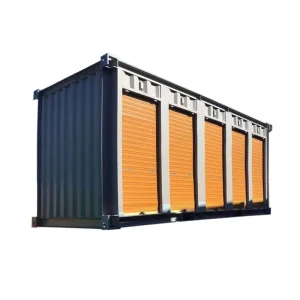
Precision Structural Foundations: ISO 1161 Corner Castings & Feet
The structural integrity of intermodal logistics relies entirely on container feet—standardized corner fittings engineered to withstand multi-tier stacking forces up to 216,000 kg.
Cast Steel Metallurgy (SCW480)
Fabricated using normalized, low-carbon weldable cast steel complying with ISO 1161 and ASTM A216 WCA/WCB standards. Formulated to provide exceptional high-impact toughness, elongation above 25%, and low temperature brittle-fracture resistance down to -40°C for arctic freight lanes.
Finite Element Analysis (FEA)
Every casting profile undergoes iterative 3D FEA stress simulations under extreme static and dynamic loads. Optimized geometry mitigates notch concentration around twistlock engagement apertures, withstanding dynamic torsion forces induced by harsh sea swells and rail humping.
Dimensional Tolerancing (CNC)
Automated CNC machining guarantees critical inner throat radii within ±1.0mm tolerance envelopes. Strict compliance ensures seamless coupling with commercial chassis twistlocks, spreader beams, bridge fittings, and flatbed lashing gear without operational jamming.
| Property Parameter | Standard Specification (ISO 1161 / SCW480) | Tianjin CIMIC Production Baseline | Engineering Benefit |
|---|---|---|---|
| Yield Strength (ReH) | ≥ 220 MPa | ≥ 280 - 310 MPa | Eliminates structural distortion under fully loaded 9-high vessel stacks. |
| Tensile Strength (Rm) | 430 - 600 MPa | 490 - 580 MPa | Guarantees resistance against dynamic shear during lifting operations. |
| Elongation at Fracture (A5) | ≥ 21% | ≥ 26% | Ductile response under abrupt point-load shocks. |
| Charpy V-Notch Impact (-20°C) | ≥ 27 Joules | ≥ 38 - 45 Joules | Prevents brittle shattering in severe maritime and sub-zero rail corridors. |
China Factory 4.0: Supply Chain Resilience & Casting Efficiency
Combining forty years of heritage with digitalized sand casting, robotic finishing, and a strategic location in the Tianjin Port maritime belt.
Automated Disamatic Molding
High-pressure vertical molding lines eliminate internal slag inclusions, sand washes, and porosity flaws. Every container foot retains homogenous grain structure, essential for flawless structural corner butt-welds onto Corten-A steel corner posts.
Digital Traceability & Ultrasonic NDT
100% non-destructive testing (NDT), magnetic particle testing (MT), and ultrasonic evaluation (UT) map every finished casting batch. Each corner block receives deep laser-etched heat codes tied directly to mill inspection certificates (EN 10204 3.1).
Port-Proximate Marshalling (100km)
Situated within 100 kilometers of Tianjin Xingang Port, our logistics matrix avoids rail congestion bottlenecks. Direct drayage lines ensure expedited vessel departures across key trade lanes servicing the European Union, the Americas, and Africa.
Engineered Foundation Footings Across Complex Sectors
Container feet serve not only intermodal transit, but also act as foundational structural anchoring points for mission-critical industrial modules.
Modular Architecture & Prefab Systems
Corner feet function as rapid civil engineering foundation pads. Using our standardized twistlock bases, multi-story modular container homes, hospitals, and command facilities anchor firmly to concrete pile caps without field welding, resisting lateral wind-shear forces.
BESS & Generator Power Housings
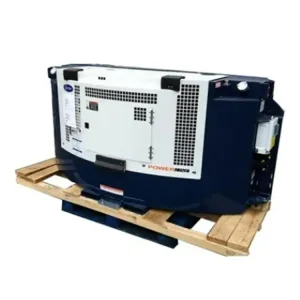
Battery Energy Storage Systems (BESS) and high-output gensets generate severe harmonic vibration. Our reinforced, heavy-duty foundation foot castings feature enhanced internal damping characteristics, isolating dynamic cyclic loads from floor mountings.
Offshore & High-Salinity Energy Hubs
For marine and offshore platform deployment, container feet undergo high-thickness thermal spray zinc coatings or dual-stage epoxy powder sealing. Fully certified under DNV GL standards to resist coastal corrosion and chloride pitting stress.
Addressing Global Supply Chain Risk: TCO & Quality Security
Enterprise buyers from North America, Europe, and Australasia evaluate structural container components using comprehensive total-cost-of-ownership (TCO) metrics.
Risk Mitigation: Structural Micro-Cracking
Sub-par foundry castings suffer from internal cooling fractures that propagate under crane lifting dynamics. CIMIC eliminates catastrophic failure risks through stringent deoxidation, argon bubbling degassing, and 100% automated magnetic particle screening.
Full Audit Transparency
Procurement contracts feature comprehensive documentation dossiers: Bureau Veritas (BV) product approval, DNV certification records, complete metallurgical spectrometer breakdowns, tensile elongation logs, and Charpy impact certificates.
Standardized Export Palletization
Cast corner feet, foundation plates, and intermodal base blocks are packed in fumigated, steel-banded crates with VCI corrosion inhibitors, ensuring parts arrive free from rust and ready for automated robotic welding lines.
Localized Support, Customs Clearance & Compliance
Seamless cross-border transactions supported by bilingual logistics coordinators, pre-cleared customs documentation, and regional engineering consultation.
Multilingual Engineering Engagement
Technical consultation is conducted in English, Spanish, and French by project engineers who understand regional design codes, structural wind-load parameters, and intermodal lifting criteria.
Customs Documentation Assurance
Shipments depart accompanied by full Certificates of Origin (Form A/E, CO), Bill of Lading drayage manifestos, fumigation paperwork, and mill-verified material testing certificates (EN 10204 3.1) to avoid port-of-entry delays.
Strategic Export Corridors
Consolidated shipments transit through deep-water berths at Tianjin Port, offering scheduled liner rotations to Rotterdam, Hamburg, Los Angeles, Santos, Durban, and Singapore.
Technological Roadmap: Smart Feet & Sustainable Metallurgy
Adapting container foundation hardware for autonomous shipping, automated guided vehicles (AGVs), and circular supply chains.
IoT Sensor Integration
Our engineering division is developing casting cavities designed for embedded, battery-free RFID and low-energy IoT stress-sensing beacons. These components allow smart ports to track tare distribution and structural fatigue during handling cycles.
EAF Green Steel Formulations
Transitioning toward 100% electric arc furnace (EAF) scrap-melt processes. This production line reduces the carbon footprint per casting set by up to 48%, helping shipowners meet Scope 3 emissions goals without lowering tensile or yield performance.
Self-Aligning AGV Castings
Optimized chamfers on lower casting apertures accommodate automated guided vehicle (AGV) pin insertions at high-throughput port terminals, reducing alignment delays in automated container handling yards.
Frequently Asked Questions: Container Feet & Structures
Direct answers covering material properties, corner casting standards, and order fulfillment parameters.
What types of shipping containers and structural feet does CIMIC supply?
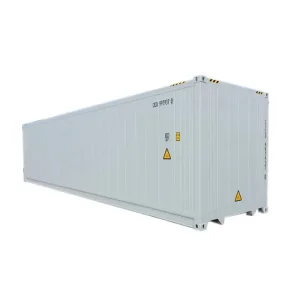
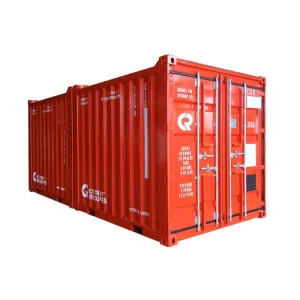
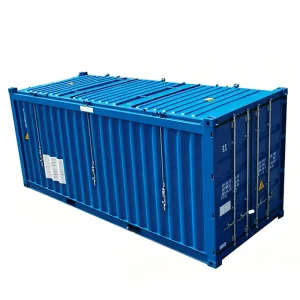
We manufacture and export reefer (refrigerated) containers, dry cargo containers, offshore containers, insulated containers, tank containers, modular containers, and specialized containers (including side-open, roll-up-door, and open-top units). For all units, we provide full corner casting sets (Top Left, Top Right, Bottom Left, Bottom Right) manufactured in strict accordance with ISO 1161 and certified by BV.
Can you manufacture customized OEM/ODM containers and base foundation feet?
Yes. We accept tailor-made OEM and ODM orders. Our engineering staff assesses cargo distributions, transit routes, and dynamic operational profiles. We issue detailed 2D/3D CAD fabrication drawings covering structural corner post thickness, floor cross-member spacing, insulation barriers, and foundation foot bolt patterns before production runs begin.
Which certifications and safety standards do your container feet meet?
CIMIC holds Bureau Veritas (BV) type-approval and ISO quality management certifications. Our corner castings and structural assemblies match ISO 1161 dimensions, and specialized offshore modules satisfy DNV GL certification requirements for marine lifting operations.
Which refrigeration systems are available for reefer container solutions?
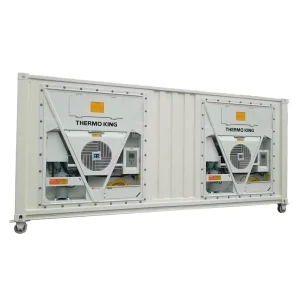
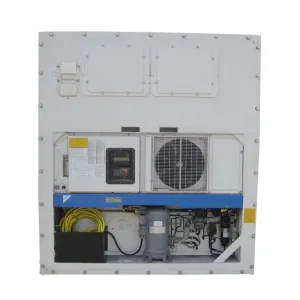
Our reefer fleet can be equipped with industry-standard machinery from Thermo King, Daikin, and Carrier. We offer builds across 10ft, 20ft, 20ft high-cube, 40ft, and 40ft high-cube dimensions, configured to client cold-chain temperature targets.
Where are your used containers and surplus inventory stored?
Our second-hand and depot-grade units are positioned across multiple ports in China (including Tianjin, Qingdao, and Shanghai). Detailed photographic inspections, CSC plate validations, and ultrasonic shell checks are provided for buyer review prior to release.
Where is CIMIC located and which international trade lanes do you serve?
Our core production and engineering facilities operate in Tianjin and Suzhou, situated approximately 100 km from major seaport gates. We export internationally to commercial hubs across Africa, Europe, North America, South America, and Australasia.
Energy, Chemical & Specialized Logistics Enclosures
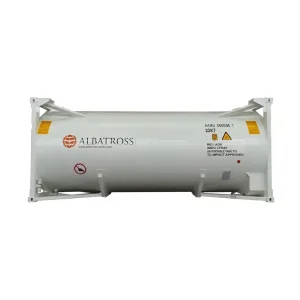
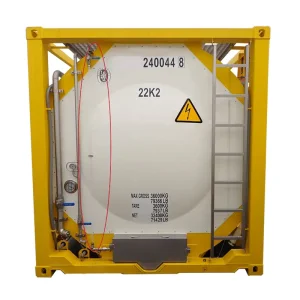
Engineered structural foundations supporting asphalt transport, chemical ISO tanks, specialized vehicle carriers, and high-cube rail corridors.