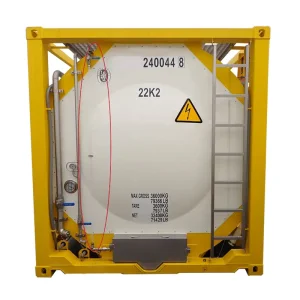
Cryogenic T75
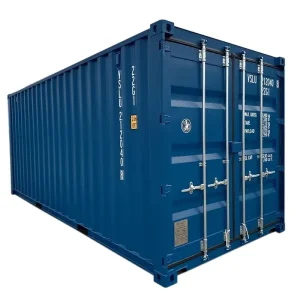
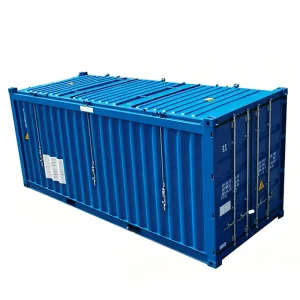
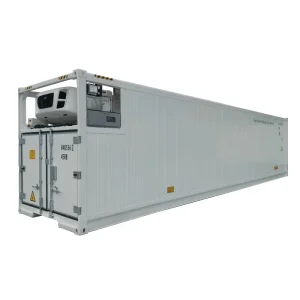
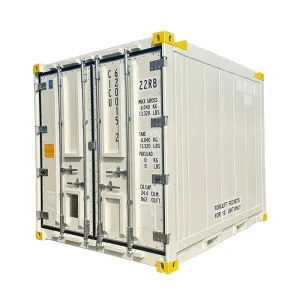
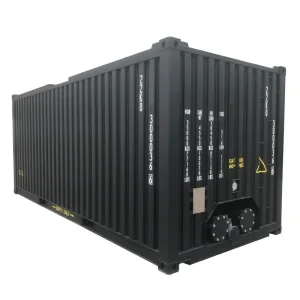
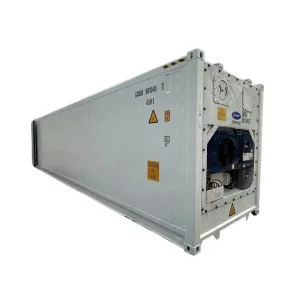
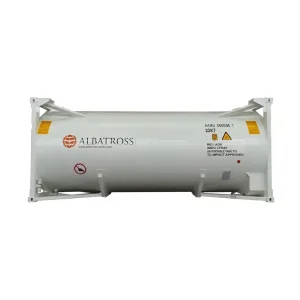
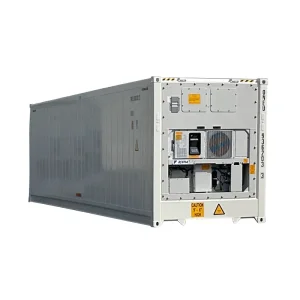
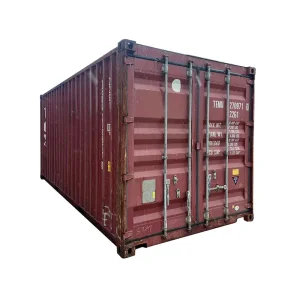
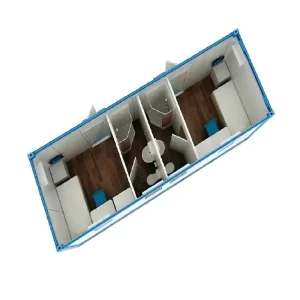
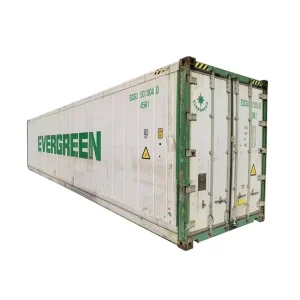
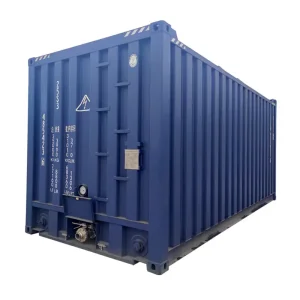
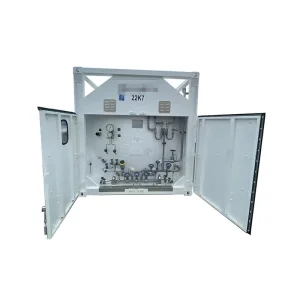
Factory-inspected inventory ready for multimodal dispatch: Cryogenic T75 tanks, double-door dry freight, hard open-top bulk handlers, and high-cube intermodal reefers.
Cryogenic T75
Dry Cargo
Open Top
Intermodal Reefer
Compact Reefer
Thermal Liquid
Certified Used
Pressure Tank
Analyzing production capacity shifts, raw material fluctuations, and compliance benchmarks reshaping multimodal shipping economics across Africa, Europe, and the Americas.
Standard dry van and heavy machinery containers depend on SPA-H (JIS G3125) Corten-A weathering steel. The self-passivating atmospheric oxide patina delays corrosion penetration under continuous oceanic brine exposure. Modern manufacturing plants mandate ultrasonic weld checks along corner castings to resist stacking stresses exceeding 192,000 kg (9-high laden stacking per ISO 1496-1).
Pharmaceutical, chemical, and perishables supply chains require rigid cyclopentane-blown polyurethane foam insulation panels with an absolute thermal conductivity benchmark below 0.028 W/(m·K). Coupled with hermetic scroll compressors from Carrier, Daikin, and Thermo King, temperature profiles stay strictly between -40°C and +30°C under severe ambient excursions.
Factory quotes correlate directly with hot-rolled coil (HRC) futures, zinc primer coating costs, and class society witness fees. By procuring directly from manufacturing yards located along coastal hubs (Tianjin, Shanghai, Qingdao), international operators reduce inland drayage expenses by up to USD 600 per TEU while locking in verifiable CSC plate documentation.
Comprehensive dimensions, payload parameters, structural metallurgy, and primary payload configurations standardized according to ISO 668 and ISO 1496-1 rules.
| ISO / Industry Designation | External Dimensions (L × W × H) | Internal Clear Volume | Max Gross Mass (MGM) | Tare Weight (Avg) | Structural Metallurgy & Compliance |
|---|---|---|---|---|---|
| 20ft General Dry (20GP) | 6,058 × 2,438 × 2,591 mm | 33.2 m³ (1,172 cu ft) | 30,480 kg (67,200 lbs) | 2,200 kg | SPA-H Corten, 28mm Apitong plywood flooring, ISO 1496-1 |
| 40ft High-Cube Dry (40HC) | 12,192 × 2,438 × 2,896 mm | 76.4 m³ (2,698 cu ft) | 32,500 kg (71,650 lbs) | 3,900 kg | High-yield front/rear sills, corrugated Corten panels, CSC |
| 40ft HC Reefer (40RH) | 12,192 × 2,438 × 2,896 mm | 67.8 m³ (2,394 cu ft) | 34,000 kg (74,950 lbs) | 4,480 kg | SUS304 food-grade stainless liner, Al-alloy T-floor, Carrier/Daikin |
| 20ft ISO Tank (T11 / T14) | 6,058 × 2,438 × 2,591 mm | 21,000 – 26,000 L | 36,000 kg (79,365 lbs) | 3,550 kg | 316L Stainless (3-4.5mm), PTFE seals, ASME Sec VIII, ADR/RID |
| 20ft Cryogenic Tank (T75) | 6,058 × 2,438 × 2,591 mm | 19,500 – 22,000 L | 36,000 kg (79,365 lbs) | 7,800 kg | Double-walled vacuum jacket, perlite insulation, EN 13530 |
| 20ft Hard Open Top (20OT) | 6,058 × 2,438 × 2,591 mm | 32.0 m³ (1,130 cu ft) | 30,480 kg (67,200 lbs) | 2,650 kg | Removable steel roof header, swing-out lintel, heavy project cargo |
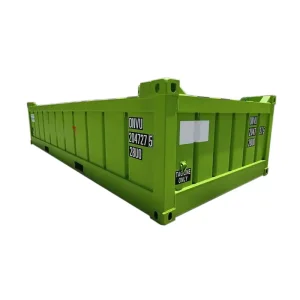
| DNV Offshore Half-Height | 6,058 × 2,438 × 1,295 mm | 13.8 m³ (487 cu ft) | 18,000 kg (39,680 lbs) | 2,300 kg | DNV 2.7-1 / EN 12079, 4-point dynamic lifting slings, subzero steel |
Engineering Notice on Tare Weight vs. Payload Optimization: When issuing procurement quotes, high-payload factory builds employ optimized corrugation geometries (2.0mm side wall pitch reduction to 1.6mm using micro-alloyed ultra-high-strength steel). This raises clear internal payload by up to 450 kg without compromising ISO stacking capacity.
Reefer containers operate as self-contained microclimates. Modern manufacturing utilizes ozone-friendly refrigerants (R-134a, R-452A, and low-GWP R-513A). Units feature Dehumidification & Controlled Atmosphere (CA) subsystems, maintaining nitrogen/oxygen/CO2 ratios down to 2% precision to extend perishables storage shelf-life beyond 45 days.
Marine offshore drilling environments present violent acceleration shocks during dynamic crane transfers in open seas. Our DNV certification containers feature Charpy V-notch tested steel at -20°C to eliminate brittle fracture risk, along with integrated certified pad eyes tested to 2.5× Design Working Load (DWL).
T75 and T50 tank containers integrate double-walled vacuum insulation with high-vacuum multilayer insulation (MLI). Certified under UN Portable Tank Instructions (T75), ADR, RID, and IMDG codes, these vessels safely transport liquefied natural gas (LNG), liquid oxygen (LOX), ethylene, and liquid nitrogen across intercontinental rail and maritime routes.
How Tier-1 container production lines in Tianjin and Suzhou ensure zero structural deviation, 100% weather tightness, and comprehensive certification sign-off.
Raw Corten-A steel coils pass through high-speed uncoilers and automated centrifugal shot-blasting chambers, achieving an exact Sa 2.5 profile to remove mill scale before robotic stamping.
Corner posts, crossmembers, and side panels are locked in high-precision pneumatic jigs. Continuous multi-axis robotic MAG welding ensures deep weld penetration meeting AWS D1.1 specifications.
3-coat protective system: Zinc-rich epoxy primer (30μm), epoxy intermediate tie coat (40μm), and weatherable chlorinated rubber/acrylic polyurethane topcoat (50μm), yielding a durable 120μm dry film thickness (DFT).
28mm marine-grade 19-ply hardwood (Apitong/Keruing) treated to Australian Department of Agriculture (DAFF) timber quarantine standards, secured with zinc-plated Torx countersunk screws.
Each production batch undergoes Bureau Veritas (BV), ABS, or LR witnessed tests: 7,260 kg floor axle roll load, 15-bar hydraulic light & water-tightness test, and diagonal rack resistance tests.
Navigating statutory transport mandates, structural gauge clearances, and phytosanitary controls in key overseas trading regions.
Shipments routed through US rail corridors (BNSF, Union Pacific) demand compliance with Association of American Railroads (AAR) Standard M-930. This mandates reinforced undercarriage crossmembers to absorb slack-action shock forces during double-stack humping operations. Reefer electrical architecture must accommodate standard 460V 3-phase 60Hz connections.
Reefer containers deployed within the EU adhere strictly to Regulation (EU) No 517/2014 (F-gas) regarding fluorinated greenhouse gases, requiring low-GWP refrigerants and hermetic sealing reports. Tank containers carrying pressure gases must comply with the Pressure Equipment Directive (PED 2014/68/EU) and ADR transport requirements.
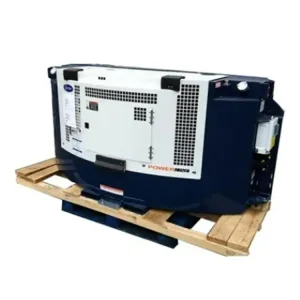
Eurasian land-bridge container runs between China, Central Asia, and Eastern Europe face ambient temperatures below -45°C. These conditions require low-temperature notch-toughness steel, synthetic low-viscosity compressor lubricants, and dual-system diesel-electric clip-on generators capable of continuous unattended 240-hour operation.
Containers cleared through Australian and New Zealand ports require strict adherence to Department of Agriculture, Fisheries and Forestry (DAFF) guidelines. Flooring timbers must undergo accredited methyl bromide (MB) or sulfuryl fluoride (SF) fumigation or heat treatment (HT), documented on permanent CSC identification plates.
Secondary inland transport corridors in developing markets often present unpaved terrain and rough handling. Specialized heavy-payload chassis protection plates, anti-theft high-security lockboxes, and dual-side-opening door architectures simplify manual forklift loading at terminals lacking overhead spreaders.
How to evaluate factory price quotations (FOB vs CIF), differentiate asset grades, and budget for customized OEM/ODM engineering fleets.
Hot-rolled Corten-A steel plate constitutes the single largest component of dry container costs (approx. 1.8 tons for a 20GP; 3.6 tons for a 40HC). Secondary factors include Apitong wood commodity pricing, polyurethane insulation resin blends, and international zinc coating index levels.
In refrigerated container builds, the mechanical refrigeration unit accounts for 50-60% of total asset cost. Choosing between Carrier Transicold PrimeLINE, Thermo King Magnum+, or Daikin LXE involves balancing immediate CapEx against lifetime energy efficiency (cooling kW per kWh).
Standard ISO production includes batch-level classification by Bureau Veritas (BV) or CCS. Independent unit-by-unit testing, DNV 2.7-1 dynamic lift verification, or customized NDT ultrasonic weld inspection will adjust final FOB invoice totals accordingly.
Factory quotes incorporate customizations: 5-character fleet identification stenciling, customer-specified RAL color formulations, internal lashing rings (1,000 to 2,000 kg WLL rating), and specialized anti-tamper door lockboxes.
Procuring directly from Tianjin or Suzhou factories offers two primary freight strategies: direct "empty repositioning" or pairing with one-trip export cargo ("cabotage loading"), allowing buyers to offset marine haulage costs entirely on major oceanic legs.
Anticipating major technological transformations in container manufacturing, composite materials, and real-time telematics over the next decade.
Standard production runs are transitioning to built-in dual-mode cellular & LEO satellite telematics. Integrated solar harvest sensors monitor internal shock (3-axis g-force), door status, humidity, cargo weight shifts, and reefer compressor telemetry without requiring external battery maintenance for up to 10 years.
To address Scope 3 supply chain emissions, container factories are introducing hydrogen-reduced direct reduced iron (DRI-EAF) steel plates. This production method lowers manufacturing carbon footprints by up to 60% compared to traditional blast furnace manufacturing, while preserving identical tensile performance and corrosion resilience.
Escalating tropical hardwood restrictions are accelerating the industry-wide adoption of glass-reinforced thermoplastic (GMT) and recycled polyethylene sandwich flooring. These composite designs eliminate pest infestation risks entirely, provide zero moisture absorption, and withstand standard 7,260 kg forklift axle weights.
Authoritative answers to common questions regarding structural compliance, custom engineering, used equipment conditions, and export formalities.
A T11 ISO tank is rated for general non-refrigerated liquid chemicals and food products under moderate working pressures (typically 4.0 bar). A T75 tank container is an engineered double-walled cryotank with vacuum perlite or super-insulation designed to carry cryogenic refrigerated liquefied gases (such as LNG, LOX, and liquid Argon) at temperatures down to -196°C under dedicated thermodynamic hold times.
Standard carbon steel (like Q235B) forms loose oxide flakes when exposed to maritime salt-spray, causing progressive structural thinning. Corten-A contains micro-alloyed copper, chromium, and nickel that create a dense, protective amorphous patina layer, reducing oceanic atmospheric corrosion rates by 4 to 8 times.
The Institute of International Container Lessors (IICL-5) standard imposes strict allowable repair tolerances for structural frames, side panels, and flooring. For refrigerated reefers, this includes an end-to-end Pre-Trip Inspection (PTI), a 24-hour data-log temperature pulldown test down to -20°C, a vacuum decay check, and certified zero refrigerant leakage.
No. Standard ISO containers certified under CSC are not rated for offshore vessel-to-rig dynamic transfer. Offshore units must comply with DNV 2.7-1 / EN 12079 / ISO 10855 standards, requiring certified low-temperature impact-tested steel, specialized weld procedures, internal reinforcement, and designated lifting pad eyes designed for severe maritime sea states.
Following technical drawing confirmation and engineering review, standard OEM custom container production spans 20 to 35 business days for orders between 10 and 100 units. Prototype units, custom paint livery formulations, and third-party witness inspections (BV/LR/ABS) are integrated within this production cycle.
To prevent invasive pest transfers (such as termites or wood-boring insects), all solid timber container flooring is treated in accordance with Australian DAFF Quarantine Requirements. Flooring planks receive permanent identification stamps specifying chemical immersion or thermal heat treatments (HT), verified on the master CSC data plate.
Heavy industrial assets: DNV offshore carriers, Daikin cold storage rooms, mobile gensets, alcohol ISO food-grade tanks, and modular structures.
DNV Offshore
Daikin Cold Storage
Reefer Genset
Food Grade Tank
Storage Grade
Modular Systems
Certified Reefer
Bulk Liquid