
Precision Engineering Catalog
Featured Industrial Containers & High-Cube Modules (Part 1)
Factory-direct intermodal maritime hardware manufactured to ISO 1496-1 parameters, certified by Bureau Veritas and optimized for high-density volumetric intermodal freight.
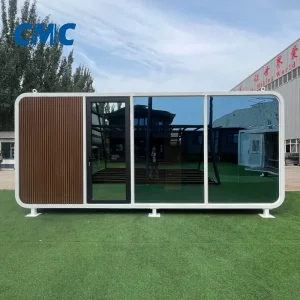
Famous 20ft Prefab Container House Flat Pack Modular House Office Tiny House Outdoor Apple Cabin Office Pod Garden Office Pod Manufacturer, Product
Inspect Specifications
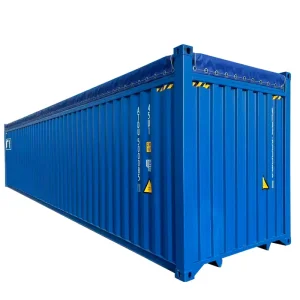
High-Quality New Offshore Basket Container for Offshore Operations Exporter, Exporters
Inspect Specifications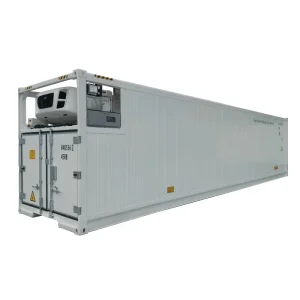
Famous New 40-foot high cube & 45-foot "Belt and Road" railway refrigerated container. Product, Products
Inspect Specifications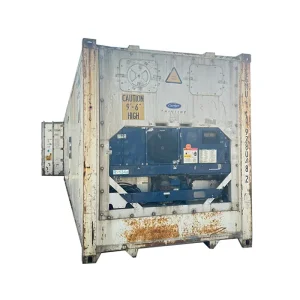
China Used 40ft High-Cube Certified Reefer Container Pricelist, Exporter
Inspect Specifications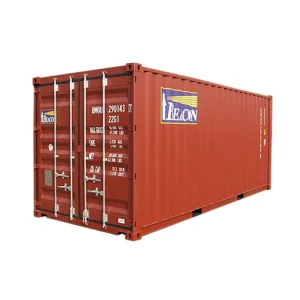
ODM 40ft New Certified Dry Shipping Container Pricelist, Exporters
Inspect Specifications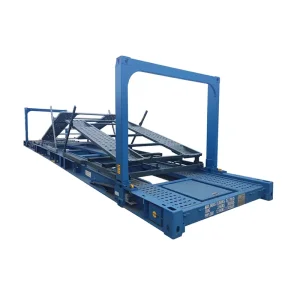
China New 20ft Car Carrier Container Special Container Exporter, Quotes
Inspect Specifications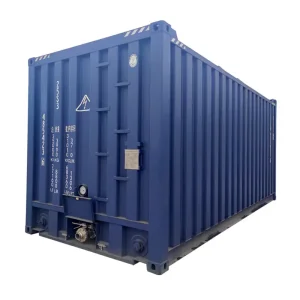
Buy New 20ft Square Liquid Container Factory, Product
Inspect Specifications
Industry Technical White Paper
The Evolution of the High Cube Sea Can: Volumetric Density, Yield Strength & ODM Engineering
An exhaustive engineering review on why High Cube (9'6" / 2,896 mm) shipping containers have surpassed standard dry vans as the primary vessel for multimodal supply chains, modular computing, and decentralized energy infrastructure.
300mm Volumetric Information Gain
The additional 1 foot (304.8 mm) vertical clearance in High Cube configurations yields a 76.3 m³ volumetric payload versus 67.7 m³ in standard 40ft GP units. This 12.7% volume increase drives direct freight amortization across consumer electronics, non-dense dry freight, and insulation-heavy refrigerated reefers without exceeding maximum gross mass tolerances (30,480 kg to 34,000 kg).
Corten-A (SPA-H) Structural Integrity
Constructed with high-strength atmospheric anti-corrosive SPA-H weathering steel, the core frames withstand extreme dynamic rack loads, marine saline mist, and dynamic inertial stress. Crossmembers and corner posts endure stack tests exceeding 86,400 kg per corner column, ensuring compliance with heavy multimodal container stacking rules across 9-tier vessel holds.
Full-Custom ODM Architecture
From CAD engineering to FEA stress simulation, CIMIC provides bespoke architectural adaptations: side open bifold walls, roll-up shutter openings, acoustic damping louvers for generator sets, thermal barrier reinforcements, and subfloor cable tray routing for edge-compute data centers.
Technical Comparison: High Cube vs. Standard Sea Cans
Standardized engineering data illustrating payload advantages and load distribution metrics across core intermodal profiles.
| ISO Dimensional Criteria | 20ft Standard (20GP) | 40ft Standard (40GP) | 40ft High Cube (40HC) | 40ft High Cube Reefer (40RH) | 45ft High Cube Intermodal |
|---|---|---|---|---|---|
| External Height | 8'6" (2,591 mm) | 8'6" (2,591 mm) | 9'6" (2,896 mm) | 9'6" (2,896 mm) | 9'6" (2,896 mm) |
| Internal Dimensions (L×W×H) | 5.90 × 2.35 × 2.39 m | 12.03 × 2.35 × 2.39 m | 12.03 × 2.35 × 2.69 m | 11.58 × 2.29 × 2.55 m | 13.55 × 2.35 × 2.69 m |
| Usable Volume (m³) | 33.2 m³ | 67.7 m³ | 76.3 m³ (+12.7%) | 67.6 m³ | 86.5 m³ |
| Tare Weight (Nominal) | 2,230 kg | 3,700 kg | 3,920 kg | 4,480 kg | 4,820 kg |
| Max Gross Mass (MGM) | 30,480 kg | 30,480 kg | 30,480 kg / 32,500 kg | 34,000 kg | 34,000 kg |
| Flooring Specification | 28mm Hardwood Marine Plywood | 28mm Hardwood Marine Plywood | 28mm Plywood or Checkered Steel | Aluminium T-Floor (Airflow) | Heavy-Duty Bamboo Composite |
Smart Manufacturing Prowess
China Factory 4.0: Supply Chain Resilience, Automation & Scale
How CIMIC leverages heavy industrial automation, robotic submerged arc welding, and coastal proximity to guarantee on-time volume deliveries and zero-defect quality control.
Robotic Cold-Roll Corrugation
Our hydraulic continuous cold-forming press lines process high-grade Corten-A coils into side panels with micro-millimeter wave precision. Continuous profile tolerance control minimizes weld joint stresses and prevents sheet deformation under high pressure stacking tests.
Submerged Arc & CO2 Shielded Welding
Multi-axis robotic arms perform double-sided submerged arc welding across critical base rails, bottom corner castings, and structural corner posts. Complete non-destructive weld testing (NDT), ultrasonic flaw detection, and X-ray verification are documented for every export batch.
Eco-Friendly Shot Blasting & Coating
Automated centrifugal shot blasting cleans steel surfaces to SA 2.5 standard. Automated painting booths apply low-VOC waterborne zinc-rich primers, intermediate epoxy tie-coats, and polyurethane top-coats delivering over 1,500 hours of salt spray resistance (ISO 12944 C5-M marine rating).
100 km Deepwater Port Integration
Operating production epicenters in Tianjin and Suzhou puts our container yards inside a 100-kilometer transport radius to China's major maritime gateways. This proximity slashes inland drayage expenses, secures daily berth allocations, and speeds up empty container repositioning.
Rigorous CSC & TIR Certification
Each unit undergoes hydrostatic leak testing, diagonal racking deflection checks, floor load tests using heavy multi-ton front-loaders, and air-tightness inspections before stamping with the International Convention for Safe Containers (CSC) Safety Approval Plate.
Dual-Inventory Strategy
In addition to mass ODM contract fabrication, CIMIC maintains certified inventories of brand-new and inspected used 40HC dry and reefer sea cans across major Chinese container hub ports, ensuring zero-lead-time dispatch for urgent logistics turnarounds.
Macro Logistics & Industrial Deployment
Engineered High Cube Solutions Across Critical Global Sectors
From transcontinental rail corridors to utility-scale renewable battery storage, our modular high-cube enclosures adapt to the harshest environmental and mechanical loads.
Intermodal Road & Eurasian Rail Freight
Optimized for China-Europe "Belt and Road" railway corridors and Class I American rail lines, our reinforced 40ft and 45ft high-cube containers resist longitudinal shunting accelerations up to 2G. Reinforced side sills prevent sagging across intermodal well-cars while meeting strict AAR (Association of American Railroads) and UIC dimensional clearances.
Battery Energy Storage Systems (BESS)
With the global transition to clean energy, our ODM facility customizes 20ft and 40ft HC containers as fire-rated, explosion-vented structural enclosures for utility-scale lithium-ion battery banks. Features include thermal insulation barriers, integrated HVAC mounting plenums, FM-200 / Novec fire suppression hookups, and structural floors tested for 40+ metric ton payloads.
Cold Chain Agritech & Biopharma
Equipped with Daikin, Thermo King, or Carrier Transicold electric inverter refrigeration machinery, our high cube reefers preserve fragile pharmaceutical cargo, biologics, and premium perishables in ambient extremes between -40°C and +50°C with digital precision to ±0.25°C.
Rapid-Deploy Modular Architecture
High Cube dimensions provide essential vertical ceiling clearance for habitable building code compliance. We engineer turnkey flat-pack modules, Apple Cabin luxury glamping pods, expandable site offices, and mobile emergency surgical hospital units with integrated electrical conduit channels and fire-resistant rockwool core walls.
Automotive & Heavy Machinery Transport
Leveraging extra height, our internal cassette racking converts a single 40HC into a tri-level multi-vehicle carrier for electric vehicles (EVs), SUVs, and agricultural tractors. Soft open-top configurations with tarpaulins allow top-crane loading for heavy oversized industrial motors and breakbulk hardware.
Offshore Energy Support (DNV 2.7-1 / EN 12079)
Marine rigs require containers capable of sustaining dynamic snatch lifting during sea states up to 6 meters. We manufacture certified offshore baskets, half-height pipe carriers, and tool cabins with Charpy impact-tested materials verified at -20°C and heavy four-leg sling assemblies.
Strategic Sourcing Advisory
Enterprise Sourcing Guide: Total Cost of Ownership (TCO) & Factory Verification
Navigating global container procurement requires a rigorous analytical approach toward material specifications, quality assurance audits, and lifecycle depreciation models.
Material Integrity Audits
A key failure point in cheap imitation units is using standard structural carbon steel (Q235) in place of genuine weathering Corten steel (SPA-H). Standard steel corrodes at three times the rate under marine conditions. Enterprise buyers must mandate mill test certificates (MTC) with full chemical tracing for copper, chromium, and nickel alloying agents.
Floor Loading & Treatment Regulations
International biosecurity compliance (such as Australian DAFF / quarantine guidelines) dictates that container timber floors receive certified chemical preservative treatments against insects and fungi. CIMIC provides both AP (Australian Treatment) certified 28mm tropical hardwood plywood and heavy-duty, rot-proof steel checker plate floors.
Total Cost of Ownership (TCO)
Evaluating acquisition price without factoring in resale value, corrosion lifecycle, and seal longevity can cost millions across a fleet. High Cube sea cans retain up to 35% higher terminal salvage values after 12 years of ocean service compared to standard height units due to secondary market demand in modular construction and static on-site storage.
Pre-Shipment Factory Acceptance
Our Tianjin factory welcomes third-party inspection firms (SGS, Bureau Veritas, Lloyd’s Register) for random non-destructive thickness testing (paint dry film thickness DFT 120-150 μm), door gasket dual-lip EPDM pressure tests, and water hose tests up to 100 kPa from a 1.5-meter standoff.
One-Way "SOC" Cabotage Logistics
To offset repositioning costs, CIMIC arranges Shipper Owned Container (SOC) one-way freight contracts with ocean carriers. Your newly manufactured containers are loaded with export cargo from Chinese ports directly to your home destination port, turning delivery overhead into freight revenue.
Drawing Lock & Prototype Runs
Custom ODM builds undergo strict stage-gate approvals: initial 3D CAD modeling, FEA mechanical finite element analysis, 1:1 scale structural prototype fabrication, and physical destructive testing before mass assembly line authorization.
Next-Generation Roadmap
Technology Roadmap & Future Outlook: The Smart Sea Can
Integrating IoT telematics, low-carbon composite metallurgy, and digital twins to transform static steel containers into autonomous logistics nodes.
Satellite IoT & Condition Monitoring
Future sea cans feature solar-powered, flush-mounted satcom sensors that track interior humidity, 3-axis shock impacts, door breach events, and real-time cargo temperatures across mid-ocean transits without external power supplies.
Aerogel & Phase-Change Insulation
Replacing conventional polyurethane foams with aerogel composites and vacuum-insulated panels (VIP). This innovation narrows wall thickness by 40% while doubling thermal retention (R-value), preserving cubic capacity for chilled perishables.
Zero-Emission Circular Metallurgy
Pioneering container frames built with 100% electric arc furnace (EAF) recycled green steel and bio-resin timber floor alternates to help global ocean freight operators comply with upcoming IMO Scope 3 carbon tax frameworks.
1983
Production Heritage
40+
Years Engineering Expertise
100 KM
Proximity to Major Seaports
34,000 KG
Certified Heavy Rating
Certifications & Global Compliance
Global Regulatory Assurance & Localized Technical Support
Every High Cube container produced at our manufacturing plants is documented to guarantee frictionless clearance across ports, border posts, and rail terminals worldwide.
BV & ISO Certification
Factory production facilities hold Bureau Veritas industrial marine certification and ISO 9001 quality management systems, assuring uniform metallurgical purity, dimensional precision, and repeatable weld schedules across all batches.
CSC & TIR Customs Sealing
Containers feature tamper-evident Customs Convention on the International Transport of Goods (TIR) door handle lock cam retainers and stainless steel CSC data plates certified for unrestricted worldwide deep-sea carriage.
DNV 2.7-1 / ISO 10855
For offshore drill platforms and maritime energy exploration, specialized containers undergo cryogenic impact analysis and multi-axis drop tests complying with DNV offshore lifting regulations.
Dedicated Technical Liaison
Our engineering support team in Tianjin and Suzhou provides continuous project oversight: detailed 2D/3D CAD shop drawings, customs tariff classification advice, and spare parts supply lines for seals, hinges, and lock-bars.
Precision Engineering Catalog
Featured Industrial Containers & High-Cube Modules (Part 2)
Explore additional specialized, refrigerated, and purpose-built intermodal units engineered for cold logistics, asphalt bulk carriage, and extreme-service offshore supply operations.
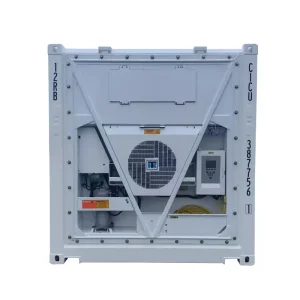
OEM 20ft Offshore Refrigerated Container DNV Certification Is More Durable Exporter, Exporters
Inspect Specifications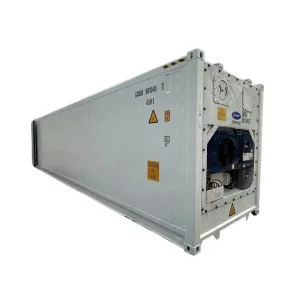
Buy Ninety Percent New Used 40ft HC Carrier Refrigerated Container Product, Quotes
Inspect Specifications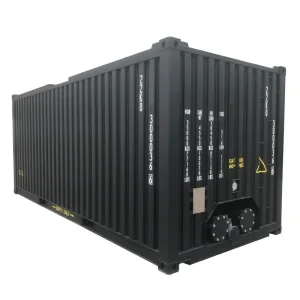
China 20 Feet Heated Shipping Asphalt Container Exporter, Manufacturers
Inspect Specifications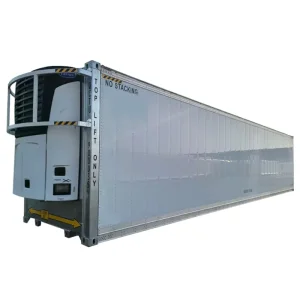
China Carrier X4-7300 Refrigeration and Electricity Integrated Container Exporter, Products
Inspect Specifications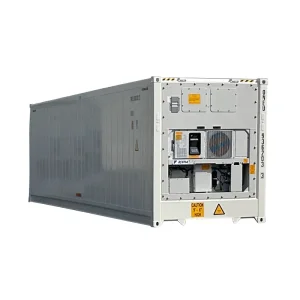
OEM New 40ft High-Cube Daikin Freezer Container Cold Storage Room Manufacturer, Products
Inspect Specifications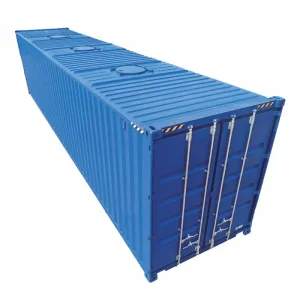
Buy 20 Feet Shipping Bulk Container Manufacturer, Exporters
Inspect Specifications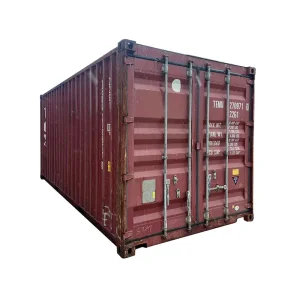
Buy 20ft Used Shipping or Storage Container Manufacturer, Products
Inspect Specifications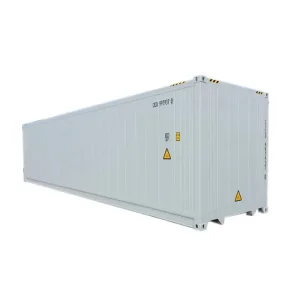
Buy New 40ft High Cube Thickened Foam Insulation Container Factory, Exporters
Inspect Specifications
Technical & Procurement FAQ
Frequently Asked Questions: High Cube Sea Can Manufacturing & Global Export
Detailed answers regarding production specifications, minimum order quantities (MOQ), custom ODM workflows, inspection protocols, and multimodal handling.
What structural and dimensional differences define a High Cube Sea Can compared to a standard GP container?
A standard General Purpose (GP) container has an external height of 8'6" (2,591 mm), whereas a High Cube (HC) container stands at 9'6" (2,896 mm), providing exactly 1 foot (304.8 mm or ~30 cm) of additional vertical space. Internally, a 40ft High Cube provides an internal height of 2.69 m compared to 2.39 m in a standard unit. This increases total internal cubic capacity from 67.7 m³ to 76.3 m³—a gain of approximately 12.7%.
Because the corner casting layout matches standard ISO geometry horizontally, High Cube containers sit on standard ocean vessel twistlocks, flatbed skeletal trailers, and railway wagons without requiring dedicated tie-down retrofits. Visual warning decals (black-and-yellow hazard stripes) are mounted along top corner edges to caution crane and bridge operators.
What specific steel grades and corrosion protection systems does CIMIC employ?
Our structural members, corrugations, crossmembers, and corner posts are pressed strictly from high-yield SPA-H atmospheric corrosion-resistant steel (commonly referred to as Corten-A). Corten steel forms a stable, protective oxidized patina upon outdoor exposure, which retards deep rust development.
For surface protection, all raw panels undergo automated shot blasting to SA 2.5 profile depth to clear mill scale. A three-layer liquid coating system is then applied: a zinc-rich primer (30-40 μm dry film thickness), an epoxy intermediate barrier (40-50 μm), and a durable acrylic or polyurethane external topcoat (40-50 μm), achieving total paint thickness exceeding 120-150 μm to survive harsh maritime environments.
What is the minimum order quantity (MOQ) for custom ODM and OEM container configurations?
For stock standard ISO containers (new or inspected used 20GP, 40GP, and 40HC units), the minimum order quantity is typically 1 unit. For tailored OEM/ODM conversions involving minor adjustments (such as lock-box additions, corporate RAL paint schemes, customized bamboo/steel flooring, or side forklift pockets), we can accept orders starting from 2 to 5 units.
For deep structural modifications—such as full hydraulic fold-out side doors, custom hatch cutouts, BESS battery housing frames, and certified offshore DNV 2.7-1 modules—production jigs must be adjusted, typically requiring an MOQ of 5 to 10 units to optimize tooling amortization. We routinely produce pre-production prototypes for client engineering sign-off.
Which refrigeration machinery brands are fitted in CIMIC High Cube reefer containers?
We supply factory-new and recertified high-cube refrigerated containers equipped with world-class marine machinery, primarily Carrier Transicold (ThinLINE, PrimeLINE), Daikin (LXE series), and Thermo King (Magnum Plus). Units operate under dual 380V/460V 3-phase 50/60Hz supplies, with temperature stability spanning from -35°C to +30°C (with ultra-low deep-freeze units reaching -60°C to -70°C for seafood and vaccine cold-chains).
Interiors feature marine-grade 304 food-grade stainless steel linings, extruded aluminium T-section subfloors designed for continuous chilled airflow, and closed-cell polyurethane foam insulation blown at high density (minimum 40-45 kg/m³) to avoid cold bridging.
How does CIMIC manage quality control (QC) and international shipping documentation?
CIMIC operates under ISO 9001 quality workflows and holds Bureau Veritas (BV) Type Approval certificates. Every unit receives an individual CSC plate, custom stamping, and ISO container identification prefixes registered under BIC (Bureau International des Containers) standards.
For delivery, our factory arranges complete export documentation: Bill of Lading (B/L), Commercial Invoice, Packing List, Mill Test Chemical Analysis Certificates, CSC Safety Clearance, and Phytosanitary Wood Floor Treatment Certificates. We coordinate seamless loading onto container ships via our nearby seaport yards in Tianjin and Shanghai/Taicang.
Can High Cube sea cans be converted into habitable modular building structures?
Yes. High Cube units are preferred for architectural and modular housing conversions over standard containers because the extra 30 cm allows developers to fit floor insulation, subfloor heating, suspended acoustic drywall ceilings, and HVAC ducting while still maintaining a finished interior ceiling height of 2.4 meters (8 feet), conforming to international building codes.
CIMIC manufactures dedicated modular products including flat-packs, luxury outdoor office pods ("Apple Cabins"), pop-up container cafes, and multi-unit interconnectable residential modules built directly on the High Cube structural footprint.