Featured Marine Freight Solutions
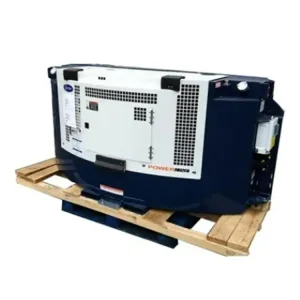
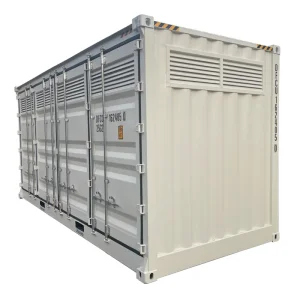
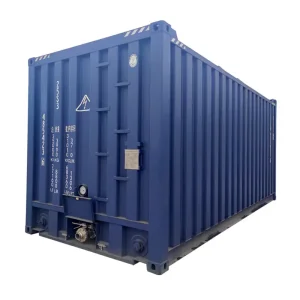
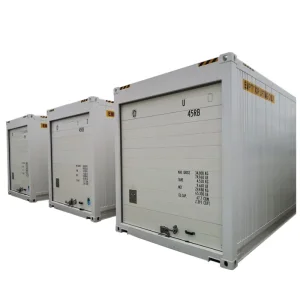
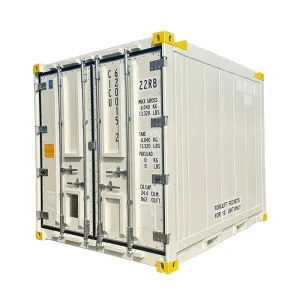
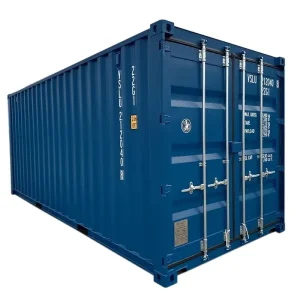
Engineered to withstand harsh oceanic routes, meeting ISO, BV, and DNV international standards with verified payload capacity.
The Global Commercial Landscape of Marine Freight Equipment
A comprehensive examination of oceanic freight circulation, structural metallurgy, and procurement economics.
Intermodal Fleet Resiliency
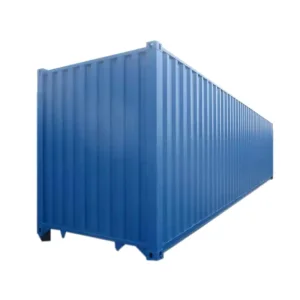
The contemporary marine container is no longer merely a standard six-sided corrugated steel repository; it serves as a critical, high-load intermodal dynamic module across diverse multi-tiered freight lanes. With world shipping accounting for the backbone of global commerce, maritime containers must endure harsh environmental stressors: massive hydrostatic wave impacts, severe torsion forces during post-panamax sea transit, cyclic salt spray corrosion, and relentless port handling shock.
Metallurgical Rigor & Anti-Corrosion
To eliminate early metal fatigue, high-end container engineering employs SPA-H atmospheric corrosion-resistant Corten steel. Corten creates an authentic passivating surface patina when subjected to oceanic atmosphere, mitigating deep rust propagation. Structural corners, base rails, and lintel beams are reinforced to absorb up to 216,000 kg stacking loads, complying rigorously with ISO 1496-1 design parameters and third-party BV (Bureau Veritas) inspection criteria.
OEM Customization Architecture
Global supply chain diversification demands non-standardized engineering. Factory OEM production encompasses complex multi-door configurations, high-cube height elevations, open-top systems, explosive-grade venting, integrated bunded spill-containment reservoirs, and hazardous chemical enclosures built in conformance with international IMDG code directives.
Industry Trajectory: Decarbonization, Telematics & Automation
The convergence of sustainable material science, IoT connectivity, and automation in modern container production.
Connected IoT Telematics
The rapid digital transformation of shipping fleets relies on embedded smart sensors. Modern reefer and offshore fleets are equipped with wireless transceivers tracking internal temperature curves, relative humidity, ethylene spikes, shock vectors, and precise GPS geofencing via Low Earth Orbit (LEO) satellite links.
Low-GWP Thermal Systems
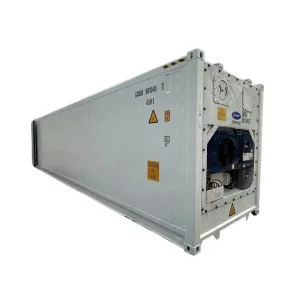
Regulatory mandates (such as the EU F-gas phase-down and Kigali Amendment) are driving reefer container design toward natural and ultra-low GWP refrigerants, including R-513A, R-452A, and transcritical CO2 (R-744). Combined with variable-speed scroll compressors, energy consumption on vessels decreases significantly.
Modular Intermodal Scalability
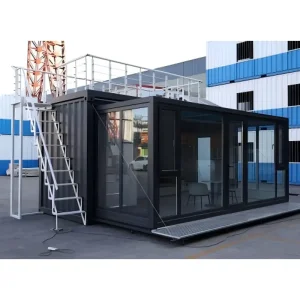
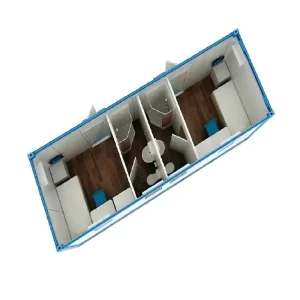
Industrial users are shifting from static port storage infrastructure to agile modular platforms. Demountable high-cube shelters, scalable power stations, battery energy storage systems (BESS), and water purification plants are pre-engineered directly within ISO Corten footprints for rapid deployment.
Localized Industrial Applications & Case Scenarios
Specific field implementations reflecting real-world engineering adaptations and environmental extremes.
Offshore Energy Platforms
Certified according to DNV 2.7-1 / EN 12079, our offshore dry goods units and half-height ore containers feature high-resilience lifting padeyes, non-destructive test (NDT) welds, and anti-static coatings tailored to withstand the North Sea and Gulf of Guinea dynamic wave profiles.
Cold-Chain Agricultural Export
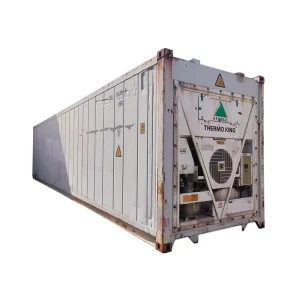
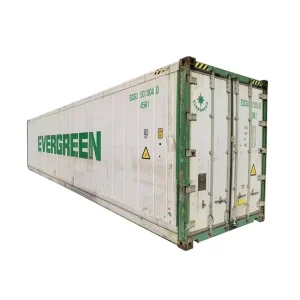
Supplying reefer hardware equipped with Carrier, Thermo King, and Daikin units across Latin America and African trade lanes. Precise micro-environment controls maintain perishable cargo stability during transit across equatorial waters.
Mining & Bulk Heavy Minerals
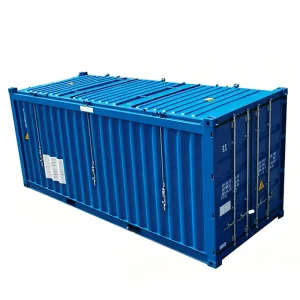
Custom open-top and half-height heavy-duty containers operating in Western Australia and Chilean copper basins. Engineered with ultra-high yield strength steel floorboards, heavy lashing points, and removable top headers to handle high-density abrasive bulk.
Macro Technical Roadmap & Lifecycle Governance
A systematic framework of manufacturing precision, regulatory oversight, and post-delivery integrity.
1. Finite Element Analysis (FEA)
Every non-standard OEM geometry undergoes rigorous computerized stress modeling. FEA guarantees load dispersal along corner castings and sills before plasma cutting commences, ensuring structural compliance under maximum gross mass conditions.
2. Automated Submerged-Arc Welding
Core load points and longitudinal floor rails are joined via automated multi-pass submerged arc welding. This process guarantees penetration depth, uniform seam geometry, and structural integrity under prolonged ocean passage stresses.
3. Shot Blasting & Marine-Grade Coating
Steel surfaces are blast-cleaned to ISO Sa 2.5 standards to eliminate mill scale. They are protected with zinc-rich epoxy primers, high-build epoxy intermediate barriers, and polyurethane exterior finishes formulated to C5-M marine-grade specifications.
Technical & Procurement FAQ
In-depth responses resolving complex logistics inquiries, certification questions, and production parameters.
What distinguishes an ISO marine container from an offshore container?
ISO shipping containers conform to ISO 668 and ISO 1496, prioritizing standardized stacking, corner castings, and twistlock operations on container ships. Offshore containers meet DNV 2.7-1 (or EN 12079 / ISO 10855) criteria, incorporating permanent padeyes, structural yield requirements at -20°C, and dynamic lifting sling sets to handle open-sea offshore crane dynamics safely.
How does Corten-A/SPA-H steel mitigate oceanic corrosion?
SPA-H atmospheric corrosion-resistant steel contains copper, chromium, and nickel alloy elements. In coastal marine atmospheres, it generates an adherent oxide layer (patina) that seals the underlying substrate, slowing oxidation and extending container operational lifespans significantly.
What certifications accompany export-grade marine containers?
Every production run is documented with a valid CSC (International Convention for Safe Containers) safety approval plate. Specialized variants include Bureau Veritas (BV) Type Approval, American Bureau of Shipping (ABS) certifications, or DNV offshore certification packages, supported by complete welding inspection documents.
What are the manufacturing tolerances and custom options for specialized cargo?
Our OEM/ODM manufacturing accommodates custom door configurations (curtain-side, side-open, roll-up shutter), internal load tie-down tracks, certified explosive-proof electrical routing, and bespoke internal lining including food-grade 304/316 stainless steel walls and leak-proof subfloors.
Specialized Heavy Logistics & Modular Platforms
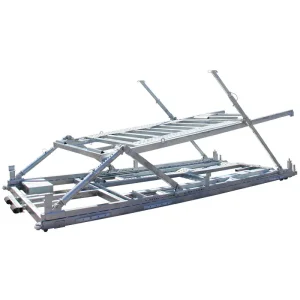
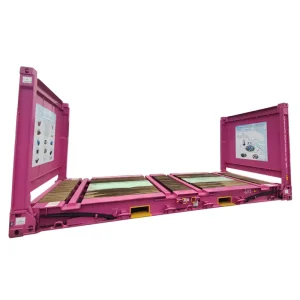
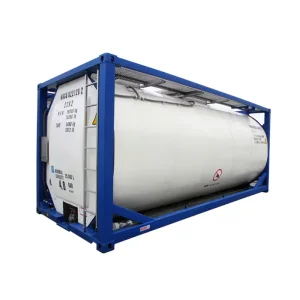
Engineered vehicle racks, liquid tanks, multi-mode intermodal flat-racks, and rapid-deployment modular equipment.