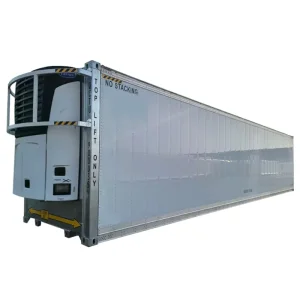
Primary Transporting Containers: Fleet Catalog
Pre-engineered heavy payload units and temperature-sensitive container solutions manufactured under stringent DNV, ISO 1496, and CSC maritime conventions.
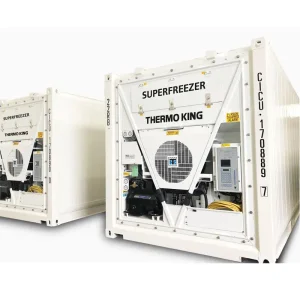
OEM New Deep Freezer Refrigerator Container For Sale
View Specifications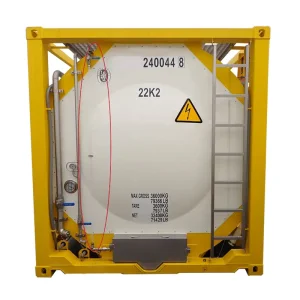
ODM 20ft Tank Container for Alcohol Manufacturer
View Specifications
Certified Blast Reefer Containers by Classification Societies
View Specifications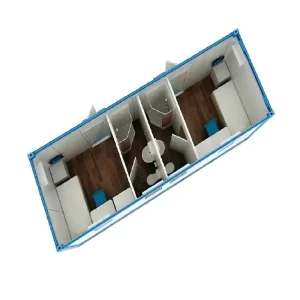
20ft 40ft Standard Modular House Container
View Specifications
TK SLXI Mobile Power Generation Trailer Cooling Unit
View Specifications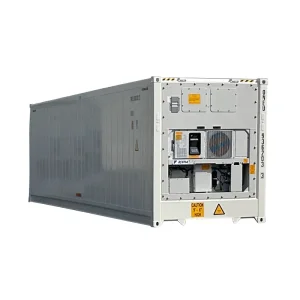
OEM 40ft High-Cube Daikin Freezer Container Room
View Specifications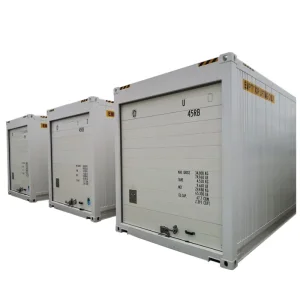
China 40ft High-Cube Roll Up Reefer Container
View Specifications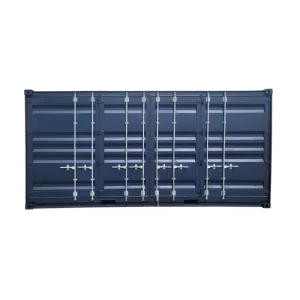
20ft Customized Side Door Dry Cargo Container
View SpecificationsIntegrated Manufacturing & Global Supply Chain Dominance
Since 1983, Tianjin Cimic Imp&Exp Co., Ltd. (CIMIC Group) has established comprehensive metallurgical, structural, and thermodynamic production lines engineered for harsh offshore and cross-border transport environments.
China Factory Ecosystem Advantage
Located in the heart of China’s steel fabrication centers in Tianjin and Suzhou, CIMIC harnesses upstream access to high-tensile Corten weathering steel (SPA-H), automated submerged arc welding, and specialized polyurethane foam continuous injection lines. This co-located supply network slashes lead times, ensures uniform raw material traceability, and drives out cost without sacrificing structural integrity.
Direct Mill TraceabilityEngineering Precision & OEM Flexibility
From CAD/FEA simulation analysis of load-bearing structural corners to thermal heat-leak calculations according to ATP standards, our in-house engineering team translates complex enterprise tenders into precision fabrication prints. We accommodate custom floor reinforced capacities up to 9,000 kg/m², side-opening doors, integrated diesel gensets, and custom telemetry mounts.
FEA Validated FramesPort-Proximate Marshalling & Dispatch
Situated within 100 kilometers of the deep-water container berths at Tianjin Port and adjacent to key Eastern railway lines, our distribution facilities bypass domestic transshipment bottlenecks. We orchestrate immediate CSC-plated vessel loadings, single-trip one-way leased export dispatch, or direct consolidation to Europe, North America, Latin America, and West Africa.
Tianjin Hub DispatchEnterprise Sourcing: Meeting Global Quality, Regulatory & ESG Demands
Procuring industrial transporting containers requires rigorous risk mitigation across international maritime conventions, thermodynamic efficiency limits, and local lifecycle compliance.
International Statutory Compliance
Every transport unit is constructed to comply strictly with the International Convention for Safe Containers (CSC), UIC 592/596 intermodal standards, and TIR customs regulations. For hazardous petrochemical tank containers, IMDG, ADR/RID, and ASME Section VIII stamps verify full international transit legality without terminal quarantine.
Marine Classification Approvals
We work directly with major classification societies including Bureau Veritas (BV), Det Norske Veritas (DNV), American Bureau of Shipping (ABS), and Lloyd's Register (LR). Units destined for dangerous goods transport or offshore wave-impact forces receive rigorous drop, tilt, stacking, and racking test verifications.
Thermodynamic ATP Standards
Cold chain preservation requires ultra-low thermal bridging. Our reefer units utilize cyclopenthane-blown polyurethane foam insulation delivering K-coefficients below 0.38 W/(m²·K), verified through ATP Class FRC certification protocols to minimize compressor energy loads during trans-equatorial journeys.
Localized Maintenance & Parts
Reefer machines are integrated exclusively with globally established OEMs—Thermo King, Daikin, and Carrier Transicold. Global fleet managers benefit from immediate availability of genuine replacement compressors, microprocessors, and sensors at over 1,200 port service depots worldwide.
Standard & Custom Intermodal Unit Engineering Matrix
A reference architecture for technical procurement officers, operations managers, and naval architects.
| Container Classification | Structural Metallurgy / Lining | Thermal / Capacity Rating | Max Gross Mass (R) | Regulatory Framework | Key Operational Use Case |
|---|---|---|---|---|---|
| 40ft High Cube Reefer (40HC) | SPA-H Corten frame; MGSS stainless interior, aluminum T-floor | Carrier / Daikin / TK; -30°C to +30°C; 67.6 m³ | 34,000 kg | ISO 1496-2, CSC, ATP FRC, BV Class | Intercontinental frozen food, pharmaceutical cold chain, perishable produce |
| 20ft ISO Chemical Tank (T11/T14) | SANS 50028-7 / 316L Stainless Steel; PTFE gaskets & valves | 17,500 – 26,000 Liters; Steam & electrical heating | 36,000 kg | IMDG, ASME VIII, RID/ADR, US DOT | Bulk liquid transport, hazardous corrosive chemicals, food-grade alcohols |
| DNV 2.7-1 Offshore Cargo Basket | High strength structural steel S355; 4-leg wire rope sling | Open top drainage; internal lashing rings every 500mm | 15,000 – 25,000 kg | DNV GL-ST-E271, EN 12079, IMO MSC/Circ.860 | Subsea drill pipe transport, offshore platform maintenance gear, marine rigging |
| 20ft Multi-Door / Side-Access Dry | Corten steel corrugation; 28mm Apitong marine plywood flooring | Full 180° / 270° bi-fold side door opening; 31.0 m³ | 30,480 kg | ISO 1496-1, CSC, TIR, UIC | Rapid forklift side-loading, oversized industrial machinery, military field logistics |
| Expandable Modular Unit (Prefab) | Lightweight galvanized steel chassis, 75mm PU sandwich panels | Thermal insulation R-value > 3.2 m²·K/W; fireproof Grade A | 12,000 kg | CE, ISO 9001, National Building Code | Remote mining camps, emergency medical field pods, temporary construction offices |
Enterprise Sourcing & Quality Governance Protocol
A structured five-tier methodology guaranteeing zero-defect intermodal equipment delivery from design authorization to destination delivery.
Application Discovery
Analysis of dynamic operational factors: tare weight limitations, corrosive marine exposure classes, thermal profiles, and handling gear interfaces.
Engineering Approval
CAD, 3D modelling, and finite element stress verification. Complete GA (General Arrangement) drawing release signed off by customer engineers.
Precision Fabrication
Automated cutting, robotized seam welding, blast cleaning to Sa 2.5, anti-corrosive zinc primer coats, and high-density foam injection.
Marine Class Survey
Rigorous third-party testing witnessed by BV/DNV inspectors: hydrostatic water tightness, 9-high stacking load tests, and PTI reefer validation.
Marshalling & Shipping
Issuance of CSC documentation, customs clearance filing via Tianjin FTA pilot corridor, and terminal vessel loading for direct global deployment.
Emerging Paradigms in Modern Container Logistics
Analyzing key technology vectors transforming intermodal transporting containers over the next decade.
IoT Telemetry & AI Cold Chains
Modern transport fleets are rapidly transitioning to active telemetry. Containers now embed low-power satellite and cellular sensors monitoring internal humidity, temperature, atmospheric composition (O₂/CO₂), door status, and shock loads in real time, alerting supply chain controllers prior to spoilage events.
Smart Telematics ReadyDecarbonization & Solar Integration
To comply with IMO net-zero targets and EU ETS maritime carbon pricing, transport containers are integrating ultra-thin photovoltaic roof arrays coupled with lithium backup packs. These systems deliver silent, emissions-free auxiliary power to reefer units when staging at rail yards or intermodal hubs.
Zero-Emissions StagingHigh-Strength Advanced Metallurgy
By shifting to advanced micro-alloyed and higher-yield weathering steels, container engineers can reduce tare weight by up to 12% without forfeiting stackability under 9-high fully loaded cellular vessel configurations. Lower tare weights directly translate to higher cargo payload limits and reduced transport emissions.
Ultra-High Tensile AlloysTailored Solutions Across Regional Scenarios
How specialized transporting containers perform in dynamic operational sectors worldwide.
Intermodal Silk Road Corridors
Heavy-duty dry boxes and side-door containers engineered for cross-border rail connections linking China, Central Asia, and Europe, built to endure severe ambient variations from -40°C in Siberian transit to +45°C in dry desert stretches.
Offshore Oil & Gas Installations
DNV 2.7-1/EN 12079 certified cargo baskets, chemical totes, and specialized half-height ore containers designed for dynamic hoisting in open North Sea and Gulf of Guinea conditions with integrated padeye slings.
Cold Chain Agricultural Logistics
Thermo King and Carrier blast freezer units deployed across African seafood export harbors, South American fruit logistics lines, and European distribution hubs, ensuring strict temperature-sensitive compliance.
Industrial Infrastructure Camps
Turnkey expandable and flat-pack modular container units deployed for resource exploration camps, temporary military headquarters, disaster relief triage units, and high-spec field office accommodation.
Transporting Containers Sourcing & Manufacturing Answers
Clarifications on production parameters, classification society standards, custom builds, and maritime export protocols.
What structural materials guarantee longevity in high-salinity oceanic environments?
Our standard and customized maritime transporting containers are constructed using SPA-H Corten atmospheric corrosion-resistant steel. This alloy forms a dense, self-regenerating oxide passivation layer upon exposure to weather, retarding rust progression. External coatings feature a multi-layer zinc-rich epoxy primer topped by tough polyurethane topcoats delivering a dry film thickness (DFT) exceeding 120 microns, easily withstanding salt-spray exposure up to 1,500 hours under ASTM B117 testing.
What differentiates standard ISO containers from DNV 2.7-1 certified offshore units?
Standard ISO containers are engineered for land and cellular vessel stacking where lifting occurs strictly through vertical corner castings with automated spreaders. DNV 2.7-1 / EN 12079 units are built for offshore dynamic hoisting where vessel pitch and wave action generate immense lateral shock forces. Offshore units feature heavy-section hollow profiles, charpy-tested impact-resistant steels, integrated lift padeyes, and dedicated 4-leg certified wire rope chain slings.
Can reefer cooling architectures be paired with auxiliary diesel generators (Gensets)?
Yes. For transcontinental rail journeys or remote cold storage where shore power or vessel electric feeds (380V/440V 3-phase 50/60Hz) are intermittently unavailable, we integrate clip-on or underslung diesel generator sets (such as Thermo King SLXi or Carrier units). These units incorporate large-capacity fuel cells capable of maintaining continuous refrigeration operation for up to 120 hours without refueling.
What is the standard Minimum Order Quantity (MOQ) and production turnaround for custom OEM containers?
For custom structural configurations (including side-access doors, non-standard dimensions, roll-up shutters, or reinforced industrial equipment housings), production line tooling typically requires a baseline MOQ of 2 to 4 units. Standard ISO dry containers or reefer units can be ordered starting at 1 unit. Following GA drawing sign-off, fabrication lead times generally range between 25 and 40 calendar days at our Tianjin and Suzhou manufacturing facilities.
Specialized Logistics, Chemical & Modular Platforms
Explore our extended line of ISO chemical tanks, certified offshore baskets, refrigeration components, and modular housing containers.
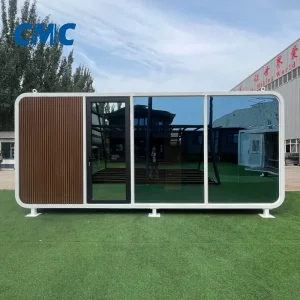
20ft Prefab Container Modular Tiny House Office Pod
View Specifications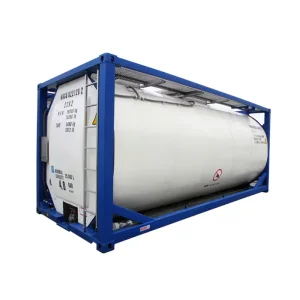
ISO Standard 20ft Versatile Chemical Tank Container
View Specifications
Certified Offshore Basket Container for Operations
View Specifications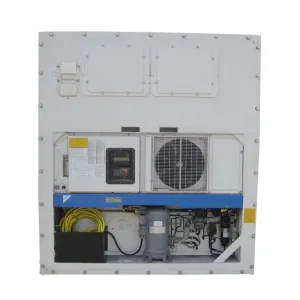
Refrigeration Equipment Cooling Unit for Containers
View Specifications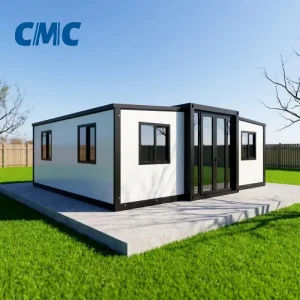
OEM 20ft Modular Expandable Steel Container House
View Specifications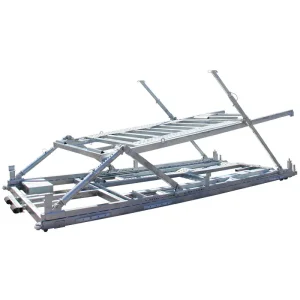
China Industrial Vehicle Transport Rack Platform
View Specifications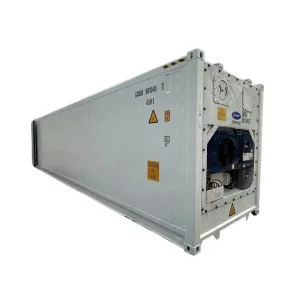
Ninety Percent New Used 40ft HC Carrier Reefer
View Specifications