
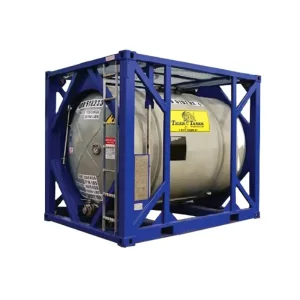
Flagship Equipment
Sydney Offshore Certified Solutions
Pre-engineered, dynamic load-tested, and DNV GL certified containers ready for rapid deployment across New South Wales maritime terminals and oceanic platforms.
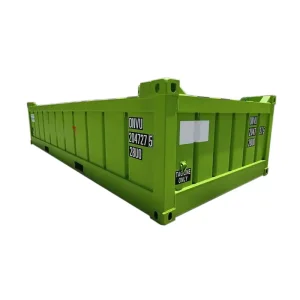
Sydney ODM DNV Half-Height Open Top Offshore Container
View Specifications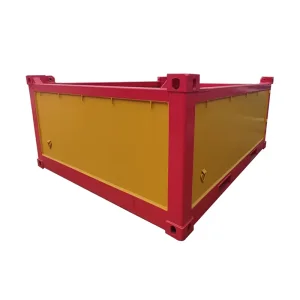
Sydney High-Strength Offshore Cargo Basket Unit
View Specifications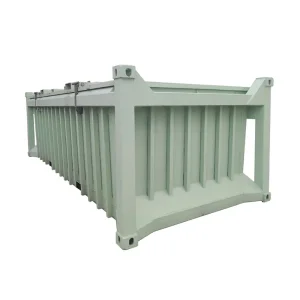
Sydney Industrial Half-Height Bulk Mineral Carrier
View Specifications
Geographic & Industrial Context
Sydney’s Offshore & Maritime Supply Chain Ecosystem
Analyzing the demanding engineering criteria driven by Port Botany logistics, Tasman Sea energy projects, and regional infrastructure corridors.
Port Botany & Intermodal Nodes
As Australia's premier deepwater container port, Port Botany processes severe heavy industrial freight requiring continuous offshore stevedoring transfers. Equipment moving through Botany to offshore installations must seamlessly transition from rail and heavy chassis directly to marine dynamic cranes without structural fatigue.
Hunter & Illawarra Energy Hubs
The industrial maritime corridors adjacent to Sydney—spanning Newcastle/Hunter to the north and Port Kembla/Illawarra to the south—are rapidly evolving into offshore wind zones and hydrogen development clusters. These zones require certified Cargo Carrying Units (CCUs) designed for extreme cyclic wind loads.
Naval Defense & Subsea Survey
With major defense facilities stationed across Garden Island and Sydney Harbour, military-grade offshore containerization demands fail-safe containment, electromagnetic shielding capability, and specialized acoustic insulation for deployment on naval patrol and hydrographic survey vessels.
Engineering Standards
DNV 2.7-1, EN 12079 & ISO 10855 Metallurgy Architecture
Offshore container operations across Sydney’s outer continental shelf encounter dynamic sea states vastly more punishing than standard ISO container transport. Under severe sea-swell conditions, dynamic snatch loads on crane lifting points can exceed four times the static gross weight.
Our manufacturing protocols utilize structural hollow sections and high-yield micro-alloyed steel (EN 10025-2 S355J2 / S355ML). Critical structural members are Charpy V-Notch impact-tested at -20°C and -40°C down to 27 Joules minimum, guaranteeing fracture toughness against brittle failure during heavy sea lifts.
- Integral Pad Eyes: Full-penetration welded directly into corner posts and primary longitudinal rails, ultrasonically inspected (UT) to zero-defect criteria.
- Offshore Slings: Four-leg DNV 2.7-1 certified wire rope lifting slings fitted with high-tensile quad assemblies and safety pin shackles.
- C3 to CX Marine Coating: Multi-coat zinc silicate and epoxy systems resisting severe splash-zone salinity up to 25 years lifecycle durability.
| Engineering Attribute | Standard ISO Shipping Box | DNV 2.7-1 Offshore Unit |
|---|---|---|
| Primary Structural Steel | Cort-Ten A / Mild Steel | EN 10025 S355ML (Normalized) |
| Low-Temp Charpy Impact | Non-Mandatory | Mandatory (-20°C / -40°C @ 27J) |
| Dynamic Acceleration Factor | Static stacking only (~1.8g) | Dynamic hoisting up to 3.0g - 4.5g |
| Lifting Configuration | Corner castings / twistlocks | Integrated forged pad eyes & rated slings |
| Certification & Testing | CSC Safety Approval Plate | DNV GL / Lloyd's Register offshore data plate |
| NDT Inspection Mandate | Visual spot checks | 100% MPI & UT on primary welds |
Macro Industry Solutions
Mission-Critical Offshore Applications
Custom-engineered specialized units serving energy transition operators, marine contractors, and bulk mineral exporters.
Subsea Pipeline & ROV Control Labs
For offshore exploration vessels and cable-laying projects operating off the coast of New South Wales, standard dry boxes cannot support sensitive equipment.
- Pressurized A60 fire-rated control cabins
- HVAC systems built to hazardous area Zone 1 / Zone 2
- Vibration-isolated flooring for sonar equipment
- Integrated umbilical winches & hydraulic conduits
Offshore Wind Blade & Turbine Tooling
As the Hunter and Southern Ocean offshore wind zones deploy mega-turbines, specialized transport modules become indispensable.
- Open-top heavy duty half-heights for anchor chains
- Extended 40ft and 60ft cargo baskets for riser pipes
- Internal load-binding rings certified to 5,000 kg each
- Hot-dip galvanized structural steel finishing
Dangerous Goods & Chemical Bunkering
Transporting hazardous drilling fluids, methanol, lubricants, and high-purity industrial chemicals requires fail-safe marine integrity.
- DNV 2.7-1 / ASME VIII certified T11 to T75 ISO tanks
- Internal 316L stainless steel vessels with baffling
- Vapor recovery and dual emergency relief valves
- Self-bunded double-wall secondary containment
Innovation Roadmap
Next-Generation Technological Framework
How CIMIC integrates cutting-edge IoT sensing, green metallurgy, and predictive structural twin analysis into modern fleets.
IoT Telemetry & G-Force Monitoring
Equipping units with ATEX/IECEx Zone 0 wireless sensors measuring dynamic G-load shocks during wave-impact offshore transfers. Fleet managers in Sydney track real-time stress concentrations and sling fatigue remotely via cloud telemetry.
Low-Carbon Recycled Metallurgy
Transitioning toward electric arc furnace (EAF) low-embodied-carbon structural steel certified to ISO 14044 life-cycle standards. This enables Australian energy firms to fulfill strict ESG parameters and Scope 3 carbon reduction mandates.
Digital Twin FEA Verification
Every non-standard custom OEM/ODM offshore model undergoes non-linear Finite Element Analysis (FEA) simulating multi-directional angular tilts up to 30°, accidental drop impacts, and severe localized bottom indentation before prototyping.
Australian Standards & Wharf Compliance
Seamless Sydney Stevedoring & AMSA Alignment
Navigating maritime regulatory bodies in New South Wales requires acute adherence to Australian Maritime Safety Authority (AMSA) guidelines, SafeWork NSW plant regulations, and AS/NZS compliance parameters.
We guarantee every container shipped into Port Botany arrives with a comprehensive Manufacturer's Data Report (MDR), including full material mill test certificates (MTC 3.1), Non-Destructive Testing (NDT) reports, structural weld maps, and third-party Lloyd's Register or Bureau Veritas inspection stamps.
Direct Factory-to-Wharf Transit Efficiency
Our coastal manufacturing plants in Tianjin and Suzhou are located within 100 km of international deep-water seaports, ensuring direct shipping routes into Port Botany with zero intermediate handling risks.
Import Biosecurity (DAFF / BMSB) Pre-Treatment
Fully compliant with the Australian Department of Agriculture, Fisheries and Forestry (DAFF) requirements. Timber flooring is treated to AQIS/Australian quarantine standards or substituted with heavy-duty pressed steel non-skid plate.
Localized Periodic Sling Re-Certification
All pad eye configurations and four-leg sling assemblies adhere to Australian Standard AS 2759 and AS 1353, ensuring annual NDT re-inspections can be performed by any qualified rigging workshop in Port Botany or Newcastle without tooling adapters.
Procurement & Technical FAQ
Frequently Asked Questions for Sydney Importers
Critical commercial, structural, and regulatory queries answered by our chief offshore engineering division.
Why can't standard ISO shipping containers be used offshore in Sydney?
Standard ISO containers are engineered solely for static stacking and calm marine vessel transits. They lack the structural yield strength, specialized low-temperature impact metallurgy (Charpy V-Notch testing), and certified high-integrity corner pad eyes necessary to withstand the dynamic snatch loads (often up to 3.5g) experienced during offshore ship-to-platform crane lifts in rough Tasman Sea conditions.
What specific offshore container certifications do you supply for NSW?
All our offshore units can be supplied with complete dual-certification under DNV 2.7-1 (Standard for Certification No. 2.7-1 Offshore Containers), EN 12079, and the global ISO 10855 standard. Each unit is stamped by accredited classification bodies including DNV, Bureau Veritas (BV), or Lloyd’s Register (LR).
Can you engineer bespoke dimensions for specialized subsea tooling?
Yes. While we produce standard 10ft, 20ft, and half-height containers, our core capability lies in OEM/ODM engineering. We manufacture custom lengths up to 70ft, specialized half-height open-tops with removable side-doors, drill pipe baskets, and dedicated ROV workshop modules tailored to specific naval or commercial drawings.
How are the lifting slings tested and certified prior to dispatch?
Every sling set (including 4-leg wire rope or chain bridle, top master link, and intermediate quad assemblies) is individually proof-load tested to DNV 2.7-1 Chapter 8 requirements. Rigging certificates and batch metallurgy tracking forms are provided within the Manufacturer's Data Report (MDR).
What is the typical shipping lead time from your factories to Sydney?
Direct ocean container lines from our port logistics hubs in Tianjin and Shanghai reach Port Botany, Sydney within 14 to 21 sailing days. For bespoke structural orders, standard engineering drafting, FEA simulation, fabrication, NDT testing, and classification society survey require approximately 4 to 6 weeks.
Are custom color schemes and zinc thermal metallization available?
Absolutely. In addition to our heavy-duty marine paint systems (zinc rich primer, intermediate epoxy tie-coat, and polyurethane top-coat), we offer hot-dip galvanizing (HDG) to ISO 1461 and thermal arc zinc spray metallization, ensuring maximum corrosion protection against high UV and marine salinity along Australian coastlines.
Complete Fleet Portfolio
Specialized Marine & Modular Shipping Containers
Explore our extended range of high-performance liquid tanks, insulated cold-chain reefers, explosive-proof hazardous containers, and prefabricated modular shelters.
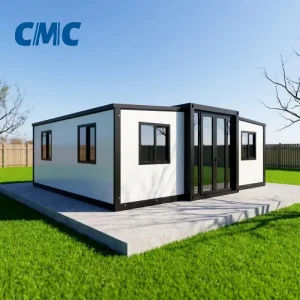
Sydney 20ft Insulated Modular Field Shelter Unit
View Specifications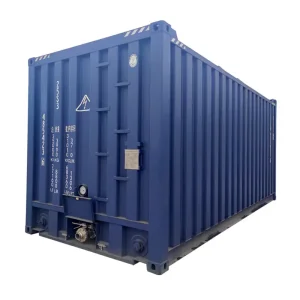
Sydney Heavy-Duty 20ft Square Liquid ISO Tank
View Specifications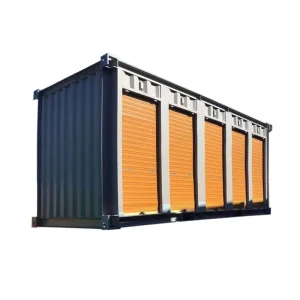
Sydney 20ft Rapid-Access Roll-Up Door Storage Unit
View Specifications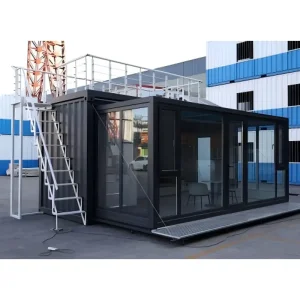
Sydney 20ft Foldable Rapid-Deploy Camp Cabin
View Specifications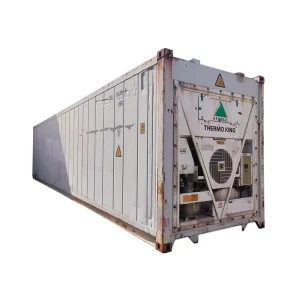
Sydney 40ft High-Cube Deep Freezer Reefer Unit
View Specifications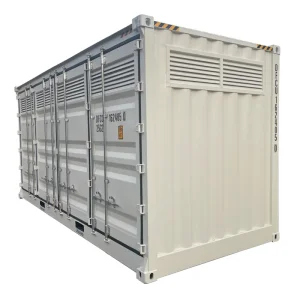
Sydney 20ft Dangerous Goods Side-Open Vent Container
View Specifications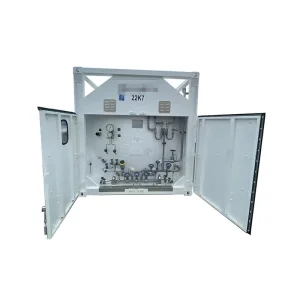
Sydney T75 20ft Cryogenic Marine Fuel ISO Tank
View Specifications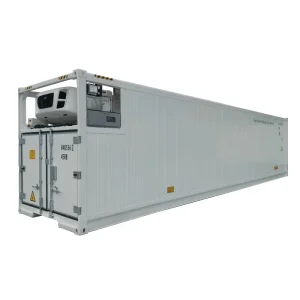
Sydney 40ft/45ft Intermodal Reefer Transport Box
View SpecificationsPlan Your Next Offshore Fleet Project with Certified Engineers
Direct OEM/ODM technical consultations, FEA calculations, and quotation schedules tailored specifically for Sydney procurement managers and maritime offshore contractors.
Send Inquiry Now