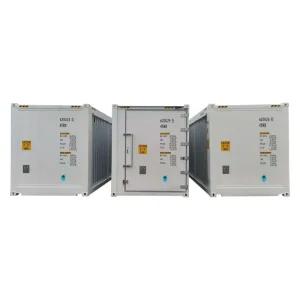
Immediate dispatch and project-scale manufacturing for marine operators across Port of Melbourne, Hastings, and Geelong. Built strictly in compliance with maritime classification societies.
TEU Annual Throughput
Handled via Port of Melbourne Webb & Swanson Docks
Mandatory Safety Standard
Absolute compliance for Bass Strait open-sea crane lifts
Atmospheric Corrosion Class
ISO 12944 standard applied across all offshore units
Charpy V-Notch Baseline
Guaranteed impact toughness for primary load members
The Greater Melbourne commercial territory represents Australia’s premier maritime gateway, anchoring the nation’s supply chain through the bustling multimodal terminals of the Port of Melbourne, Swanson Dock, and Webb Dock. However, industrial container requirements across Victoria extend far beyond standard dry-freight shipping boxes. South of Melbourne lies the volatile waterway of Bass Strait—home to Australia’s most critical offshore hydrocarbon infrastructure, deep-sea subsea maintenance hubs, and the emerging Gippsland Declared Offshore Wind Area.
Offshore containers deployed across the Bass Strait oil, gas, and renewable developments operate in one of the planet’s most treacherous sub-Antarctic wave climates. Unlike standard ISO shipping containers (governed by ISO 668 and ISO 1496) which rely solely on static stacking through corner castings, Offshore Cargo Carrying Units (CCUs) are subjected to continuous dynamic loads, violent ocean-swell shock transmissions during crane lifting from offshore supply vessels (OSVs), and prolonged exposure to marine saltwater spray.
Meeting Victorian workplace health and safety benchmarks and securing offshore operating permissions demands unwavering engineering adherence to DNV 2.7-1 (Standard for Certification of Offshore Containers), EN 12079, and ISO 10855. As direct-manufacturer exporters, we bridge the gap between heavy industrial Chinese fabrication capacity and strict Australian marine safety covenants, delivering turn-key equipment engineered to absorb high-amplitude dynamic forces without structural yield.
Combining over four decades of steel container production expertise with Tier-1 metallurgy, robotic precision, and direct shipping lines from northern China to Port of Melbourne berths.
Every offshore frame utilizes mill-certified structural steel (S355 or SPA-H Corten) with complete heat-number stamping. Full mill test certificates (MTC 3.1) and ultrasonic weld inspection reports are systematically compiled for maritime safety audits before port dispatch.
Critical structural pad-eyes and perimeter tubular frames undergo automated submerged-arc and multi-pass robotic MIG welding. This achieves continuous, defect-free root penetration capable of withstanding torsional twisting induced by open-ocean supply vessel transits.
Situated within 100 kilometers of the major export hubs of Tianjin and Shanghai, our staging yards load containers onto direct express container vessels bound for Port of Melbourne (Victoria), dramatically cutting transit times, handling costs, and inventory holding risks.
Procurement teams must distinguish between intermodal sea boxes and offshore certified modules. Deploying non-certified ISO containers offshore is a violation of Australian maritime safety regulations.
| Evaluation Parameter | Standard ISO Shipping Container | DNV 2.7-1 / EN 12079 Offshore Container | Engineering Significance for Melbourne/Bass Strait |
|---|---|---|---|
| Governing Standard | ISO 668, ISO 1496-1, CSC | DNVGL-ST-E271, EN 12079, ISO 10855 | Mandatory offshore regulatory compliance in Victoria |
| Design Acceleration | 1.0g - 1.2g (static/calm water lifting) | 2.0g - 2.5g+ dynamic amplification factor | Resists vessel surge, heave, and snatch-load forces |
| Lifting Configuration | Twistlocks via 4 standard corner castings | Dedicated heavy-duty pad eyes welded to primary frame | Allows multi-leg wire rope slings with certified shackles |
| Steel Grade & Charpy | Commercial structural steel, untested Charpy | EN 10025 S355 / Corten, Charpy impact tested at -20°C | Prevents brittle fracture in Southern Ocean sub-zero conditions |
| Coating Architecture | Standard industrial alkyd/epoxy (approx. 120μm) | High-build offshore marine C5-M system (300μm - 340μm) | Protects against heavy salt mist in open Bass Strait environments |
| Periodic Certification | CSC periodic inspection (30 months) | Annual sling NDT and visual load inspection | Full asset compliance with NOPSEMA and WorkSafe Victoria |
From renewable wind farm installations to specialized petrochemical processing and cold-chain perishables, our modular equipment underpins key industrial sectors.
With the Australian Federal and Victorian State Governments designating Gippsland as Australia's premier offshore wind zone, logistics contractors require highly specialized containers for transporting sensitive turbine maintenance tooling, subsea cabling instrumentation, and offshore technician workshops. Our customized DNV acoustic and fire-rated (A60) offshore container modules provide secure, climate-controlled, safe-haven operational pods on installation vessels.
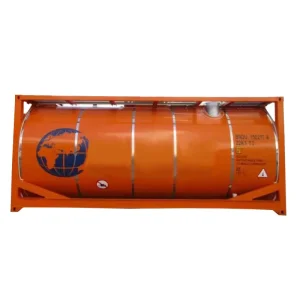
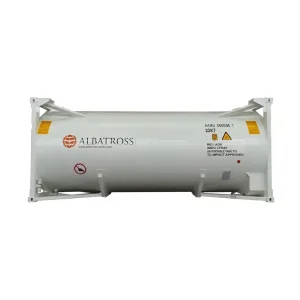
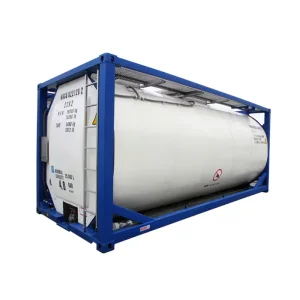
Decades of energy extraction across the Gippsland and Otway Basins are transitioning toward late-life production and targeted asset decommissioning. This operational shift drives massive demand for specialized half-height offshore baskets, cutting skids, and hazardous chemical transport tank containers (ISO T11/T14/T50) capable of safely moving volatile drilling muds, recovered condensate, and subsea valve assemblies between offshore platforms and Barry Beach Marine Terminal.
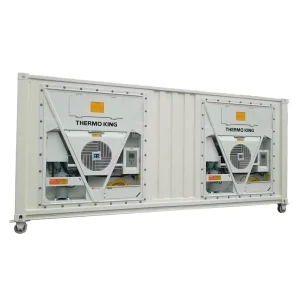
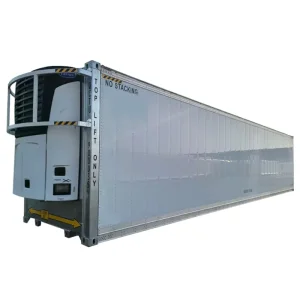
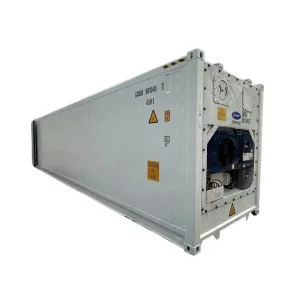
Victoria is Australia’s food bowl, exporting dairy, premium beef, stone fruit, and seafood to global destinations. Our Carrier and Daikin-equipped high-cube refrigerated containers and blast reefers maintain surgical temperature stability (down to -35°C), ensuring agricultural integrity from regional processing hubs in Shepparton and Gippsland all the way through Webb Dock berths.
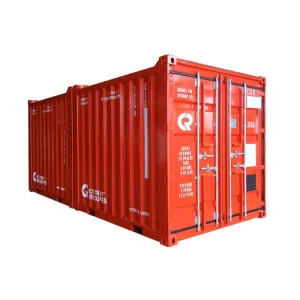
We customize bare offshore shells into complex operational modules configured to exact engineering blueprints:
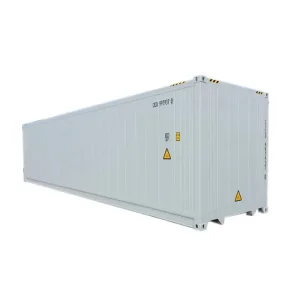
Explore our full line of liquid ISO tanks, cryogenic and gas containers, high-cube cold storage, and mobile refrigeration systems ready for immediate order fulfillment to Melbourne.
We de-risk overseas sourcing through transparent engineering milestones, independent Third-Party Inspection (TPI), and stringent Australian customs pre-clearance.
Navigating the stringent occupational health covenants of the Australian National Offshore Petroleum Safety and Environmental Management Authority (NOPSEMA) requires documented verification at every manufacturing step. When manufacturing offshore CCUs for delivery into Victoria, we enforce a strict 4-stage Quality Control plan:
Delays at the Port of Melbourne due to biosecurity hold-ups can compromise project timelines. All our containers heading to Victoria are treated and certified to comply with the Department of Agriculture, Fisheries and Forestry (DAFF) standards:
Comprehensive answers for marine logistics supervisors, procurement leads, and offshore engineering contractors sourcing for Victorian waters.
Whether you require standard DNV 2.7-1 dry storage containers for immediate Bass Strait charter, ISO liquid tanks for chemical transport, or custom modified offshore workspace units, our structural engineering team is ready to assist.