
Chemical T11
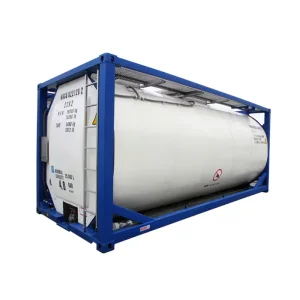
Precision-engineered ISO tank containers and specialized handling platforms configured for direct intermodal transfer across US Class I railroads, Gulf Coast port terminals, and intermodal highway chassis networks.
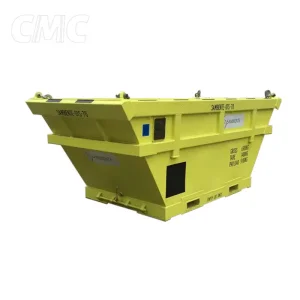
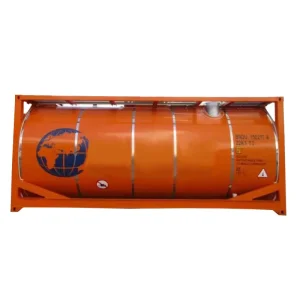
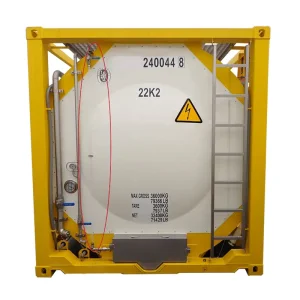
Strategic macroeconomic shifts across North American chemical refining, semiconductor manufacturing corridors, and renewable fuel transitions are fundamentally redefining tank container deployment specifications.
The concentration of ethylene, propylene, aromatics, and chlor-alkali derivatives spanning the Houston Ship Channel, Port of Corpus Christi, Baton Rouge, and Lake Charles drives massive domestic demand for UN Portable T11, T14, and T20/T22 gas tanks. With ongoing multi-billion-dollar expansions along the US Gulf Coast, shippers are shifting aggressively away from conventional tank cars toward multimodal ISO tank containers that can easily transfer between rail corridors, container ships, and inland barge terminals without costly decanting or risk of cross-contamination.
The agricultural heartland spanning Iowa, Illinois, Nebraska, and Indiana represents an intense demand corridor for specialized liquid bulk logistics. Large-scale fertilizer solutions (UAN, liquid potash), specialty pesticides, and the booming Renewable Diesel (HVO) and Sustainable Aviation Fuel (SAF) production supply chains require robust, steam-heated, and insulated stainless steel tank containers. Utilizing ISO tanks instead of road tankers optimizes seasonal storage buffers and mitigates expensive deadheading runs across Class I rail networks like BNSF and Union Pacific.
With massive domestic semiconductor fabrication investments catalyzed by the US CHIPS and Science Act across Arizona (Silicon Desert), Ohio (Silicon Heartland), and Texas, demand for ultra-high-purity (UHP) chemical vessels has reached unprecedented highs. Transporting electronic-grade sulfuric acid, hydrogen peroxide, and TMAH requires tank containers engineered with electropolished internal surface finishes (Ra ≤ 0.2 μm) or fluoropolymer linings (PTFE/PFA) that ensure zero ion leeching, backed by full ASME Section VIII Division 1 fabrication stamps.
Navigating North American transport mandates requires rigorous dual-code design compliance across federal agencies, maritime authorities, and railroad safety councils.
Our export units conform strictly to US Department of Transportation (DOT) Title 49 Code of Federal Regulations (49 CFR § 178.274 and § 178.275). Units intended for specialized hazardous materials operate under valid US DOT Special Permits (DOT-SP), complete with National Board vessel registration and periodic inspection plates adhering to FRA (Federal Railroad Administration) requirements for intermodal drop-frame transport.
For pressurized gas (T50) and cryogenic fluid (T75) containment, pressure vessels are engineered according to ASME Section VIII Division 1 criteria and stamped with the authorized 'U' Stamp. Inspection and validation are conducted by Authorized Inspection Agencies (AIA), ensuring effortless plant acceptance across US chemical facilities subject to OSHA PSM (Process Safety Management) oversight.
Highway weight restrictions set by the US Federal Bridge Gross Weight Formula demand optimized tare weights. Our engineering features high-tensile lightweight Corten and dual-phase stainless steels, maximizing liquid payload within the federal 80,000-pound Gross Vehicle Weight (GVW) limit. Every container features AAR-600 impact-tested designs verified for North American humping and rail switching dynamics.
For procurement officers managing bulk chemical and food logistics into the United States, equipment selection directly impacts operational expenditure, risk profile, and corporate Scope 3 emissions.
| Evaluation Parameter | ISO Tank Container (20ft T11/T14) | Single-Use Flexitanks (in 20ft Dry Box) | 55-Gallon Steel Drums (in 20ft Dry Box) |
|---|---|---|---|
| Volumetric Efficiency | Optimal Up to 26,000 Liters per single TEU | Maximum 24,000 Liters (Restricted by bulge risk) | Approx. 16,000 Liters (80 drums × 205 L) |
| Hazardous Cargo Authorization | Fully Approved: UN Classes 3, 4, 5, 6, 8, 9 under US DOT & IMDG | Prohibited: Strictly limited to non-hazardous liquids | Conditional: Requires palletizing, UN packaging ratings |
| Cargo Security & Rupture Risk | Maximum Protection 4mm+ 316L Stainless Steel Shell | High vulnerability to shifting, puncturing, or container bulge | Moderate: Susceptible to puncture, leakage, and fork damage |
| ESG & Carbon Footprint | Virtually Zero Solid Waste: 100% recyclable, 30+ year lifespan | Generates 60-100 kg of contaminated single-use plastic waste | High recycling overhead; continuous reconditioning required |
| Loading & Discharge Efficiency | Single-hose connection; fully automated discharge in < 45 mins | Moderate; requires dedicated pump fittings and disposal handling | Extremely Labor Intensive: Manual un-drumming and decanting |
| Intermodal Velocity (Rail/Road/Sea) | Instant transfer across ship, double-stack rail, and chassis | Risk of sloshing dynamics causing rail derailment restrictions | Standard intermodal compatibility, high stowage overhead |
Built to withstand the most corrosive acids and aggressive chemical reagents, every tank vessel represents an apex of structural engineering, automated submerged arc welding, and specialized surface passivations.
Fabricated from premium sanitary grade AISI 316L (EN 1.4404) or specialized molybdenum-alloyed 316Ti / 2205 Duplex Stainless Steels. Shells are hot-rolled and subjected to fully automated longitudinal and circumferential robotic plasma welding, followed by 100% radiographic weld testing. Internal shells receive complete chemical pickling and passivation, achieving mirror-like mechanical polishing or electropolishing (down to Ra 0.2 μm) to prevent micro-pitting and bacterial colonization.
For transport of high-concentration Hydrochloric Acid (HCl), Hydrofluoric Acid (HF), Ferric Chloride, and ultra-corrosive halides, we supply specialized barrier-coated vessels. Options include seamlessly roto-molded high-density PFA / PTFE (Teflon) fluoropolymer linings, high-build vulcanized Chlorobutyl/Bromobutyl rubber linings, and ethylene chlorotrifluoroethylene (ECTFE). Linings undergo rigorous 25,000-volt high-frequency spark holiday testing to ensure absolute pinhole-free integrity.
Equipped with high-efficiency 6-run to 8-run steam heating channels fabricated from longitudinally welded 316L profiles, capable of operating up to 6 bar working pressure. For heat-sensitive or high-viscosity products (bitumen, fatty acids, resins), optional multi-zone electric heating jackets or specialized glycol heat-exchange circuits are integrated. Thermal insulation incorporates 50mm dense polyurethane foam or hydrophobic rockwool encased in a seamless weatherproof marine-grade GRP/aluminum outer skin.
The next decade of intermodal tank operations unites real-time cloud data telemetry with breakthrough cryogenic containment for liquid hydrogen and LNG decarbonization corridors.
Our intelligent tank container fleets feature certified intrinsically safe (ATEX/IECEx Zone 0) tracking nodes. Sensors provide real-time cloud visibility into core operational metrics: multi-point product temperature, internal vessel pressure, ullage levels, geofencing coordinates, and sudden G-force kinetic shock occurrences during intermodal rail coupling. Shippers manage active alerts via API into enterprise ERPs (SAP/Oracle).
Meeting the surge in clean energy transition projects across the United States, our T75 cryogenic containers operate under high-vacuum multi-layer insulation (super-insulation) to achieve minimum daily boil-off rates (BOR < 0.15%). Engineered for seamless international transport of Liquefied Natural Gas (LNG), Liquid Nitrogen (LIN), Liquid Argon (LAR), and Liquid Oxygen (LOX), with next-gen research deployed for Liquid Hydrogen (LH2) multi-modal carriage.
Our carbon-reduction design roadmap incorporates structural finite element analysis (FEA) to reduce container tare weights by up to 12% without sacrificing torsional stiffness. Utilizing high-yield Corten steel cross-members, lightweight composite walkway grates, and optimized valve protection boxes, each unit unlocks greater cargo payload under strict US highway Gross Vehicle Weight mandates.
From manufacturing slipways situated 100 km from major seaport docks directly into premier US deepwater gateways: Houston, Los Angeles/Long Beach, Savannah, Charleston, and New York/New Jersey.
Every newly constructed tank undergoes an intensive battery of hydrostatic, pneumatic, and helium-leak tests verified by third-party international classification societies including Bureau Veritas (BV), Lloyd's Register (LR), or DNV. Complete manufacturing record books (MDR) including material mill test certificates (MTRs), welder qualification records, and calibrated ASME safety relief valve certifications are provided with every serial number.
Importing pressure equipment into the United States requires spotless customs and environmental compliance. Our dedicated logistics team prepares complete Harmonized Tariff Schedule documentation, EPA chemical equipment declarations, and US Customs entry filings. We coordinate closely with US chassis providers to facilitate rapid terminal turnaround, eliminating demurrage and chassis split fees.
To support multi-year operational leases and fleet ownership in the United States, our engineering drawings match universal North American depot spare parts (Fort Vale, Perolo valve fittings, Super Seal gaskets). Containers adhere strictly to the mandatory 2.5-year intermediate and 5-year periodic hydrostatic test intervals mandated by IMDG and 49 CFR, supported across accredited US tank cleaning and repair depots nationwide.
Authoritative guidance for chemical manufacturers, freight forwarders, and equipment leasing managers regarding container selection, regulatory certification, and technical configurations.
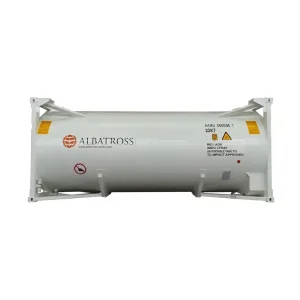
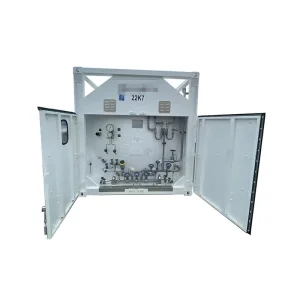
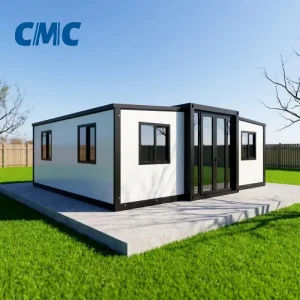
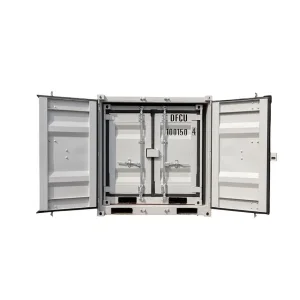
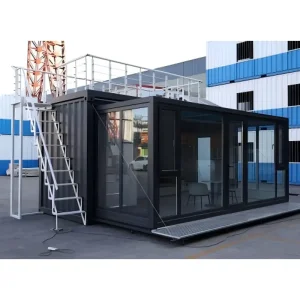
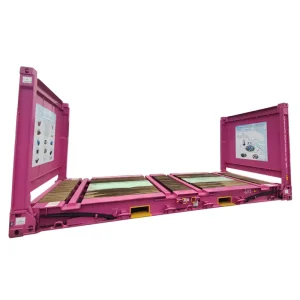
Explore our full line of specialized pressurized gas tanks, cryogenic units, flat-rack platform frames, portable accommodation modules, and compact storage solutions configured for worldwide and US industrial buyers.
Connect directly with our senior vessel engineers. Submit your chemical MSDS/UN hazard code, target payload volume, and designated US discharge port for comprehensive CAD general assembly drawings, full material mill specifications, and prompt CIF quotations.