
Primary Offshore & Heavy-Duty Cold Chain Units
Engineered for dynamic open-ocean lifting, severe temperature profiles, and specialized industrial deployments with global factory-direct pricing.
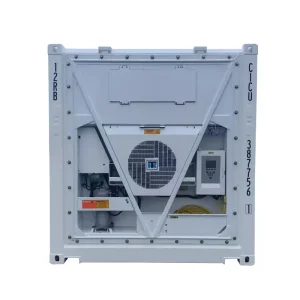
OEM 20ft Offshore Refrigerated Container DNV Certification Is More Durable Exporter, Exporters
View Specifications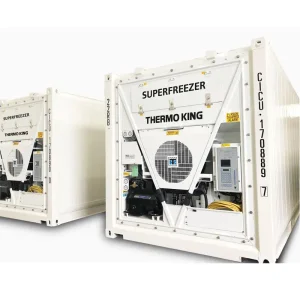
OEM New Deep Freezer Refrigerator Container For Sale Factory, Quotes
View Specifications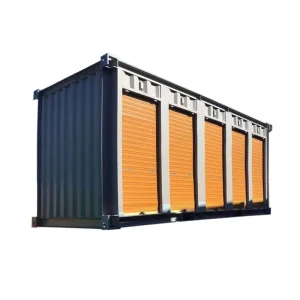
OEM New 20ft Storage Roll-Up Door Dry Cargo Container Pricelist, Product
View Specifications
Buy Used 40ft HC Shipping Reefer Container Manufacturers, Exporters
View Specifications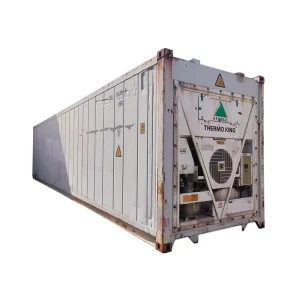
ODM New 40ft Refrigerated Freezer Container for Sale Factory, Exporter
View Specifications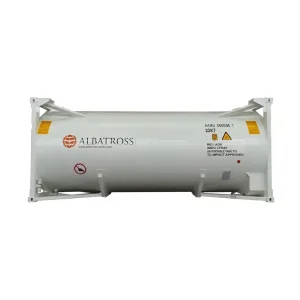
China 25000 Liters ISO 20ft Gas Tank Container for Sale Product, Factories
View Specifications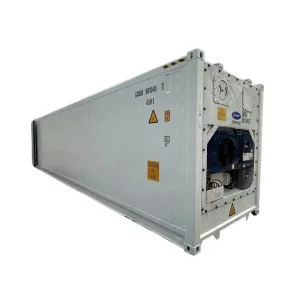
Buy Ninety Percent New Used 40ft HC Carrier Refrigerated Container Product, Quotes
View Specifications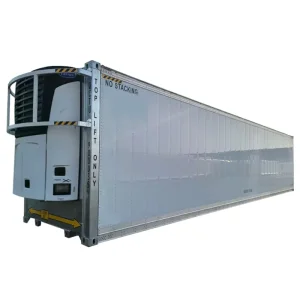
China Carrier X4-7300 Refrigeration and Electricity Integrated Container Exporter, Products
View SpecificationsGlobal Landscape of Offshore Reefer Containers
Navigating dynamic acceleration forces, salt-fog corrosion, and safety mandates in marine hydrocarbon extraction and offshore renewable installations.
Dynamic Stress Mitigation
Unlike static onshore cold rooms or standard intermodal shipping containers, offshore reefer units must endure violent multi-axis dynamic loads during open-sea crane transfers between supply vessels and floating production platforms (FPSOs, spar buoys, jack-up rigs).
CIMIC builds offshore reefer boxes using reinforced SPA-H Corten structural steel frames, heavy-gauge corner posts, and continuous submerged-arc welding. This ensures complete dimensional stability when facing wave heave, pitch, and roll accelerations that exceed 2.5G.
- Engineered pad eyes tested to withstand 2.5x design gross weight
- Charpy V-notch impact toughness certified to -20°C and -40°C environments
- Elimination of cold-bridge deformation under heavy torsional sea loads
Stringent Regulatory Compliance
Marine energy operators require complete compliance traceability. Operating in high-consequence maritime zones necessitates meeting triple safety benchmarks: DNV 2.7-1 (Standard for Certification of Offshore Containers), EN 12079, and the global ISO 10855 standard.
Every CIMIC offshore refrigeration unit undergoes full Non-Destructive Testing (NDT), magnetic particle inspection (MPI), and proof load pull-tests supervised by Bureau Veritas (BV) or DNV surveyors, yielding complete traceability documentation packages for procurement auditing.
- Full mill certs for all primary and secondary structural steel plates
- Four-leg certified wire rope lifting slings with Crosby master link and safety shackles
- Data plate stamping per DNV 2.7-1 / EN 12079-1 mandatory rules
ATEX & IECEx Zone Engineering
Operating in combustible marine atmospheres—such as wellhead platforms or petrochemical transfer decks—requires strict containment of thermal and spark hazards. CIMIC supplies custom offshore reefers adapted with ATEX/IECEx Zone 1 and Zone 2 explosion-proof electrical systems.
We modify industry-leading refrigeration units (Thermo King, Carrier Transicold, and Daikin) with cast bronze-free explosion-proof control boxes, intrinsically safe sensor loops, and anti-static internal airflow paths to guarantee uninterrupted thermal holding without risk of igniting ambient gases.
- Zone 1 & Zone 2 rated compressor motors, fan assemblies, and cabling
- 316L stainless steel external hardware, fasteners, and locking gear
- Integrated emergency internal release mechanisms to ensure crew safety
Architectural Information Gain: Why Offshore Reefers Differ from ISO Reefers
A standard ISO reefer utilizes lightweight aluminum T-flooring, lightweight sandwich panels, and standard corner castings engineered strictly for twist-lock container-ship cellar guides. In contrast, an offshore reefer container incorporates an integral, ultra-rigid external steel skeleton, top-mounted certified lifting lugs (pad eyes), continuous heavy-duty internal seam welding, insulated vacuum-injected high-density polyurethane walls (minimum 100mm thickness), and C5-M marine anti-corrosive coating systems capable of surviving 1,500+ hours of continuous salt-spray exposure.
China Factory Scale & Engineering Efficiency
Leveraging four decades of manufacturing heritage since 1983 from Tianjin and Suzhou hubs to deliver rapid turnaround, stringent tolerances, and total cost leadership.
Port-Proximate Hubs: Tianjin & Suzhou
Logistics latency directly increases procurement expenses. CIMIC’s primary fabrication plants in Tianjin and Suzhou are located within 100 kilometers of northern and eastern China’s largest deepwater container hubs.
This strategic geographic alignment allows finished offshore reefer units, specialized bulk tanks, and modified reefers to transition from production lines to ocean freight vessels within 48 hours of final QC release, drastically cutting domestic haulage fees and transit lead times for overseas buyers.
Full Supply Chain Integration
China’s mature industrial ecosystem enables CIMIC to source certified high-grade SPA-H weathering steel, stainless-steel liners (grade 304/316L), automated thermal foaming materials, and marine coating systems at unprecedented economies of scale.
By integrating laser-cutting CNC centers, automated robotic welding cells, and closed-loop environmental paint booths under one roof, we eliminate intermediate subcontracting markups and provide overseas EPCs with 20% to 35% CAPEX advantages over European or North American fabricators.
Standardized Bureau Veritas & ISO Audits
Every container manufactured by CIMIC is governed by our documented ISO 9001 and ISO 14001 quality management infrastructure, alongside Bureau Veritas (BV) type-approval oversight.
From steel chemical batch analyses to automated pre-trip inspection (PTI) refrigeration runs that log 24-hour temperature pull-downs from +30°C to -30°C, our factory provides verifiable, stamp-signed quality documentation that guarantees seamless clearance at customs and safety acceptance by offshore terminal managers.
Specialized Offshore Reefer Field Applications
Engineered for uncompromising duty across upstream petroleum, offshore wind installations, remote polar operations, and open-ocean aquaculture networks.
FPSO & Drilling Rig Food Provisions
Offshore energy facilities host crews for 30 to 90 consecutive days. CIMIC’s 10ft and 20ft DNV 2.7-1 reefer units maintain vital frozen and chilled foodstuffs (meat, poultry, dairy, vegetables) without temperature spikes, operating reliably on supply boat transits across the North Sea, Gulf of Guinea, and Southeast Asian basins.
Equipped with food-grade 304 stainless-steel interior walls, anti-bacterial silicone floor caulking, and multi-tier adjustable shelving racks to organize high-density culinary inventories.
Offshore Wind Farm Construction
The global expansion of gigawatt-scale offshore wind farms requires offshore substation (OSS) support fleets to store temperature-sensitive chemical grouts, composite resins, and epoxy bonding agents that require strict preservation temperatures between +15°C and +22°C.
Our precision micro-channel evaporators maintain temperature stability within ±0.25°C, ensuring composite repair materials do not cure prematurely before turbine blade maintenance.
Subsea Pipeline Chemical Reagents
Flow assurance chemicals, subsea umbilical flushing compounds, and kinetic hydrate inhibitors (KHIs) can degrade when exposed to tropical marine ambient heat.
CIMIC builds explosion-proof ATEX Zone 2 reefer containers designed to house specialized IBC totes and chemical drums, incorporating heavy-duty internal tie-down track systems, spill-containment drip trays, and explosive-atmosphere ventilation scrubbers.
Pelagic Mariculture & Live Slurry
Industrial open-ocean salmon farms and deep-sea aquaculture stations demand immediate chilling for harvested sashimi-grade fish. Our ultra-deep freezer units pull down core body temperatures to -40°C in hours.
Features heavy wash-down high-pressure drains, marine-grade copper condensing fins, and zinc-rich epoxy paint layers that withstand harsh biological fluids and alkaline sanitizers.
Emerging Engineering Trends in Offshore Cold Chain
Technological advancements shaping zero-emission marine cold chains, remote diagnostic telematics, and eco-friendly refrigerants.
Satellite & Cellular Dual Telematics
Modern offshore supply lines stretch far outside land-based 5G networks. CIMIC integrates dual-mode Iridium satellite and cellular IoT tracking modems directly into the container controller architecture. Fleet superintendents can monitor:
- Real-time internal supply air and return air temperatures
- Compressor discharge pressure and motor amp draw alerts
- GPS location, open-door alarms, and power interruption triggers
Low-GWP & Natural Refrigerants
In line with the Kigali Amendment and strict European F-gas regulations, CIMIC engineers refrigeration structures fully adapted to low Global Warming Potential (GWP) fluorinated hydrocarbons (R-513A, R-452A) as well as transcritical CO2 (R-744) units.
- Zero ozone-depletion potential (ODP) closed thermodynamic loops
- Optimized condenser coils coated in hydrophilic anti-corrosion resins
- Compliance with IMO MARPOL Annex VI eco-emissions guidelines
Redundant Dual-Cooling Systems
For ultra-critical logistics—such as live biological specimens, deepwater pipeline core samples, or pharmaceutical supplies for remote energy personnel—a refrigeration failure is unacceptable.
We manufacture specialized dual-circuit containers fitted with two independent compressor circuits and automatic switch-over logic boards. If one unit faults, the auxiliary system activates immediately to preserve precious cargo.
Engineering Specifications & Structural Matrix
Comparative design criteria for offshore refrigerated containers versus standard ISO shipping boxes to assist supply-chain technical teams.
| Technical Feature | CIMIC DNV 2.7-1 Offshore Reefer | Standard ISO Shipping Reefer | Industrial Advantage |
|---|---|---|---|
| Design Standards | DNV 2.7-1 / EN 12079 / ISO 10855 | ISO 1496-2 / CSC / TIR | Certified for dynamic ocean lifts in rough seas |
| Structural Frame Steel | High-Yield SPA-H Corten Steel (4.5mm - 8.0mm) | Standard Corten & Aluminum Extrusions | Withstands 2.5G wave impact accelerations |
| Lifting Architecture | Integral Pad Eyes & 4-Leg Crosby Sling Set | Corner Castings Only (Twist-lock crane spreader) | Facilitates single-hook crane boat-to-deck hoisting |
| Environmental Coating | C5-M Heavy Marine Paint System (300+ μm) | Standard Marine Alkyd / Epoxy System (150 μm) | 1,500+ hrs salt-fog corrosion durability |
| Operating Temperature | -40°C to +50°C Ambient Range | -25°C to +38°C Typical Range | Arctic-ready steel toughness & extreme cooling capacity |
| Hazardous Zone Capability | ATEX / IECEx Zone 1 & Zone 2 Custom Options | Non-Ex (Safe Zone Operations Only) | Prevents ignition of hydrocarbon vapors on platform decks |
| Thermal Insulation | 100mm - 120mm High-Pressure Polyurethane | 60mm - 80mm Foamed-In-Place Polyurethane | Superior thermal envelope reduces power draw by 18% |
Global Engineering Procurement & Delivery Protocol
Engineering Scope & Rig Requirements
Procurement teams define payload density, operating ambient temperature ranges, sling length angles, and certification body requirements (BV, DNV, ABS, or LR).
3D CAD Design & Calculation Review
CIMIC structural and thermal engineers issue detailed production GA drawings, center-of-gravity estimations, pad eye shear stress calculations, and electrical schematics.
Fabrication, Welding & NDT
Steel assembly using automated submerged-arc welding, shot blasting to ISO Sa 2.5 standards, Charpy V-notch steel batch validation, and 100% magnetic particle testing on lifting lugs.
Refrigeration PTI & Proof Load Testing
Full Pre-Trip Inspection (PTI) with computer-logged pull-down cycles. Physical 2-point and 4-point dynamic lifting proof-load tests supervised by class surveyors.
Port Delivery & Turnkey Customs Clearance
Trucking to Tianjin or Shanghai seaports (approx. 100 km). Delivery under FOB, CIF, or DDP terms with complete documentation (as-built dossiers, sling certs, DNV approval stamps).
Specialized Logistics, Cryogenic & Storage Equipment
Expanding global offshore supply capabilities with intermodal tanks, nested mini-containers, automotive racks, and custom side-door cargo units.
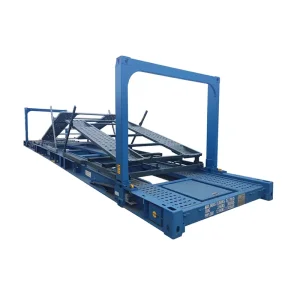
China New 20ft Car Carrier Container Special Container Exporter, Quotes
View Specifications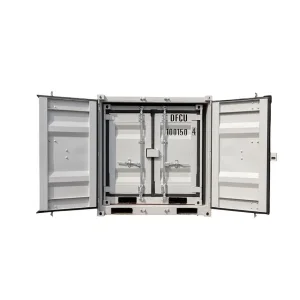
High-Quality Durable Cargo Shipping Container 4Ft/5Ft/6Ft/7Ft/8Ft/9Ft/10Ft/11Ft/12Ft Mini Storage Container Nested Shipping Container Manufacturers, Factories
View Specifications
OEM 20ft Offshore Refrigerated Container DNV Certification Is More Durable Exporter, Exporters
View Specifications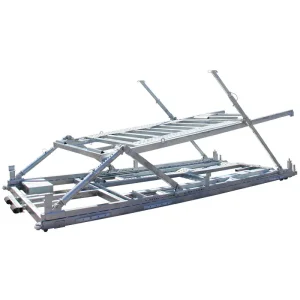
China vehicle transport rack Product, Exporters
View Specifications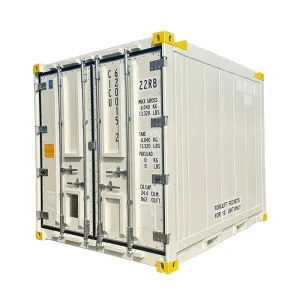
High-Quality New 10ft Certified Thermo King Freezer Container Exporter, Manufacturers
View Specifications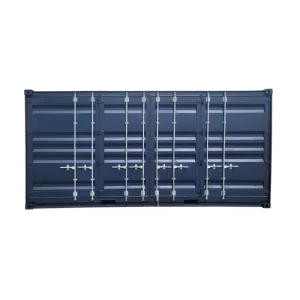
High-Quality New 20ft Customized Side Door Dry Cargo Shipping Container Factory, Product
View Specifications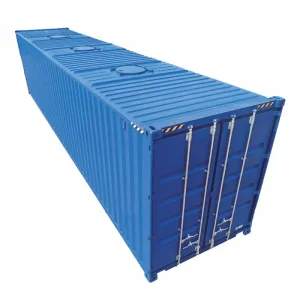
Buy 20 Feet Shipping Bulk Container Manufacturer, Exporters
View Specifications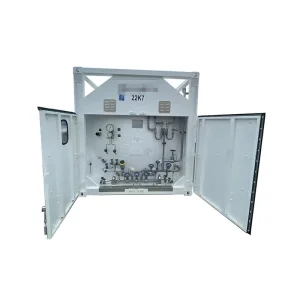
Famous T75 20ft Cryogenic Liquid Tank Container Products, Exporters
View SpecificationsFrequently Asked Questions for Fleet Engineers & Buyers
In-depth answers addressing marine certifications, custom OEM modifications, cold-chain longevity, and international logistics operations.
What structural differences differentiate an offshore reefer from a standard ISO reefer container?
An offshore reefer container is engineered specifically to survive extreme dynamic acceleration loads encountered when cranes hoist cargo between rolling supply vessels and offshore energy structures in rough seas. Key differentiators include:
1. Heavy Corten Framing: Primary structural members are fabricated with high-yield SPA-H Corten steel plates (up to 8.0mm thick), compared to lightweight 2.0mm aluminum or thin steel in standard boxes.
2. Dedicated Pad Eyes: Integrated lifting lugs designed to withstand four-point dynamic slings under 2.5x Max Gross Weight calculations.
3. Charpy Impact Testing: Steel components are tested for notch toughness at -20°C or -40°C to eliminate brittle-fracture risks in sub-zero Arctic conditions.
4. Protective Machinery Cage: Refrigeration condensing units are recessed behind heavy-duty impact bars and protective grilles rather than remaining flush to external panels.
Which classification societies certify CIMIC’s offshore reefer containers?
CIMIC units are fully designed, calculated, and manufactured to meet the dual standards of DNV 2.7-1 (Standard for Certification - Offshore Containers), EN 12079-1, and ISO 10855.
We routinely conduct type tests and batch certification inspections witnessed by Bureau Veritas (BV), DNV, ABS (American Bureau of Shipping), or Lloyd’s Register (LR) based on client specifications. Each container is delivered with its physical metal DNV inspection data plate and complete certification dossier.
Can you build explosion-proof (ATEX / IECEx) offshore refrigerated containers?
Yes. We regularly supply custom OEM/ODM explosion-proof reefer units modified for ATEX Zone 1 and Zone 2 hazardous areas on drilling rigs and production platforms.
Engineering modifications include explosion-proof electrical enclosures (Ex d / Ex e), intrinsically safe control circuits (Ex i), spark-resistant copper-free bronze/stainless fan blades, sealed wiring conduits with silicone resin potting, and hermetic overload protections to ensure absolute fire safety in the presence of volatile hydrocarbon vapors.
What brands of refrigeration machinery can be integrated into your offshore units?
We integrate original, factory-warranted refrigeration machinery from the world’s leading manufacturers, including Carrier Transicold (ThinLINE, PrimeLINE), Thermo King (Magnum Plus), and Daikin (Zestia / LXE series).
Depending on cargo specifications, we supply deep-freeze systems capable of pulling temperatures down to -40°C, dual-refrigeration redundant setups, or integrated diesel-generator hybrid systems (e.g., Carrier X4-7300 units) to provide autonomous off-grid cooling during sea barge transfers.
What lifting sling sets and rigging accessories are provided with offshore containers?
Every DNV-certified container can be supplied complete with a pre-installed, certified 4-leg wire rope lifting sling set and top master link assembly with safety pin shackles.
Our rigging gear utilizes grade 80 or grade 100 marine alloy hardware certified to EN 12079-2 and DNV 2.7-1 sling requirements, calibrated specifically to match the container’s sling angle (typically 45° to 60° from horizontal) and design gross weight.
How does CIMIC ensure long-term corrosion resistance in extreme marine environments?
We employ a multi-tier corrosion mitigation process. The entire raw steel structure undergoes automatic shot-blasting to Swedish Standard Sa 2.5 cleanliness to achieve an anchor profile of 40–75 microns.
This is followed immediately by a heavy C5-M marine-grade epoxy and polyurethane coating system (total Dry Film Thickness exceeding 300 microns). Internal linings are made with non-reactive food-grade 304 or 316 stainless steel with electropolished surfaces, and external locking hardware uses hot-dip galvanized or 316 stainless assemblies to prevent galvanic cell formation.
What is your standard production lead time and port departure arrangement?
Standard catalogue offshore reefer units and dry offshore containers typically carry a factory lead time of 3 to 5 weeks depending on batch volume. Tailored OEM builds with specialized ATEX electrical fit-outs or dual redundant chillers generally require 5 to 8 weeks for complete assembly, testing, and third-party classification auditing.
Because our plants in Tianjin and Suzhou are within 100 kilometers of deepwater ocean ports, we organize immediate terminal haulage, customs filing, and container vessel roll-on/lift-on bookings without domestic inland delays.
Do you supply refurbished or used reefer containers alongside new builds?
Yes. In addition to our new-build manufacturing lines, we stock premium used and 90% new reefer containers (10ft, 20ft, and 40ft High Cube) across major Chinese coastal container depots.
All second-hand reefers undergo a comprehensive Pre-Trip Inspection (PTI), structural steam cleaning, mechanical overhaul, refrigerant leak testing, and electrical health verification before release, offering capital-conscious operators an immediate, cost-efficient cold storage solution.
Request Custom Technical Drawings & Quotations
Consult directly with CIMIC’s container structural and refrigeration design engineers. We review your maritime environment, thermal requirements, lifting constraints, and class survey preferences to deliver exact GA blueprints and transparent factory pricelists.