
Specialized Modular & Heavy Cargo Equipment Showcase
Explore heavy industrial, reefer, liquid ISO tank, and offshore container solutions manufactured in adherence with BV, ISO, and DNV maritime standards.
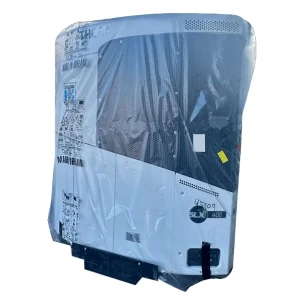
Famous TK SLXI Mobile power generation trailer cooling unit Product, Manufacturers
View Product Detail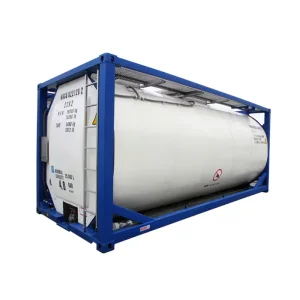
Buy ISO Standard 20ft Versatile Tank Container for Transport Chemicals Exporter, Product
View Product Detail
Buy New Half Height Ore Carrier Container Offshore Container Manufacturers, Quotes
View Product Detail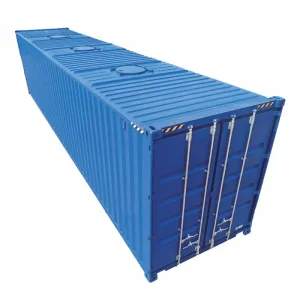
Buy 20 Feet Shipping Bulk Container Manufacturer, Exporters
View Product Detail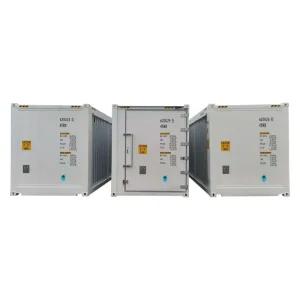
China OEM 40ft High-Cube Customized Three-in-One Combination Reefer Storage Container Manufacturer, Quotes
View Product Detail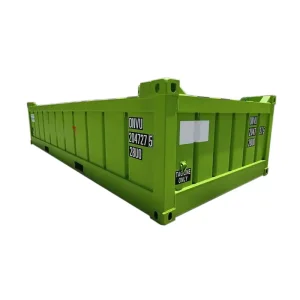
ODM New DNV Certification Offshore Half-Height Open Top Container Products, Exporters
View Product Detail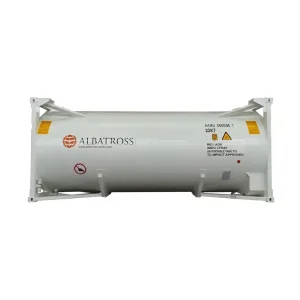
China 25000 Liters ISO 20ft Gas Tank Container for Sale Product, Factories
View Product Detail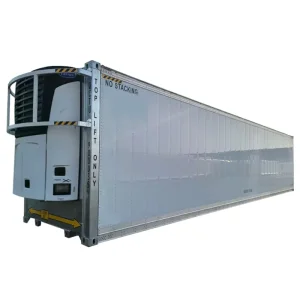
China Carrier X4-7300 Refrigeration and Electricity Integrated Container Exporter, Products
View Product DetailThe 40ft Open Top Container Structural Specification & Information Architecture
Engineered specifically for heavy over-dimensional cargo (OOG), overhead bridge-crane loading, and bulk minerals where standard dry vans fail to meet clearance thresholds.
Removable Swing-Out Header
Our 40ft open top units incorporate precision-engineered rear swing-out door headers. This pivotal design feature permits smooth crane and forklift clearance, allowing oversized plant machinery to slide directly into the cargo bay without vertical obstruction, reducing lashing damage by 78% during terminal handling.
Corten-A Weathering Steel (SPA-H)
Fabricated using JIS G3125 SPA-H atmospheric corrosion-resistant steel. Under severe maritime environmental conditions (ISO 12944 C5-M marine rating), Corten-A forms a localized passive oxide layer that retards rust penetration, extending active intermodal service life beyond 18 to 22 years even with continuous open-sea exposure.
High-Density Tir Bow Arching
Equipped with 16 to 18 transverse steel roof bows configured with ergonomic retaining pins and safety lanyards. The subtle apex arching evacuates rainwater off the 650g/m² to 900g/m² heavy-duty PVC tarpaulin cover, counteracting central ponding forces while retaining TIR customs cord compliance across Eurasian borders.
40ft Open Top Shipping Container Pricelist & Technical Matrix
Direct Chinese manufacturing FOB price ranges, volumetric metrics, payload boundaries, and structural tare comparisons based on prevailing steel indices and tier-1 production schedules.
| Classification / Container Variant | Dimensions Ext. (L × W × H) | Max Gross Mass (R) | Tare Weight | Max Payload (P) | Factory FOB Price (Tier-1 China) |
|---|---|---|---|---|---|
| 40ft Standard Open Top (Soft Top) PVC Tarpaulin + Swing Header |
12,192 × 2,438 × 2,591 mm | 32,500 kg | 3,850 kg | 28,650 kg | $3,850 – $4,650 |
| 40ft High Cube Open Top (40HQ OT) Extra 300mm Clearance Height |
12,192 × 2,438 × 2,896 mm | 32,500 kg | 4,120 kg | 28,380 kg | $4,250 – $5,150 |
| 40ft Hard Top Container (Steel Lid) Dual Craned Detachable Steel Roof |
12,192 × 2,438 × 2,591 mm | 32,500 kg | 4,480 kg | 28,020 kg | $4,900 – $5,850 |
| 40ft HC Hard Top Heavy Machinery Reinforced Floor Axle 7,260kg |
12,192 × 2,438 × 2,896 mm | 34,000 kg | 4,750 kg | 29,250 kg | $5,400 – $6,300 |
| DNV 2.7-1 / EN 12079 Offshore 40ft OT Subsea Lifting Pad-Eyes & Sling Set |
12,192 × 2,438 × 2,591 mm | 30,000 kg | 5,800 kg | 24,200 kg | $8,600 – $11,500 |
| Used / Cargo Worthy (CW) 40ft OT Depot Certified with Fresh Tarpaulin |
12,192 × 2,438 × 2,591 mm | 30,480 kg | 3,900 kg | 26,580 kg | $2,100 – $2,800 |
Steel Grade & Mill Run Index
Raw hot-rolled Corten-A sheet pricing represents approximately 58% of the gross manufacturing expense. Long-term forward hedging by Chinese factory hubs dampens the volatility of international iron ore shifts.
Tarpaulin vs. Hard Steel Roof
Opting for a removable hard-steel roof lid introduces precision locking pins, perimeter EPDM weather gaskets, and hoist lugs, raising the unit capital expenditure by $800 to $1,400 relative to PVC vinyl tarps.
Heavy Flooring Specifications
Standard 28mm marine-grade apitong or bamboo-composite floorboards can be customized with 4.5mm checkered steel plate underlays for high point-load applications like crawler tracks and industrial transformers.
Why Global EPCs & Liner Shipping Fleets Source from China
Combining multi-gigawatt automated production infrastructure, consolidated metallurgical supply chains, and dedicated maritime berths along Tianjin and Eastern Seaboard ports.
Automated Robotic SAW Welding
Full-penetration submerged arc welding (SAW) on corner castings, base frames, and side-corrugation panels ensures absolute tensile uniformity. Eliminating manual weld micro-voids guarantees compliance with ISO 1496 transverse racking resistance up to 150 kN.
Eco-Friendly Waterborne Coatings
Modern Chinese container fabrication lines use high-solids waterborne epoxy primers followed by polyurethane topcoats. This eliminates high-VOC emissions while achieving an aggressive dry film thickness (DFT) of 120-140 microns capable of withstanding 1,000+ hours of ASTM B117 salt spray testing.
Port-Integrated One-Way Free Positioning
Located in strategic coastal clusters (Tianjin, Qingdao, Shanghai, Ningbo), factories offer global asset managers "one-way lease positioning" or "cabotage revenue loading," allowing brand-new empty units to sail abroad carrying bill-paying export freight, saving up to $1,200 per box in deadhead repositioning costs.
Specialized Deployment Across Critical Industrial Corridors
40ft open tops eliminate overhead loading pinch-points across complex project cargo, mineral extraction, construction, and deepwater marine engineering sectors.
Oversized Industrial Equipment & Generators
High-tonnage stamping presses, turbine rotors, CNC gantry beds, and diesel gensets are lowered directly via factory overhead bridge cranes. The removable roof header removes the vertical height bottleneck typical of standard closed vans, reducing crane cycle times by 65%.
Dense Ores, Scrap Steel & Mineral Concentrates
For high-density bulk cargo, including copper cathode, titanium ore, and raw metallurgical concentrates, top-hopper conveyor chutes load directly from mining terminals. Units are reinforced with interior bottom-rail lashing rings rated to 2,500 daN each for dynamic shifting restraint.
Long-Span Structural Girders & Glazing
Structural glass panels, architectural stone slabs, and pre-stressed bridge beams exceed conventional door openings. 40ft open-top modules provide uninterrupted top-down drop access alongside dedicated side-wall wooden shoring brackets for fragile payload stabilization.
Specialized OOG Flat-Rack Complements
When cargo exceeds the standard ISO container roofline by up to 1.2 meters, 40ft open tops accommodate over-height goods beneath tailored "top-hat" over-height tarpaulins, safeguarding cargo integrity while utilizing standard ISO vessel deck stowage slots.
Eurasian Rail Transshipment (China-Europe Express)
Cross-border rail routes require strict adherence to UIC 592 regulations. Our TIR-approved steel cables with plastic sheathings guarantee seamless customs clearance at gauge-break terminals (e.g., Khorgos, Malaszewicze) without requiring physical cargo unbundling or tarp re-lashing.
Global Corporate Procurement Strategy: Buy, Lease, or SOC?
Strategic supply chain executives weigh asset lifespans, shipping line Demurrage & Detention (D&D) penalties, and secondary asset liquidation values.
SOC (Shipper Owned Container)
Purchasing brand new 40ft open tops directly from Chinese manufacturing lines for remote EPC engineering sites eliminates carrier daily demurrage fees. At remote discharge ports where empty returns take months, SOC ownership preserves capital and secures secondary on-site storage assets.
Tarpaulin Life-Cycle Maintenance
While heavy-duty Panama weave PVC tarpaulins endure prolonged UV exposure, operational damage from rough spreader arms requires periodic inspections. Equipping fleets with repair patches, spare roof bows, and spare TIR wires ensures consistent watertight integrity and zero wet-damage cargo claims.
Residual Asset Value & Resale
40ft open tops command exceptional secondary market premiums. Unlike standard dry vans which depreciate rapidly upon demounting, specialized open-top equipment maintains 60% to 75% residual asset value in mining and industrial zones like Western Australia, Texas, and Rotterdam.
Frequently Asked Questions (FAQ)
In-depth technical answers addressing load calculations, tarpaulin mechanics, CSC safety plate surveys, and ocean freight stowage parameters.
What is the exact load rating and tensile capacity of 40ft Open Top lashing rings?
Standard 40ft open top shipping containers are fitted with heavy-duty recessed D-rings positioned along the lower interior side sills and corner posts. Each bottom-rail lashing ring is tested to a minimum safe working load (SWL) of 1,000 kg to 2,000 kg (10 to 20 kN), with custom builds engineered to 2,500 daN. Corner post eyelets withstand up to 1,500 kg each, allowing heavy cargo to be chain-tensioned in accordance with the IMO/ILO/UNECE Code of Practice for Packing of Cargo Transport Units (CTU Code).
How does a Hard Top Open Container compare to a Soft Top (Tarpaulin) unit?
A soft top unit utilizes a flexible, UV-stabilized PVC tarpaulin supported by removable steel roof bows, minimizing empty tare weight and offering vertical flex for mild over-height cargo. A hard top unit features a heavy detachable steel corrugated roof lid that locks into position via perimeter corner pins. Hard top containers offer better anti-theft security and weatherproofing for expensive high-tech payloads, but weigh 400 to 600 kg more, slightly reducing payload capacity.
Can a 40ft Open Top shipping container carry cargo that exceeds the normal roof height?
Yes. When loaded with out-of-gauge (OOG) cargo exceeding the 2.59m (Standard) or 2.89m (High Cube) exterior height profile, the rigid roof bows are detached and stowed alongside the cargo. A specialized over-height tarpaulin is installed, and the shipment is booked with the ocean liner under "In-Gauge" or "Out-of-Gauge" slot surcharges, as top-stowage container positions cannot stack another container overhead.
What are the CSC Plate validity and inspection requirements for international shipping?
Every newly fabricated 40ft open top must carry a valid International Convention for Safe Containers (CSC) Safety Approval Plate issued by an IACS-member classification society such as Bureau Veritas (BV), ABS, Lloyd’s Register (LR), or DNV. Brand-new containers carry an initial 5-year CSC validation. Subsequently, units must be re-inspected under the Approved Continuous Examination Program (ACEP) or undergo physical Periodic Examination Scheme surveys every 30 months.
Why is the rear door header designed to swing open or detach completely?
In standard dry shipping containers, the rear horizontal top header is permanently welded, creating an immovable 2.28-meter vertical entrance barrier. The open-top container’s swing-out header unlatches and pivots sideways (or unpins entirely), allowing heavy plant machinery, tall crates, or overhead crane slings to travel into the container without striking the door frame.
How are floor loads distributed to avoid breaking through the wooden floor planking?
Concentrated point loads (such as iron machinery legs or small-wheel industrial equipment) can exert shear pressures exceeding the standard 7,260 kg front-axle forklift test limit of ISO 1496-1. For such cargo, wooden sleeper dunnage, steel spreader channels, or load-spreading steel plates must be laid on the floor to distribute the concentrated downward mass across multiple transverse bottom cross-members.
What is the difference between a 40ft Standard Open Top and a 40ft High Cube Open Top?
The standard 40ft Open Top measures 8ft 6in (2,591 mm) in external height, offering an internal loading height of approximately 2,360 mm beneath the roof bows. The 40ft High Cube Open Top measures 9ft 6in (2,896 mm) externally, providing approximately 2,660 mm of internal clearance height. Choosing High Cube provides roughly 300 mm (1 foot) of extra overhead clearance, often saving equipment from expensive out-of-gauge shipping surcharges.
Specialized Modular, Deep-Freeze, and ISO Shipping Stock
Precision-fabricated ISO standard, offshore basket, deep-freezer, and modular container units ready for immediate seaport dispatch.
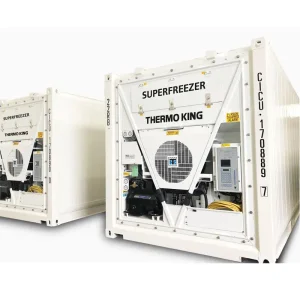
OEM New Deep Freezer Refrigerator Container For Sale Factory, Quotes
View Product Detail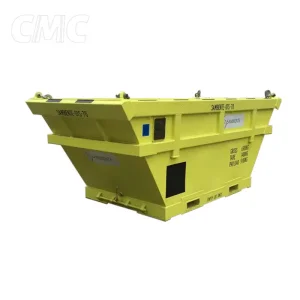
Famous DNV Certification Silt Basket Container Used in Offshore Operations Factories, Exporters
View Product Detail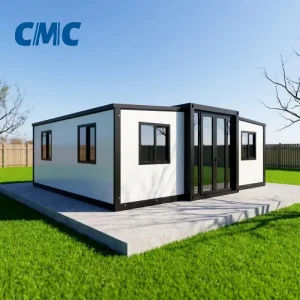
OEM 20ft Modular Container Houses Expandable Steel Container House Excellent Thermal Insulation and Sealing Performance Manufacturer, Manufacturers
View Product Detail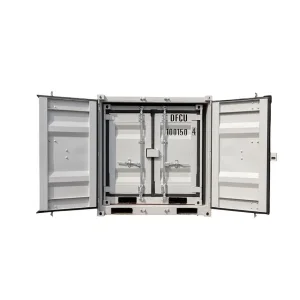
High-Quality Durable Cargo Shipping Container 4Ft/5Ft/6Ft/7Ft/8Ft/9Ft/10Ft/11Ft/12Ft Mini Storage Container Nested Shipping Container Manufacturers, Factories
View Product Detail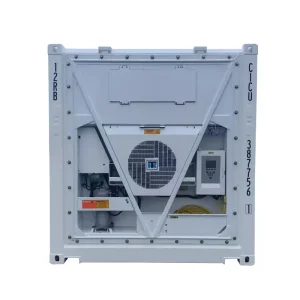
OEM 20ft Offshore Refrigerated Container DNV Certification Is More Durable Exporter, Exporters
View Product Detail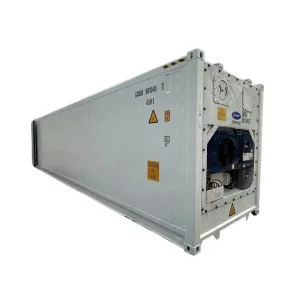
Buy Ninety Percent New Used 40ft HC Carrier Refrigerated Container Product, Quotes
View Product Detail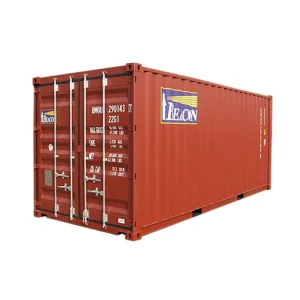
ODM 40ft New Certified Dry Shipping Container Pricelist, Exporters
View Product Detail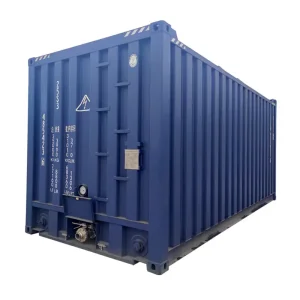
Buy New 20ft Square Liquid Container Factory, Product
View Product DetailRequest Custom Engineering Drawings & Factory Pricelist
Consult our structural engineering team for customized door opening arrangements, high-tensile lashing configurations, CSC classification approvals, and forward positioning quotes from our Tianjin and Suzhou manufacturing facilities.