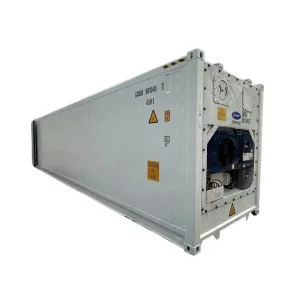
Standard & Specialized Container Systems Series (Part I)
Explore our certified intermodal solutions, heavy-duty cargo platforms, and industrial fluid modules engineered to integrate seamlessly with ISO 1161 corner casting structural foot standards worldwide.
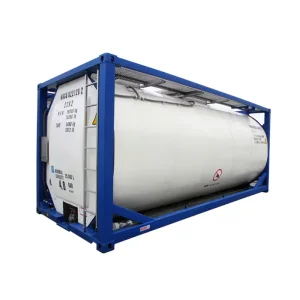
Buy ISO Standard 20ft Versatile Tank Container for Transport Chemicals Exporter, Product
Explore Specifications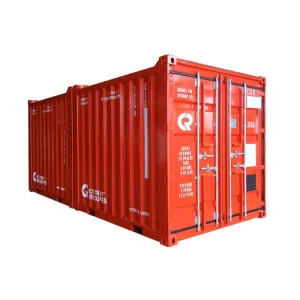
Buy New DNV Certification Offshore Dry Cargo Container Factory, Product
Explore Specifications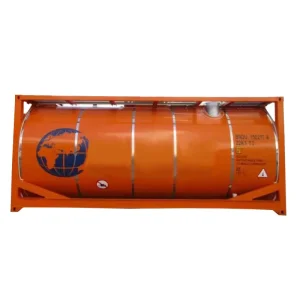
China 20 Foot ISO Liquid Tank Container for Water Manufacturer, Product
Explore Specifications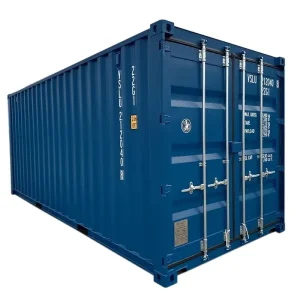
Buy New 20ft Double Door Dry Cargo Shipping Container Products, Manufacturers
Explore Specifications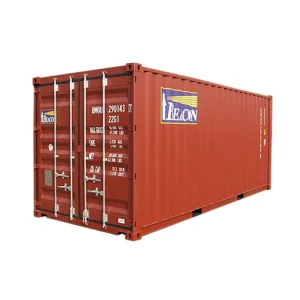
ODM 40ft New Certified Dry Shipping Container Pricelist, Exporters
Explore Specifications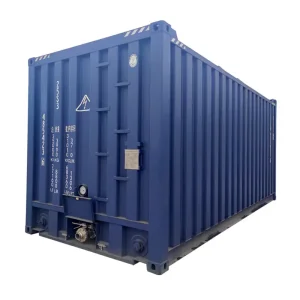
Buy New 20ft Square Liquid Container Factory, Product
Explore Specifications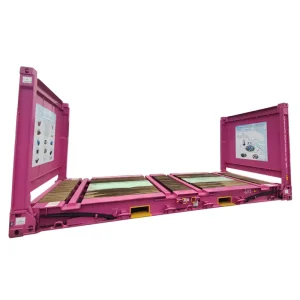
ODM New 20ft Platform Frame Container Pricelist, Exporters
Explore Specifications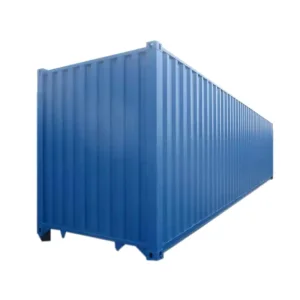
China 40ft High Cube Certified Dry Cargo Shipping Container Factory, Product
Explore SpecificationsThe Structural Anatomy of ISO Container Feet & Foundation Corner Castings
Understanding why container feet and corner castings represent the critical single point of failure and load transmission interface across intermodal freight logistics and architectural engineering.
ISO 1161 Dimensional Precision
The global intermodal network depends on rigorous standardization governed by ISO 1161 (Series 1 freight containers — Corner fittings — Specification). Every container features eight distinct castings: top right (TR), top left (TL), bottom right (BR), and bottom left (BL). The container bottom feet bear extraordinary vertical stacking loads of up to 86,400 kg (equivalent to stacking nine fully laden 30,480 kg containers at a 1.8g sea state acceleration).
Any dimensional variance exceeding ±1.5 mm disrupts automated port twistlocks, cellular vessel guides, and rail intermodal well cars, resulting in catastrophic handling lockouts.
Metallurgical Metallurgy & SCW490
Industrial container feet are cast utilizing premium cast carbon-manganese structural steel, primarily conforming to JIS G5102 SCW490, ASTM A27 Grade 70-36, or EN 10293 GE300. The chemical composition is strictly calibrated with Carbon (C ≤ 0.20%), Manganese (Mn ≤ 1.50%), and Silicon (Si ≤ 0.60%) to prevent cold-cracking during structural welding onto Corten steel (SPA-H) side rails.
Critical Charpy V-notch impact toughness must exceed 27 Joules at -40°C, ensuring arctic resilience against brittle fracture under extreme shock loading.
Multiaxial Load Dissipation
Beyond static vertical compression, container bottom feet are subjected to brutal shear forces during vessel racking, longitudinal braking shock on freight rail wagons (up to 4g deceleration), and angular torsion during crane spreader pick-ups. The specialized aperture geometries—featuring standardized elongated side apertures, end apertures, and bottom twistlock holes—distribute stresses into the primary longitudinal corner posts and floor sill crossmembers.
Modern FEM (Finite Element Method) validation guarantees stress concentrations remain below 80% yield strength under ultimate failure test conditions.
Macro Strategic Sourcing & Global Procurement Vectors
How Tier-1 engineering EPCs, intermodal equipment leasing conglomerates, and defense logistics operators mitigate supply chain vulnerabilities when procuring container feet and corner castings.
Supply Chain Resiliency & Foundry Auditing
Enterprise procurement departments must navigate extreme foundry variability. Sourcing container feet requires comprehensive supplier qualification: evaluating automated green-sand casting versus precision resin-bonded sand casting systems. Leading global buyers verify that foundry electric induction furnaces maintain tight deoxidation practices to eliminate internal micro-porosity and inclusions.
Procurement teams demand 3.1 Material Test Reports (EN 10204) accompanied by third-party heat-batch tracing from Bureau Veritas (BV), ABS, or DNV to ensure counterfeit steel does not compromise fleet operations.
Total Cost of Ownership (TCO) & Coating Life
A standard container foot casting accounts for a minor percentage of initial assembly expense but represents up to 40% of localized corrosion failures over a 15-year lifecycle. Leading international procurement strategies prioritize advanced surface preparation: automated shot blasting to ISO 8501-1 Sa 2.5 standards followed immediately by zinc-rich epoxy shop primers (minimum 30 μm DFT).
For offshore deployment under DNV 2.7-1 / EN 12079 guidelines, hot-dip galvanization conforming to ISO 1461 or thermal spray aluminum (TSA) coatings prevents catastrophic crevice corrosion within coastal and splash-zone environments.
Modular Construction & Civil Foundation Engineering
The exponential rise of prefabricated modular architecture, remote mining workforce encampments, and mobile containerized battery energy storage systems (BESS) has revolutionized procurement criteria. Civil engineers no longer treat container feet merely as ocean shipping hardware, but as structural pile-cap interfaces, foundation anchor piers, and seismic damping lockpoints.
Custom container foot pads with threaded leveling jacks, baseplate flanged anchors, and elastomer vibration isolation mounts now represent a high-growth sector in enterprise procurement portfolios worldwide.
Cross-Sector Macro Applications & Structural Solutions
From deep-sea drilling platforms to hyperscale modular data centers, our specialized container feet castings and connection systems provide uncompromising mechanical anchorage.
Offshore Energy & Marine Dynamics (DNV 2.7-1)
Offshore container feet operate in harsh maritime environments characterized by high wave impact, salt fog, and continuous cyclic stress. Standard ISO 1161 castings are insufficient for dynamic offshore lifting over open ocean swells.
Our DNV 2.7-1 / EN 12079 certified base corners feature thickened weld prep bevels, vacuum-degassed low-temperature steel chemistry, and full magnetic particle inspection (MPI) around padeye lifting intersections to prevent progressive fatigue cracking during dynamic snatch-lift operations.
BESS & Utility Data Infrastructure Enclosures
Lithium-ion Battery Energy Storage Systems (BESS) pack up to 40 tons of batteries, liquid cooling chillers, and fire suppression systems inside 20ft and 40ft custom enclosures. These heavy payloads concentrate extreme static loads on the four bottom feet.
We engineer specialized reinforced corner casting foundation pedestals designed with integrated thermal expansion slots and ground-fault bonding lugs, safeguarding electrical integrity while maintaining full seismic zone 4 anchorage compliance.
Rapid Deployment Defense & Disaster Relief
Humanitarian aid organizations and defense logistics forces rely on containerized surgical hospitals, water desalination systems, and tactical command centers that must deploy instantly over unprepared soils, sand, or broken concrete without pouring permanent foundation footings.
Our quick-deploy screw-jack leveling feet lock directly into standard bottom corner apertures, allowing a four-person crew to level and stabilize a 30-ton shelter within 15 minutes using basic manual or pneumatic hand tools.
| Performance Criterion | Standard ISO 1161 Commercial Foot | DNV 2.7-1 Offshore Heavy Foot | Civil BESS / Architectural Foundation Pad |
|---|---|---|---|
| Base Casting Alloy | SCW490 Cast Carbon Steel | Low Alloy Ni-Cr-Mo (Vacuum Degassed) | ASTM A27 Gr. 70-36 or Ductile Iron 65-45-12 |
| Charpy V-Notch Impact | ≥ 27 J at -20°C / -40°C | ≥ 42 J at -40°C (Transverse & Longitudinal) | ≥ 20 J at 0°C (Standard Civil Ambient) |
| Vertical Stacking Capacity | 86,400 kg (9-High Laden Container Stack) | Dynamic Lifting Factor 2.5g Acceleration | Up to 120,000 kg Continuous Static Compression |
| Weldability Rating | Carbon Equivalent CEV ≤ 0.45 | CEV ≤ 0.40 (Preheat-Free Structural Fusion) | CEV ≤ 0.48 (Manual Shielded Metal Arc / MIG) |
| Quality Certification | ISO 9001, BV Marine Type Approval | DNV GL, Lloyd's Register Offshore Certificate | IBC Seismic Chapter 16, AISC 360 Structural Code |
Technological Roadmap & Advanced Manufacturing Trends
The transformation of traditional cast steel container feet into intelligent, sensor-integrated, and additive-manufactured foundational hardware.
Precision Sand Reclamation & Vacuum-Assisted Casting (2025–2026)
Traditional sand casting processes frequently introduce micro-shrinkage porosity at the thickest corner sections of container feet. We are transitioning high-volume production lines to automated 3D sand-printed mold cores combined with counter-gravity vacuum-assisted pouring. This ensures zero internal casting voids, eliminates post-casting machining rework on twistlock cam pockets, and achieves 98.5% foundry sand circular reclamation.
Integrated IoT Strain Gauges & Smart Foundation Monitoring (2026–2027)
As intermodal logistics enters the automated terminal era, container feet are becoming sensorized node terminals. Embedded micro-electro-mechanical systems (MEMS) and piezoelectric strain sensors cast directly within non-critical corner recesses measure real-time vertical weight distribution, eccentric cargo shifting, and dynamic rail-impact shocks. Data is harvested via low-power Bluetooth and satellite mesh transponders to detect structural overloading before crane handling incidents occur.
Additive Wire-Arc DED Titanium-Steel Cladding for Arctic Routes (2027–2028)
With the opening of Northern Sea Route (NSR) maritime corridors, standard marine coatings experience rapid ice-scouring abrasion at bottom corner fittings. Our R&D team is developing automated robotic Directed Energy Deposition (DED) wire-arc cladding systems to fuse a 2 mm metallurgical layer of corrosion-impervious, ultra-tough nickel-chromium-molybdenum alloy over high-wear bearing surfaces, achieving a 30-year zero-maintenance service life.
Circular Economy & Carbon-Neutral Electric Arc Steel (2028–2030)
Under international Scope 3 greenhouse gas reporting mandates, maritime leasing giants demand certified low-embodied-carbon components. Our manufacturing roadmap establishes 100% green-hydrogen reduced scrap recycling utilizing dedicated electric arc furnaces (EAF). Each container foot casting carries an immutable digital product passport (DPP) via laser-etched 2D DataMatrix code detailing its exact carbon footprint and chemical batch genealogy.
Global Commercial & Industrial Manufacturing Landscape
A macroeconomic overview of global container manufacturing hubs, regional foundry clusters, and strategic port-proximate logistics advantages.
The Bohai Rim & Yangtze Industrial Clusters
Over 85% of the world's intermodal shipping containers and structural corner castings originate from advanced manufacturing clusters along the Chinese eastern seaboard. The Tianjin and Suzhou industrial zones represent the world's most concentrated ecosystem for container metallurgical casting, automated robotic welding, and automated surface treatment.
Proximity to mega-deepwater ports such as Tianjin Port and Shanghai Port minimizes domestic container positioning legs, preserving lead-time integrity for mega-orders of several thousand TEU sets per calendar quarter.
Western Nearshoring & Secondary Manufacturing
Recent trade policies and supply-chain diversification have spurred regional container modification and assembly yards across Eastern Europe (Poland, Romania), North America (Mexico, Texas Gulf Coast), and Southeast Asia (Vietnam, Malaysia). However, these secondary regional plants remain dependent on primary Tier-1 cast steel corner feet forged in certified heavy foundries.
Our dedicated bulk export supply lines deliver container corner sets in palletized 20-foot container batches directly to overseas builders, providing reliable access to standardized, third-party certified structural components.
Market Share Dynamics: New Builds vs. Refurbishment
The global inventory of operational intermodal containers exceeds 50 million TEU. Roughly 6% to 8% of this fleet undergoes structural depot maintenance annually, where damaged or severely oxidized bottom corner castings must be cut out and replaced in accordance with the International Institute of Container Lessors (IICL-6) repair manual.
Supplying replacement container feet that precisely replicate factory weld tolerances without causing alignment deviations in corner post verticality is an essential commercial service provided to global port depot networks.
Localized Compliance, Testing & Quality Assurance
Delivering uncompromised structural confidence through multi-agency international classification society oversight, full traceability, and localized engineering support.
Multi-Agency Classification Approvals
Every industrial container foot and casting supplied by CIMIC holds active Type Approval Certifications from leading maritime classification societies: Bureau Veritas (BV), Det Norske Veritas (DNV), American Bureau of Shipping (ABS), and China Classification Society (CCS).
These certificates verify that chemical composition, tensile yield strength, elongation percentages, and fatigue life comply with the International Convention for Safe Containers (CSC 1972) and ISO 1496-1 requirements.
Rigorous Non-Destructive Testing (NDT)
To eliminate casting flaws before delivery, our testing facilities conduct comprehensive 100% Magnetic Particle Inspection (MPI) around high-stress aperture radiuses. Subsurface soundness is validated using Ultrasonic Testing (UT) conforming to ISO 16810 and Radiographic Testing (RT) on random batch selections.
Dimensional compliance is monitored via high-precision 3D coordinate measuring machines (CMM) and go/no-go optical laser scanners, verifying aperture tolerances to within ±0.8 mm across all locking faces.
On-Site Engineering & Depot Support
Our engineering support services assist clients worldwide with custom chassis mounting, modular structural engineering calculations, and localized welding procedure specifications (WPS). We provide detailed guidelines on preheat controls, interpass temperatures, and filler metal compatibility (AWS A5.18 ER70S-6) when joining SCW490 castings to weathering Corten steel.
Clients benefit from direct technical communication with our design engineers in Tianjin and Suzhou, avoiding unnecessary delays during critical project execution.
Frequently Asked Questions (Engineering FAQ)
Authoritative technical answers to common queries regarding container feet, corner castings, material specifications, and structural installation practices.
What is the precise difference between top and bottom shipping container feet / corner castings?
While top and bottom container castings appear superficially similar, their aperture geometries and structural load paths differ fundamentally under ISO 1161 specifications. A standard ISO freight container requires eight castings in total: two Top Left (TL), two Top Right (TR), two Bottom Left (BL), and two Bottom Right (BR).
Top corner castings feature top apertures designed specifically for crane spreader twistlocks and vertical lifting hooks, along with smaller end and side holes. Bottom corner castings (the container "feet") feature standardized elongated pear-shaped apertures on their bottom surfaces that accommodate terminal chassis twistlocks, shipboard stacking cones, and deck lashing plates. Bottom castings also feature thicker load-bearing walls designed to withstand compressive stacking forces up to 86,400 kg per corner without plastic deformation.
What specific steel grade is utilized in manufacturing ISO 1161 container feet, and can it be welded directly to standard structural steel?
Container corner castings are typically cast from weldable, low-carbon structural steel meeting JIS G5102 SCW490, ASTM A27 Grade 70-36, or BS 3100 Grade A1 standards. The chemical composition is strictly restricted to Carbon ≤ 0.20%, Manganese ≤ 1.50%, and Phosphorus/Sulfur ≤ 0.035%, maintaining a Carbon Equivalent (CEV) below 0.45.
This formulation ensures excellent weldability directly to Corten steel (SPA-H) side rails, mild steel (ASTM A36 / S235JR), and high-strength structural steels (S355JR / Q355B). Standard industrial welding processes—including GMAW (MIG), FCAW, and SMAW utilizing low-hydrogen electrodes such as AWS E7018 or wires conforming to AWS ER70S-6—are standard. In ambient temperatures below 5°C or for heavy-gauge offshore applications, preheating the joint area to 100°C–150°C is recommended to prevent heat-affected zone (HAZ) hydrogen embrittlement.
How are container feet utilized as foundations in modular container housing and civil building projects?
In modular building and civil engineering, container feet act as the primary structural point-load transfer interface. Instead of pouring continuous reinforced concrete grade beams across the entire footprint, structural engineers specify concrete pier foundations or helical screw piles placed directly beneath each bottom corner casting foot.
The container is mechanically secured to the foundation using embedded steel anchor baseplates equipped with standardized twistlock connectors, vertical weld studs, or high-tensile anchor bolts (Grade 8.8 / ASTM A325) passed through the bottom aperture. This concentrates load dissipation through the container's structural corner posts, allowing modular buildings to resist significant wind uplift and seismic lateral forces in accordance with International Building Code (IBC) guidelines.
What non-destructive testing (NDT) standards are mandatory for certifying offshore container feet under DNV 2.7-1?
Offshore container base corner castings operating under DNV 2.7-1 (or EN 12079 / ISO 10855) must pass significantly more stringent quality assurance protocols than standard commercial ISO units. Because offshore containers are lifted over open seas where shock loading factors reach 2.5g or higher, casting integrity is paramount.
Mandatory NDT protocols include: 100% Visual Examination (VT) to EN ISO 17637, 100% Magnetic Particle Testing (MPI) to EN ISO 17638 to detect any surface or near-surface cracks or shrinkage flaws, and Ultrasonic Testing (UT) to EN ISO 16810 to verify subsurface homogeneity. Furthermore, steel melts must undergo Charpy V-notch impact testing proving minimum impact energy absorption of 42 Joules at -40°C (or -20°C for temperate zones) to ensure absolute resistance to brittle fracture under arctic dynamic impact.
How can depot operators and maintenance engineers determine when a container foot must be replaced rather than repaired?
Inspection and repair criteria are strictly governed by the International Institute of Container Lessors (IICL-6) guide. A container foot casting must be completely removed and replaced if it exhibits any of the following conditions:
1. Any visible cracks or fractures through the casting walls or across aperture edges.
2. Plastic deformation or distortion of any aperture exceeding 3 mm from baseline ISO 1161 dimensions, which prevents proper engagement or locking of standard twistlocks.
3. Deep gouges, abrasive wear, or corrosion pitting that reduces the nominal wall thickness by more than 10%.
4. Evidence of unapproved heat straightening or improper structural field welding that has degraded the mechanical metallurgy. Repair welding on corner castings is strictly prohibited by ISO standards; damaged feet must be entirely cut away from the corner post and bottom sills, and an approved, fully-certified new casting welded in place under qualified welding procedures.
What surface treatment and corrosion protection systems provide the longest operational lifespan in marine splash zones?
Due to condensation pooling and direct sea-spray contact, container bottom feet face severe galvanic and atmospheric corrosion. The most effective protective system begins with automated centrifugal wheel blasting to ISO 8501-1 Sa 2.5 standard, creating a sharp 40–70 μm surface anchor profile.
This is followed by a high-build two-component zinc-rich epoxy primer (providing cathodic galvanic protection), an intermediate epoxy micaceous iron oxide (MIO) barrier coat, and an aliphatic polyurethane topcoat, achieving a combined dry film thickness (DFT) exceeding 250 μm. For offshore and subsea deployments, hot-dip galvanizing according to ISO 1461 (minimum 85 μm / 600 g/m² zinc thickness) or thermal sprayed aluminum (TSA) coatings provide over 20 years of maintenance-free service in high-salinity C5-M marine environments.
Advanced Intermodal Equipment & Specialty Container Series (Part II)
Explore our specialized prefabricated modular living pods, nested dry storage units, and temperature-controlled reefer solutions engineered to withstand international logistics demands.
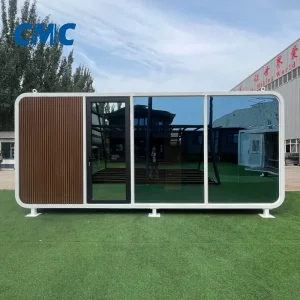
Famous 20ft Prefab Container House Flat Pack Modular House Office Tiny House Outdoor Apple Cabin Manufacturer, Product
Explore Specifications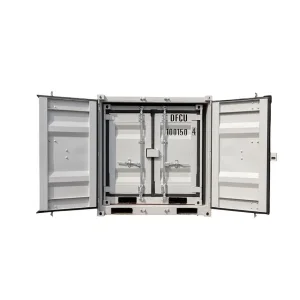
High-Quality Durable Cargo Shipping Container 4Ft-12Ft Mini Storage Nested Container Manufacturers, Factories
Explore Specifications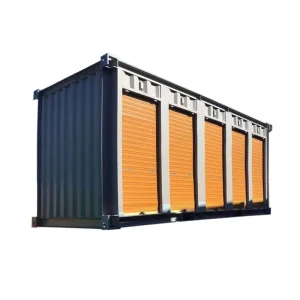
OEM New 20ft Storage Roll-Up Door Dry Cargo Container Pricelist, Product
Explore Specifications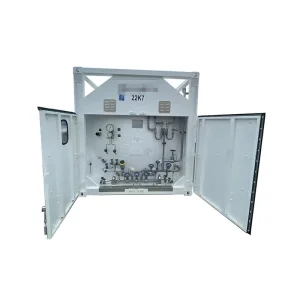
Famous T75 20ft Cryogenic Liquid Tank Container Products, Exporters
Explore Specifications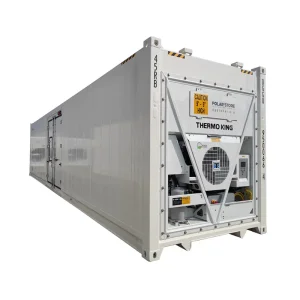
Famous 40ft High-Cube Side Open Door Reefer Container Manufacturer, Factories
Explore Specifications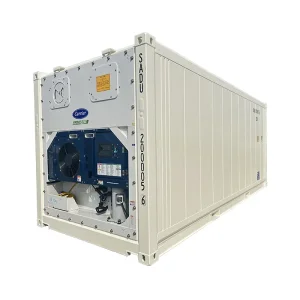
High-Quality New 40ft High Cube Carrier Refrigerator Freezer Cold Room Product, Exporters
Explore Specifications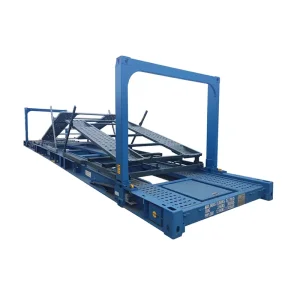
China New 20ft Car Carrier Container Special Container Exporter, Quotes
Explore Specifications