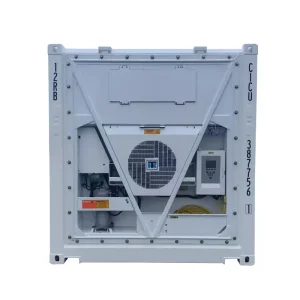
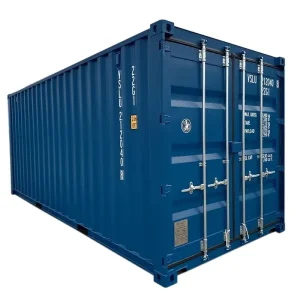
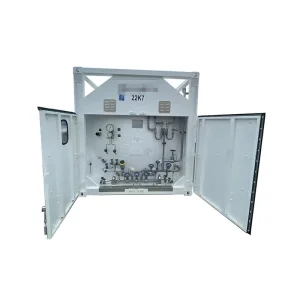
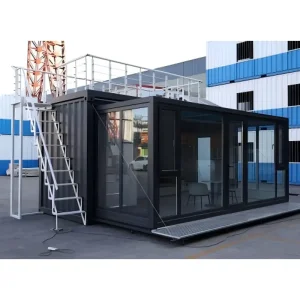
High-Performance Cold Chain & Offshore Equipment
Engineered for deep-freeze perishables, dynamic rail corridors, chemical transport, and demanding marine extraction facilities worldwide.
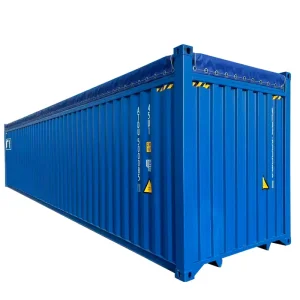
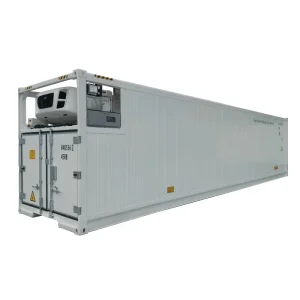
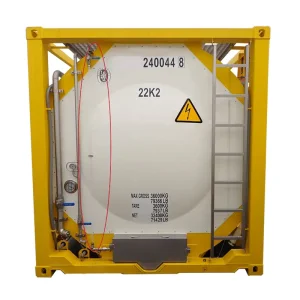
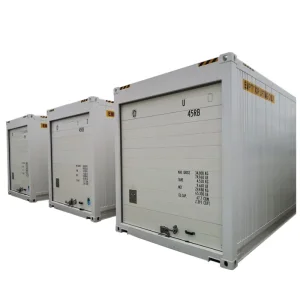
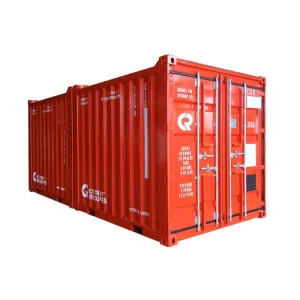
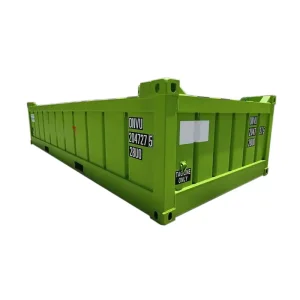
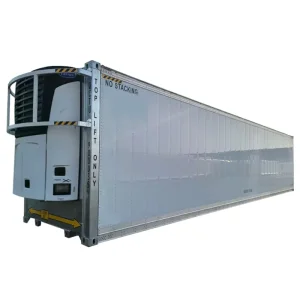
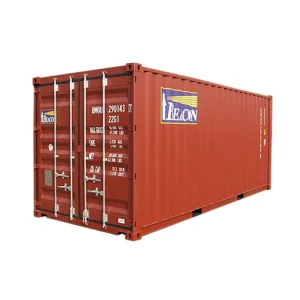
Evolutionary Trends in Special Refrigerated Containers
The global cold chain industry is transitioning from passive thermal insulation to responsive, AI-supervised intermodal climate sanctuaries designed for extreme geopolitical routes and carbon neutrality targets.
Intermodal Resiliency & Transcontinental Transit
Cross-border rail networks, particularly the 10,000+ kilometer China-Europe "Belt & Road" corridors, expose perishable commodities to external ambient swings ranging from -45°C in Siberian permafrost to +45°C across Central Asian steppes. Modern special refrigerated containers utilize multi-fuel diesel-electric gensets paired with oversized 800L fuel reservoirs to maintain autonomous temperature control for over 25 continuous rail days without grid tethering.
High-Density VIP Insulation Dynamics
Traditional rigid polyurethane foam has been upgraded with core Vacuum Insulation Panels (VIP) encapsulated within multi-layer barrier membranes. This structural breakthrough reduces thermal bridging coefficient (U-value) below 0.32 W/(m²·K) while simultaneously saving 35mm of wall thickness. The result is an immediate 8.5% gain in internal cubic capacity, permitting higher volumetric loading for air-freight-substituting pharmaceutical cargoes.
Decarbonization & Low-GWP Refrigerants
Global environmental mandates, notably the Kigali Amendment and EU F-Gas regulations, necessitate immediate phase-outs of high-GWP hydrofluorocarbons. Leading manufacturing methodologies now implement R-513A, R-452A, and carbon dioxide (R-744 natural refrigerant) cooling cycles. Operating in tandem with scroll and variable-speed hermetic compressors, these systems drop thermodynamic lifecycle power draw by upwards of 34%.
Meeting Global Procurement Pain Points
Strategic analysis of mission-critical engineering parameters for international corporate buyers, fleet operators, and energy conglomerates.
Life Sciences & Cold Chain Integrity
Procurement Mandate: Strict adherence to GDP (Good Distribution Practice), continuous NIST-traceable multi-point temperature logging, and secondary fail-safe power redundancy.
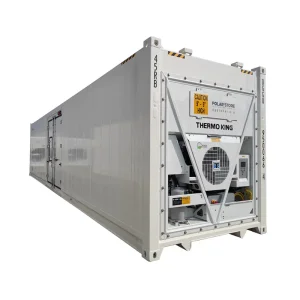
Engineered Solution: Specialized 20ft and 40ft high-cube units integrated with Carrier Transicold ThinLINE® or Daikin LXE units, certified dual-sensor supply and return air control (±0.1°C accuracy), backed by automated cloud-based satellite telematics transmitting temperature, vibration, and door-opening alerts in real time.
Offshore Energy & Explosive Atmospheres
Procurement Mandate: Resistance to sea spray corrosion, dynamic crane hoisting shocks, and ATEX/IECEx Zone 1 and Zone 2 explosion-proof standards for offshore drilling rigs.
Engineered Solution: Structural framework fabricated from high-yield normalized EN 10025 S355NL steel, welded in strict compliance with DNV 2.7-1 / ISO 10855. Fully insulated cargo hold lined with 316L surgical stainless steel, equipped with spark-proof internal circulating fans, intrinsically safe thermostatic relays, and flameproof electrical enclosures.
Rapid Logistics & Roll-Up Access
Procurement Mandate: Eliminating long dwell times and thermal discharge during multi-stop inner-city distribution and pallet handling operations.
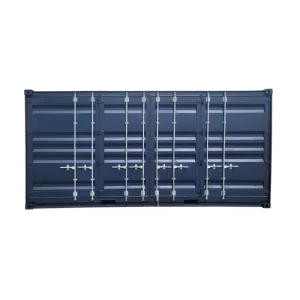
Engineered Solution: Dual-zone refrigerated containers with high-speed pneumatic thermal roll-up shutters and hydraulic full side-opening bi-folding doors. Allows immediate reach-truck access directly into specific temperature-controlled compartments (e.g., -25°C frozen seafood and +4°C produce simultaneously) without cooling losses.
| Model / Configuration | External Dimensions (L×W×H) | Payload / Max Gross | Temp Control Spectrum | Refrigeration Power Plant | Primary Classification |
|---|---|---|---|---|---|
| 40ft High Cube Special Reefer | 12,192 × 2,438 × 2,896 mm | 29,580 kg / 34,000 kg | -35°C to +30°C (±0.25°C) | Carrier Transicold / Daikin / Thermo King | ISO / CSC / BV |
| 45ft Belt & Road Railway Reefer | 13,716 × 2,550 × 2,896 mm | 31,200 kg / 36,000 kg | -30°C to +25°C (Auto-defrost) | Carrier X4-7300 Diesel-Gen Integrated | TIR / UIC / ISO |
| 20ft DNV Offshore Reefer | 6,058 × 2,438 × 2,591 mm | 11,400 kg / 15,000 kg | -25°C to +20°C (Zone 1/2 Option) | Explosion-Proof Stainless Steel Package | DNV 2.7-1 / EN 12079 |
| 40ft Side-Open Door Reefer | 12,192 × 2,438 × 2,896 mm | 27,800 kg / 34,000 kg | -28°C to +25°C | Thermo King Magnum Plus Scroll | ISO 1496-2 / BV |
| T75 20ft Cryogenic Tank Unit | 6,058 × 2,438 × 2,591 mm | 18,000 kg / 24,000 kg | -196°C Cryogenic Storage | Multi-Layer Vacuum Super-Insulation | ASME / IMDG / ADR |
Compliance Assurance & Global Commissioning
Strict structural integrity and thermal sealing testing protocols performed in Tianjin and Suzhou ensure zero-dispute customs clearance and lasting fleet performance.
Multinational Certification Portfolios
Every refrigerated unit engineered by Tianjin Cimic Imp&Exp Co., Ltd. is verified by third-party classification societies. Our certifications include Bureau Veritas (BV) Type Approval, DNV 2.7-1 offshore certificates, CSC safety plates, UIC 592 rail compliance, and ATP certificate of compliance for international carriage of perishable foodstuff. Technical packages and complete welding dossiers (WPS/PQR) accompany each dispatch.
Stringent Factory Acceptance Tests (FAT)
Our Quality Management division executes rigorous testing cycles prior to dock dispatch: positive-pressure air leakage testing per ISO 1496-2; multi-stage thermal pull-down performance from +38°C ambient to -25°C in under 120 minutes; full electrical dielectric insulation breakdown tests; and ultrasonic seal-verification on all perimeter door gaskets to prevent atmospheric intrusion.
Immediate Port Proximity Logistics
Situated within 100 kilometers of the mega-ports of Tianjin (Xingang) and Shanghai/Taicang from our twin manufacturing complexes, CIMIC optimizes inland cartage economics. Our facilities maintain direct rail spurs and heavy low-bed trailer logistics, reducing inland transport lead-time to 48 hours for immediate vessel loading onto transpacific, European, and African sea lanes.
Next-Generation Technological Roadmap
Architecting the future of climate logistics: AI-driven autonomous refrigeration, cryogenic hybrids, and zero-emission micro-grids.
Edge-AI Telematics
Autonomous onboard sensors measuring relative humidity, ethylene build-up, and O2/CO2 levels, interfacing with variable-frequency blowers to prolong organic fruit shelf life by up to 35%.
Phase Change Hybrids (PCM)
Integration of non-toxic bio-based thermal storage slabs within container ceilings, storing latent cold energy during low-tariff shore power to slash diesel generator runtimes by 40% during rail transit.
Hydrogen Fuel Cell Gensets
Developing quiet, zero-emission hydrogen fuel-cell range extenders replacing mechanical diesel engines, delivering clean electric propulsion power for transcontinental refrigerated rail cars.
Autonomous Swarm Fleet
Self-diagnosing container networks that communicate via low-earth-orbit satellite mesh, pre-ordering spare parts at arrival terminals and scheduling preemptive repairs prior to refrigeration mechanical failure.
Need Custom Engineering for Complex Cargo Routes?
Our naval architects, cryogenic specialists, and thermal engineers review your payload requirements to generate bespoke 3D CAD models and thermodynamic simulation reports within 48 hours.
Frequently Asked Questions on Special Reefer Sourcing
Comprehensive procurement, technical, and regulatory clarity for fleet buyers, shipowners, and supply chain managers.
While a standard ISO reefer operates within -25°C to +25°C with standard end doors, "Special" refrigerated units are modified to solve specific logistics challenges. These include ultra-low deep freeze capabilities (-60°C to -70°C) for high-value tuna and biomedical vaccines, dual-side hydraulic doors for forklift side-loading, integrated dual-fuel diesel generators for cross-border rail without external power, explosion-proof DNV 2.7-1 certifications for offshore rigs, and multi-compartment dual-temperature bulkheads.
We are authorized OEM solution providers for all global industrial leaders, including Carrier Transicold (ThinLINE, PrimeLINE, NaturaLINE CO2), Daikin Reefer (LXE series with active humidity control), Thermo King (Magnum Plus and SuperFreezer), and Starcool. Machinery selection is aligned directly with your internal cargo profiles, electrical line parameters (380V/460V 3-phase 50/60Hz), and target energy conservation metrics.
We utilize structural Corten steel (SPA-H) treated with marine anti-corrosive epoxy primers, high-density non-CFC polyurethane foam injected under precision robotic high-pressure fixtures, and interior walls lined with food-grade SUS 304 or mirror stainless steel. Door seals feature continuous four-fin EPDM gaskets with double thermal breaks, verified by automated ISO pressure decay testing before shipping.
Standard catalog models are frequently stocked at our primary coastal depots in Tianjin and Shanghai. For custom OEM/ODM configurations (such as custom length, side-opening roll-ups, or offshore specs), engineering design review takes 3 to 5 business days, followed by prototype fabrication and testing within 2 to 3 weeks. Production batch capacity scales upwards of 500 units monthly per line.
Specialized Cargo, Cryogenic & Modular Systems
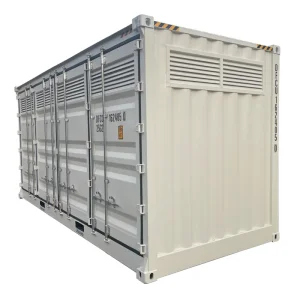
Advanced intermodal assets: heavy offshore units, dangerous goods containers, cryogenic tank modules, and high-cube side access reefers.