
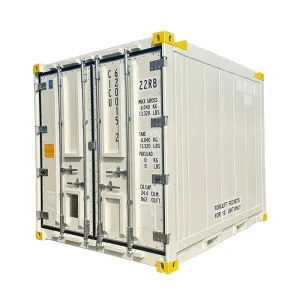
Precision Engineering Fleet
Featured Specialized Maritime Equipment (Series I)
Explore our certified cold storage reefers, DNV-rated offshore transport vessels, and dangerous cargo modules engineered to ISO dimensions for rapid multi-modal intermodal transit.
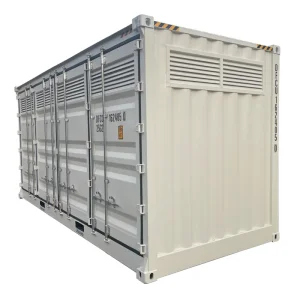
Famous 20FT High-cube Dangerous Goods Container Side Open Door with Ventilation Opening Manufacturer, Exporter
View Technical Specs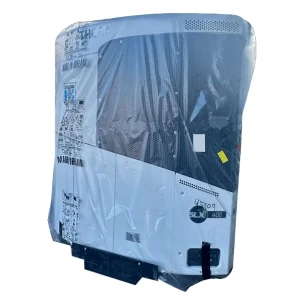
Famous TK SLXI Mobile power generation trailer cooling unit Product, Manufacturers
View Technical Specs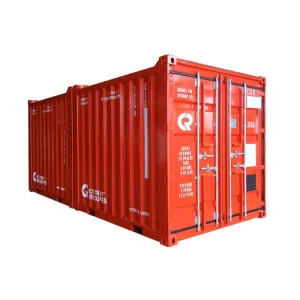
Buy New DNV Certification Offshore Dry Cargo Container Factory, Product
View Technical Specs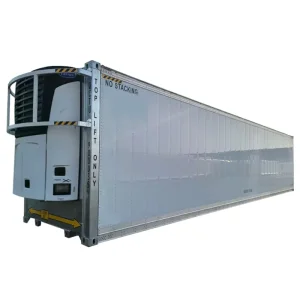
China Carrier X4-7300 Refrigeration and Electricity Integrated Container Exporter, Products
View Technical Specs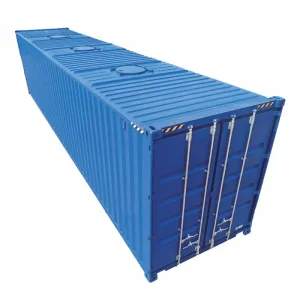
Buy 20 Feet Shipping Bulk Container Manufacturer, Exporters
View Technical Specs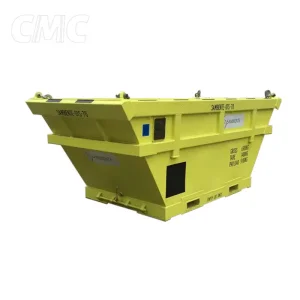
Famous DNV Certification Silt Basket Container Used in Offshore Operations Factories, Exporters
View Technical Specs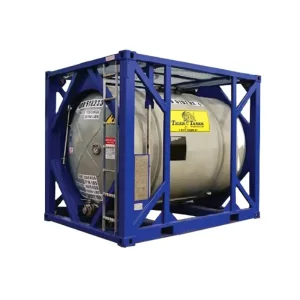
Buy New DNV Certification 10ft Offshore Tank Container Factory, Products
View Technical Specs
Metallurgical Deep-Dive
Engineering Maritime Grade Corten SPA-H Resilience
At CIMIC, container engineering begins at the atomic boundary. Standard commercial maritime intermodal vessels fail prematurely when exposed to cyclic oceanic saltwater fog and mechanical dynamic stacking stresses exceeding 192,000 kg. Our ODM production exclusively leverages certified high-yield SPA-H atmospheric corrosion-resistant steel conforming to JIS G3125 and ISO 1496-1 parameters.
The continuous passivated oxide patina layer formed by copper, chromium, and nickel alloy elements impedes galvanic oxidation penetration even in tropical deep-water routes. Prior to robotized submerged-arc welding, all rolled plate sections undergo automatic centrifugal shot blasting exceeding Swedish standard Sa 2.5, eliminating all surface mill scale and micro-contaminants.
Surface barrier integrity is sealed with a triple-tier chemical coating stack: a solvent-based zinc-rich primer (dry film thickness 30μm), an intermediate high-build polyamide epoxy barrier (40μm), and a modified high-gloss aliphatic acrylic polyurethane topcoat (50μm) providing superior resistance to intense ultraviolet photodegradation and abrasive wave pounding.
345 MPa
Min Yield Strength
Sa 2.5
Surface Blast Clean
120 μm
Total Dry Film DFT
9-High
Standard CSC Stacking
Classification Rigor
Bureau Veritas & DNV Structural Validation
Every production batch manufactured within our Tianjin and Suzhou production plants operates under rigorous third-party inspection schedules. Bureau Veritas (BV) type certificates and ISO 9001:2015 quality registers oversee our material traceability from ladle heat analysis to final pressure and raking tests.
- Dynamic Transverse Raking: 150 kN longitudinal structural shear tolerance testing.
- Floor Axle Rigidity: Standard 7,260 kg forklift axle test exceeding ISO 1496-1 Annex C.
- Weatherproof Door Gaskets: Dual-lip high-elasticity EPDM compound tested under continuous 2-bar hydrostatic sprays.
- Offshore Dynamic Lifting: Full compliance with DNVGL-ST-E271 (DNV 2.7-1) and BS EN 12079 specifications.
Factory Verification Record
Complete manufacturing mill test certificates (MTC 3.1) and non-destructive weld testing (NDT) reports accompany all commercial export shipments.
Supply Chain Supremacy
Why China's Coastal Manufacturing Cluster Dictates Global Lead Times
From blast furnaces to direct quayside vessel loading: our strategic manufacturing nodes in Tianjin and Suzhou leverage unmatched industrial integration, slashing logistics overhead and procurement delays.
Direct Port Proximity (100km)
Our facilities sit within a direct 100 km transit radius to Tianjin Xingang Port and Shanghai deep-water container terminals. This proximity eliminates prohibitive inland drayage expenses, mitigates transit vibration risks, and enables immediate shipper-owned container (SOC) one-way repositioning or empty depot stacking.
Vertical Raw Material Integration
Direct high-volume procurement partnerships with premium domestic mills (Baosteel, Shougang) secure continuous access to bespoke SPA-H coil batches and certified extruded aluminum T-flooring without intermediary markups, insulating our contract clients from volatile global steel futures.
Rapid Prototype-to-Assembly Scale
Equipped with 3D CAD/CAM parametric nesting systems, multi-head CNC plasma cutters, and automated roll-forming lines, our manufacturing floor can turn approved structural drawings into working physical prototypes within 14 working days, scaling up to 1,200 TEU per month effortlessly.
Procurement Intelligence
Solving the Modern Fleet Owner's Total Cost of Ownership (TCO) Equation
Global procurement executives in intermodal logistics, cold chain distribution, and offshore energy face severe margin pressures driven by port congestion fees, thermal energy loss, and early corrosion write-downs. Choosing the right ODM container architecture shifts capital expenditure from a liability into a high-yielding operational asset.
1. Minimizing Thermal Conductivity Delta
In refrigerated container logistics (meat, seafood, active pharma APIs), inadequate wall insulation yields catastrophic thermal bridging. We inject high-density cyclopentane-blown polyurethane foam (42 kg/m³) under automated vacuum assist, securing overall heat transfer coefficients (U-values) below 0.36 W/(m²·K) and trimming generator fuel burn by 18%.
2. Fleet Telemetry & Sensor Standardization
Modern multi-modal enterprise operations require autonomous continuous visibility. Our custom ODM builds integrate flush-mounted solar arrays, ATEX-certified internal humidity/temperature sensors, and satellite/cellular dual-mode transponders compatible with Thermo King TracKing®, Daikin Zestia, and Carrier DataCOLD systems.
3. Structural Standardization vs. Purpose-Built Adaptations
Standard ISO twistlocks fail when dynamic cargo profiles shift. Whether engineering side-opening high-cube doors for rapid battery energy storage system (BESS) maintenance or sloped silt baskets for offshore drilling mud, our custom internal tie-down rings and reinforcements are FEA-modeled for 2.0g impact vectors.
Global Accreditations
Standardized Compliance Across Five Continents
Failure to clear port classification registers leads to impounded freight and severe administrative penalties. Every container rolling off our manufacturing line carries verified documentation recognized worldwide.
| Regulatory Standard | Certifying Classification Society | Mandatory Engineering Criteria | Target Export Market |
|---|---|---|---|
| CSC 1972 Convention for Safe Containers |
Bureau Veritas / ABS / LR | 9-high dynamic stacking load test (216,000 kg), floor structural load rating, end/side wall pressure integrity. | Global Maritime Routes (Worldwide) |
| DNV 2.7-1 / EN 12079 Offshore Container Standard |
DNV / Lloyd's Register | Design temperature down to -20°C / -40°C, 2.5x dynamic impact safety factor, certified pad eyes and 4-leg sling assembly. | North Sea, Gulf of Mexico, West Africa |
| IMDG Code Chapter 6.7 Dangerous Goods Tank Units |
Bureau Veritas / CCS | ASME VIII Div. 1 pressure vessel calculation, periodic hydrostatic re-testing, emergency venting and relief valve certification. | Global Chemical & Hazmat Transport |
| UIC 592 / EN 284 Intermodal Rail & Road Swap Bodies |
TÜV / Bureau Veritas | Side curtain structural deflection tests, crane grapple pocket alignment, railway curve acceleration ratings. | Pan-European & Eurasian Rail Corridors |
| TIR Custom Sealing Customs Transit Approval |
National Customs Authorities | Tamper-proof door hinges, hidden fastener plates, certified high-security cable seal housings. | Trans-Eurasia, Middle East, Americas |
Future Horizons
Technology Megatrends Shaping Next-Generation Containers
The global shipping industry is entering an era defined by decarbonization, automated logistics hubs, and extreme thermal efficiency. CIMIC actively integrates cutting-edge engineering into every custom build.
Ultra-Low GWP Refrigeration
Navigating the phase-down of hydrofluorocarbons (HFCs), our reefer units now support next-generation refrigerants including R-452A, R-513A, and natural carbon dioxide CO₂ (R-744) scroll compressors, achieving net-zero compliance across EU and North American ports.
Fiberglass & Composite Panels
To combat tare weight overhead and internal chemical oxidation, CIMIC deploys fiber-reinforced polymer (FRP) and carbon-composite skin options for bulk dry and high-cube utility units, providing a 14% tare reduction and greater payload envelope per TEU.
Autonomous Edge-IoT Sensors
Onboard micro-processing edge hubs continuously stream structural vibration acceleration, door-opening tamper alerts, interior gas mixture composition (controlled atmosphere), and precise GPS latitude/longitude data directly to company ERP platforms via cloud APIs.
Circular Life Extensions
We pioneer modular bolt-in structural framing and standardized blast-and-reline kits for second-life containers. Used reefer frames stored across Chinese seaports undergo automated structural stress recertification, enabling cost-conscious fleets to capture reliable secondary asset lifespans.
Field Deployment
Mission-Critical Deployment Across Harsh Global Environments
CIMIC maritime containers operate in the world's most unforgiving climates—from deep-freeze Arctic supply routes to corrosive offshore oil fields and remote mining corridors.
Sub-Zero Arctic Intermodal Transit
Constructed with normalized fine-grain steel plates verified for Charpy V-notch impact toughness at -40°C. Equipped with silicone heating cables around perimeter door gaskets, heated internal sub-flooring, and dual-redundant electric cooling units to safeguard high-value industrial fluids and temperature-critical freight across Scandinavian and trans-Siberian routes.
Offshore Deepwater Energy Platforms
DNV 2.7-1 certified silt baskets, tool skips, and chemical tanks designed to withstand sudden snatch loads during ship-to-platform dynamic hoisting in severe sea states (significant wave height up to Hs = 6.0 m). Built with certified lifting slings, Crosby shackles, and non-spark aluminum floor linings.
Heavy-Density Bulk Mineral Transport
Specialized half-height open-top containers equipped with heavy-duty Hardox 450 wear-resistant steel internal lining. Designed for high-density copper, lithium, and bauxite ore transport, featuring heavy-gauge removable tarpaulins, high-speed container-tippler rotational discharge compatibility, and unyielding floor support.
Systematic Execution
Our 5-Stage Precision Export Engineering Lifecycle
From cargo profile evaluation to quayside release, every customized build undergoes rigorous stage-gate verification to eliminate dimensional errors and transit delays.
01
Design & FEA Brief
Comprehensive assessment of cargo weight distribution, handling machinery, and operational ambient temperatures to generate initial 3D parametric CAD models.
02
Structural Sign-off
Finite Element Analysis (FEA) validates load paths, deflection tolerances, and corner casting stresses. Full engineering drawings approved by client & classification bodies.
03
Automated Fabrication
Precision CNC plate cutting, robotic corrugation stamping, Sa 2.5 blast cleaning, continuous seam welding, and multi-tier marine epoxy coating application.
04
Factory Witness Testing
CSC dynamic stacking testing, door water-tightness hydro testing, reefer pull-down calibration, and Bureau Veritas or DNV third-party stamped verification.
05
Terminal Release
Transport via heavy-haul corridors directly to Tianjin or Shanghai container terminals, pre-cleared for direct vessel loading or SOC positioning.
Engineering Matrix
Standardized Dimensions, Payloads & Thermal Ratings
Compare internal cubic capacity, gross mass allowances, and structural tare metrics across our primary certified maritime container profiles.
| Profile Designation | External Dimensions (L × W × H) | Internal Dimensions (L × W × H) | Cubic Capacity | Max Gross Mass (MGM) | Tare Weight (±2%) |
|---|---|---|---|---|---|
| 20ft GP Dry Freight | 6,058 × 2,438 × 2,591 mm | 5,898 × 2,352 × 2,393 mm | 33.2 m³ (1,172 cu ft) | 30,480 kg (67,200 lbs) | 2,200 kg (4,850 lbs) |
| 40ft High-Cube Dry | 12,192 × 2,438 × 2,896 mm | 12,032 × 2,352 × 2,698 mm | 76.4 m³ (2,698 cu ft) | 32,500 kg (71,650 lbs) | 3,850 kg (8,487 lbs) |
| 40ft HC Reefer (40RH) | 12,192 × 2,438 × 2,896 mm | 11,583 × 2,290 × 2,557 mm | 67.9 m³ (2,398 cu ft) | 34,000 kg (74,950 lbs) | 4,480 kg (9,876 lbs) |
| 10ft DNV Offshore Unit | 2,991 × 2,438 × 2,591 mm | 2,831 × 2,278 × 2,270 mm | 14.6 m³ (516 cu ft) | 10,000 kg (22,046 lbs) | 2,150 kg (4,740 lbs) |
| 20ft ISO Tank (T11) | 6,058 × 2,438 × 2,591 mm | Shell Nominal Thickness: 4.4 mm | 26,000 Liters | 36,000 kg (79,366 lbs) | 3,650 kg (8,046 lbs) |
*Note: Tare weights include standard marine plywood or extruded T-bar aluminum flooring. Custom heavy-duty steel plate flooring, explosion-proof electrical conversions, or localized side-opening portals will modify tare and payload specifications. Verified on formal engineering drawings.
Expert Knowledge
Frequently Asked Engineering & Procurement Questions
Authoritative technical explanations addressing manufacturing tolerances, classification procedures, cold-chain components, and custom structural orders.
Need Custom Engineering Drawings?
Our naval architects and container engineers provide preliminary general arrangement (GA) drawings within 48 hours.
Contact Engineering DeskWhat specific steel grades and corrosion protection systems are used in CIMIC maritime containers?
Our manufacturing facilities exclusively specify certified SPA-H high-yield weathering steel (equivalent to ASTM A588 / JIS G3125) for all structural corrugations, corner posts, and cross members. SPA-H contains specific alloying elements including copper, chromium, and nickel that react with atmospheric moisture to form an impenetrable, stable passivation layer, drastically halting oxidation progression.
Surface preparation is executed via automated centrifugal blast wheels that achieve Swedish Sa 2.5 cleanliness, clearing all mill scale. We then apply an industrial-grade three-layer paint system: an inorganic zinc-rich primer (30μm), an epoxy intermediate mastic (40μm), and an aliphatic acrylic polyurethane topcoat (50μm), resulting in a minimum dry film thickness (DFT) of 120μm capable of withstanding over 1,500 continuous hours in ASTM B117 salt spray tests.
How does DNV 2.7-1 offshore container certification differ from standard ISO CSC approval?
While ISO / CSC (International Convention for Safe Containers) certifications focus on static stacking loads (typically up to 216,000 kg for 9-high cell stacks) and uniform transverse racking within container ships, DNV 2.7-1 (BS EN 12079) addresses dynamic shock loading, snag hazards, and severe impact factors experienced during offshore vessel-to-rig open sea lifting.
DNV units mandate structural design temperatures down to -20°C or -40°C using Charpy V-notch tested steel, integrated certified lifting pad eyes welded directly into the primary framework, full non-destructive testing (NDT via MPI/ultrasound) on structural welds, and a designated 4-leg wire rope sling assembly tested with a 2.5x design safety factor. Standard shipping containers cannot be legally or safely lifted onto offshore oil, gas, or wind platforms.
Which commercial refrigeration machinery brands can be integrated into custom reefer containers?
We maintain direct OEM partnerships with the global market leaders in marine cold chain machinery: Thermo King (Magnum Plus®), Carrier Transicold (PrimeLINE® / ThinLINE®), and Daikin (Zestia®). Depending on cargo operating parameters, our systems support operating envelopes ranging from ultra-low deep freeze (-65°C for high-grade tuna and pharmaceutical active ingredients) up to chilled controlled-atmosphere settings (+30°C for delicate fruits and floriculture).
All reefer units are pre-plumbed with dual 380V/440V 3-phase power architectures, low-ambient thermal heating elements, micro-channel heat exchangers, and optional integrated diesel gensets (clip-on or underslung) to provide unbroken temperature security during multi-day rail or road transit.
What is the lead time for custom OEM/ODM prototypes and fleet orders from China?
For standard dry cargo, open-top, and standard reefer formats, production lead times generally range between 15 to 25 calendar days from formal engineering drawing confirmation to gate-out staging at Tianjin or Shanghai ports.
Bespoke ODM projects involving complex modifications—such as side-opening bifold doors, explosion-proof ATEX Zone 1 electrical integration, specialized acoustic baffling, or custom interior shelving—typically require 14 days for finite element modeling and drawing approval, followed by 30 to 45 days for tooling, fabrication, and class society witness stamping.
Can CIMIC deliver specialized containers as Shipper Owned Containers (SOC) to reduce repositioning fees?
Yes. Supplying containers as Shipper Owned Containers (SOC) is a core competitive strategy for our export clients. Rather than leasing carrier-owned units (COC) and incurring punishing destination detention, demurrage, and empty repositioning expenses, clients take full asset ownership at our factory gates.
Our logistics coordinators can book one-way outbound export freight where your containers carry paying revenue cargo directly to your destination port (e.g., Rotterdam, Durban, Houston, Santos), effectively reducing the net ocean transport cost of the container structure itself to near zero.
What documentation and customs compliance registers are provided with each export unit?
Every exported maritime container leaves our facility accompanied by an exhaustive technical and customs compliance package. This includes the stamped CSC Safety Approval Certificate (with physical stainless steel data plates affixed to the rear door), Bureau Veritas Type Examination Certificates, Raw Material Mill Test Certificates (MTC 3.1), Timber Treatment & Quarantine Immunization Certificates (Australia AQIS compliant), and TIR customs sealing registrations.
For hazardous cargo or pressure vessels, ASME U-stamp declarations, IMDG UN Portable Tank T-code documents, and full non-destructive testing (radiographic and hydrostatic) logs are integrated into the final asset dossier.
Certified Fleet Solutions
Industrial Tank, Reefer & Multimodal Portfolio (Series II)
Discover our specialized bulk chemical ISO tanks, heated asphalt transporters, refurbished high-cube reefers, and heavy-equipment vehicle transport platforms ready for global deployment.
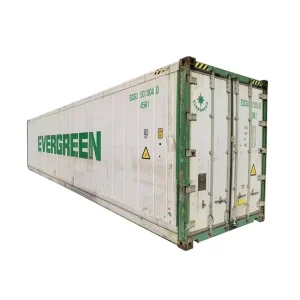
Buy Used 40ft HC Shipping Reefer Container Manufacturers, Exporters
View Technical Specs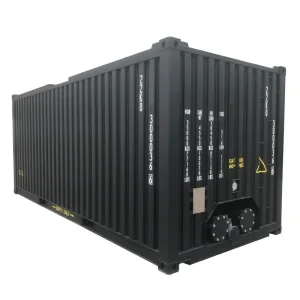
China 20 Feet Heated Shipping Asphalt Container Exporter, Manufacturers
View Technical Specs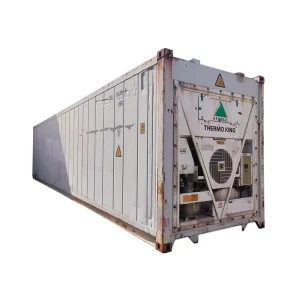
ODM New 40ft Refrigerated Freezer Container for Sale Factory, Exporter
View Technical Specs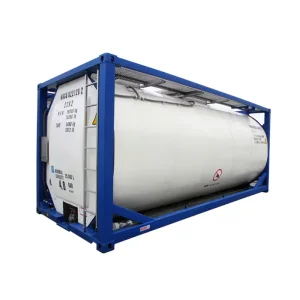
Buy ISO Standard 20ft Versatile Tank Container for Transport Chemicals Exporter, Product
View Technical Specs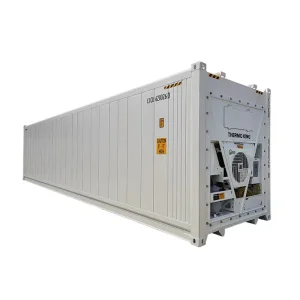
OEM New 40ft High-Cube Certified Reefer Shipping Cargo Container Pricelist, Product
View Technical Specs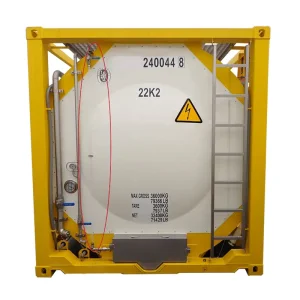
ODM 20ft Tank Container for Alcohol Manufacturer, Quotes
View Technical Specs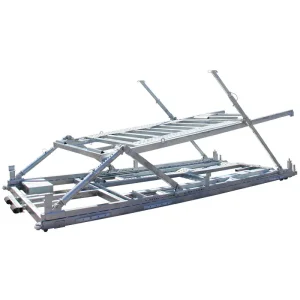
China vehicle transport rack Product, Exporters
View Technical Specs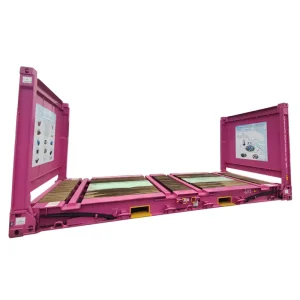
ODM New 20ft Platform Frame Container Pricelist, Exporters
View Technical Specs
DIRECT FACTORY TECHNICAL DESK
Engineer Your Specialized Maritime Fleet With CIMIC
Submit your specific intermodal cargo demands, cold chain tolerances, or offshore classification mandates. Our naval architecture and logistics engineering team provides detailed dimensional drawings, finite element validation, and transparent quayside quotes.
Factory Export Headquarters:
Huaying Building-1134, Central Avenue, Airport Economic Zone, Tianjin FTA Pilot Area, China
Direct Engineering Line: +86-13920482102
Official Tender Desk: [email protected]
WhatsApp Project Liaison: +86 139 2048 2102