
High-Cube, Specialized & Intermodal Cold Chain Fleet Units
Verified factory production lines featuring automated thermal foaming, Corten steel framing, and multi-class certification ready for rapid global deployment.
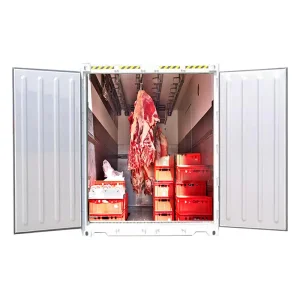
High-Quality Brand new hanging meat container for low temperature fresh transportation Pricelist, Products
View Product Specs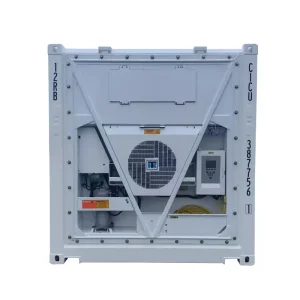
OEM 20ft Offshore Refrigerated Container DNV Certification Is More Durable Exporter, Exporters
View Product Specs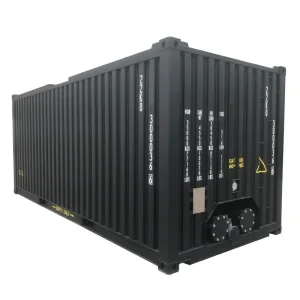
China 20 Feet Heated Shipping Asphalt Container Exporter, Manufacturers
View Product Specs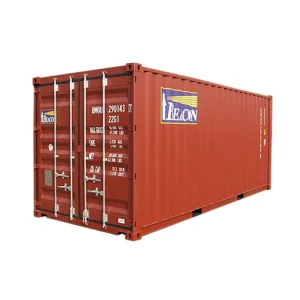
ODM 40ft New Certified Dry Shipping Container Pricelist, Exporters
View Product Specs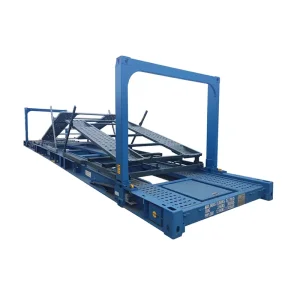
China New 20ft Car Carrier Container Special Container Exporter, Quotes
View Product Specs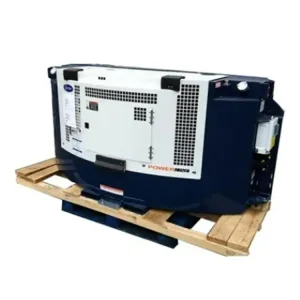
China Refrigerated container diesel generator Exporter, Quotes
View Product Specs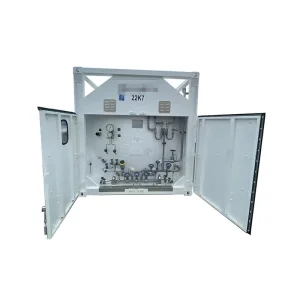
Famous T75 20ft Cryogenic Liquid Tank Container Products, Exporters
View Product Specs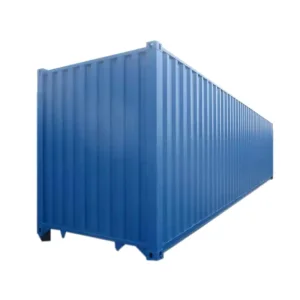
China 40ft High Cube Certified Dry Cargo Shipping Container contaoner Factory, Product
View Product SpecsReefer Container Cost Drivers & Lifecycle Capital Dynamics
Understanding Total Cost of Ownership (TCO): Moving beyond baseline FOB quotes to quantify thermal efficiency, machinery reliability, and residual scrap salvage.
Percentage of baseline manufacturing cost attributed directly to refrigeration compressors, condensers, and microprocessors.
State-of-the-art cyclopentane high-pressure polyurethane insulation minimizing thermal transmission and genset fuel burn.
Achieved via SPA-H Corten atmospheric corrosion-resistant structural steel and MGSS inner lining panels.
Delivered by digital scroll and variable frequency inverter drive technologies compared to legacy reciprocating units.
1. Deconstructing the OEM Cost Structure: From Raw Corten to Intelligent Cold Chambers
For fleet directors, global procurement executives, and cold-chain infrastructure operators, procuring OEM reefer containers is fundamentally an exercise in multi-variable capital risk optimization. Unlike dry freight intermodal boxes—which are primarily driven by raw steel index pricing and basic coating chemistries—refrigerated container capital expenditures are partitioned into three distinct engineering layers: structural shell fabrication, thermal boundary insulation, and active thermodynamic machinery.
In modern industrial container manufacturing, raw materials represent approximately 58% to 65% of the total unit FOB cost. The outer structural chassis relies entirely on cold-rolled atmospheric corrosion-resistant Corten steel (SPA-H grade), prized for its ability to develop a self-passivating oxide layer under marine salt-spray exposures. The interior cargo envelope must satisfy stringent international food-grade and pharmaceutical sanitation standards, utilizing either food-grade Muffler Grade Stainless Steel (MGSS, SUS410/430) or marine-grade 304 stainless steel, supported by extruded aluminum alloy (6061-T6 or 6082-T6) deep T-floor aeration profiles.
Total Cost of Ownership Formulation: $TCO = Capex_{OEM} + \sum_{t=1}^{n} \frac{Opex_{Energy}(t) + Opex_{PTI/M\&R}(t)}{(1+r)^t} - \frac{SalvageValue}{(1+r)^n}$. Where thermal insulation degradation (foam aging rate) directly influences $Opex_{Energy}$, emphasizing why high-density vacuum/cyclopentane polyurethane injection is critical to lifecycle profitability.
The thermodynamic refrigeration package constitutes another 30% to 40% of the aggregate initial unit quote. Global supply chains standardize across four premier machinery builders: Carrier Transicold (ThinLINE, PrimeLINE), Thermo King (Magnum Plus, SuperFreezer), Daikin (LXE series, ZeOPIR), and Starcool (CIMIC/Maersk integrated designs). Choosing between standard scroll, digital scroll, or dual-inverter hermetic screw compressors alters not only the upfront capital bill of materials (BOM) by $1,800 to $4,500 per unit, but profoundly affects fuel usage during trans-oceanic voyages and multi-modal railway transfers on genset power.
OEM Industrial Specifications & Procurement Cost Modeling
Comprehensive engineering matrix comparing dimensional architectures, tare weights, thermal performance, and global volume pricing bands.
| ISO Form Factor | External Dims (L×W×H) | Internal Volume | Tare Weight (±2%) | Temp Range (°C) | Machinery Options | Indicative OEM Price Band |
|---|---|---|---|---|---|---|
| 20ft Standard Reefer (20RF) ISO 1496-2 |
6,058 × 2,438 × 2,591 mm (20'0" × 8'0" × 8'6") |
28.3 m³ (1,000 cu.ft) |
3,080 kg (6,790 lbs) |
-30°C to +30°C | Carrier PrimeLINE / Thermo King Magnum |
$12,500 – $15,800 (Volume Dependent) |
| 40ft High-Cube Reefer (40RH) Global Mainstay |
12,192 × 2,438 × 2,896 mm (40'0" × 8'0" × 9'6") |
67.8 m³ (2,394 cu.ft) |
4,480 kg (9,876 lbs) |
-35°C to +30°C | Carrier / Thermo King / Daikin LXE10E |
$17,200 – $22,500 (Contract Fleet Base) |
| 20ft DNV Offshore Reefer DNV 2.7-1 / EN 12079 |
6,058 × 2,438 × 2,591 mm (Pad-eye reinforced) |
24.5 m³ (Heavy Insulation) |
4,200 kg (Heavy Tare) |
-30°C to +20°C | Explosion-Proof / ATEX / Carrier Marine Spec |
$24,000 – $34,500 (Offshore Certified) |
| Ultra-Low Temp Deep Freeze Tuna & Bio-Pharma |
12,192 × 2,438 × 2,896 mm (40HC Specialized) |
63.2 m³ (Thickened Core) |
4,920 kg (Dual Cascade) |
-60°C to +10°C | Thermo King SuperFreezer (Cascade System) |
$36,000 – $48,000 (Specialist Build) |
| Multi-Temp Controlled Reefer Dual-Zone Partition |
12,192 × 2,438 × 2,896 mm (Internal Insulated Bulkhead) |
65.0 m³ (Configurable) |
4,750 kg (With Evaporators) |
Dual Zone: -25°C & +4°C |
Multi-Evaporator Dual Loop Refrigeration |
$26,500 – $33,000 (Custom Engineering) |
2. Analytical Cost Breakdown: Why OEM Pricing Fluctuates Across Global Quotes
When purchasing managers request formal requests for quotation (RFQs), they frequently observe significant price dispersion between tier-one Chinese container conglomerates and smaller regional conversion yards. This price variance is rarely arbitrary; it reflects quantifiable differences in engineering tolerances, automated production quality, and structural metallurgical sourcing.
The primary raw material variable is the grade and gauge of structural steel. Top-tier Chinese facilities utilize high-tensile SPA-H atmospheric corrosion-resistant alloy (minimum yield strength 345 MPa), whereas lower-cost assemblers may substitute lower-grade Q235B or standard structural steels that rust rapidly under marine conditions. Furthermore, reefer floor substructures must withstand intense forklift loading up to 7,260 kg (16,000 lbs) per axle in compliance with ISO 1496-1 floor strength tests. Precision extrusion of heavy-duty 6000-series aluminum T-floors with high fineness ratios ensures even air dispersal without premature metal fatigue or weld fracture under repetitive pneumatic tire transits.
A second major price differentiator is the polyurethane insulation chemical formulation. State-of-the-art Chinese Industry 4.0 plants employ zero-ODP (Ozone Depletion Potential) and ultra-low GWP (Global Warming Potential) cyclopentane blowing agents. Automated high-pressure injection presses pump high-density foam (42 to 45 kg/m³) between the interior stainless steel panels and exterior Corten walls in a single, continuous, climate-controlled shot. This prevents internal voids, thermal bridging, and foam delamination over thousands of flexural cycles on rough seas.
China Factory 4.0: Supply Chain Resilience & Port Clustering Advantages
How hyper-integrated coastal manufacturing clusters, robotic laser cutting, and automated continuous foaming lines unlock structural economies of scale.
Integrated Industrial Clusters
Situated in primary industrial zones such as Tianjin FTA and the Yangtze River Delta (Suzhou), manufacturing ecosystems concentrate Corten blast furnaces, roll-forming lines, polyurethane chemical refineries, and maritime testing facilities within a 100-kilometer radius. This geographic density eliminates inter-provincial transit bottlenecks and stabilizes component procurement lead times.
Robotic Metallurgy & Laser Welding
End-to-end automation incorporates multi-axis robotic laser welding systems for corrugation seam assembly, automated shot-blasting machines achieving SA 2.5 surface cleanliness, and precision CNC punch-presses. This ensures uniform weld seams, eliminating stress-riser microcracks that could breach thermal envelopes under sea-swell torsional loads.
Port-Proximate Staging Yards
Factory yards located under 100 km from major export hubs (Tianjin Port, Shanghai Port) drastically slash inland drayage costs. Containers roll directly from the final Pre-Trip Inspection (PTI) and Bureau Veritas / ABS classification test cells straight onto ocean terminals, allowing "One-Way Cargo Load" (cabotage) options that save buyers thousands in repositioning freight.
3. Eco-Friendly Waterborne Coatings & Regulatory Green Compliance
In response to international environmental covenants and tightening VOC (Volatile Organic Compounds) regulations, leading Chinese reefer manufacturers have converted 100% of their surface preparation and finishing lines to automated waterborne coatings. The external finishing cycle comprises an inorganic zinc-rich epoxy primer (providing galvanic barrier protection), followed by an epoxy intermediate build coat and an ultra-durable aliphatic polyurethane topcoat designed to withstand extreme UV degradation, saline spray, and thermal cycling between -40°C and +70°C.
Simultaneously, the continuous foaming halls leverage automated robotic carousels equipped with multi-point infrared thermal imaging. As the liquid polyol and isocyanate mixture is injected under 180-bar high pressure into the container wall cavities, thermal sensors monitor the exothermic curing reaction in real time. This micro-level process control guarantees that every square centimeter of the container achieves the design density without hidden air gaps, preventing moisture vapor infiltration—the number-one cause of irreversible thermal decay and premature scrap in commercial reefer fleets.
Enterprise Sourcing: Navigating Global Fleet Demands & Lead-Time Optimization
Actionable guidance for logistics directors, carrier consortiums, and military supply divisions on structuring contracts, evaluating factory audits, and managing commodity risk.
Tier-1 Carrier Master Contracts
Global ocean liners hedge procurement cycles via rolling 12-to-24-month master purchase agreements, securing capacity allocations and locking in Corten and copper BOM indexes to avoid spot-market volatility.
Pharma & GDP Traceability
Pharmaceutical shippers require strict GDP (Good Distribution Practice) certification, demanding dual independent temperature sensors, integrated backup telematics, and mapping certificates validating ±0.5°C temperature stability throughout the cabin.
Offshore & Defense Rigidity
Naval and offshore oil/gas operations mandate DNV GL 2.7-1 / ISO 10855 type-approval with -20°C dynamic impact charpy V-notch toughness steel, integrated internal emergency escape hatches, and fire-rated insulation panels.
Capex vs. Lease-Purchase (OPEX)
Evaluating outright factory capex against lease agreements from box lessors. OEM direct purchasing routinely achieves amortized cost savings of 22% to 35% across an 8-year operational horizon compared to long-term leases.
4. Navigating Commodity Price Swings: Steel, Copper, and Refrigerants
Procurement teams must recognize how commodity raw material indexes dictate the baseline price floor of refrigerated equipment. A standard 40ft High Cube reefer container incorporates roughly 3.2 metric tons of Corten structural steel, 450 kilograms of stainless steel (MGSS), 420 kilograms of aluminum, 120 kilograms of copper (primarily within the refrigeration motor windings, condenser tubing, and evaporator coils), and approximately 150 kilograms of polyurethane foam reagents.
In addition, global environmental regulations (such as the EU F-Gas Regulation and Kigali Amendment) have triggered substantial price movements in fluorinated gases. The industry transition from legacy R134a to lower-GWP alternatives—such as R452A, R513A, and natural refrigerants like carbon dioxide (R744 in Carrier NaturaLINE systems)—influences both initial refrigerant charging bills and long-term dockside maintenance budgets. Forward-thinking procurement strategies incorporate dual-fuel or low-GWP compatible machinery to safeguard resale values across global secondary markets.
Localized Engineering Use Cases & Custom Deployment Architectures
How specialized OEM configurations address hostile ambient environments, regional power grids, and distinct perishable commodity profiles.
Latin America & Africa: Meat Hanging Transit
Engineered for high-volume beef and pork transit across South America (Brazil, Argentina, Uruguay) and Africa. Units feature reinforced Corten roof cross-members integrated with high-load extruded aluminum ceiling meat-hanging rails and stainless steel slide hooks, capable of carrying over 18,000 kg of hanging carcass without structural roof deflection.
North Sea & Middle East: Offshore Modular Cold Vaults
Deployed on offshore platforms and FPSOs under harsh Arctic or high-temperature marine environments. Units comply with DNV 2.7-1 / EN 12079 hoisting safety requirements, internal escape lighting, explosion-proof ATEX-rated electrical junctions, and heavy-duty 8-point lifting slings engineered for crane lifts in Sea State 6 conditions.
Southeast Asia & Europe: Multi-Temperature Cold Stores
Configured for multi-drop grocery chains and fast-moving agritech corridors. Movable, insulated longitudinal or transverse bulkheads create dual-zone chambers: keeping frozen seafood at -20°C in the front compartment and fresh produce or flowers at +4°C in the rear, monitored by remote IoT cellular/satellite gateways.
5. Intermodal Compatibility: Rail Corridors and Desert Crossings
When operating across extensive intercontinental rail lines—such as the China-Europe Railway Express (Yiwu/Chongqing to Duisburg) or transcontinental North American rail networks—reefer containers face extreme operational challenges. Ambient temperatures can swing from -40°C in Siberian winter corridors to +45°C across Central Asian deserts. Standard reefers risk thermal shock, compressor freeze-up, or diesel genset fuel gelling.
To overcome these challenges, OEM engineering packages integrate auxiliary clip-on diesel generator sets (providing up to 460V 3-phase autonomous power with 400-liter diesel tanks running uninterrupted for 120 hours), low-temperature sump heaters, dual drain heating elements, and satellite-based telematics that transmit live air supply, return air, defrost cycles, and error codes directly to remote train control centers.
Factory QC Audits, PTI Run Testing & Marine Classification Standards
A look at the multi-stage quality control gates that validate dimensional tolerances, air-tightness, and thermodynamic stability before pre-shipment sign-off.
6. The Six Essential Factory Quality Control Gates
True OEM container engineering demands rigorous compliance with international standards overseen by classification societies such as Bureau Veritas (BV), ABS, Lloyds Register (LR), or DNV. Each production run must pass six comprehensive inspection gates:
Gate 1: Ultrasonic & X-Ray Seam Weld Inspection. Corner post-to-casting intersections, corner headers, and bottom side rails undergo ultrasonic weld thickness and non-destructive magnetic particle inspection (NDT) to prevent fatigue cracks during 9-high fully loaded sea stacking (up to 216,000 kg total stack load).
Gate 2: Controlled Air Leakage (Pressure Decay) Testing. Conducted in an ISO-accredited test chamber. The container interior is pressurized to 250 Pa (1.0 inch water gauge). The time elapsed for pressure decay to drop to 150 Pa is timed; high-specification OEM reefers must exhibit leakage rates under 4.0 m³/hour, preventing warm ambient air infiltration through door gaskets and riveted joints.
Gate 3: Thermal Dissipation & K-Value Measurement. In accordance with ISO 1496-2 and ATP (Agreement on the International Carriage of Perishable Foodstuffs) guidelines, random production-line samples enter guarded thermal balance chambers. Continuous electrical resistance heating measures overall heat transmission coefficients ($K$-values), guaranteeing performance at or below $0.32 W/(m^2 \cdot K)$.
Gate 4: Pre-Trip Inspection (PTI) and Extended Machine Run. The refrigeration machinery undergoes automated electronic self-testing followed by a continuous 4-hour performance run. The unit cycles from ambient (+25°C) down to -20°C, verifying compressor amperages, condenser fan speeds, expansion valve modulation, defrost heating elements, and safety cut-out switches.
Gate 5: Light-Proof & Water Deluge Testing. Prior to insulation foam injection, the steel outer shell passes through a torrential high-pressure water deluge tunnel (2.5 bar spray pressure across all faces and door seals for 15 minutes) followed by a darkroom internal light penetration check to confirm 100% seam watertight integrity.
Gate 6: Dimensional Verification & CSC Plating. Digital laser calipers measure diagonal corner casting distances, cam-lock engagement, and squareness within strict ISO tolerance limits (diagonal difference $\le 10 mm$). Units passing all gates are fitted with stainless steel CSC (Convention for Safe Containers) and TIR compliance plates.
Enterprise Q&A: Commercial Procurement, Maintenance & Customization
Clear, practical answers to technical and financial questions asked by global equipment managers and procurement directors.
What are the key cost drivers that separate standard dry containers from OEM reefer containers?
While a brand-new 40ft High-Cube dry freight container typically trades between $2,600 and $3,800 depending on Corten steel indexes, a 40ft High-Cube reefer container averages $17,000 to $23,000. This price premium stems from three primary engineering elements: (1) The precision thermodynamic refrigeration machinery (compressor, microprocessor, evaporator, condenser) representing 35-40% of the cost; (2) High-density cyclopentane-blown polyurethane insulation and food-grade Muffler Grade Stainless Steel (MGSS) or aluminum inner linings; and (3) Heavy-duty structural extrusions, including deep-channel aluminum T-floors and dual-gasket Santoprene/EPDM door seals tested to strict air-leakage tolerances.
Which refrigeration brand (Carrier, Thermo King, Daikin) should be specified for our fleet order?
Selection depends largely on your operating trade lanes, cargo profiles, and depot technician familiarity. Carrier Transicold (PrimeLINE) is the global market leader by fleet share, providing the widest availability of spare parts and standardized technician training worldwide. Thermo King (Magnum Plus) is frequently preferred for deep-frozen cargo (down to -35°C to -40°C) and rapid pulldown performance due to its advanced digital scroll compressor design. Daikin (LXE / ZeOPIR) utilizes high-efficiency water-cooled condenser options and patented inverter scroll technology that provides high energy efficiency and precise temperature control (±0.2°C) for delicate fresh produce and pharmaceuticals.
How does China 4.0 manufacturing ensure long-term thermal efficiency (K-value) over 15+ years?
Thermal degradation ("foam aging") occurs when atmospheric air and moisture penetrate the polyurethane insulation cell matrix, replacing low-conductivity blowing gases. Advanced Chinese factories prevent this by utilizing automated single-shot high-pressure cyclopentane injection inside heated hydraulic presses. This process achieves uniform closed-cell content exceeding 95% with an initial thermal conductivity below 0.020 W/(m·K). Combined with automated robotic seam welding of the outer Corten shell and air-tight silicone sealing along inner MGSS panel overlaps, moisture vapor transmission is essentially stopped, maintaining low heat ingress and reducing machinery power consumption throughout the unit's operational life.
What are the lead times for custom OEM reefer production and export clearance?
Standard OEM reefer orders generally require a 30 to 45 day production window following engineering drawing approval, depending on order volume and component availability (particularly refrigeration machinery batches). Units are manufactured at coastal production facilities (such as Tianjin or Suzhou), allowing containers to clear factory PTI, Bureau Veritas classification witness audits, and customs clearance within 4 to 7 days. They are then transferred to container terminals for immediate export booking or one-way domestic cabotage loading.
Can CIMIC integrate remote IoT telematics and cold chain tracking sensors at the factory?
Yes. Factory-fitted telematics are commonly specified in OEM builds. We integrate all major telematics architectures, including Carrier eSolutions, Thermo King TracKing, Orbcomm, and Nexxiot systems. Devices are wired directly into the main microprocessor controller with secondary backup batteries and solar roof-panel mounts, providing live satellite/cellular reporting of supply/return air temperatures, relative humidity, oxygen/CO2 concentrations, fuel reserves (on attached gensets), compressor run status, and GPS geofence alerts.
Should procurement teams purchase brand-new OEM reefers or certified used units?
This decision centers on your operating model. For international ocean lines, trans-continental rail routes, and GDP pharmaceutical cold chains, brand-new OEM containers are strongly advised to secure manufacturer warranties (typically 5 years on refrigeration components), optimal energy efficiency (minimizing vessel genset load), and a low probability of en-route failure. For static ground cold storage, seasonal agricultural overflow, or budget-constrained regional transport, certified used reefers (typically 8 to 12 years old, priced between $4,500 and $7,500) provide a cost-effective alternative, provided they pass a strict comprehensive Pre-Trip Inspection (PTI) and vacuum pressure hold test prior to delivery.
Specialized Logistics, Insulated & Offshore Container Portfolio
Expandable modular systems, high-cube thermal insulated containers, cryogenic tank units, and secondary market solutions designed to rigorous engineering tolerances.
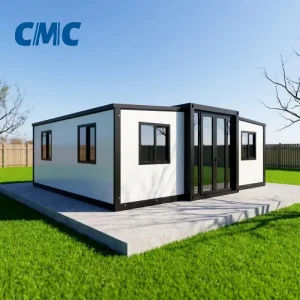
OEM 20ft Modular Container Houses Expandable Steel Container House Excellent Thermal Insulation and Sealing Performance Manufacturer, Manufacturers
View Product Specs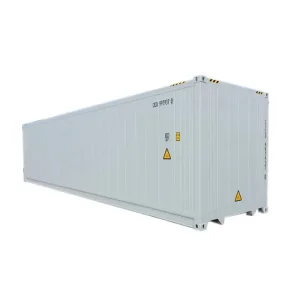
Buy New 40ft High Cube Thickened Foam Insulation Container Factory, Exporters
View Product Specs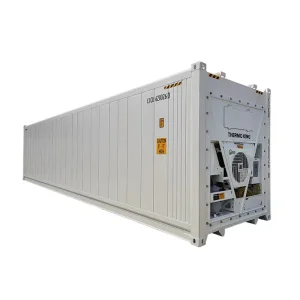
OEM New 40ft High-Cube Certified Reefer Shipping Cargo Container Pricelist, Product
View Product Specs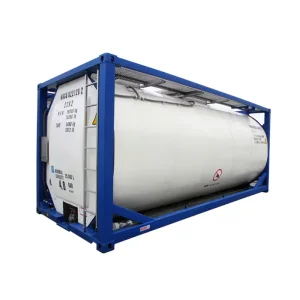
Buy ISO Standard 20ft Versatile Tank Container for Transport Chemicals Exporter, Product
View Product Specs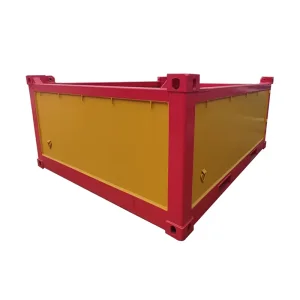
High-Quality New Offshore Basket Container for Offshore Operations Exporter, Exporters
View Product Specs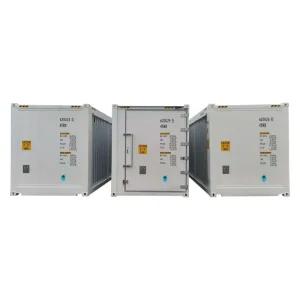
China OEM 40ft High-Cube Customized Three-in-One Combination Reefer Storage Container Manufacturer, Quotes
View Product Specs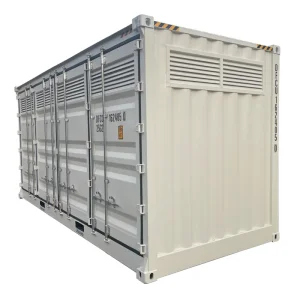
Famous 20FT High-cube Dangerous Goods Container Side Open Door with Ventilation Opening Manufacturer, Exporter
View Product Specs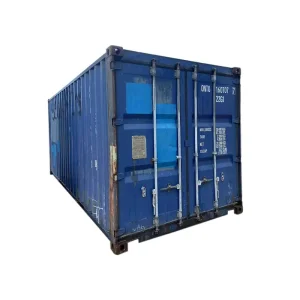
ODM 40ft Used Dry Cargo Shipping Container Manufacturers, Quotes
View Product SpecsRequest Direct Factory Quotation & Technical Drawings
Connect directly with our engineering division in Tianjin and Suzhou. We review your specific route, cargo requirements, and target volumes to deliver comprehensive CAD drawings, thermal transmission analysis, and competitive factory-gate pricing.