Standard & Customized Intermodal Configurations
Explore our top-tier 40-foot and specialized container assemblies engineered in accordance with ISO 1496, CSC, Bureau Veritas, and classification society requirements.
China Factory 4.0: Supply Chain Resilience & Production Supremacy
The global trade ecosystem relies unconditionally on the 40-foot intermodal freight container. Representing over 70% of worldwide containerized cargo volume by Twenty-Foot Equivalent Units (TEU) volume, the 40ft container is the backbone of global commerce. As modern supply networks encounter structural volatility, geopolitical shifts, and rigorous decarbonization mandates, procuring containers directly from primary Chinese manufacturing powerhouses is no longer solely a matter of unit price—it is an essential operational risk mitigation strategy.
Founded on four decades of specialized metallurgical and mechanical expertise dating back to 1983, Chinese container fabrication hubs centered around Tianjin and the Yangtze River Delta (Suzhou) have transitioned from conventional metal-stamping plants into fully digitized, automated Industry 4.0 smart complexes. Utilizing continuous-feed robotic seam welding, automated laser cross-member trimming, and vacuum environmental priming chambers, our facilities engineer structures with micrometer tolerances that eliminate structural stress concentrations and air leakages.
Integrated Corten-A Metallurgy
Our 40-foot manufacturing framework uses exclusively certified SPA-H weathering steel (Corten-A grade). When exposed to marine atmospheric environments, the alloy develops an adherent copper-phosphide oxidation layer that passivates the core steel substrate, suppressing oxidation progression and extending operational field life beyond 18 years in heavy ocean freight conditions.
Technical Architecture & 40 Ft Dimensional Matrix
Comparative empirical engineering data between 40-foot general purpose (GP), 40-foot High Cube (HC), thickened insulation reefers, and specialized intermodal variants.
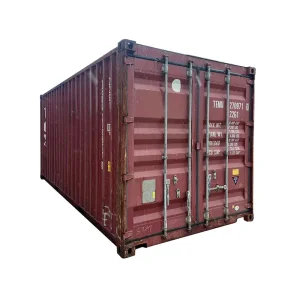
40ft Dry Cargo Standard (40GP)
Fabricated for general intermodal freight, machinery crating, and dense dry commodities. Engineered with 14 corrugated roof panels, heavy-duty 4.0 mm bottom side rails, and 28 mm marine-grade hardwood plywood flooring treated in accordance with Australian Quarantine and Inspection Service (AQIS) standards.
- Tare Weight: 3,740 kg ± 2%
- Internal Volume: 67.7 m³ (2,390 cu.ft)
- Payload Capacity: 26,740 kg
- Floor Load Test: 7,260 kg axle rating
40ft High Cube Container (40HC)
Providing an additional 305 mm (1 foot) of vertical clearance, the 40HC is the definitive global standard for volumetric freight, electronics staging, light furniture, e-commerce consolidations, and modular living or Battery Energy Storage System (BESS) integration enclosures.
- Tare Weight: 3,900 kg ± 2%
- Internal Volume: 76.4 m³ (2,698 cu.ft)
- Payload Capacity: 28,600 kg
- Gooseneck Tunnel: 120 mm deep recess
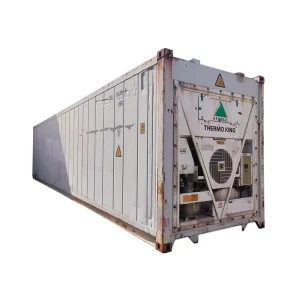
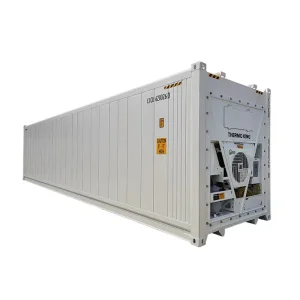
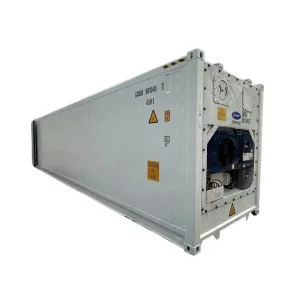
40ft High-Cube Certified Reefer (40RH)
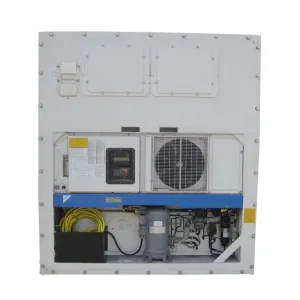
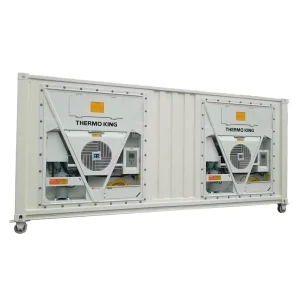
Integrated cold chain thermal envelope built with structural stainless steel (MGSS 1.0 mm) lining, seamless polyurethane high-pressure injection insulation (density 42-45 kg/m³), and aluminum T-bar airflow flooring supporting micro-channel refrigeration from Carrier, Thermo King, or Daikin.
- Thermal Heat Leakage (U-value): < 0.38 W/(m²·K)
- Usable Internal Volume: 67.6 m³
- Operational Setpoint: -30°C to +30°C
- Fresh Air Exchange: 0-285 m³/hr adjustable
| Model Variant | External Dimensions (L × W × H) | Internal Dimensions (L × W × H) | Max Gross Mass (MGM) | Insulation / Wall Substrate | Compliance / Society Rating |
|---|---|---|---|---|---|
| 40' GP ISO Dry Container | 12,192 × 2,438 × 2,591 mm | 12,032 × 2,352 × 2,393 mm | 30,480 kg (67,200 lbs) | Corrugated SPA-H Corten Steel (2.0mm / 1.6mm) | ISO 1496-1, CSC, BV |
| 40' High Cube Dry (40HC) | 12,192 × 2,438 × 2,896 mm | 12,032 × 2,352 × 2,698 mm | 32,500 kg (71,650 lbs) | Corten-A / Corten-B Alloy Assemblies | ISO 1496-1, ABS, BV, UIC |
| 40' HC Reefer (40RH Carrier/TK) | 12,192 × 2,438 × 2,896 mm | 11,583 × 2,290 × 2,557 mm | 34,000 kg (74,950 lbs) | Cyclopentane PU Foam + MGSS/SUS304 Liner | ATP, CSC, ISO 1496-2, DNV |
| 40' Open Top Hard/Soft Roof | 12,192 × 2,438 × 2,591 mm | 12,024 × 2,342 × 2,340 mm | 30,480 kg (67,200 lbs) | Removable Steel Header Bar + Heavy PVC Tarpaulin | CSC, TIR, ISO 668 |
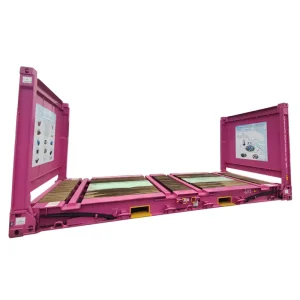
| 40' Platform / Flat Rack (Collapsible) | 12,192 × 2,438 × 2,591 mm | 11,650 × 2,230 × 1,950 mm | 45,000 kg (99,200 lbs) | Extra High Tensile Q345E / Strenx 700 Structural Beams | CSC, ISO 1496-5, CCS |
Macro Industrial Solutions: Transforming Global Infrastructure
Beyond standardized containerized maritime shipping, 40-foot structural shells manufactured in our facilities power critical global infrastructure across renewable energy, cold chain pharmaceuticals, and off-grid housing.
Grid-Scale Energy Storage (BESS)
Custom 40ft High Cube structural enclosures engineered with internal thermal partitioning, NFPA 68/69 explosion deflagration venting panels, and certified lifting points for multi-megawatt lithium-iron-phosphate (LFP) battery energy storage installations worldwide.
NFPA 855 Ready IP67 EnclosureCold Chain Perishables & Pharma
Equipped with dual-temperature zone separation and ultra-fine atmospheric control (CA/MA), keeping active respiration fresh produce (bananas, avocados) and biopharmaceuticals precisely within ±0.25°C across 45-day deep-sea intermodal transits.
Controlled Atmosphere Pharma GradeModular Architectural Systems
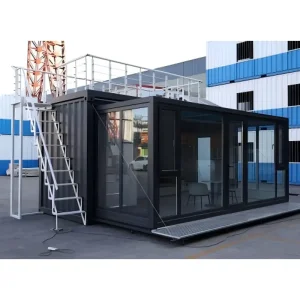
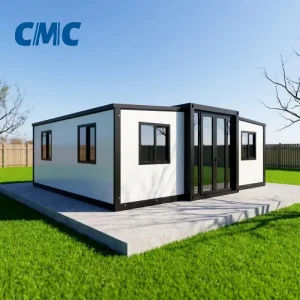
Prefabricated 40ft expandable structures with integrated thermal breaks, rock-wool acoustic insulation, and factory-plumbed sanitary utilities. Shipped turnkey to reduce remote mine-site or disaster relief assembly times by up to 85% compared to on-site builds.
IBC Compliant Turnkey AssemblyOffshore Dynamic Rig Supply
Certified in compliance with DNVGL-ST-E271 (DNV 2.7-1) and EN 12079 for North Sea and deep-water subsea platform staging. Engineered with heavy corner pad-eyes, charpy V-notch tested steel at -20°C, and integrated 4-part offshore sling sets.
DNV 2.7-1 EN 12079Integrated Manufacturing Infrastructure Since 1983
Four continuous decades of structural container design, testing laboratories, and port-proximate staging operations.
Strategic Port-Centric Logistical Advantage
Operating twin industrial production campuses situated in Tianjin (serving North China, Xingang Port, and the Trans-Eurasian Rail Corridors) and Suzhou (serving Shanghai and Ningbo-Zhoushan deep-sea hubs), our facilities sit within an average 100-kilometer drayage corridor to automated deep-water container berths. This proximity reduces inland trucking expenses, protects fresh factory coatings from long inland transit abrasion, and provides overseas charter lines and corporate fleet procurement officers with flexible Factory Acceptance Testing (FAT) before shipside loading.
Global Enterprise Sourcing & Total Cost of Ownership (TCO)
Why Tier-1 shipping lines, leasing conglomerates, and multinational EPC engineering contractors partner directly with certified Chinese primary factories.
CapEx vs. Lifecycle Optimization
Direct manufacturer procurement eliminates broker and intermediary commissions, reducing acquisition costs by 18-24%. More importantly, precision electro-deposition primers and automated seam welding lower maintenance outlays (M&R) by up to 35% over a 15-year maritime fleet lifecycle.
OEM / ODM Drawing Verification
Every procurement batch is supported by comprehensive CAD/SolidWorks Finite Element Analysis (FEA). Before metal is cut, engineers calibrate door gasket profiles (EPDM 3-fin or 4-fin seals), side wall corrugation geometries, floor beam pitch, and internal tie-down ring load ratings according to the buyer's cargo specifications.
Stringent FAT & Third-Party Auditing
We welcome third-party technical auditors—including Bureau Veritas, ABS, Lloyd's Register, and SGS. Our dedicated quality gates mandate floor load deflections under 6 mm at 7,260 kg axle forces, weatherproof water spray testing at 100 kPa from 4 directions, and microscopic ultrasonic weld flaw detection.
Five-Stage Direct Factory Execution Protocol
Analysis of target route, payload shear loads, temperature parameters, and classification demands.
Production blueprint confirmation, structural simulation, and material mill test certification review.
Robotic roll forming, jigged welding, blast cleaning to Sa 2.5, and zinc silicate primer baking.
Light leakage tests, high-pressure monsoon spray tunnels, dimensional checks, and CSC plating.
Immediate dispatch to Tianjin Xingang, Shanghai, or Ningbo terminals for ocean carrier loading.
Global Compliance, Certification & ESG Engineering Horizon
In international trade, cross-border compliance failures can bring substantial demurrage, port fines, or cargo rejection. Every 40ft container rolling off our automated production lines carries globally verified safety and environmental certifications.
International Maritime Safety (CSC)
Certified in strict compliance with the 1972 International Convention for Safe Containers (CSC). Certified by Bureau Veritas (BV) or ABS with stamped stainless steel data plates validating maximum stacking, racking, and floor axle capacity.
Phytosanitary & Custom Transit
Timber flooring components undergo pressurized methyl bromide (MB) or high-temperature heat treatment (HT) complying with AQIS / ISPM-15. Equipped with Customs TIR approval seals for bonded rail and truck transit across Eurasia and North America.
Waterborne Eco-Coatings (Low VOC)
Aligned with stringent global ESG initiatives, our surface treatment processes have fully transitioned to waterborne multi-coat paint systems, cutting volatile organic compound (VOC) emissions by over 70% while improving salt spray resistance past 1,000 hours.
Future Technology Roadmap: Intelligent & Composite Containers
Looking ahead, China's 40-foot container manufacturing ecosystem is pioneering the shift toward intelligent, low-emission intermodal logistics. The integration of active IoT telematics modules directly into the corner casting recesses during factory assembly provides end-to-end GPS positioning, real-time shock and vibration sensing, door-opening event tracking, and automated reefers telemetry with remote temperature logging via satellite uplink.
Simultaneously, material science research is driving the adoption of Vacuum Insulation Panels (VIP) embedded alongside zero-ODP blowing agent cyclopentane polyurethane foams. This breakthrough cuts thermal conductivity to under 0.018 W/(m·K), lowering reefer compressor operating cycles by up to 30% and delivering substantial fuel and carbon savings across long maritime voyages.
Procurement & Engineering Inquiries Answered
Detailed answers regarding factory capacities, technical drawing validations, reefer machinery selections, and international container deliveries.
What are the precise structural differences between a 40ft Standard (GP) and 40ft High Cube (HC)?
The definitive engineering distinction between a standard 40-foot General Purpose (40GP) and a 40-foot High Cube (40HC) container is the external height. A standard 40GP features an external height of 2,591 mm (8 feet 6 inches), yielding an internal height of 2,393 mm and a volumetric capacity of 67.7 m³. In contrast, the 40HC features an external height of 2,896 mm (9 feet 6 inches)—an increase of exactly 305 mm (12 inches)—which expands interior volume to 76.4 m³ (approximately 13% more space).
Structurally, because of the higher center of gravity and increased side-wall wind resistance, 40HC units incorporate reinforced front and rear header assemblies, an integrated gooseneck tunnel recess on the underside front rail (to lower overall travel height on intermodal chassis), and specialized high-tensile corner posts to meet ISO 1496 transverse racking resistance standards.
Which refrigeration machinery brands are supported on factory-built 40ft reefer containers?
Our manufacturing lines maintain standardized mounting jigs and electrical harness configurations compatible with the world's three leading industrial refrigeration powerhouses:
- Carrier Transicold: Featuring PrimeLINE® with digital scroll compressor technology, renowned for exceptional energy efficiency and deep freezing performance down to -35°C.
- Thermo King: Featuring the Magnum Plus® series, optimized for rapid pull-down speeds, low power draw, and cryogenic capabilities reaching -40°C.
- Daikin: Utilizing advanced DC inverter scroll compressor units designed for precise temperature modulation within ±0.1°C, ideal for sensitive pharmaceuticals and high-value fruit consignments.
We provide full OEM integration, including electrical power cable routing, micro-channel condensing units, air ducting, fresh air exchange calibration, and pre-trip inspection (PTI) certification conducted before factory release.
How does CIMIC guarantee welding integrity and corrosion resistance in marine environments?
Corrosion mitigation begins with material selection: all primary structural corrugated side panels, crossmembers, roof sheets, and corner castings are forged exclusively from high-strength SPA-H Corten weathering steel. Prior to robotic seam welding, steel coils and structural shapes undergo centrifugal automatic shot blasting to ISO Sa 2.5 cleanliness, eliminating mill scale and rust.
Immediately after automated fabrication, structures undergo a three-tier painting cycle: a zinc-rich epoxy primer (providing cathodic galvanic protection), a high-build epoxy intermediate coat (creating an impermeable moisture barrier), and a polyurethane or waterborne topcoat formulated with superior UV resistance. Welded joints undergo ultrasonic non-destructive testing (NDT), followed by a 100 kPa pressurized monsoon water leakage audit across all seams and door gaskets.
Can our procurement team commission customized OEM / ODM configurations (such as side-doors, roll-up doors, or internal tracks)?
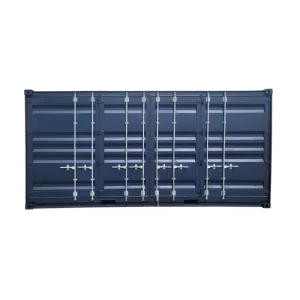
Yes. Custom engineering accounts for a substantial share of our factory throughput. We regularly design and build side-open-door containers (bi-folding panels across the full 40-foot wall length), industrial motorized roller shutters, strengthened floors supporting 10-ton axle loads, internal airline lashing tracks, customized power penetrations, HVAC bulkheads, and interior fire-rated insulation panels.
Our technical workflow involves issuing 3D parametric CAD drawings and FEA structural validation reports for customer approval prior to tooling setup. Custom builds include complete classification society type-approval testing to ensure modifications retain their intermodal CSC safety certification.
What documentation is supplied with each export batch for global customs clearance?
Every commercial container shipment is supported by a comprehensive documentation portfolio: Official CSC Safety Plates with third-party classification approvals (Bureau Veritas or ABS); ISPM-15 Phytosanitary Treatment Certificates for timber floorings; Factory Inspection and Acceptance Certificates; Mill Test Certificates (MTC) proving SPA-H steel metallurgy; PTI Test Records for reefer units; and standard commercial customs documents (Commercial Invoice, Packing List, Certificate of Origin, and Ocean Bill of Lading).
What are the delivery lead times and Minimum Order Quantities (MOQ) for custom 40ft units?
Standard ISO 40ft dry and high cube container lines maintain continuous production runs, allowing small sample orders or fleet volumes (1 to 500+ units) to be dispatched within 10 to 20 days. Custom OEM/ODM orders (such as specialized side-opening units, offshore baskets, or modular houses) typically require a 25 to 35-day production window following technical drawing sign-off. Given our plant's location within 100 km of Tianjin and Shanghai/Suzhou port zones, completed units move rapidly from factory floor to dockside staging.
Advanced Modular, Offshore & Liquid Logistics Stock
Expand your logistics operational capabilities with our second specialized cohort of ISO, DNV-certified offshore, vehicle transport, and cryogenic modular equipment.