
Heavy-Duty Offshore & Intermodal Container Fleet
Precision-engineered containment architectures certified to Lloyd's Register, Bureau Veritas (BV), and DNV specifications for seamless maritime, rail, and deepwater exploration deployment.
Global Enterprise Procurement Dynamics for Offshore Tank Containers
Analyzing the macro-economic and engineering parameters driving multi-tier EPCs, drilling operators, and marine logistics providers in cross-border asset acquisition.
Total Cost of Ownership (TCO) Optimization
Global offshore operators are shifting procurement matrices from initial CAPEX toward lifecycle-driven OPEX calculations. In subsea development and harsh platform servicing, tank container failures yield exponential downstream demurrage and remediation costs.
- 304L/316L pickled and passivated stainless steel minimizing cyclic maintenance.
- Superior anti-corrosive multi-coat polyurethane marine coating systems.
- Extended 5-year periodic DNV/BV hydro-testing integrity retention.
Severe Environment Operational Integrity
Offshore platform operations demand containers that withstand dynamic side impacts, high-amplitude ship-to-platform wave heave, and extreme ambient salinity. Standard ISO shipping tanks fail catastrophic dynamic acceleration thresholds common in open ocean lifting.
- Primary structural frame manufactured from high-yield structural steel.
- Charpy V-notch impact verified toughness at -20°C and -40°C sub-zero environments.
- Pad eyes integrated directly into the structural frame for dedicated 4-leg sling sets.
Dangerous Goods & Fluid Diversity
From drilling fluids, aviation kerosene (Jet A-1), acids, and methanol to liquid nitrogen for well stimulation, procurement specifications require multi-modal UN Portable Tank T-Codes (T11, T14, T50, T75) matched to exact chemical properties.
- Precision PTFE/FEP chemically inert gaskets for toxic and acidic cargo.
- ASME "U" stamp pressure vessels rated from 1.75 bar up to 22.0 bar working pressures.
- High-vacuum multilayer thermal super-insulation for cryogenic LNG/LIN logistics.
Engineering Specifications: Offshore Tank Container Architecture
A granular analysis of physical metallurgy, stress-distribution physics, pressure vessel dynamics, and international safety compliance.
| Technical Parameter | DNV 2.7-1 Offshore Chemical Tank | T75 Cryogenic Offshore Tank | Standard ISO Tank (Non-Offshore) |
|---|---|---|---|
| Primary Certification | DNVGL-ST-E271 / EN 12079 / ASME VIII | DNV 2.7-1 / ADR / RID / IMDG T75 | ISO 1496-3 / CSC / IMDG |
| Structural Frame Steel | EN 10025-S355NL / S355J2 with -20°C/-40°C Impact Toughness | Heavy-section hollow structural sections with low-temp notch toughness | Standard Corten-A / SPA-H weathering steel |
| Dynamic Lifting Factor | Design Load Factor (F) up to 2.5–3.0× Max Gross Mass | Design Load Factor (F) 2.5–3.0× Max Gross Mass | Static 1.0–1.2× corner casting rating (no crane sling rating) |
| Inner Vessel Shell Material | AISI 316L / 316Ti / Hastelloy C-276 / Carbon Steel Lined | Austenitic Stainless Steel (06Cr19Ni10 / 1.4301) | AISI 304 / 316L standard thickness |
| Insulation & Thermal Barrier | 50mm Polyurethane foam / mineral wool with 1.5mm GRP cladding | High vacuum multilayer insulation (MLI) with molecular getter | Optional 50mm rockwool with standard aluminum skin |
| Pad Eyes & Lifting Slings | Welded forged pad eyes, magnetic particle inspected, 4-leg sling assembly | High-profile reinforced pad eyes with dedicated DNV-certified slings | None (Restricted strictly to ISO corner twist-locks) |
| Pressure Rating Scope | Working: 1.75 – 6.0 Bar; Test: 2.65 – 9.0 Bar | Working: 8.0 – 22.0 Bar; Test: Up to 33.0 Bar | Working: 1.75 – 4.0 Bar; Test: 2.65 – 6.0 Bar |
Corrosion Mitigation & Surface Integrity
Offshore salt spray induces severe accelerated pitting and galvanic degradation. Our fabrication methodology implements shot-blasting to ISO 8501-1 Sa 2.5 purity, accompanied by an inorganic zinc-silicate base primer (75μm), an intermediate high-build epoxy polyamide barrier (150μm), and an aliphatic polyurethane topcoat (60μm), achieving exceeding 15 years C5-M marine exposure durability.
Valving, Instrumentation & Secondary Containment
Valving systems integrate 3-closure fail-safe redundancy conforming to IMDG Chapter 6.7: high-precision internal foot valve with emergency thermal/cable shutdown, secondary manual flanged isolation valve, and tertiary stainless blind flange or quick-camlock coupling. Spill containment boxes feature drain valves to retain spilled hazardous liquid, mitigating environmental regulatory fines.
Global Industrial Landscape & Exploration Theaters
Deploying mission-critical chemical and cryogenic tank equipment across the world's most demanding deepwater basins and coastal terminals.
North Sea Basin
Governed by strict UK NORSOK and DNV regulations. Requires full compliance with extreme fatigue cycles, low ambient design temperatures down to -20°C, and rigorous periodic sling inspections for FPSO and fixed-rig operations.
Gulf of Mexico (GoM)
Operates under US Coast Guard (USCG) and API RP 2A guidelines. High utilization of chemical injection tank units for deepwater subsea completions, paraffin inhibitor circulation, and ultra-deep high-pressure acidizing runs.
Middle East Arabian Gulf
High ambient thermal envelopes approaching +55°C. Tank systems demand reinforced thermal insulation, high-efficiency solar reflective coatings, and enhanced pressure relief valves (PRVs) to prevent fluid boil-off and overpressurization.
Asia-Pacific & West Africa
Rapid expansion in LNG bunkering infrastructure, offshore gas fields, and remote FPSO projects off Guyana and Angola. Focus rests on high-capacity ISO tank logistics, standardized multi-modal interchange, and robust spare-parts availability.
Technological Roadmap & Future Outlook: Next-Gen Offshore Containment
Transitioning from passive containment hardware to intelligent, sensor-networked, ultra-safe digitalized assets tailored for the global low-carbon energy transition.
IoT Telematics & Predictive Monitoring
Modern offshore fleets integrate ATEX Zone 1/Zone 2 certified telemetry modules powered by micro-energy harvesting and long-life batteries. Sensors broadcast real-time internal pressure, vessel temperature, GPS/GNSS location, dynamic shock loadings, and liquid levels via dual satellite/cellular channels.
Benefit: Immediate detection of unexpected venting, seal degradation, or violent impact during open-sea transfer operations.
Clean Energy: Liquid Hydrogen & CO2 CCS
As the energy transition accelerates, tank container designs are pivoting toward low-carbon fuels and Carbon Capture & Storage (CCS). Liquid hydrogen (LH2) transport demands deep cryogenic temperatures of -253°C, necessitating advanced vacuum-jacketed, ortho-para hydrogen catalysis catalysts.
Benefit: Offshore LCO2 tank units provide high-pressure containment enabling offshore reinjection for subsea geological carbon sequestration.
Advanced Composite & Dual-Phase Alloys
To reduce container tare weight and elevate payload capacities, R&D investments target duplex stainless steels (such as 2205 and 2507) providing twice the mechanical yield strength of standard austenitic 316L alongside superior pitting resistance equivalent numbers (PREN > 42).
Benefit: Carbon-fiber wound composite reinforced outer jackets reduce dynamic vessel stress on deck cranes while maintaining complete impact barrier integrity.
Localized Support & International Compliance Assurance
Every manufactured unit must pass rigorous physical testing witnessed by independent classification surveyors prior to factory acceptance certification.
Full-Scale Prototype Drop Testing
Under DNV 2.7-1 / EN 12079 Section 5, container prototypes undergo a vertical drop test from a calculated height (typically 50mm to 200mm) loaded to Maximum Gross Mass onto a flat, non-yielding surface. Dynamic deflection is monitored without weld rupture, fluid leakage, or irreversible structural collapse.
Non-Destructive Examination (NDE)
100% of lifting pad eye welds, primary load paths, and critical vessel circumferential seams undergo Ultrasonic Testing (UT), Magnetic Particle Inspection (MPI), and Radiographic Examination (RT). Documented material mill test certificates (EN 10204 3.1/3.2) ensure 100% heat traceability back to raw steel ingots.
Global Parts & Recertification Network
Operating out of major logistics hubs proximate to Tianjin Port and major global shipping lanes, we deliver comprehensive maintenance support, supply OEM valves (Fort Vale, Girard, Perolo), and support periodic 2.5-year and 5-year DNV inspections with complete documentation packages.
Frequently Asked Questions: Offshore Tank Procurement & Engineering
Detailed technical, commercial, and operational clarity directly addressing common inquiries from offshore EPC engineers and procurement directorships.
What distinguishes a DNV 2.7-1 Offshore Tank Container from a standard ISO Tank?
Which classification societies inspect and certify your offshore containers?
What internal lining options are available for corrosive acid transport?
What are the lead times for custom-engineered OEM/ODM offshore tank units?
How is thermal holding time managed in T75 Cryogenic offshore containers?
What periodic inspection schedules are legally required for offshore tank units?
Specialized ISO & Offshore Container Portfolio
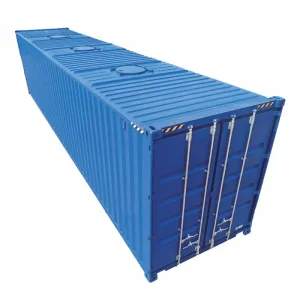
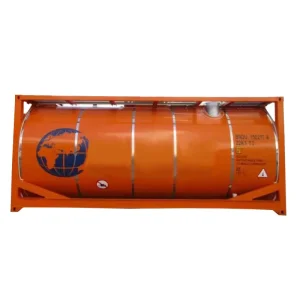
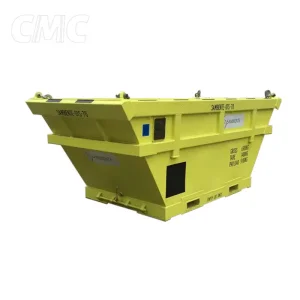
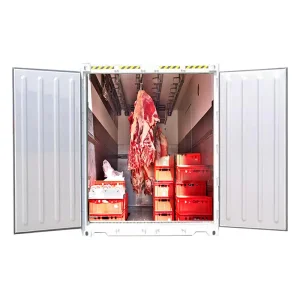
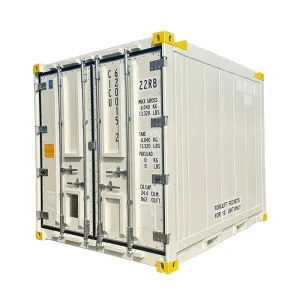
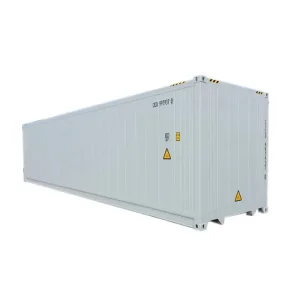
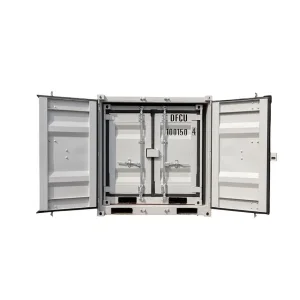
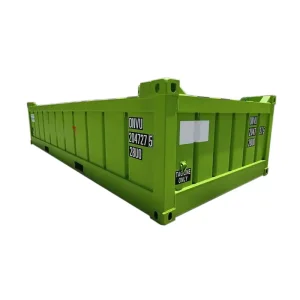
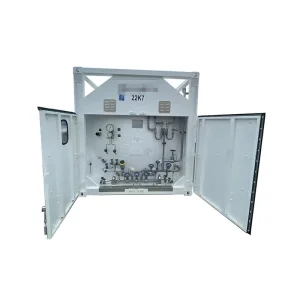
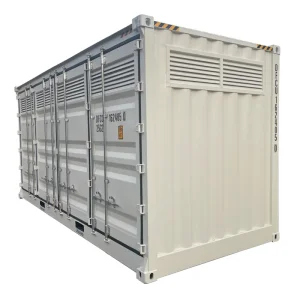
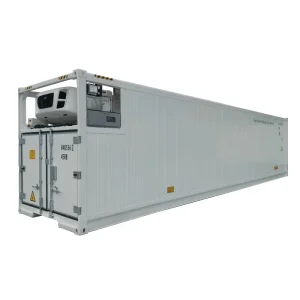
Broadening operational horizons with specialized offshore baskets, dangerous goods units, refrigerated modules, and cryogenic containment solutions.

Engage Our Offshore Containment Engineering Team
Whether you are executing a front-end engineering design (FEED) for deepwater drilling or seeking certified DNV 2.7-1 chemical tank container quotes, our technical engineering office provides rapid-turnaround solutions.
Technical Drawings & FEA
Request bespoke General Arrangement (GA) drawings, Finite Element Analysis (FEA) structural simulations, and chemical compatibility assessments tailored to your designated cargo UN numbers.
Manufacturing & Logistics Axis
Strategically positioned in Tianjin and Suzhou, within 100 km of primary container and heavy-lift seaports, optimizing inland logistics, pre-shipment inspections, and direct international carrier loading.
Quality Certification File
All containers are provided with DNV/BV certified Databooks containing EN 10204 3.1 material traceability, non-destructive test results, pressure vessel hydrotest certificates, and sling assembly test proofs.