Engineered High Cube & Multimodal Freight Containers
Precision-machined structural frames engineered from Corten-A weathering steel, certified by classification societies for cold-chain, hazardous chemicals, and specialized marine logistics.

Global HQ Container Macro Dynamics & Structural Economics
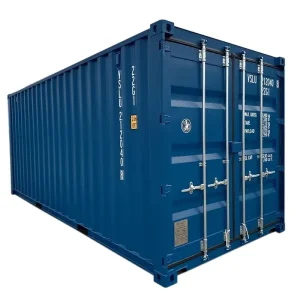
The strategic shift toward High Cube (9'6" / 2,896 mm exterior height) containerization represents an evolution in spatial efficiency, structural aerodynamics, and multimodal asset management across intercontinental trade routes.
Volumetric Densification Economics
High Cube units offer an internal volume increase from 67.7 m³ (standard 40GP) to 76.4 m³ (40HC)—a net expansion of roughly 12.8%. For high-cube light cargo, automotive KD assemblies, and retail e-commerce parcels, this additional vertical clearance optimizes cube utilization, reducing ocean freight expenditure per cubic meter by up to 9.2%.
Cold-Chain Reefer Architecture
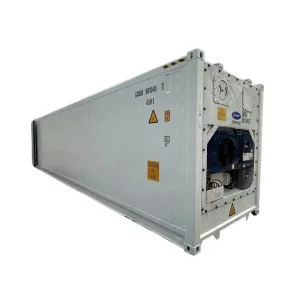
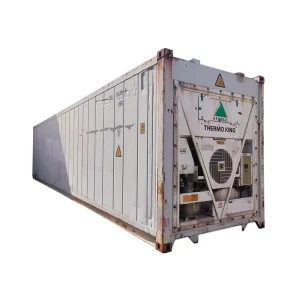
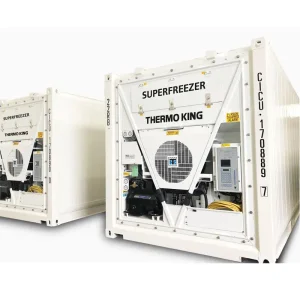
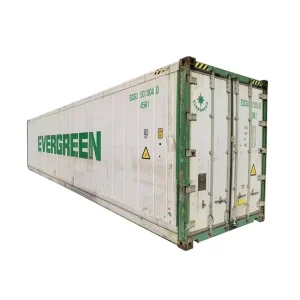
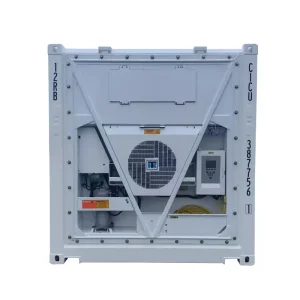
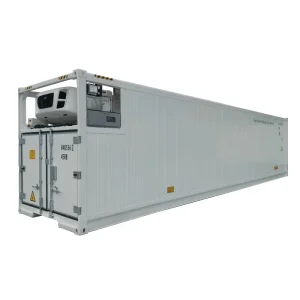
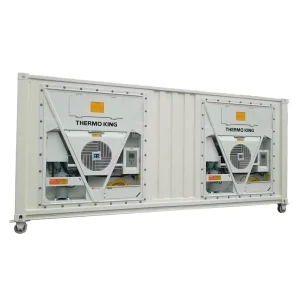
The deployment of 40HC reefer frames addresses the cubic displacement consumed by thick polyurethane insulation walls (50-70 mm) and floor T-bar ducting. By utilizing an HQ format, operators retain 67.6 m³ of usable chilled cargo volume, facilitating uniform airflow and temperature consistency (±0.25°C) across long-haul transit.
Intermodal Rail Corridor Synergy
Along the Belt and Road Eurasian railway corridors, 40ft and 45ft HQ containers withstand substantial dynamic vibration and longitudinal buffeting forces during flat-wagon humping. Modern ODM manufacturers engineer reinforced end-frames and door gaskets to meet strict UIC 592 and ISO 1496/1 intermodal fatigue criteria.
The Engineering Moat of Chinese ODM Hubs
Modern container manufacturing facilities in Tianjin and Suzhou leverage industrial clustering, vertically integrated steel rolling, and automated laser-guided assembly lines to achieve delivery timelines and mechanical tolerances unmatched worldwide.
Automated Robotic MIG Welding Lines
Our ODM partner workshops operate multi-axis industrial robots executing continuous submerged and metal inert gas (MIG) welding. Automated corrugation pressing and frame assembly eliminate thermal distortion, guaranteeing diagonal dimensional variances strictly under 3.0 mm across the complete 40-foot box frame.
Zinc-Rich Surface Finishing & Blasting
Automated shot-blasting machines treat every sheet of Corten steel to ISO Sa 2.5 cleanliness. Three-stage anti-corrosion coating systems incorporate zinc-rich epoxy primers, high-build epoxy intermediate coats, and acrylic/polyurethane topcoats, delivering dry film thickness (DFT) exceeding 120 microns to resist high-salinity oceanic environments.
Port-Proximate Staging Infrastructure
Operating from industrial manufacturing clusters within 100 kilometers of the deep-water ports of Tianjin (Xingang) and Shanghai/Taicang, factory operations drastically minimize inland haulage overheads, ensure rapid vessel berthing, and enable factory-gate container depot interchange under CSC safety plates.
Standard vs. High Cube Engineering Matrix
Direct structural and thermodynamic comparison between standard general-purpose boxes and high-cube architectural variations built under strict ISO 668 and ISO 1496 manufacturing standards.
| Dimensional / Performance Parameter | 20ft Standard GP | 40ft Standard GP | 40ft High Cube (40HC) | 40ft HC Reefer (40RH) |
|---|---|---|---|---|
| External Dimensions (L × W × H) | 6,058 × 2,438 × 2,591 mm | 12,192 × 2,438 × 2,591 mm | 12,192 × 2,438 × 2,896 mm | 12,192 × 2,438 × 2,896 mm |
| Internal Dimensions (L × W × H) | 5,898 × 2,352 × 2,393 mm | 12,032 × 2,352 × 2,393 mm | 12,032 × 2,352 × 2,698 mm | 11,583 × 2,290 × 2,550 mm |
| Door Opening (Width × Height) | 2,340 × 2,280 mm | 2,340 × 2,280 mm | 2,340 × 2,585 mm | 2,290 × 2,535 mm |
| Internal Cubic Capacity | 33.2 m³ (1,172 cu.ft) | 67.7 m³ (2,390 cu.ft) | 76.4 m³ (2,698 cu.ft) | 67.6 m³ (2,387 cu.ft) |
| Tare Weight (Nominal) | 2,230 kg (4,916 lbs) | 3,740 kg (8,245 lbs) | 3,900 kg (8,598 lbs) | 4,520 kg (9,965 lbs) |
| Max Payload Capacity | 28,250 kg (62,280 lbs) | 26,740 kg (58,951 lbs) | 30,100 kg (66,358 lbs) | 29,480 kg (64,992 lbs) |
| Base Flooring Spec | 28mm Marine Hardwood / Bamboo | 28mm Marine Hardwood / Bamboo | 28mm High-Density Bamboo Composite | Extruded Aluminum T-Bar Flooring |
| Structural Certifications | ISO 1496-1, CSC, BV, ABS | ISO 1496-1, CSC, BV, ABS | ISO 1496-1, CSC, BV, ABS, LR | ISO 1496-2, ATP, BV, DNV-GL |
Localized Engineering Solutions for Critical Operations
From extreme sub-zero railway operations across Northern Eurasia to high-salinity offshore lifting zones in the North Sea, HQ container engineering adapts to challenging mechanical thresholds.
Offshore Oil & Gas (DNV 2.7-1 / EN 12079)
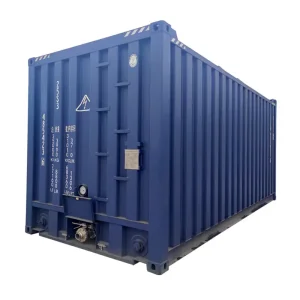
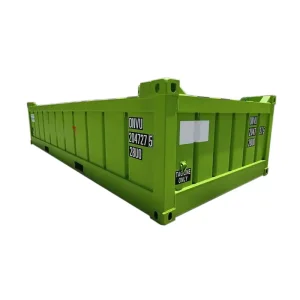
Rig-supply operations require specialized offshore containers, cargo baskets, and open-top mud-skips capable of surviving dynamic shock loads during offshore crane operations. Fitted with certified 4-leg wire rope lifting slings, tested corner pads, and low-temperature impact steel (-20°C charpy impact verified), these units protect critical drill tools and hazardous valving offshore.
Pharmaceutical & Deep-Freeze Logistics
Equipped with Carrier Transicold, Thermo King Magnum Plus, or Daikin LXE machinery, high-cube cold-chain containers provide tight temperature stability between -35°C and +30°C. For specialized biological reagents or high-end seafood, blast-freezer enclosures maintain continuous cooling loops with digital telematics, remote datalogging, and power-fail alert relays.
BESS & Modular Power Enclosures
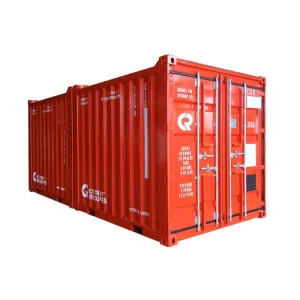
With the transition to green energy, 40HC structural shells are increasingly customized as Battery Energy Storage Systems (BESS) and modular generator houses. Factory modifications incorporate heavy internal fire-rated insulation panels, automated HVAC exhaust louver cutouts, internal cable tray bracketing, and explosion-relief roof hatches engineered according to NFPA 855 regulations.
Technical Sourcing & Quality Audit Standards
International freight forwarders, container leasing corporations, and industrial EPC contractors require standardized Factory Acceptance Tests (FAT) to ensure fleet longevity and regulatory compliance.
Mill Test Reports & Material Traceability
Sourcing verification requires complete heat trace certificates verifying SPA-H Corten steel chemical composition (Copper 0.25-0.55%, Chromium 0.30-1.25%, Nickel 0.65% max) to ensure atmospheric corrosion resistance. Corner castings must strictly conform to ISO 1161, verified by non-destructive ultrasonic and magnetic particle testing.
Static Load & Stacking Rigidity Tests
Standard qualification protocols execute vertical stacking load testing up to 86,400 kg per corner post (simulating 9-high fully laden ocean vessel cell-guide stacking). Transverse racking tests apply 150 kN forces to corner castings without permanent deformation, ensuring structural stability under high sea-state rolling motions.
Weather-Tightness & Light Infiltration Check
Every finished container undergoes high-pressure water jet testing (minimum nozzle pressure of 100 kPa from a distance of 1.5 meters) focused on door gaskets, roof-to-side-rail joints, and floor perimeter seals. Internal dark-room light leakage inspections guarantee complete hermetic sealing for dry freight preservation.
Frequently Asked Engineering & Procurement Questions
Direct technical resolutions for logistics directors, procurement engineers, and global project contractors procuring High Cube containers from Chinese manufacturing facilities.
What is the exact dimensional difference between a 40GP and a 40HC container?
Which steel grade is utilized for marine-grade container manufacturing?
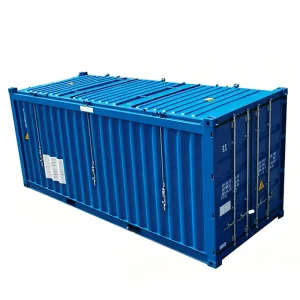
Can ODM factories produce customized door configurations (side-open, roll-up)?
What third-party classification certifications accompany the containers?
What refrigeration brands and power configurations are supported in reefer builds?
What are the lead times and minimum order quantities (MOQ) for custom ODM orders?
Liquid Tanks, Offshore Baskets & Certified Freight Equipment
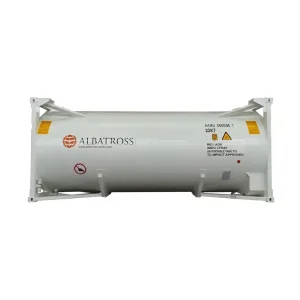
Complete your fleet procurement with our comprehensive range of ISO tank containers, certified offshore transport modules, and specialized heavy-freight configurations.