Engineered Intermodal & Specialized Marine Units
Explore certified modular solutions designed for precision vehicle stowage, intelligent temperature stabilization, bulk transport, and industrial prefab living deployed across international deep-sea lanes.
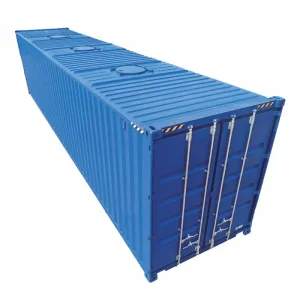

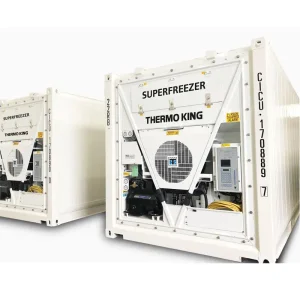
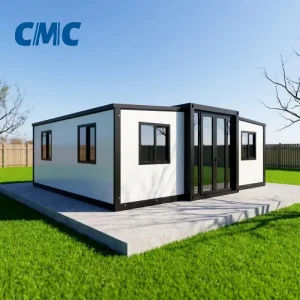
Global Intermodal Shipping & Industrial Marine Dynamics
The international freight environment has transitioned from generic dry-van commodity logistics to mission-critical, highly customized shipping solutions engineered for geopolitical resilience, carbon abatement, and specialized industrial transport.
IMO Decarbonization & Structural Lifecycle
With the International Maritime Organization targeting net-zero GHG emissions by 2050, vessel operators demand lighter, aerodynamic, and high-tensile containers. By integrating high-yield SPA-H Corten alloy, tare weights decrease without sacrificing stack racking limits (up to 84,000 kg racking resistance).
- Reduced fuel consumption on mega-containerships
- Eco-friendly waterborne zinc-rich primer matrix
- 100% recyclable structural steel profiles
Specialized Industrial & Offshore Demand
Offshore exploration, wind farm subsea logistics, and heavy mining infrastructure have outpaced standard ISO box capabilities. Marine units now mandate compliance with DNV 2.7-1 / EN 12079, incorporating integrated lifting lugs, offshore padeyes, and Charpy impact-tested structural welds capable of withstanding dynamic sea snatch-loads.
- Dynamic sling drop-testing down to -20°C ambient
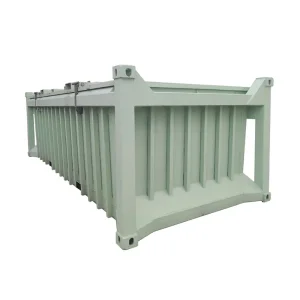
- Half-height open-top configurations for high-density ore
- Explosion-proof hazardous cargo classifications
Intelligent Multimodal Interoperability
The acceleration of cross-border rail corridors (e.g., Eurasian Rail Belt, NAFTA corridors) requires seamless transfer without restuffing. Marine containers have evolved into modular cargo vaults compatible with twist-lock railway chassis, ro-ro car-carrier racking, and road transport chassis without structural fatigue.
- TIR customs wire sealing integrity certified
- Standardized gooseneck tunnel design for low-bed haulage
- Floor deflection under 6mm at 7,260kg axle loads
China Factory Supply Chain Resilience & Manufacturing Velocity
Operational agility, deep raw material integration, and robotic manufacturing processes guarantee consistent dimensional precision, unmatched economies of scale, and lightning-fast ODM prototype-to-delivery cycles.
Vertical Metallurgical Integration
Direct pipeline agreements with top-tier steel foundries guarantee uninterrupted supplies of premium SPA-H weather-resistant Corten steel plates, corner castings, and roll-formed corrugated panels.
- Zero raw material bottleneck during global market surges
- Traceable Mill Test Certificates (MTC EN 10204 3.1)
Robotic Welding & C5-M Coating
Automated continuous submerged arc welding guarantees defect-free root penetration. Automated surface blasting to ISO 8501-1 Sa 2.5 prepares substrates for 3-layer heavy-duty zinc silicate/epoxy systems.
- ISO 12944 C5-M marine extreme corrosion certification
- Total Dry Film Thickness (DFT) calibrated to ≥ 200μm
Port Proximity (Tianjin & Suzhou)
Strategic manufacturing hubs positioned just 100 km from major container transshipment terminals drastically reduce drayage costs, eliminating empty positioning delays and port storage surcharges.
- Same-week vessel gate-in and customs clearance
- Direct feeder connection to international trunk routes
Agile CAD/FEA ODM Customization
Our in-house design engineering department executes rigorous 3D Finite Element Analysis (FEA) to simulate dynamic wave slam, cargo point-load stress, and thermal leakage prior to cutting steel.
- Drawings stamped within 72 hours of inquiry
- Rapid prototype turnaround for pilot batch trials
Localized Applications & Engineered Working Scenarios
ODM marine containers transcend ocean freight. Our custom containers are engineered to perform under extreme temperature differentials, violent offshore dynamics, and rapid-turnaround inland logistical hubs.
Cross-Border Intermodal Rail & Landbridge
Navigating rough trans-Siberian routes or North American intermodal networks requires extreme shock absorption. Units feature reinforced 4.0mm Corten bottom side rails, heavy-duty forklift pockets, and specialized corner castings tested to exceed ISO dynamic acceleration standards.
- Continuous operating temperature tolerance: -40°C to +70°C
- Anti-rack door hardware prevents seal fatigue during rail shunt impacts
Offshore Exploration & Subsea Support
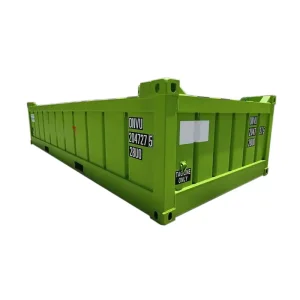
Supplying North Sea or Gulf of Guinea drilling platforms demands containers capable of surviving open-sea deck wave slamming. Custom offshore half-height baskets and dry units carry high-density drill pipe, drill bits, and specialized subsea instrumentation under harsh maritime conditions.
- Certified to DNV 2.7-1 / EN 12079 / IMO MSC/Circ.860
- Equipped with 4-leg wire rope lifting slings and safety shackles
Pharma & High-Value Perishable Cold Chains
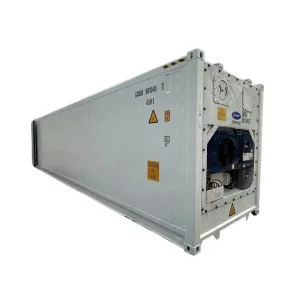
Operating across equatorial routes requires unyielding temperature consistency. Our reefer builds integrate Carrier Transicold, Daikin, or Thermo King machinery into high-cube shells with microcellular polyurethane foam insulation and stainless steel food-grade linings.
- Temperature control range: -35°C to +30°C within ±0.25°C stability
- T-floor airflow profiles maximize static pressure circulation
Automotive Finished-Vehicle & KD Transport
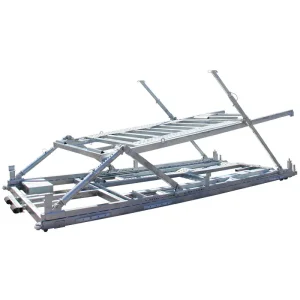
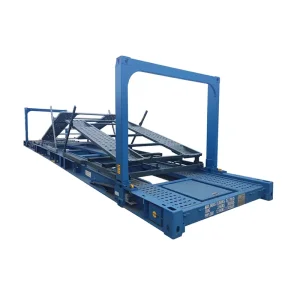
Replacing traditional Ro-Ro vessels with containerized car-carrier racks reduces localized handling damage and port transit delays. Removable or built-in multi-tier rack systems safely secure SUVs, EVs, and sedans in standard 20ft/40ft high cube envelopes.
- Integrated hydraulic and mechanical wheel-chock locking tracks
- Maximizes container space utilization to 3–4 automobiles per 40HC
Containerized BESS & Mobile Data Centers
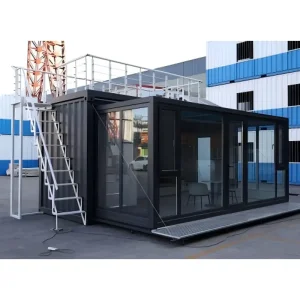
Renewable energy expansion requires factory-tested Battery Energy Storage Systems (BESS). Marine container shells are structurally modified with internal HVAC ducting, explosion relief vents, fire-rated rock wool insulation, and cable penetrations.
- Tested to ISO 1496-1 full-gross rating with heavy battery racks
- Custom IP55 / IP65 water-tight seal engineering
Engineering Specifications & Structural Tolerances
Comparative baseline data for standard, specialized, and offshore shipping containers engineered to Bureau Veritas (BV) and DNV-GL classification parameters.
| Container Classification | Structural Metallurgy | External Dimensions (L × W × H) | Internal Volume | Max Gross Mass (MGM) | Thermal / Load Baseline |
|---|---|---|---|---|---|
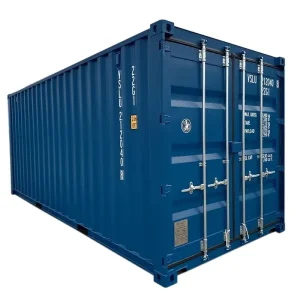
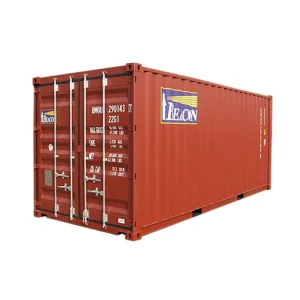
| 20ft Standard ISO Dry (20GP) | SPA-H Corten Steel | 6,058 × 2,438 × 2,591 mm | 33.2 m³ (1,172 cu.ft) | 30,480 kg (67,200 lbs) | ISO 1496 floor test: 7,260 kg axle rating |
| 40ft High Cube Dry (40HC) | SPA-H Corten Steel | 12,192 × 2,438 × 2,896 mm | 76.3 m³ (2,694 cu.ft) | 32,500 kg (71,650 lbs) | 9-high stack racking proof: 86,400 kg/post |
| 40ft High Cube Reefer (40RH) | SUS304 Liner / MG Corten | 12,192 × 2,438 × 2,896 mm | 67.6 m³ (2,387 cu.ft) | 34,000 kg (74,950 lbs) | U-value: ≤ 0.38 W/(m²·K), Cyclopentane PUR |
| DNV Offshore Half-Height (Open Top) | S355NL / S355J2 Marine Plate | 6,058 × 2,438 × 1,280 mm | 14.8 m³ (522 cu.ft) | 18,000 kg (39,680 lbs) | DNV 2.7-1 dynamic lift & drop certified (-20°C) |
| 20ft Automotive Carrier Special | Reinforced Corten & Q345B | 6,058 × 2,438 × 2,896 mm | 37.4 m³ (1,320 cu.ft) | 30,480 kg (67,200 lbs) | Integrated modular hydraulic automotive rack |
Global Compliance Assurance & Field Support
Sourcing container assets demands absolute legal, maritime, and safety compliance across every trade territory. Every container unit manufactured in our facilities leaves with certified classification credentials.
CSC Safety Approval Plating
Every dry, reefer, and open-top box is stamped with an anti-corrosion stainless steel CSC (International Convention for Safe Containers) Plate, validating maximum gross weight, allowable stacking weight (86,400 kg), and transverse racking test values.
- Direct sign-off by Bureau Veritas (BV) or Lloyd's Register (LR)
- Guarantees instant clearance through international container terminals
DNV 2.7-1 / EN 12079 Offshore Protocol
Critical for oilfield services, offshore wind development, and subsea lifting. Manufactured using low-temperature impact resistant steels with magnetic particle inspection (MPI) and ultrasonic testing (UT) performed across all load-bearing padeyes.
- Full structural design review verified by DNV classification societies
- Accompanied by certified high-grade wire rope lifting sling assemblies
Customs TIR & UIC Intermodal Certifications
To eliminate border delays across transcontinental routes, our container seals and lock boxes conform to TIR Customs Convention standards, ensuring that secure customs seals prevent unauthorized cargo access during multimodal transit.
- UIC 592 homologation for European rail network passage
- Heavy-duty anti-cut lock-box enclosures fitted as standard
Technical Roadmap & Next-Generation Engineering
The intermodal shipping sector is rapidly digitizing. Our long-term R&D trajectory integrates connected telematics, composite materials, and robotic lean production.
IoT & Satellite Telemetry
Standardizing low-profile solar-powered LTE-M/NB-IoT trackers directly inside reefer and dry boxes for 24/7 autonomous monitoring of cargo temperature, humidity, door events, and geographic location.
Thermoplastic Composites
Deploying lightweight carbon-reinforced floor panels and continuous glass-fiber reinforced panels (CFRTP) to replace traditional hardwood plywood, reducing tare weight by 14% while halting floor fungal contamination.
Zero-Carbon Metallurgy
Transitioning to certified green steel fabricated using hydrogen-direct reduction (H-DRI) processes, cutting embodied structural carbon by up to 60% to support ESG carbon accounting for shipping fleets.
Autonomous Fleet Mesh
Integrating decentralized short-range mesh networking between adjacent maritime containers on cargo vessels to autonomously report structural payload shifts, shock spikes, and localized temperature anomalies directly to bridge navigation.
Frequently Asked Questions on Marine Container Export & Customization
Definitive answers on custom dimensions, classification protocols, refrigeration machinery, and export logistics for procurement executives and maritime engineers.
Specialized Freight, Offshore Platforms & Heavy-Duty Equipment
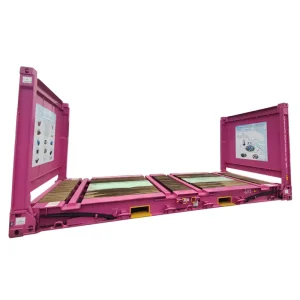
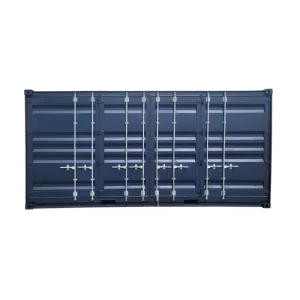
Explore certified platform flat-racks, high-cube offshore ore units, customized side-access dry containers, and multi-modal transport equipment built for critical industrial deployments.