Featured Offshore & Specialty Logistics Fleet
Browse our factory-direct OEM production lineup engineered for offshore energy assets, deep-freeze cold chains, and multi-modal heavy transport.
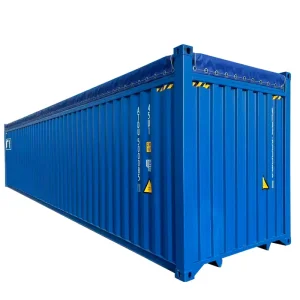
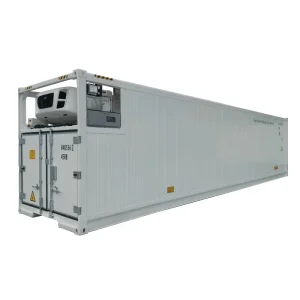
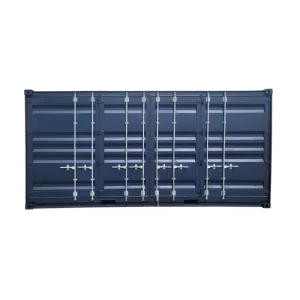
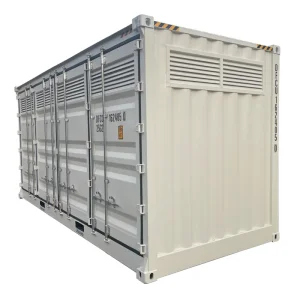
Offshore Dynamics: The Physics of DNV 2.7-1 Compliance
Understanding why standard ISO shipping containers fail catastrophic offshore hoist maneuvers, and how specialized OEM metallurgy protects multi-million dollar operational payloads.
Dynamic Impact & Wave Loading
Unlike standard static ISO shipping boxes that rest placidly inside cellular vessel guides, DNV 2.7-1 CCUs face extreme wave impacts, aggressive crane snatch loads, and continuous heave accelerations exceeding 3.0g during platform supply transfers in sea states up to 6 meters.
Charpy V-Notch Toughness (-20°C / -40°C)
Arctic and sub-zero offshore operations demand micro-alloyed structural steels (e.g., S355NL, S355ML). Our certified metallurgical chain guarantees Charpy V-notch impact toughness exceeding 27 Joules at -20°C or -40°C to permanently prevent catastrophic brittle fractures under shock load.
Pad Eyes & Integrated Rigging
Pad eyes are not afterthoughts welded to corrugated sheet; they are fully penetrated through-welded structural plates aligned with primary corner posts. Every batch is 100% Non-Destructive Tested (NDT) via Magnetic Particle Inspection (MPI) and Ultrasonic testing (UT).
Structural Engineering Rule: DNVGL-ST-E271 (Formerly DNV 2.7-1) vs. Standard ISO 1496
Standard ISO container corner castings are optimized for twist-lock spreaders in calm inland or container ship cell environments. A DNV offshore container is explicitly designed without fragile cast lock points on top, utilizing reinforced pad eyes, high-tensile shackles, and dedicated 4-leg wire rope slings to manage violent open-sea vessel-to-rig transfers.
Global Macro-Solutions: The Strategic Role of DNV CCUs in Deepwater & Green Transition
The offshore energy sector is undergoing a massive structural transformation. As offshore exploration ventures push into ultra-deepwater environments in the North Sea, Gulf of Mexico, West Africa, and Australia's Northwest Shelf—alongside the massive deployment of floating offshore wind (FOW) platforms—the demand for specialized dynamic load units has experienced unprecedented growth.
Procurement teams within major energy operators (such as Shell, Equinor, BP, and ExxonMobil) and tier-1 EPC contractors no longer view shipping containers as simple boxes. They are categorized as mission-critical Cargo Carrying Units (CCUs) that must guarantee zero structural failure. A dropped container or shearing pad eye in open ocean conditions represents not merely cargo loss, but multi-million-dollar subsea infrastructure wreckage and severe environmental liability.
Comparison Matrix: ISO Intermodal vs. DNV Offshore Containers
| Engineering Attribute | Standard ISO Intermodal (ISO 1496/668) | Offshore DNV CCU (DNV 2.7-1 / EN 12079 / ISO 10855) |
|---|---|---|
| Primary Structural Steel | Cort-Ten A / Weathering Steel (Q235/Q345) | High-Yield Killed Steel (S355NL / S355ML) with Guaranteed Impact Z-Testing |
| Design Operational Temperature | -20°C to +40°C (General atmospheric) | -20°C (Standard Offshore) or -40°C (Extreme Arctic / North Sea) with Charpy ≥ 27J |
| Dynamic Acceleration Factor | Static stacking (~1.0g – 1.2g) | Dynamic hoist factoring between 1.5g and 3.0g based on gross tare mass |
| Lifting Mechanism | Top / Bottom ISO Corner Castings via Spreader | Integral structural pad eyes engineered for tested 4-leg wire rope slings |
| Quality Assurance & NDT | Sample factory dimensional & visual checking | 100% 3rd-party surveyor witnessed (DNV/BV/Lloyds), 100% NDT on lifting welds |
| Protective Coating System | Standard marine 3-coat system (120-150 μm) | NORSOK M-501 System 1 marine coating (280-320 μm) for C5M corrosive class |
Localized Global Support & Rigorous Regulatory Defense
Operating a fleet of offshore containers requires seamless international compliance. CIMIC guarantees that every custom OEM build leaves the factory with a comprehensive Manufacturing Data Report (MDR). This technical dossier includes Mill Test Certificates (MTC 3.1) tracing every structural plate back to the blast furnace, Welding Procedure Specification (WPS) and Welder Qualification Records (WPQR) certified to ASME IX / AWS D1.1 / ISO 15614-1, along with individual DNV Class Type Approval certificates.
Whether deploying to the high-salinity waters of the Persian Gulf, the sub-zero squalls of the Barents Sea, or equatorial offshore fields off Brazil, our containers ensure instant local port authority clearance, eliminating costly vessel demurrages.
Mission-Critical Offshore Operating Arenas
Tailored structural profiles engineered for extreme marine logistics, specialized oilfield servicing, and subsea exploration.
Drill Pipe & Casing Baskets
Longitudinal low-profile open-mesh baskets (up to 70ft) built with heavy-duty lashing points and anti-roll partitions to transport heavy tubulars, drill collars, and downhole tools from shore supply bases to drillships.
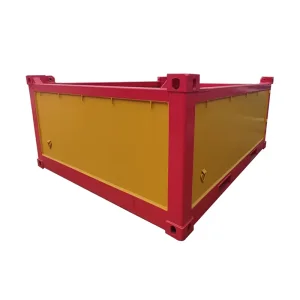
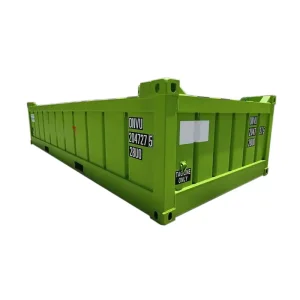
Half-Height Mud & Cutting Bins
Designed for extreme bulk density contents such as drilling cuttings, gravel, metal waste, and minerals. Equipped with internal tie-downs, certified drainage valves, and removable tarpaulin covers.
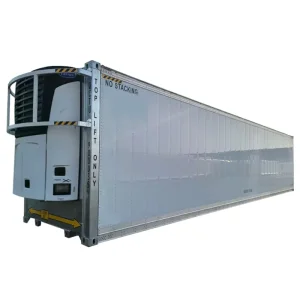
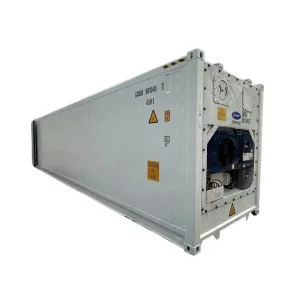
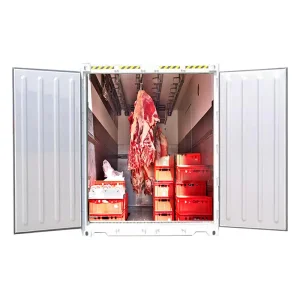
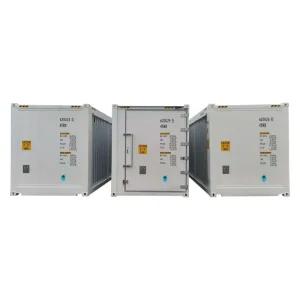
Offshore Reefer Units
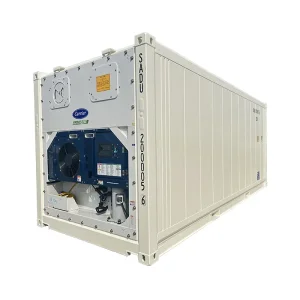
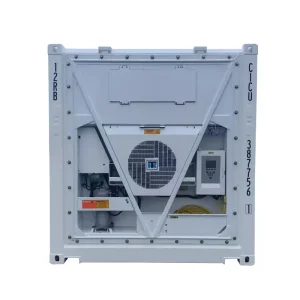
Explosion-safe, ATEX/IECEx Zone 2 compliant refrigerated CCUs for critical temperature catering, provisions, biological specimens, or hazardous chemicals, fitted with Carrier, Daikin, or Thermo King powerpacks.
Modular Rig Workstations (A60)
Turnkey offshore laboratory, MWD cabin, ROV control room, or pressurized office modules certified to DNV 2.7-2 and IMO SOLAS A60 fire rating standards for hazardous Zone 1 / Zone 2 environments.
Technological Roadmap: Next-Gen Autonomous Offshore Assets
Integrating IoT telemetry, fatigue-life analytics, and green metallurgy into standard offshore production lines.
Embedded IoT & Dynamic Load Telemetry
Embedding low-power satellite sensors and 3-axis load cell strain gauges inside primary structural members to record real-time dynamic g-forces, ocean swell stresses, and geolocation during offshore transit.
Predictive Fatigue Life Algorithms
Transitioning fleet asset management from reactive 12-month visual slings inspections to predictive finite element digital twins, calculating remaining fatigue life based on historical sea states encountered.
Ultra-Low VOC & Eco-Coatings
Deploying next-generation 100% solids solvent-free polyaspartic coatings that slash carbon manufacturing footprints by 42% while exceeding NORSOK M-501 4,000-hour cyclic salt fog test requirements.
Traceable MTC 3.1 Steels
Dynamic Load Tolerance
Arctic Rating Verification
Years Continuous Manufacturing
DNV Offshore Containers: Comprehensive FAQ
Direct technical and procurement intelligence to assist technical directors and maritime logistics managers in selecting compliant equipment.
While often used interchangeably by commercial buyers, DNVGL-ST-E271 (formerly DNV 2.7-1) originated from Det Norske Veritas as a classification society rulebook. EN 12079 is the European regional standard, and ISO 10855 is the unified international harmonization standard. Containers engineered by CIMIC simultaneously conform to all three standards, ensuring worldwide cross-border acceptance without regulatory rework.
Standard ISO containers are engineered for static stacking on commercial container vessels and handled via automated spreaders. Under offshore sea conditions, lifting involves snatch acceleration forces where vessel heaving causes dynamic impact spikes. Standard ISO corner blocks and corrugated side walls are prone to tearing and brittle fracture at low temperatures, making dynamic offshore transfers under ISO rules strictly illegal under maritime safety laws.
Every custom container unit includes a comprehensive Manufacturing Data Report (MDR), including Third-Party Survey Inspection Certificates (signed by DNV, BV, or LR), Charpy V-notch material test certificates (MTC 3.1) for all structural members, Nondestructive Testing (NDT) records for pad eyes, 2-point and 4-point proof load test verification logs, and paint thickness dry-film reports according to NORSOK standards.
Yes. As a full-spectrum OEM/ODM manufacturer, we engineer custom internal systems including ATEX/IECEx Zone 1 or Zone 2 compliant wiring, explosion-proof HVAC systems, internal tie-down track systems, gas detection alarms, fire extinguishing containment, and heavy machinery support brackets directly verified by class surveyors during production.
DNV 2.7-1 requires designated wire rope slings, master links, quad assemblies, and bow shackles designed with enhanced safety factors (often exceeding 5:1 or 6:1 depending on gross rating). We supply pre-rigged, proof-tested, and certified 4-leg offshore wire rope slings matched precisely to the pad eye angles and center-of-gravity load limits of each unit.
For established standard DNV dimensions (10ft/20ft CCUs, baskets, toolboxes), baseline manufacturing cycles run 4 to 6 weeks from structural drawing sign-off to 3rd-party stamp approval. For highly engineered custom modules (A60 cabins, specialized liquid containers, multi-compartment reefers), typical lead time spans 6 to 9 weeks including prototype load testing.
Explore Specialized Intermodal & Marine Storage Units
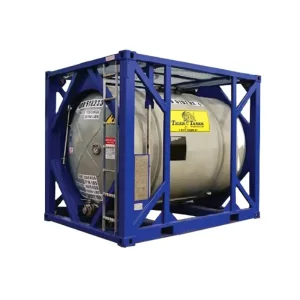
Browse high-durability cold storage, chemical tank containers, and heavy industrial offshore transport solutions.