
High-Spec Cargo Handling & Special Door Openings
Explore our top verified industrial ISO intermodal units, ranging from side-access hazardous storage to cryogenic ISO tanks and offshore cold chain solutions.
The Evolution of Open Shipping Containers in Modern Logistics
From standard closed boxes to hyper-accessible intermodal engineering: why open configurations dominate specialized maritime freight.
In global multi-modal supply chains, the standard closed ISO container presents significant bottlenecks when handling out-of-gauge (OOG) machinery, heavy manufacturing sub-assemblies, bulk minerals, or rapid-loading palletized goods. Over the past decade, the international freight sector has witnessed a profound structural pivot toward specialized "Open" shipping container architecture. This classification encompasses Open-Top (OT), Open-Side / Full-Side Access (OS), Open-Wall, and Flat-Rack configurations.
Originally conceived as niche solutions for oversized industrial components, open-format containers have transitioned into high-demand assets across international trade corridors. The driver behind this paradigm shift is simple: turnaround time efficiency and handling safety. By eliminating the single-end barrier of conventional double swing doors, side-open and open-top structures allow overhead gantry cranes, high-capacity reach stackers, and lateral multi-forklift teams to load, lash, and secure complex freight in a fraction of standard docking times.
Bi-Directional Side Access
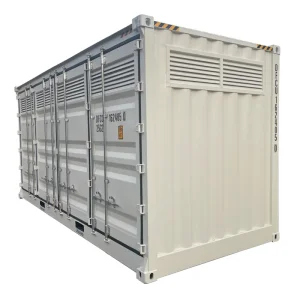
Side-opening containers feature full bifold or multi-leaf door assemblies extending 20ft or 40ft along the container flank. This structure allows seamless ground loading without needing specialized ramp docking systems.
Removable Top Headers
Hard-top and soft-top open models integrate swinging or completely detachable rear and front headers, preventing height restrictions when loading crane-suspended mining assemblies or heavy industrial engines.
Dynamic High-Cube Integration
Modern open container designs standardize on 9'6" High Cube geometry, yielding significant internal cubic capacity gains that compensate for the slight reinforcement steel weight increases required along structural roof rails.
China Factory 4.0: Supply Chain Resilience & Metallurgical Superiority
Why Chinese manufacturing hubs in Tianjin and the Yangtze River Delta produce over 90% of the world's specialized intermodal container fleet.
The manufacturing of specialized open shipping containers is substantially more demanding than producing standard dry cargo vans. When removing continuous corrugated sidewalls or longitudinal roof panels, standard tension distribution is lost. Chinese container manufacturing centers, notably clusters in Tianjin and Suzhou, have overcome these structural challenges by implementing Industry 4.0 automated production ecosystems.
Through the integration of SPA-H Corten atmospheric corrosion-resistant steel, automated underwater plasma cutting, dual-wire robotic submerged arc welding, and eco-friendly waterborne multi-coat zinc silicates, Chinese factories deliver uncompromised ISO 1496 and CSC (Convention for Safe Containers) safety coefficients.
SPA-H Corten Metallurgy
Every structural profile, upper side sill, corner post, and corner casting utilizes certified Corten-A weathering steel, generating a stable oxide passivation patina that prevents maritime rust penetration.
Automated Weld Precision
Robotic gantry welders continuously trace corner fittings, lower sill junctions, and hinge lines to guarantee zero micro-fractures under dynamic 30,480 kg gross stack loads.
3-Coat Marine Finishing
Automated shot blasting to ISO Sa 2.5 standard followed by zinc-rich epoxy primer, intermediate polyamide barrier, and top polyurethane coating with dry film thickness (DFT) exceeding 120 microns.
Logistical Port Proximity
Direct freight corridors located less than 100km from Tianjin Port and Shanghai/Taicang maritime terminals minimize overland transfer costs, enabling swift delivery onto container carriers.
Industrial Heritage Established
Distance to Primary Deepwater Ports
Standard ISO Gross Mass Rating
CSC / BV Inspection Compliance
Standardized ISO & Custom Open Container Architecture
Comprehensive comparative engineering parameters for naval architects, procurement specialists, and intermodal freight directors.
| Classification Code | Door / Roof Opening Type | Ext. Dimensions (L × W × H) | Tare Weight (±3%) | Max Payload Capacity | Key Structural Characteristic |
|---|---|---|---|---|---|
| 20' Open Side (20OS) | Full Side Bifold + End Doors | 6,058 × 2,438 × 2,591 mm | 3,180 kg | 27,300 kg | Reinforced bottom side rail; removable intermediate center post |
| 40' High Cube OS (40HCOS) | Full Flank Continuous Swing | 12,192 × 2,438 × 2,896 mm | 5,820 kg | 26,660 kg | Twin high-tensile top longitudinal box-section girders |
| 20' Hard Top Open (20HT) | Removable Steel Roof + Swing Header | 6,058 × 2,438 × 2,591 mm | 2,750 kg | 27,730 kg | Heavy-duty cam locks; crane lifting points on roof panel |
| 40' Soft Top Open (40OT) | Tarpaulin Cover + Swivel Header | 12,192 × 2,438 × 2,591 mm | 4,150 kg | 26,330 kg | Removable galvanized roof bows; TIR-compliant seal cord |
| 20' Half-Height Open | Open Top / Drop-Down Gate | 6,058 × 2,438 × 1,295 mm | 2,450 kg | 28,030 kg | Ultra-low center of gravity engineered for iron ore & concentrates |
| 20' DNV 2.7-1 Offshore OS | Sealed Side Double Doors | 6,058 × 2,438 × 2,743 mm | 4,300 kg | 10,700 kg | Impact certified at -20°C; 4-part wire rope lifting sling lugs |
Note on Structural Engineering Integrity: When selecting open-side container types (20OS / 40HCOS), end-users must consider the structural flex characteristics under dynamic rail shunting or rough maritime sea state roll angles. CIMIC designs incorporate heavier bottom sill box sections (e.g., 250×150×8mm RHS) to substitute for the absent vertical corrugation shear strength, verifying full compliance with ISO 1496-1 transverse racking and longitudinal bending criteria.
5-Stage OEM/ODM Manufacturing & Global Delivery Protocol
A clear engineering workflow ensuring drawing conformity, structural verification, and seamless customs validation.
Technical Brief & Load Audit
Evaluation of dynamic payload, cargo lashing points, center-of-gravity offsets, and extreme ambient operating temperatures.
Finite Element Analysis (FEA)
CAD drawing generation and 3D FEA stress simulation to confirm that customized door spans withstand heavy cargo stacking stresses.
Precision Robotic Fabrication
Automated cutting, jig pressing, welding, shot-blasting, and multi-layer marine-grade coating application under ISO 9001 supervision.
Witness QC Testing & CSC Approval
Third-party classification society survey (BV / LR / ABS / DNV) including rain-tightness tests and dynamic floor deflection checks.
Port Dispatch & SOC Delivery
Expedited delivery to Tianjin or Shanghai container terminals, issued as Shipper Owned Containers (SOC) for immediate global sailing.
Where Specialized Open Containers Drive Industrial Efficiency
Across global mining corridors, offshore wind platforms, and renewable energy storage projects, custom open containers resolve critical logistic challenges.
Heavy Machinery & Industrial Assemblies
Turbines, track excavators, power transformers, and long oilfield tubulars cannot be stuffed through standard end doors. Side-open and open-top containers enable swift top-down crane drops and lateral forklift maneuvers, cutting labor and port handling costs by over 40%.
Modular Battery Energy Storage Systems (BESS)
Next-generation solar and wind utility storage installations leverage custom open-side chassis. Technicians gain immediate unhindered access to modular lithium iron phosphate (LiFePO4) battery racks, HVAC cooling arrays, and fire suppression plumbing manifolds.
Bulk Ore & Concentrate Mining Logistics
Half-height open-top containers engineered from abrasive-resistant high-tensile steel allow direct dumping of copper, iron, and nickel concentrates at the mine face, transfer by rail car, and 360-degree rotation inversion at discharge port bulk facilities.
Offshore Oil & Gas Supply Chains
Certified strictly under DNV GL 2.7-1 / EN 12079, these open-top and basket units withstand harsh marine swells and aggressive offshore dynamic lifting, supplying drilling rigs with replacement valves, casings, and subsea tools.
Architectural & Emergency Deployments
From pop-up mobile retail, disaster field hospitals, and military command outposts to mobile workshops, full side-opening containers allow instant interior integration, glass curtain wall retrofitting, and hydraulic fold-out stage extensions.
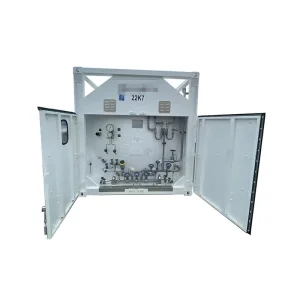
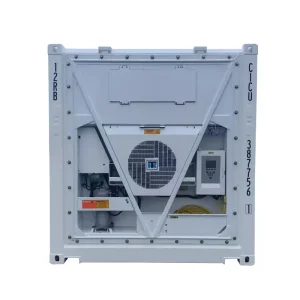
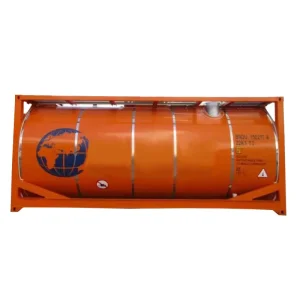
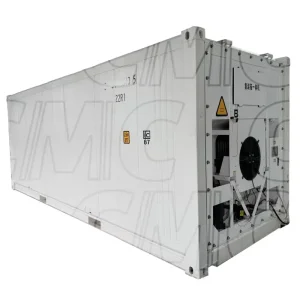
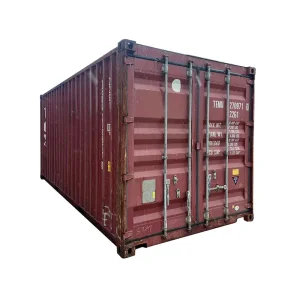
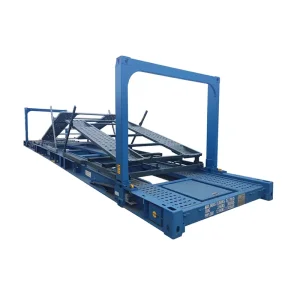
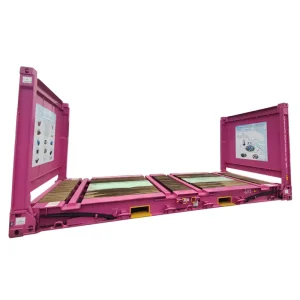
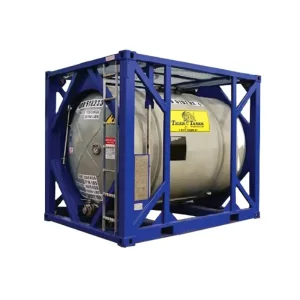
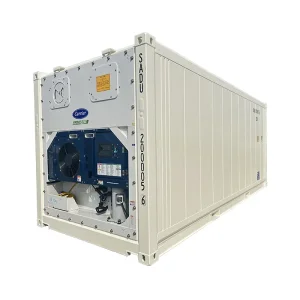
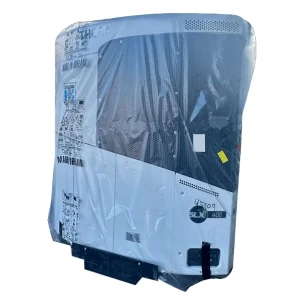
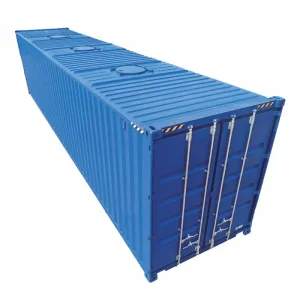
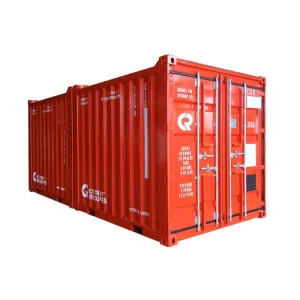
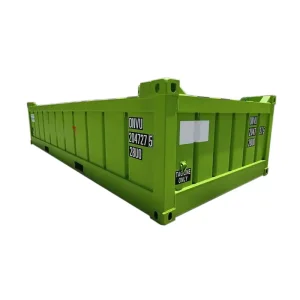
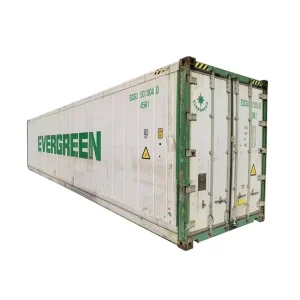
Heavy-Duty Platform Frames, Bulk, & DNV Offshore Certified Containers
Industrial models built for tough service environments: mineral transport, mobile power generation, offshore supply, and high-cube refrigeration.
Frequently Asked Questions: Sourcing Open Containers from China
Clear answers covering international certifications, structural options, lead times, and customs clearance procedures.
What engineering distinctions exist between standard dry boxes and open-side containers?
Standard ISO containers rely heavily on the continuous corrugated steel side walls to absorb longitudinal bending moments and shear stresses. When an open-side container replaces these walls with multi-folding double doors or a continuous side opening, that structural shear strength is lost. To maintain strict ISO 1496 racking and stacking safety limits (up to 216,000 kg for 9-high container ship stacks), Chinese manufacturers use significantly heavier bottom side rails (hollow structural sections up to 8–10mm thick), reinforced corner posts, and continuous top headers made of high-tensile SPA-H Corten steel. This design ensures that fully laden units maintain structural rigidity during heavy sea states or rough rail transit.
Are Chinese-manufactured open-side and open-top containers certified for immediate international maritime shipment?
Yes. All newly fabricated containers leave the factory with a valid CSC (International Convention for Safe Containers) safety approval plate and a TIR customs approval plate. They undergo rigorous third-party surveys conducted by international classification societies such as Bureau Veritas (BV), Lloyd's Register (LR), the American Bureau of Shipping (ABS), or China Classification Society (CCS). The approved CSC plate is stamped with stack load, transverse racking test forces, tare weight, payload, and factory identification details, allowing immediate global service as a certified Shipper Owned Container (SOC).
What are the key differences between Soft-Top and Hard-Top Open-Top containers?
A Soft-Top Open-Top uses heavy-duty, waterproof PVC tarpaulin sheeting (typically 650g/m² to 900g/m²) secured by removable galvanized steel roof bows and a TIR-approved sealing cord. This design is lightweight and allows overhead cranes to load oversized freight with slightly protruding dimensions.
A Hard-Top Open-Top features a rigid, fully detachable pressed Corten steel roof panel secured with internal twist locks or heavy cam-action latches. The hard-top can be lifted off by forklift or gantry crane. When locked in place, it provides identical anti-theft security, weatherproofing, and fire protection to a standard dry van, while retaining the capability to handle out-of-gauge overhead cargo when required.
How do factories prevent water ingress along long, multi-leaf side opening doors?
Water-tight integrity is critical for side-opening units. Factory engineering teams utilize multi-lip vulcanized EPDM rubber gaskets fitted into precision-extruded aluminum or stainless steel retainer channels. In addition, deep drainage channels and water deflector eaves are laser-welded along the full length of the upper side header. Before receiving class approval, every production unit undergoes a pressurized dynamic water spray test (ISO 1496-1 rain tightness audit) with nozzles delivering water at 100 kPa over all door seams for at least 15 minutes, verifying that zero moisture penetrates the interior cargo space.
What is the typical Minimum Order Quantity (MOQ) and production lead time for customized builds?
For standard dimensions (e.g., 20ft Full Side Open or 40ft High Cube Side Open), factories can support small trial runs starting from 1 to 5 units, as existing jig tooling is readily available. For highly customized engineering builds—such as non-standard heights, specialized cable access ports, integrated electrical bus duct openings, or reinforced battery flooring—the ideal economic production batch is 10 to 20 units. Lead times typically range between 25 and 45 calendar days following formal CAD engineering drawing approval, depending on steel rolling schedules and classification society witnessing calendars.
How do open containers maintain security and anti-theft integrity during long transit routes?
To prevent unauthorized access across lengthy door lines, every individual swing leaf is secured with heavy-duty forged Corten steel locking bars, high-security cam retainers, and integrated anti-theft lock boxes (puck lock shrouds). Lock rods feature tamper-proof bush retainers that cannot be unbolted from the exterior. For customs transit, all locking gear meets international TIR guidelines, allowing customs agencies to secure the container using a single high-tensile bolt seal across all locking bars.
Can open shipping containers be modified for Battery Energy Storage Systems (BESS) or mobile substations?
Yes, this is currently one of our fastest-growing manufacturing categories. Open-side architectures can be engineered specifically for modular BESS housing. Modifications include fire-rated rock wool or polyurethane insulated inner panels, structural sub-flooring engineered to handle high point-load battery racks, integrated roof pressure relief hatches, laser-cut explosion venting grilles, internal cable tray fixtures, and certified IP56 or IP65 side-opening access doors with emergency push-bar breakout hardware.
What logistics advantages stem from factory locations near Tianjin and Suzhou?
Our manufacturing and maintenance facilities in Tianjin and Suzhou are located within 100 kilometers of northern China's largest maritime hub (Tianjin Port / Xingang) and eastern China's container hubs (Shanghai Port / Taicang Port). This close proximity reduces inland road haulage costs, lowers pre-carriage transit risks, and provides immediate access to major international liner services departing weekly for North America, Europe, Australia, Africa, and Latin America.