
Precision Structural & Logistics Hardware Fleet
Direct manufacturer deployment of certified intermodal frames, thermal insulated shells, and heavy-duty baseline modular container housings adapted for industrial vertical farming retrofits.

Engineering Autonomous Biomes: Industrial CEA Container Architecture
How precision container manufacturing transforms Corten steel intermodal envelopes into bioscecure, hyper-productive micro-farms resistant to severe environmental extremes.
The Paradigm Shift from Open Field to Modular Agritech Enclosures
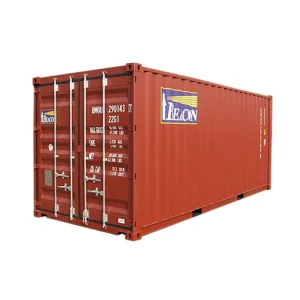
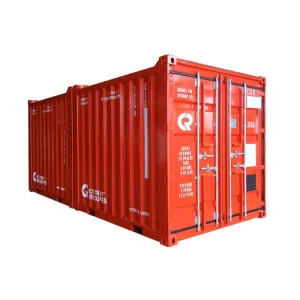
Global food supply chains, pharmaceutical botanical cultivation, and high-value seedling programs are increasingly vulnerable to land degradation, water shortages, unpredictable microclimates, and geopolitical supply ruptures. The industrialized plant cultivation container represents the pinnacle of Controlled Environment Agriculture (CEA). By packaging closed-loop hydroponic, aeroponic, or substrate fertigation setups inside standardized ISO structural shells (primarily 40ft High Cube and 20ft platforms), operators gain total sovereignty over biological variables.
As a leading Chinese manufacturer and global exporter established with logistics engineering roots since 1983, our manufacturing process transcends standard sheet-metal containers. We engineer thermo-isolated, vapor-impermeable, airtight biological cleanrooms. The envelope utilizes SPA-H Corten steel, treated with anti-corrosive zinc-rich coatings, lined internally with food-grade PIR (Polyisocyanurate) or continuous polyurethane paneling that delivers thermal conductivities as low as 0.022 W/m·K. This hyper-efficient thermal envelope insulates delicate crops from ambient temperature deltas spanning from -40°C in subarctic latitudes to +55°C in equatorial desert developments.
Thermal Barrier Factor: Continuous, high-density PIR thermal-break construction completely mitigates thermal bridging along outer ribs, driving down HVAC refrigeration duty cycle overhead by up to 34% compared to standard modular container conversions.
Within this envelope, artificial lighting, aerodynamic airflow delivery, mechanical humidity harvesting, and nutrient dosers operate synchronously via decentralized Programmable Logic Controllers (PLC) and IoT sensory fabrics. The resulting biomes deliver year-round biological yield consistency that completely decouples vegetative performance from outdoor arable realities.
Aerodynamic Microclimate Circulation & Cleanroom Pressurization
A fatal failure point in primitive cultivation retrofits is vapor boundary stagnation around the crop canopy, triggering fungal outbreaks (such as Botrytis cinerea and powdery mildew) and limiting photosynthetic gas exchange. Our cultivation containers are designed around fluid dynamics modeling, incorporating ducted positive-pressure supply plenums along the ceiling paired with dedicated floor-level return air registers or laminar perforated sub-floors.
Air filtration follows multi-stage purification cascades: exterior makeup air passes through MERV 13 to medical-grade HEPA (H14) filters, coupled with germicidal UV-C irradiance tunnels that eradicate airborne fungal spores, bacteria, and viral vectors prior to biome injection. Automated motorized louvers regulate static pressure differentials, maintaining a steady +15 Pa to +25 Pa internal positive cleanroom envelope pressure. This physical barrier ensures that whenever harvest operators ingress through the airlock antechamber, non-conditioned ambient air and opportunistic biological pests are violently expelled outward.
Simultaneously, active carbon scrubbing modules cyclically eliminate volatile organic terpenes and aromatics, making our modular containers completely compliant with urban zone planning restrictions, indoor commercial zoning, and strictly regulated cultivation environments.
Integrated High-Tech Biological Infrastructure Modules
Enterprise plant production inside containerized enclosures relies on the harmonious execution of six mission-critical mechatronic subsystems engineered directly into the vessel structure.
Dynamic Spectrum LED Arrays
Custom-tuned Samsung and Osram horticulture diodes delivering photosynthetic photon flux densities (PPFD) up to 1,200 µmol/m²/s. Engineered with dedicated 0-10V or DALI dimming profiles that dynamically manipulate red/far-red and UV-A ratios to regulate vegetative expansion, node spacing, and secondary metabolite biosynthesis without excess thermal dissipation.
Precision HVAC & Dehumidification
Variable-speed inverter-driven multi-stage scroll compressors engineered specifically for high latent heat removal. Delivers accurate closed-loop vapor-pressure deficit (VPD) regulation across the crop cycle, maintaining setpoint temperatures within ±0.4°C and relative humidity within ±2% while processing up to 250 liters of plant evapotranspiration water per 24-hour cycle.
Automated Closed-Loop Fertigation
Multi-channel peristaltic dosing manifolds governed by automated EC (electrical conductivity) and pH feedback sensors. Supports deep water culture (DWC), nutrient film technique (NFT), aeroponics, and automated drip-irrigation benches with integrated in-line ozone sterilization and dissolved oxygen supersaturation exceeding 12 mg/L for root-zone acceleration.
Enriched CO2 Micro-Dosing Plenums
Solid-state NDIR (Non-Dispersive Infrared) sensors orchestrate automated CO2 injection via micro-perforated manifolds suspended directly above the canopy. Elevates ambient carbon dioxide levels from standard 420 ppm up to 1,500 ppm, maximizing Rubisco enzyme carboxylation efficiency and accelerating vegetative biomass accumulation by up to 40% under elevated PPFD.
Edge AI Supervisory Automation
Industrial PLC brain coordinating multi-tier Modbus and BACnet communications across all onboard actuators. Features cloud telemetry logging, automated photoperiod scripting, anomaly alerts dispatched via cellular/satellite gateways, and real-time remote biometric camera streaming to guarantee complete oversight from enterprise management headquarters.
Biosecure Interlock Airlock Systems
Dedicated vestibule antechambers built into the primary door portal isolate the cultivation chamber from outside vectors. Equipped with dual-door magnetic interlocks, gowning areas, integrated footbaths, automated hand sanitization stations, and secondary air showers, preventing inadvertent microbial contamination during daily operational personnel transit.
China Factory Direct: Unrivaled Supply Chain Synergy & Economics
Why sourcing directly from our vertically integrated manufacturing complex in Tianjin and Suzhou delivers critical CAPEX advantages, rapid prototyping speed, and military-grade build tolerances.
Direct Raw Steel Sourcing
Located in the heart of China's heavy industrial corridor, our manufacturing base secures raw Corten steel and structural components straight from state-tier mills, eliminating distributor margins and ensuring consistent metallurgical purity validated by mill test certificates.
Tier-1 Component Clustering
Our plants are seamlessly co-located within 50 km of the world's highest density clusters for horticultural solid-state lighting, digital scroll compressors, automated PLC boards, and specialized hydraulic pumps, granting exceptional prototyping agility and hardware flexibility.
Rigorous In-House Testing
Each container undergoes mandatory structural load testing, simulated heavy sea-swell rack resistance verifications, helium-traced leak detection, and continuous 72-hour thermal stability burn-ins inside climate simulation cells before receiving export clearance stamp.
100 km Deepwater Port Access
Dual manufacturing headquarters in Tianjin and Suzhou sit approximately 100 kilometers from primary deepwater maritime container terminals. This geographical proximity drastically reduces domestic drayage expenses and eliminates inland logistics bottlenecks for rapid vessel loading.
The Cost-to-Value Matrix for Institutional Agritech Buyers
North American and European container farm aggregators frequently re-label and mark up basic converted reefers by 150% to 250% over production base costs. Engaging directly with our manufacturing facilities allows enterprise agriculture programs, vertical farm franchisees, and state food security agencies to acquire customized, factory-commissioned growing biomes at genuine OEM/ODM wholesale valuations.
Our production facilities maintain complete control over metal shearing, robotic submerged-arc welding, polyurethane thermal barrier foaming, electrical harness integration, and PLC firmware pre-loading. By bypassing third-party system re-sellers, capital expenditure per cultivated square meter drops from an industry average of $4,500/m² down to sub-$1,800/m², profoundly shortening project amortization schedules and establishing positive unit economics by season two.
Modular Scalability: From Pilot Pods to Megawatt Farming Hubs
A fundamental limitation of traditional fixed greenhouses is the massive upfront civil works, foundations, and rigid spatial commitments. In contrast, our standardized ISO cultivation containers represent modular building blocks. A project can begin with a single 40ft High Cube incubation unit, validate local market cultivars, and seamlessly scale into an interconnected 100-container agrarian facility arranged in compact multi-tier vertical configurations.
All interconnecting drainage lines, electrical busways, nutrient supply manifolds, and centralized chiller hookups are pre-engineered into the structural corner posts and side bulkheads. Units arrive onsite as true plug-and-produce biological machines: drop onto reinforced concrete piers, connect main water and 3-phase power, load seeded trays, and initiate production schedules within 48 hours of ship arrival.
Standardized 40ft High-Cube Biological Production Capacity
Empirical yield metrics based on factory-calibrated commercial leafy greens, culinary herbs, and microgreen cultivation runs inside our flagship modular growth chambers.
Turnkey Compliance, Electrical Certification & Intermodal Safety
We solve the complex regulatory friction overseas purchasers encounter by certifying all structural, electrical, and horticultural assemblies to cross-border statutory codes prior to export.
ISO 1496 / CSC Safety Approval
Every plant container retains a valid Convention for Safe Containers (CSC) data plate certified by Bureau Veritas (BV) or Lloyd's Register. This allows immediate, unhindered intermodal transport on commercial container vessels, freight rail, and standard skeletal semi-trailers worldwide without costly specialized freight classifications.
North American UL 508A & NEC Standards
For US and Canadian deployments, electrical power sub-panels, wiring harnesses, conduit raceways, and safety breakers are built in accordance with UL 508A (Industrial Control Panels) and National Electrical Code (NFPA 70) directives. CSA-compliant multi-pin harnesses guarantee seamless utility hookup approvals without local inspector delays.
European CE Marking & Low Voltage Directive
Units bound for EU member states adhere strictly to the Machinery Directive 2006/42/EC, Low Voltage Directive 2014/35/EU, and Electromagnetic Compatibility (EMC) 2014/30/EU. Internal materials satisfy RoHS environmental bans on hazardous compounds, accompanied by comprehensive bilingual Declaration of Conformity binders.
Food Safety, HACCP & GAP Cleanability
Interior wall and ceiling linings consist of anti-microbial, non-porous, chemical-resistant fiberglass reinforced plastic (FRP) or stainless steel sheet (AISI 304/316). Surfaces endure pressure steam sterilization and biocidal washdowns, matching strict USDA GAP (Good Agricultural Practices) and HACCP sanitation benchmarks.
Refrigerant Compliance (F-Gas & EPA SNAP)
Our integrated chillers and HVAC compressors utilize eco-friendly next-generation refrigerants including R410A, R452A, and R513A compliant with European F-Gas regulations and US EPA SNAP (Significant New Alternatives Policy) programs, ensuring complete zero-ozone depletion and low Global Warming Potential (GWP) metrics.
DNV GL Offshore & Extreme Environment Rating
Where plant containers are deployed on marine drilling platforms, mining desert fringes, or high-salinity island locales, units are engineered to meet specialized DNV 2.7-1 / EN 12079 structural offshore lift ratings and marine C5-M anti-corrosion barrier coatings for lifelong durability.
Comparative Technical Specifications: 20ft vs. 40ft CEA Pods
Examine technical differences between standard commercial platforms to accurately align structural footprint with cultivation objectives and project power budgets.
| Performance Specification | 20ft High-Cube Incubation Pod | 40ft High-Cube Commercial Production Pod | Custom Multi-Tier Breeding Complex |
|---|---|---|---|
| External Dimensions (L × W × H) | 6,058 × 2,438 × 2,896 mm | 12,192 × 2,438 × 2,896 mm | Engineered Expandable Modular Linked Formats |
| Internal Usable Cultivation Area | 28.5 m² (Vertical Tiering Layout) | 68.2 m² (Quad-Tier Automated Racking) | Scalable up to 500+ m² per Cluster |
| Core Hull Material | Corten SPA-H Anti-Corrosive Steel | Corten SPA-H Heavy Structural Ribbing | Reinforced Marine Grade + Structural Framing |
| Insulation Composition | 75 mm PIR Foamed Core (0.022 W/m·K) | 100 mm High-Density Continuous Polyurethane | 120 mm Vacuum Insulated Panel (VIP) Options |
| Installed LED Photosynthetic Capacity | 4.8 kW Spectrum Variable | 14.2 kW Multi-Spectrum Dynamic Array | Engineered to Photobiological Phenotype Needs |
| HVAC Dehumidification Latent Pull | 80 Liters / 24 Hours Active | 250 Liters / 24 Hours Continuous | Centralized Dual-Stage Industrial Loop |
| Irrigation Architecture | NFT / Micro-Drip / Seedling Trays | Deep Flow (DFT) / Aeroponic High-Pressure | Custom Automated Ebb & Flow Recirculation |
| Standard Connected Electrical Load | 208-240V, 1-Phase / 3-Phase, 32A | 380-480V, 3-Phase, 50/60Hz, 63A | Central High-Voltage Substation Feed |
| Primary Application Profile | R&D / Seed Germination | Commercial Leafy Greens | Pharma-Botanical Breeding |
Mission-Critical Deployments in Challenging Global Landscapes
From hyper-arid desert plateaus to remote subarctic industrial camps, our climate-controlled cultivation enclosures convert uninhabitable zones into resilient fresh food production sites.
Arid Middle East Deserts
Engineered with dual-stage tropicalized refrigeration condenser units, sandstorm air pre-separators, and secondary solar reflective thermal roof coatings. Operates reliably at 52°C ambient desert heat across UAE, Saudi Arabia, and Qatar, minimizing water waste by recycling 98% of plant transpiration water back into the nutrient tanks.
Arctic Mines & Polar Stations
Fitted with heavy-duty internal trace heating jackets, glycol defrost loops, and dual-layer hermetic thermal-break door jambs. Sustains pristine indoor 22°C spring crop environments while outside subarctic winter winds plunge to -45°C throughout Northern Canada, Scandinavia, and remote Alaskan oil fields.
Urban Hyper-Local Hubs
Designed for compact placement atop commercial parking garages, warehouse loading bays, or mixed-use urban rooftops in dense metropolitan centers like Singapore, London, and New York. Eliminates thousands of food-mile transport emissions and delivers hyper-fresh produce straight to metropolitan supermarket shelves within hours of cutting.
Disaster Resilience & Military Camps
Integrated with ruggedized generator tie-ins and emergency off-grid solar-hybrid microgrid couplings. Serves military deployments, island disaster recovery missions, and humanitarian relief outposts by generating fresh, enzyme-rich leafy greens, microgreens, and medicinal herbs without depending on local arable soil or municipal water mains.
Next-Generation Trajectories in Containerized Agronomy
The convergence of generative AI phenotyping, advanced closed-loop aeroponics, and autonomous modular robotics is defining the future of hyper-dense controlled agriculture.
AI Computer-Vision Phenotyping
Next-generation containers are integrating onboard multi-spectral camera rails driven by machine-learning edge algorithms. By assessing leaf reflectance, tip coloration, and stomatal conductance real-time, the system autonomously identifies microscopic nutrient deficiencies or pest incursions 72 hours before visible symptoms manifest to human agronomists.
DC Microgrid & Direct-Solar Integration
To eliminate AC-to-DC conversion losses in LED illumination and brushless EC variable fans, forward-looking builds utilize unified 380V DC native microgrid internal architectures. Direct coupling with external bifacial solar PV arrays and LiFePO4 battery energy storage modules cuts container operational electrical parasitic drag by up to 18%.
Robotic Cassette Auto-Handling
Manual labor accounts for over 38% of ongoing container farm operating expenses. Advanced custom modules incorporate automated gantry robots that systematically move seedling cassettes, elevate spacing intervals as crowns expand, and slide mature harvest channels directly toward the processing airlock portal without human entrance.
Specialized Logistics, Tank & Mobile Power Units
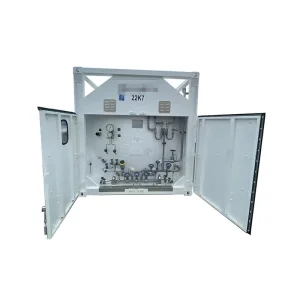
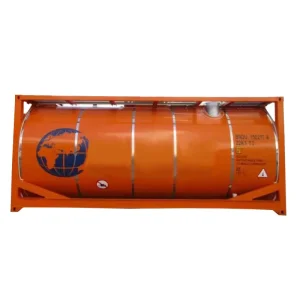
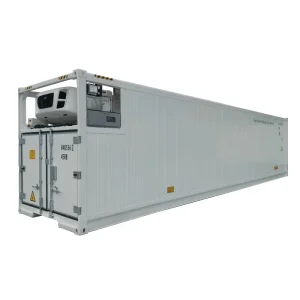
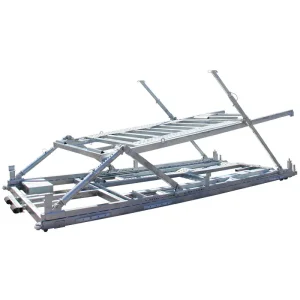
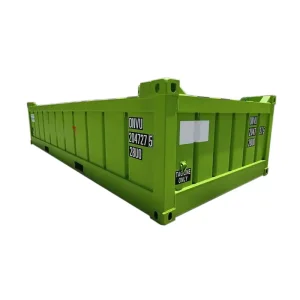
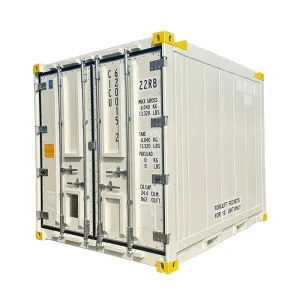
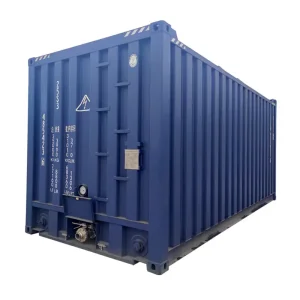
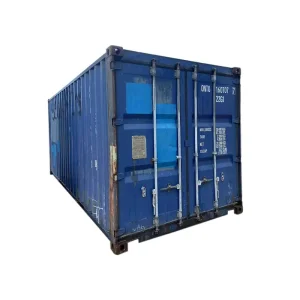
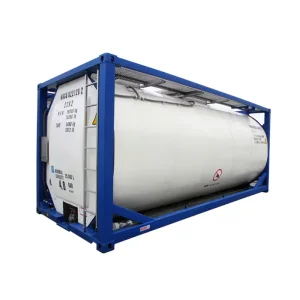
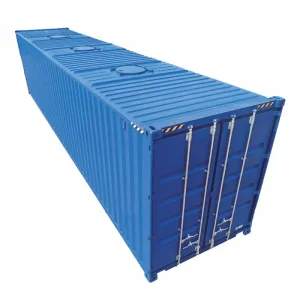
Explore our complete export catalog encompassing cryogenic chemical tanks, refrigerated cold-chain equipment, vehicle transport racks, and heavy-duty industrial storage hulls.

Frequently Asked Questions for Commercial Buyers
In-depth responses covering engineering modifications, utility requirements, shipping procedures, warranty structures, and ROI payback models for international farm projects.
A standard 40ft High Cube commercial cultivation container requires three basic hookups: a dedicated three-phase electrical supply (typically 380V-480V AC, 50/60Hz, 63A to 100A service rating depending on installed LED photon densities and compressor tonnage); a continuous potable water inlet line (3/4-inch NPT or standard BSP connector with dynamic pressure between 35 and 65 PSI); and a floor-level gravity graywater drainage connection (1.5-inch PVC or camlock). For high-density facilities, an optional RJ45 hardline Ethernet drop or 4G/5G cellular antenna mount is pre-wired to integrate the onboard industrial PLC with external cloud analytics platforms.
Condensation occurs when warm, moist crop air reaches cold structural steel members at the dew point. We prevent this by applying an impervious liquid vapor barrier over the primed Corten inner ribs, followed by automated high-pressure injection of seamless closed-cell polyurethane or continuous tongue-and-groove PIR sandwich boards. All interior seams are sealed using food-grade elastomeric antimicrobial silicone. This technique creates a continuous envelope where interior relative humidity (often kept at 65-75% RH) cannot contact the colder outer steel shell, preventing interstitial condensation and fungal contamination.
Our standard export cultivation shell is engineered with an R-value of R-28 to R-32, easily accommodating outdoor temperatures from -15°C to +40°C. For extreme climates, we build custom regional modifications. Arctic editions receive 120mm thickened insulation (R-40+), internal floor trace heating cables, and low-ambient compressor crankcase heaters rated down to -45°C. For Middle Eastern or tropical operations, we add oversized tropicalized condensers (ambient 55°C rated), motorized sand-separation louvers, and external high-albedo solar heat-shield roof coatings that reflect up to 88% of incoming solar infrared radiation.
High-value, short-cycle crops deliver the strongest return on investment. Gourmet culinary herbs (Genovese basil, cilantro, mint, chives), tender leafy greens (butterhead lettuce, arugula, Swiss chard, Asian brassicas), and microgreens provide turnaround cycles of 14 to 28 days with rapid biomass expansion. Additionally, container modules serve as biosecure breeding enclosures for high-potency medicinal botanicals, saffron propagation, nursery seedling propagation, and strawberry cloning, where spatial cleanliness, precision climate calibration, and cleanroom biological integrity command significant market premiums.
We standardize primary electro-mechanical components around globally distributed brand names. Depending on client specification, refrigeration units integrate Carrier, Daikin, or Thermo King compressors, alongside Schneider Electric switchgear and Omron or Siemens PLCs. As a result, critical wear items can be serviced locally by certified industrial technicians in Europe, the Americas, Africa, and Australasia. Additionally, our factories supply standardized critical spare parts kits (backup dosing pumps, extra LED ballasts, sensor bundles, solenoid valves) directly inside the container upon export, supported by a 3-year structural hull and 1-year electrical subsystem factory warranty.
Constructed with atmospheric-corrosion-resistant SPA-H Corten steel, heavy-duty structural corner castings, and multi-coat marine polyurethane finishes, our container structures have a design life exceeding 25 years in harsh maritime or industrial operating conditions. Interior LED lighting bars maintain an L90B10 rating exceeding 54,000 continuous hours (over 8 years of 18-hour daily photoperiod cycles). Routine preventative maintenance is straightforward: monthly cleanings of HVAC intake filters and UV sterilization tubes, sensor calibrations (pH/EC/NDIR) every 90 days, and deep system sanitary washdowns between successive crop rotations.
Yes. As an authentic OEM/ODM engineering manufacturer with over 40 years of container customization experience, custom orders are standard procedure. Our engineering team converts your crop specifications into detailed mechanical CAD layouts and electrical wiring diagrams. You can configure vertical tier shelf counts, specify custom spectral wavelength balances (including supplemental UV-A/Far-Red diode channels), select preferred irrigation mechanics (aeroponics, nutrient film technique, or ebb-and-flow), customize portal locations (side doors, cleanroom interlocks), and brand the exterior housing with your corporate identity before production begins.